
This article will help you identify 6 common eLearning design mistakes that reduce engagement and ROI, and learn how to avoid them with practical, data-driven solutions.
1. Overloading Content
Mistake: Courses include too much information in one sitting.
Why it happens: Trying to cover everything at once.
Impact: Lower retention, reduced completion rates, and wasted training time.
Overloading learners with excessive information is one of the fastest ways to reduce the effectiveness of e-learning. When too much content is delivered in a single session, cognitive overload occurs, making it difficult for learners to process and retain key information. Instead of improving knowledge, it leads to fatigue and disengagement. Breaking content into shorter, focused modules allows learners to absorb information more effectively and improves both completion rates and overall training outcomes.
What you should do instead:
Structure content into short, focused modules using a microlearning approach. Prioritize key information and remove anything that does not directly support the learning objective. Even if it is important information that needs to be learnt, dividing the information is essential for retaining engagement in learners.
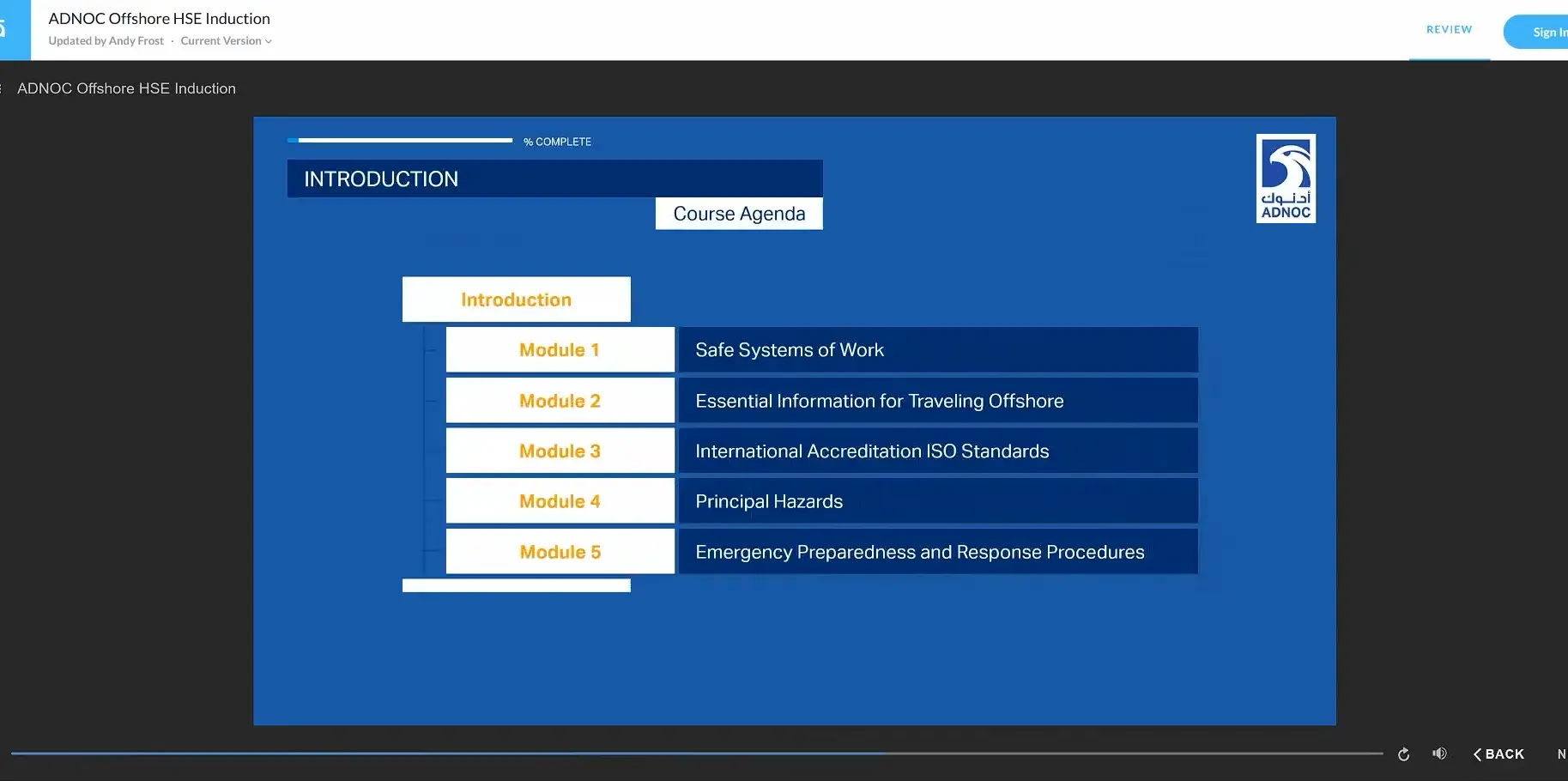
SHIIFT Training’s ADNOC e-learning project is a great demonstration of this. Even though this course as a whole was designed as an offshore HSE induction training, it was divided into 5 distinct modules with easy to digest content and regular formative assessments to maximize absorption of key knowledge.
2. Lack of Engagement
Mistake: Passive formats like long slides or text-heavy modules.
Why it happens: Faster and cheaper to produce.
Impact: Learners disengage, reducing knowledge transfer and ROI.
E-learning that relies heavily on static slides or large blocks of text fails to capture attention. Learners are more likely to skim or drop off entirely when content does not require interaction. Engagement is directly linked to retention, so passive learning formats significantly reduce the impact of training. Incorporating interactive elements such as quizzes, scenarios, or decision-based activities helps maintain attention and ensures learners actively process the material.
What you should do instead:
Introduce interactive elements such as scenario-based learning, short assessments, and decision-making tasks to keep learners actively involved throughout the course.
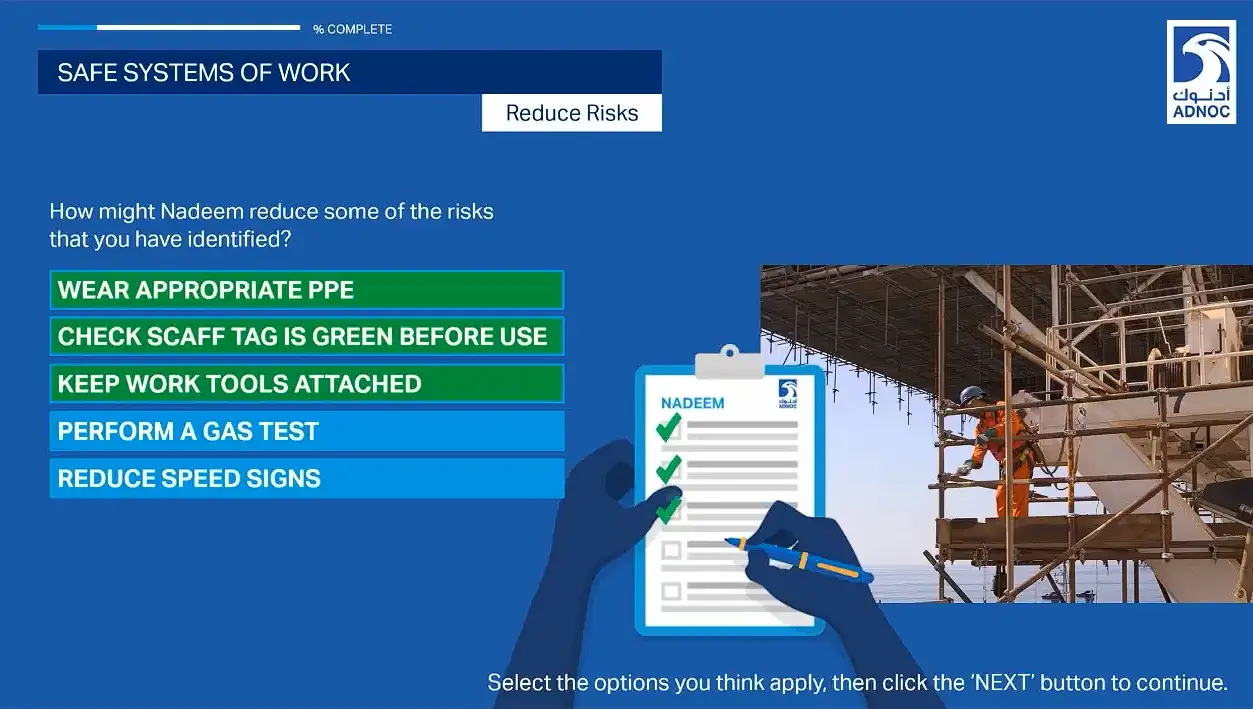
SHIIFT’s e-learning courses include built-in knowledge checks, clickable elements, and short decision-based questions throughout the content rather than only at the end. This keeps learners engaged and ensures they are actively processing information as they progress.
3. No Real-World Application
Mistake: Training is theoretical with no practical context.
Why it happens: Content is not aligned with actual job tasks.
Impact: Employees cannot apply what they learned, limiting business value.
When training content is disconnected from real job responsibilities, it becomes difficult for learners to transfer knowledge into practice. Employees may understand concepts in theory but struggle to apply them in real situations. This gap reduces the overall effectiveness of training and limits its return on investment. E-learning should be designed around real tasks, scenarios, and challenges that employees face, ensuring that learning translates directly into improved performance.
What you should do instead:
Use job-relevant examples, step-by-step workflows, and scenario-based questions within the e-learning content. Focus on mirroring real tasks through case studies, guided decision points, and practical exercises that reflect actual responsibilities.
In our e-learning projects, SHIIFT has the unique advantage of having an in-house 3d animation team that can really bring concepts to life, allowing us to easily embed the video content into the e-learning where users can see real-world application and test their comprehension.

4. Ignoring Data and Analytics
Mistake: Not tracking performance or learner behavior.
Why it happens: Lack of defined KPIs or reporting setup.
Impact: No visibility on effectiveness, making ROI impossible to measure or improve.
Without tracking data, organisations have no way of understanding whether their training is working. Metrics such as completion rates, assessment scores, time spent on modules, and performance improvements provide critical insight into effectiveness. Ignoring this data means missed opportunities to refine and optimize training programs. Establishing clear KPIs and regularly analyzing results allows organisations to identify weaknesses and continuously improve outcomes.
What you should do instead:
Define clear KPIs from the start and use learning analytics to track performance. Regularly review the data to identify gaps and improve training effectiveness.
E-learning should always be developed with data in mind. Our e-learning courses are built to integrate with LMS platforms, enabling tracking of completion rates, assessment scores, and learner progress. This gives clients clear visibility on performance and allows continuous improvement of training content.
5. One-Size-Fits-All Approach
Mistake: Same training for all roles and experience levels.
Why it happens: Easier to deploy at scale.
Impact: Irrelevant content leads to disengagement and wasted resources.
Delivering identical training to all employees, regardless of their role or experience level, reduces relevance. Beginners may feel overwhelmed, while experienced employees may find the content repetitive and unnecessary. This lack of personalization leads to disengagement and inefficient use of training time. Tailoring content to specific roles, skill levels, or learning paths ensures that each learner receives relevant information, improving both engagement and ROI.
What you should do instead:
Segment learners by role, experience, or skill level. Create tailored learning paths so content remains relevant and efficient for each group.
We usually structure e-learning content so modules can be assigned based on role or responsibility. For example, supervisory content can be separated from technician-level training, ensuring each learner only receives relevant material.
6. No Post-Training Reinforcement
Mistake: Training ends once the course is completed.
Why it happens: Focus is only on delivery, not retention.
Impact: Knowledge is quickly forgotten, reducing long-term ROI.
Learning doesn’t end when a course is completed, but many organizations treat it that way. Without reinforcement, knowledge retention declines rapidly over time. This results in employees forgetting key information and failing to apply what they learned. Reinforcement strategies such as follow-up quizzes, refresher modules, or on-the-job practice help maintain knowledge and ensure long-term impact. Continuous learning support is essential for maximizing the return on training investment.
What you should do instead: Implement reinforcement strategies such as spaced learning, refresher modules, and ongoing assessments to maintain knowledge and improve long-term retention.
Our e-learning courses include recap sections and end-of-module assessments that reinforce key points. These can also be revisited within the LMS, allowing learners to refresh their knowledge without retaking the entire course
If you’ve spotted some of these mistakes in your own training, they’re likely already impacting your results.
If you want to fix that, get in touch with SHIIFT Training. We build e-learning that follows proven design principles while going further to keep learners engaged from start to finish. We can also rework your existing courses into structured modules that meet higher industry standards and deliver better results.
If you’re looking for more insights on improving your e-learning, check out these useful resources below:
Solutions
Safety Training
Hazard recognition
Spot risks before incidents
/solutions/hazard-recognition-training
Solutions
Safety Training
Life-Saving Rules
Critical rules as decisions
/solutions/life-saving-rules-training
Solutions
Safety Training
Behavioral safety
Stop work authority, used
/solutions/behavioral-safety-training
Solutions
Safety Training
Hand safety
Fewer hand injuries
/solutions/hand-safety-training
Solutions
Safety Training
PPE selection & use
The right kit, worn right
/solutions/ppe-training
Solutions
Safety Training
H2S & gas awareness
The invisible hazard, visible
/solutions/h2s-gas-awareness-training
Solutions
Safety Training
Fire & emergency response
Beyond the routine drill
/solutions/fire-safety-emergency-response-training
Solutions
Safety Training
Toolbox talks
Five strong minutes weekly
/solutions/toolbox-talk-content
Solutions
Safety Training
Permit to work
PTW judgment scenarios
/solutions/permit-to-work-training
Solutions
Safety Training
Isolation & LOTO
Safe energy isolation
/solutions/isolation-lockout-tagout-training
Solutions
Safety Training
Confined space entry
Entries and rescue response
/solutions/confined-space-entry-training
Solutions
Safety Training
Working at height
Falls and dropped objects
/solutions/working-at-height-training
Solutions
Safety Training
Lifting & rigging
Safer critical lifts
/solutions/lifting-rigging-training
Solutions
Safety Training
Hot work
Sparks under control
/solutions/hot-work-training
Solutions
Safety Training
Line of fire
See the energy path
/solutions/line-of-fire-training
Solutions
Safety Training
Driver safety
Safer driving and journeys
/solutions/driver-safety-training
Solutions
Safety Training
Electrical safety
Safe isolation, arc flash aware
/solutions/electrical-safety-training
Solutions
Safety Training
Excavation work
Trenches and buried services
/solutions/excavation-safety-training
Solutions
Safety Training
Ergonomics
Strain prevention that sticks
/solutions/ergonomics-training
Solutions
Safety Training
Situational awareness
Noticing change on site
/solutions/situational-awareness-training
Solutions
Onboarding & People
Site orientation
Inductions before day one
/solutions/site-orientation-onboarding
Solutions
Onboarding & People
Expatriate workforce
Localized multilingual training
/solutions/expatriate-workforce-training
Solutions
Onboarding & People
Visitor inductions
Pre-arrival essentials
/solutions/visitor-induction-training
Solutions
Onboarding & People
Leadership training
Judgment, developed
/solutions/leadership-training
Solutions
Onboarding & People
Soft skills
Conversations that work
/solutions/soft-skills-training
Solutions
Onboarding & People
Safety leadership
Frontline supervisor skills
/solutions/safety-leadership-training
Solutions
Onboarding & People
Human factors
Error traps and defenses
/solutions/human-factors-training
Solutions
Operations & Technical
Process & procedures
Step-by-step competence
/solutions/process-procedure-training
Solutions
Operations & Technical
Operational readiness
Ready before start-up
/solutions/operational-readiness
Solutions
Operations & Technical
Technical training
Complex systems explained
/solutions/technical-training
Solutions
Operations & Technical
Control room & DCS
Alarms and upset response
/solutions/control-room-training
Solutions
Operations & Technical
Crane operation
Operators, banksmen, supervisors
/solutions/crane-operation-training
Solutions
Operations & Technical
Forklift operation
Operators, pedestrians, supervisors
/solutions/forklift-operation-training
Solutions
Operations & Technical
Maintenance & turnarounds
Outage preparation
/solutions/maintenance-turnaround-training
Solutions
Operations & Technical
Process safety
Barriers made visible
/solutions/process-safety-training
Solutions
Compliance & Modernization
Lessons learned (LFI)
Incidents into training
/solutions/lessons-learned-training
Solutions
Compliance & Modernization
Spill response
Environmental first response
/solutions/spill-response-training
Solutions
Compliance & Modernization
Hazardous materials
Storage, handling, transport
/solutions/hazardous-materials-training
Solutions
Compliance & Modernization
Security awareness
Physical and cyber vigilance
/solutions/security-awareness-training
Services
Content Production
Training Videos
Filmed through our global crew network
/services/workplace-safety-training-videos
A safety orientation film produced for Milestone Environmental Services.

Services
Content Production
2D & 3D Animation
Engineering-accurate visuals
/services/2d-3d-animation
From a 3D animation built to supplement an ADNOC e-learning module.

Services
Content Production
Safety Campaigns
Sustained behavior change
/services/safety-campaigns
The award-recognized Maersk hand safety campaign.

Services
Content Production
Training posters & print
Site-specific print & visual aids
/services/training-posters
A printed lessons learned handbook produced for Petroleum Development Oman.

Services
Content Production
PowerPoint Materials
Trainer-led deck rebuilds
/services/powerpoint-training-materials
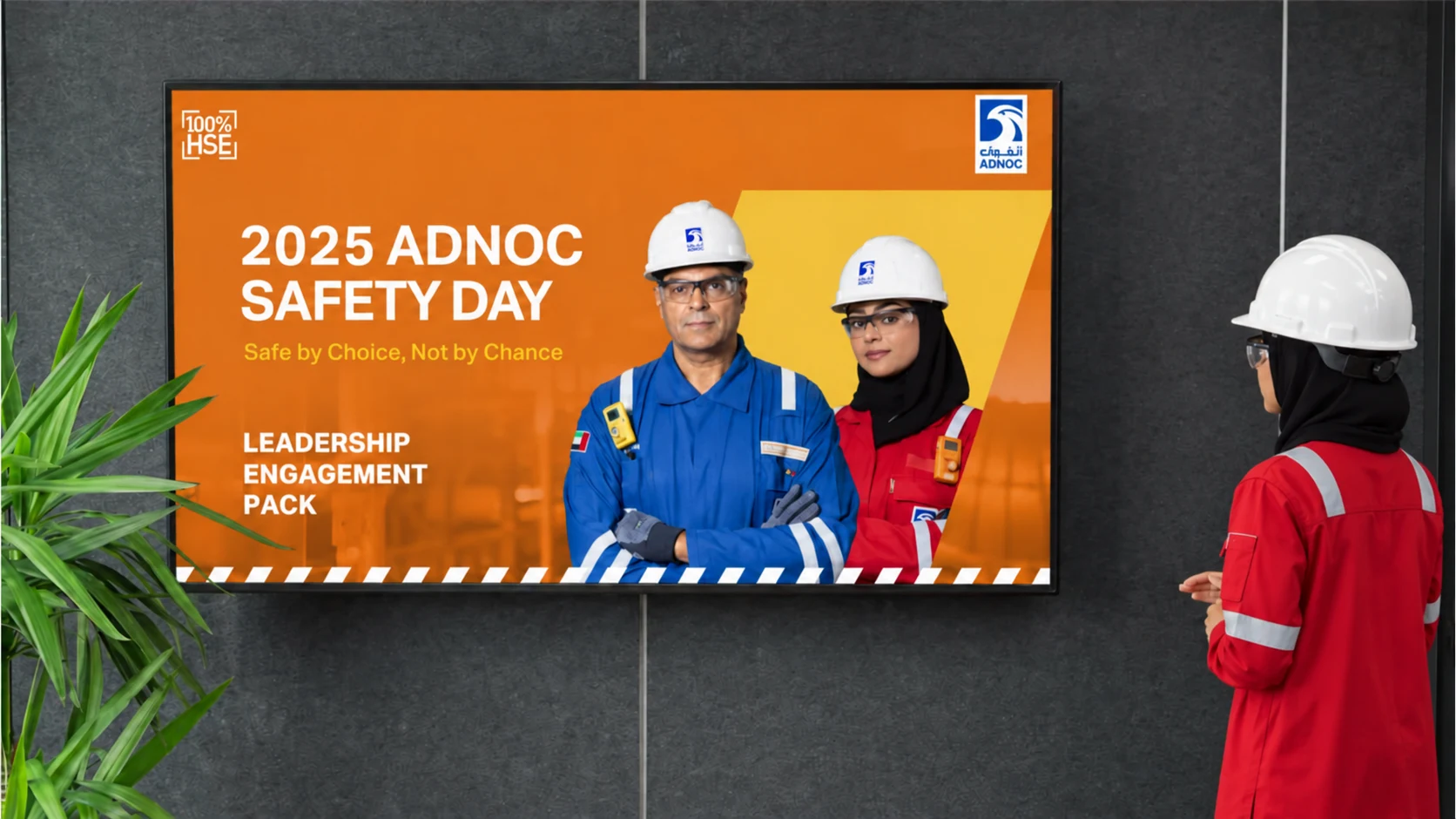
Presenting an ADNOC Safety Day engagement deck.
Services
Interactive Training
E-Learning
SCORM online modules
/services/e-learning
Scenario questions inside a client e-learning module.

Services
Interactive Training
Virtual Reality (VR)
Immersive headset training
/services/virtual-reality-vr-training
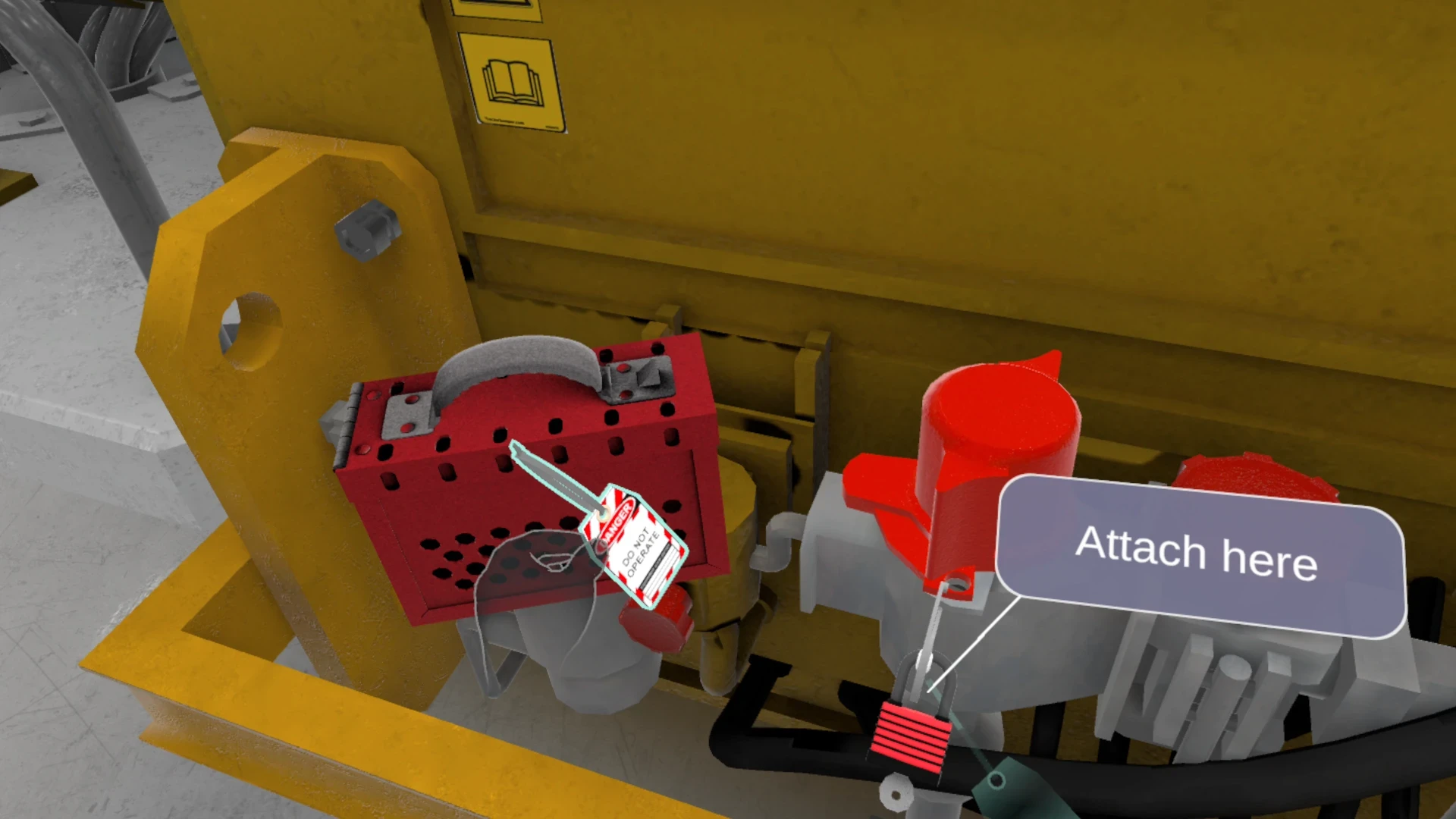
Lockout tagout training with full hand tracking in VR.
Services
Interactive Training
Flat-Screen Simulations
Desktop, web & mobile simulations
/services/flat-screen-simulation-training
SHIIFT simulations running on laptops and mobile devices.

Services
Interactive Training
Digital Twins
Navigable sites & equipment
/services/digital-twins
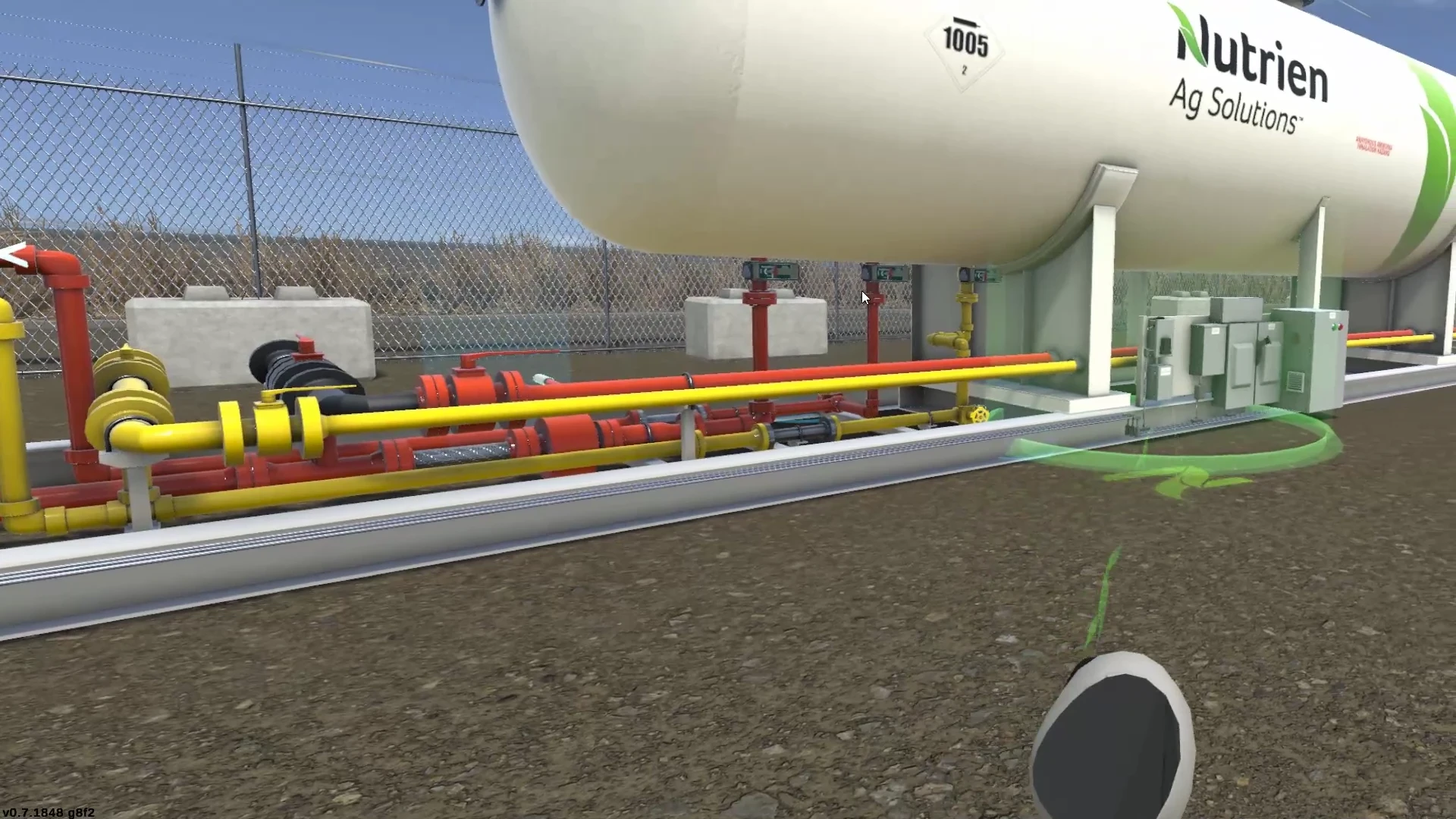
A navigable 3D replica of Nutrien's ammonia transfer plant.
Approach
How We Work
Our approach
Analysis, design, delivery, validation
/approach
Approach
How We Work
SCORM & LMS Integration
Tracking in your systems
/services/scorm-lms-integration
Approach
How We Work
Scenario-Based Assessments
Competency you can prove
/services/scenario-based-assessments