
The Role of Interactivity in Modern Training
In today’s fast-paced digital world, effective training solutions need to use more than just passive learning methods like listening to an instructor, because nowadays it’s more difficult to listen intently to training or reading with adequate attention. Interactivity plays a crucial role in engaging learners, improving knowledge retention, and enhancing skill application. Whether a company uses basic eLearning courses or advanced workplace training programs, incorporating interactive elements transforms learning from a passive experience into an active one.
Benefits of Interactivity in Training:
Improved Engagement – Interactive content, such as simulations, quizzes, or class discussions, keeps learners involved which reduces boredom and increases motivation.
Enhanced Knowledge Retention – Studies show that learners remember more when they actively participate in the learning process rather than just consuming information passively.
Better Skill Application – Practical exercises and hands-on simulations help bridge the gap between theory and real-world application, ensuring learners can confidently apply their knowledge.
Increased Collaboration – Interactive learning fosters teamwork through group activities, discussion boards, or live simulations of a group process, promoting knowledge sharing and problem-solving.
Incorporating Videos Effectively
To integrate videos and interactive videos into eLearning without overdoing it:
Balance Video with Other Content – Avoid over-relying on videos; mix them with text, quizzes, and hands-on activities for a well-rounded experience.
Keep Videos Concise – Short, focused videos improve engagement and retention compared to long, lecture-style formats.
Use Interactivity Purposefully – Incorporate clickable elements, decision points, or knowledge checks to keep learners actively involved.
Provide Clear Instructions – Ensure learners understand how to engage with interactive features to maximize their effectiveness.
Monitor Engagement and Feedback – Use analytics to assess how learners interact with videos and adjust content accordingly.
10 Strategies to Make Your eLearning More Interactive and Engaging
10 Expert-Backed Strategies for Engaging and Interactive eLearning 1. Gamification Elements 2. Scenario-Based Learning 3. Microlearning 4. Active Participation 5. Embed VR/AR Sessions Between Modules 6. Branching Scenarios 7. Video and Animation 8. Social Learning 9. Instant Feedback 10. Web-Based Immersive Simulations
Creating interactive and engaging eLearning experiences is essential for improving learner retention and motivation. Traditional eLearning approaches often lack interactivity, leading to disengaged learners and lower information retention rates. By integrating engaging elements, you can create a more dynamic and effective learning experience. Here are 10 strategies to make your eLearning content more interactive and impactful.
Gamification Elements
Gamification is an excellent way to increase learner motivation and participation. By adding game-like elements such as points, badges, leaderboards, or challenges, you can turn learning into a more enjoyable experience. Gamification taps into the competitive nature of learners, encouraging them to complete tasks and achieve milestones to compete, while learning at te same time. Providing small digital rewards like badges for progress can increase motivation and create a sense of accomplishment, it literally makes the learning feel more ‘rewarding’.
To implement gamification effectively, ensure that challenges and rewards align with learning objectives. A well-designed gamified learning experience should balance difficulty with engagement.
Scenario-Based Learning
Scenario-based learning presents learners with real-world situations where they must make decisions. This approach reinforces practical application and encourages critical thinking. Instead of passively consuming content, learners actively engage with materials, making it easier to retain information.
For example, if you’re training employees on workplace safety, create interactive scenarios where they must identify hazards and choose the correct safety procedures. By placing learners in realistic situations, they gain valuable hands-on experience without real-world consequences.
Microlearning
Microlearning involves breaking content into bite-sized lessons that are easier to digest and retain. Research shows that people learn better in short bursts with short breaks spaced out during the learning, rather than a lengthy training session. Microlearning also allows learners to fit training into their busy schedules.
For example, instead of a 60-minute lecture, break the training content into 5-10 minute interactive lessons. These can include infographics, videos, quizzes, or even interactive scenarios. This method ensures higher engagement and retention by preventing cognitive overload which usually ends up being wasted time because of the ineffective learning, resulting in needing more training sessions in the future.
Active Participation
Keeping learners actively engaged can significantly improve learning outcomes. Use polls, quizzes, discussion boards, and other interactive elements to maintain attention. Active participation not only makes learning more engaging but also helps learners retain information by requiring them to process and apply knowledge actively.
A great way to encourage participation is through real-time feedback. For example, interactive quizzes that immediately show correct answers and explanations can reinforce learning and correct misconceptions on the spot.
Virtual and Augmented Reality (VR/AR)
Virtual Reality (VR) and Augmented Reality (AR) are revolutionizing eLearning by providing immersive learning experiences between modules as a way to increase engagement so that part of the topic is taught in standard e-learning, and other parts are taught in VR. These technologies allow learners to interact with realistic simulations, making training more engaging and effective.
Branching Scenarios
Branching scenarios allow learners to choose their own path within a course, leading to personalized outcomes and deeper engagement. This approach creates a sense of autonomy, allowing learners to see the consequences of their choices in a risk-free environment.
For example, in customer service training, learners can choose different ways to handle a customer complaint. Each decision leads to a different outcome, helping learners understand the impact of each choice they make in a long process. This form of interactive learning can improve problem-solving skills and decision-making abilities.
Video and Animation
Video and animation make learning more engaging by transforming static content into dynamic visuals. Well-produced videos can simplify complex topics, making them easier to understand by breaking them apart visually and audibly. Motion graphics, animated explainer videos, and interactive video quizzes can keep learners engaged throughout these videos while the users are taught.
Social Learning
Social learning involves interaction between learners through discussion forums, peer feedback, and collaborative activities. Encouraging communication between learners creates a community-like environment where people can share insights and learn from each other.
A great way to do this is incorporating peer assessments and discussion groups into your eLearning program. This fosters collaboration between your workplace’s learners, allowing each learner to learn from each others experiences and perspectives to make training more meaningful and practical. The social aspect also improves knowledge retention
Instant Feedback
Instant feedback is a crucial element of interactive learning. It helps learners correct mistakes in real time and reinforces what a user just learnt when they get it right. Whether through quizzes, interactive exercises, or AI-driven feedback mechanisms, immediate responses help keep learners engaged and on track. Unlike traditional learning where only a few learners respond to group activities or questions asked to the group, with eLearning each learner gets to participate by submitting an answer to a question separately, allowing them to recieve individual feedback based on their own responses, which increases learner retention compared to passively absorbing the information around them.
Utilize Desktop or Web-Based Immersive Simulations
Similar to VR, computer-based immersive simulations provide learners with hands-on training in a virtual environment. These can be accessed via desktop applications or web-based platforms, allowing learners to practice real-world tasks without physical risks, and can even be embedded into customized eLearning software as a mini exercise.
For instance, industries like aviation, healthcare, and manufacturing use immersive simulations to train employees in safety procedures and operational techniques. This method enhances skill application and knowledge retention through experiential learning.
Why Choose SHIIFT Training as Your eLearning Provider?
SHIIIFT Training specializes in creating engaging, interactive, and effective eLearning solutions tailored to your organization’s needs. Our expertise in interactive employee training ensures that your employees receive hands-on, immersive experiences that improve retention and practical application.
Whether you need custom eLearning modules, compliance training, or full-scale interactive simulations, SHIIFT Training delivers innovative, results-driven solutions.
Partner with us to transform your training into an engaging and impactful learning experience.
Solutions
Safety Training
Hazard recognition
Spot risks before incidents
/solutions/hazard-recognition-training
Solutions
Safety Training
Life-Saving Rules
Critical rules as decisions
/solutions/life-saving-rules-training
Solutions
Safety Training
Behavioral safety
Stop work authority, used
/solutions/behavioral-safety-training
Solutions
Safety Training
Hand safety
Fewer hand injuries
/solutions/hand-safety-training
Solutions
Safety Training
PPE selection & use
The right kit, worn right
/solutions/ppe-training
Solutions
Safety Training
H2S & gas awareness
The invisible hazard, visible
/solutions/h2s-gas-awareness-training
Solutions
Safety Training
Fire & emergency response
Beyond the routine drill
/solutions/fire-safety-emergency-response-training
Solutions
Safety Training
Toolbox talks
Five strong minutes weekly
/solutions/toolbox-talk-content
Solutions
Safety Training
Permit to work
PTW judgment scenarios
/solutions/permit-to-work-training
Solutions
Safety Training
Isolation & LOTO
Safe energy isolation
/solutions/isolation-lockout-tagout-training
Solutions
Safety Training
Confined space entry
Entries and rescue response
/solutions/confined-space-entry-training
Solutions
Safety Training
Working at height
Falls and dropped objects
/solutions/working-at-height-training
Solutions
Safety Training
Lifting & rigging
Safer critical lifts
/solutions/lifting-rigging-training
Solutions
Safety Training
Hot work
Sparks under control
/solutions/hot-work-training
Solutions
Safety Training
Line of fire
See the energy path
/solutions/line-of-fire-training
Solutions
Safety Training
Driver safety
Safer driving and journeys
/solutions/driver-safety-training
Solutions
Safety Training
Electrical safety
Safe isolation, arc flash aware
/solutions/electrical-safety-training
Solutions
Safety Training
Excavation work
Trenches and buried services
/solutions/excavation-safety-training
Solutions
Safety Training
Ergonomics
Strain prevention that sticks
/solutions/ergonomics-training
Solutions
Safety Training
Situational awareness
Noticing change on site
/solutions/situational-awareness-training
Solutions
Onboarding & People
Site orientation
Inductions before day one
/solutions/site-orientation-onboarding
Solutions
Onboarding & People
Expatriate workforce
Localized multilingual training
/solutions/expatriate-workforce-training
Solutions
Onboarding & People
Visitor inductions
Pre-arrival essentials
/solutions/visitor-induction-training
Solutions
Onboarding & People
Leadership training
Judgment, developed
/solutions/leadership-training
Solutions
Onboarding & People
Soft skills
Conversations that work
/solutions/soft-skills-training
Solutions
Onboarding & People
Safety leadership
Frontline supervisor skills
/solutions/safety-leadership-training
Solutions
Onboarding & People
Human factors
Error traps and defenses
/solutions/human-factors-training
Solutions
Operations & Technical
Process & procedures
Step-by-step competence
/solutions/process-procedure-training
Solutions
Operations & Technical
Operational readiness
Ready before start-up
/solutions/operational-readiness
Solutions
Operations & Technical
Technical training
Complex systems explained
/solutions/technical-training
Solutions
Operations & Technical
Control room & DCS
Alarms and upset response
/solutions/control-room-training
Solutions
Operations & Technical
Crane operation
Operators, banksmen, supervisors
/solutions/crane-operation-training
Solutions
Operations & Technical
Forklift operation
Operators, pedestrians, supervisors
/solutions/forklift-operation-training
Solutions
Operations & Technical
Maintenance & turnarounds
Outage preparation
/solutions/maintenance-turnaround-training
Solutions
Operations & Technical
Process safety
Barriers made visible
/solutions/process-safety-training
Solutions
Compliance & Modernization
Lessons learned (LFI)
Incidents into training
/solutions/lessons-learned-training
Solutions
Compliance & Modernization
Spill response
Environmental first response
/solutions/spill-response-training
Solutions
Compliance & Modernization
Hazardous materials
Storage, handling, transport
/solutions/hazardous-materials-training
Solutions
Compliance & Modernization
Security awareness
Physical and cyber vigilance
/solutions/security-awareness-training
Services
Content Production
Training Videos
Filmed through our global crew network
/services/workplace-safety-training-videos
A safety orientation film produced for Milestone Environmental Services.

Services
Content Production
2D & 3D Animation
Engineering-accurate visuals
/services/2d-3d-animation
From a 3D animation built to supplement an ADNOC e-learning module.

Services
Content Production
Safety Campaigns
Sustained behavior change
/services/safety-campaigns
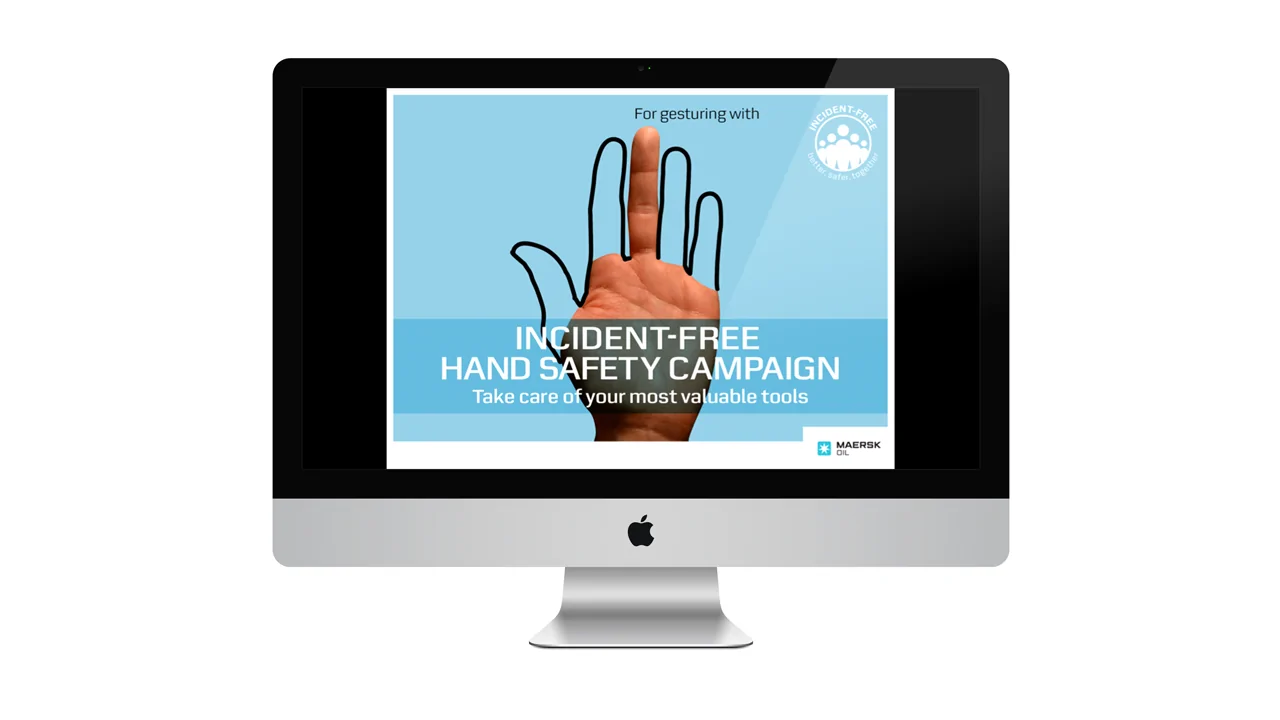
The award-recognized Maersk hand safety campaign.
Services
Content Production
Training posters & print
Site-specific print & visual aids
/services/training-posters
A printed lessons learned handbook produced for Petroleum Development Oman.

Services
Content Production
PowerPoint Materials
Trainer-led deck rebuilds
/services/powerpoint-training-materials
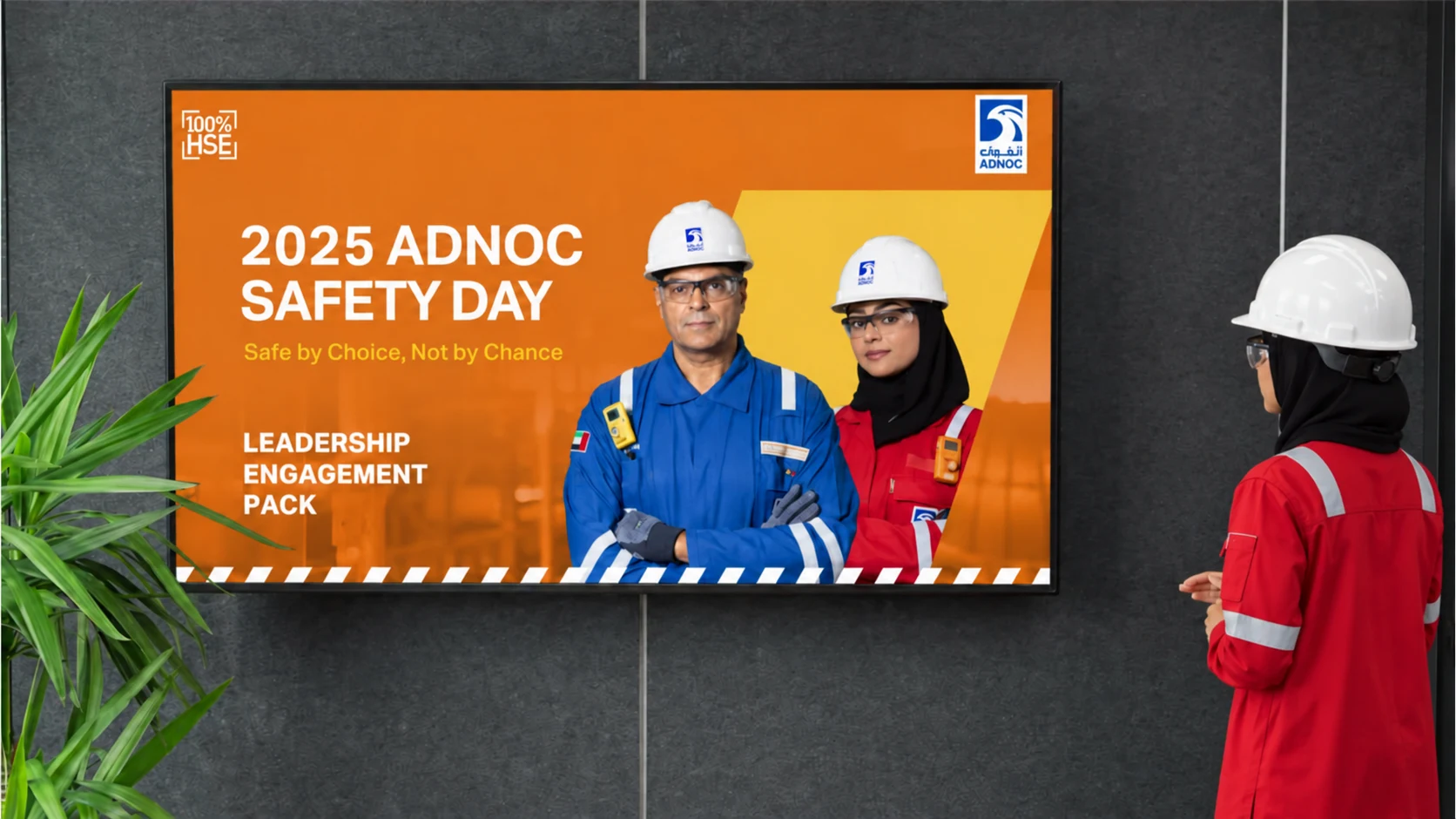
Presenting an ADNOC Safety Day engagement deck.
Services
Interactive Training
E-Learning
SCORM online modules
/services/e-learning
Scenario questions inside a client e-learning module.

Services
Interactive Training
Virtual Reality (VR)
Immersive headset training
/services/virtual-reality-vr-training
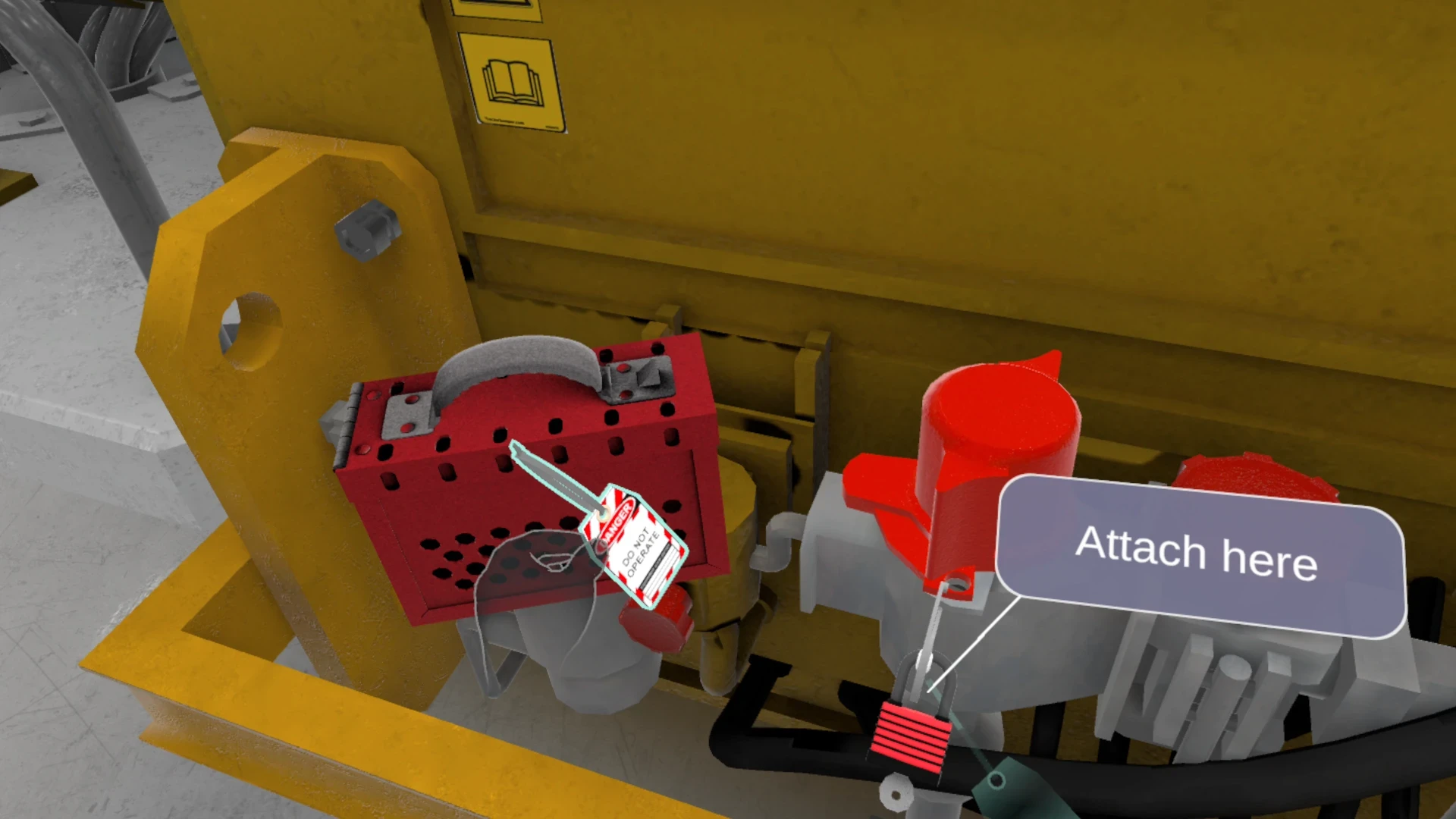
Lockout tagout training with full hand tracking in VR.
Services
Interactive Training
Flat-Screen Simulations
Desktop, web & mobile simulations
/services/flat-screen-simulation-training
SHIIFT simulations running on laptops and mobile devices.

Services
Interactive Training
Digital Twins
Navigable sites & equipment
/services/digital-twins
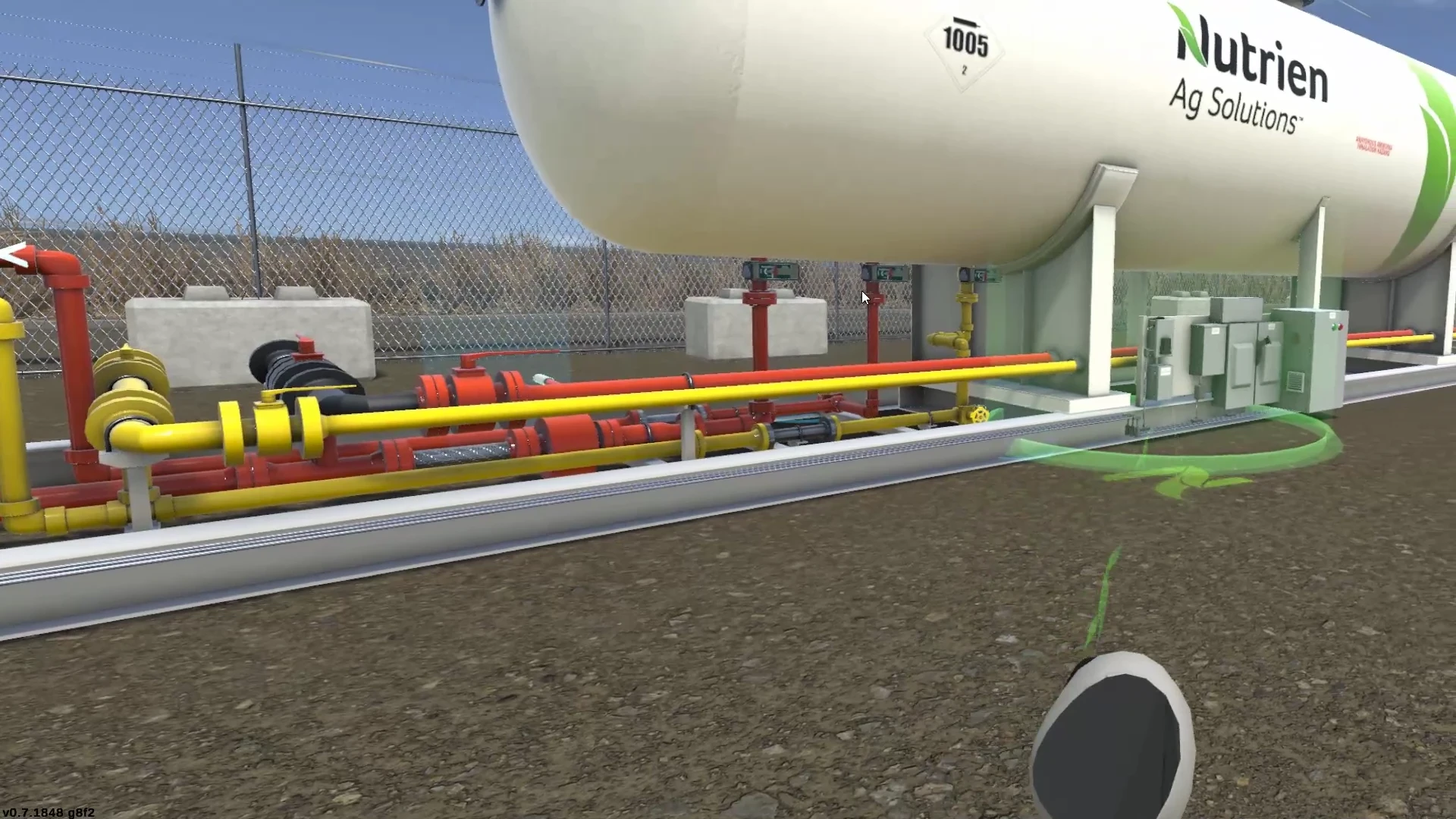
A navigable 3D replica of Nutrien's ammonia transfer plant.
Approach
How We Work
Our approach
Analysis, design, delivery, validation
/approach
Approach
How We Work
SCORM & LMS Integration
Tracking in your systems
/services/scorm-lms-integration
Approach
How We Work
Scenario-Based Assessments
Competency you can prove
/services/scenario-based-assessments