←
All articles
eLearning
How Much Does E-learning Cost? Comprehensive Guide to the Cost of E-learning
·
[[block:elc-pair-1]] <style> .shp-elc{display:grid;position:relative;width:128%;margin:16px 0 28px;padding-bottom:76px;} .shp-elc input{position:absolute;opacity:0;width:0;height:0;pointer-events:none;} .shp-elc .shp-card{grid-area:1/1;justify-self:start;align-self:end;width:78%;display:block;background:#fff;border:1px solid #E4E2DA;border-radius:14px;overflow:hidden;transition:transform .45s cubic-bezier(.2,.7,.25,1),box-shadow .45s ease,filter .45s ease;} .shp-elc .shp-card img{width:100% !important;height:auto;display:block;margin:0 !important;} .shp-elc .shp-cap{display:block;font-family:'Titillium Web',system-ui,sans-serif;font-size:14px;line-height:1.5;color:#60686C;border-left:3px solid #27DB9A;padding:2px 0 2px 12px;margin:12px 16px 14px;} .shp-elc .shp-nav{position:absolute;top:44%;z-index:4;width:52px;height:52px;border-radius:50%;background:linear-gradient(180deg,#FFFFFF 0%,#E7E4DB 100%);border:1.5px solid #14181A;color:#14181A;font-weight:700;box-shadow:0 8px 20px rgba(20,24,26,.22);display:none;align-items:center;justify-content:center;cursor:pointer;font-size:26px;line-height:1;user-select:none;transition:transform .2s ease;} .shp-elc .shp-nav:hover{transform:scale(1.1);} .shp-elc #shp-elc-r0:checked ~ .shp-card-0{z-index:3;transform:none;box-shadow:0 20px 48px rgba(20,24,26,.18);filter:none;cursor:default;} .shp-elc #shp-elc-r0:checked ~ .shp-card-1{z-index:1;transform:translateX(28.1%) translateY(64px);box-shadow:0 12px 28px rgba(20,24,26,.22);filter:brightness(0.96);cursor:pointer;} .shp-elc #shp-elc-r0:checked ~ .shp-nav-nx-1{display:flex;left:calc(78% - 26px);} .shp-elc #shp-elc-r1:checked ~ .shp-card-1{z-index:3;transform:none;box-shadow:0 20px 48px rgba(20,24,26,.18);filter:none;cursor:default;} .shp-elc #shp-elc-r1:checked ~ .shp-card-0{z-index:1;transform:translateX(28.1%) translateY(64px);box-shadow:0 12px 28px rgba(20,24,26,.22);filter:brightness(0.96);cursor:pointer;} .shp-elc #shp-elc-r1:checked ~ .shp-nav-pv-0{display:flex;left:14px;} </style> <div class="shp-elc"> <input type="radio" name="shp-elc" id="shp-elc-r0" checked> <input type="radio" name="shp-elc" id="shp-elc-r1"> <label class="shp-card shp-card-0" for="shp-elc-r0"><img src="https://framerusercontent.com/images/fbTyvJRxH8zs5XGJXn7lTHxo.webp" alt="Basic level of custom e-learning visual design"><span class="shp-cap">Basic level of custom e-learning visual design</span></label> <label class="shp-card shp-card-1" for="shp-elc-r1"><img src="https://framerusercontent.com/images/5C5RMdyMtEuI2zoFX1mufXUyNEU.webp" alt="Higher level of custom visual design and branding for e-learning"><span class="shp-cap">Higher level of custom visual design and branding for e-learning</span></label> <label class="shp-nav shp-nav-nx-1" for="shp-elc-r1" title="Next image">›</label> <label class="shp-nav shp-nav-pv-0" for="shp-elc-r0" title="Previous image">‹</label> </div> [[/block]]
Introduction to Custom eLearning Costs
The cost of e-learning varies widely, and a single module can reach twenty thousand dollars when it includes detailed visuals, strong instructional design, and high levels of engagement. Many people ask how much e-learning cost because pricing can seem inconsistent across providers. The true cost is determined by production effort, media complexity, and the amount of information supplied at the start.
When more work is needed to shape the learning experience, the e-learning cost increases. On average, a standard quality e-learning solution might cost somewhere around $20,000+ per e-learning module, while a more premium solution that includes large amount of contents per module, specialized subject matter, and 3D animated video content embedded into the e-learning can cost closer to $40,000+ per e-learning module.
The following factors outline the most influential elements that decide whether a module remains simple and efficient or expands into a larger premium project. Understanding these factors helps organisations plan an accurate budget and avoid unexpected cost increases during production.
Branding and Visual Design
Existing Content Readiness
Frequency of Interactive Training Elements
Language Requirements
Types of Interactive Media Included
Module Length and Total Module Count
Content Creation Requirements
Assessment and Quiz Complexity
Level of Audio Narration
Branding and Visual Design Level
Each screen must align with the chosen visual identity and remain consistent throughout all modules. When a project requires character illustrations or detailed graphics, the design phase becomes larger.
Complex branding also requires early discovery work to define tone and style. For organisations seeking a premium look and feel, this becomes a major cost factor. As branding expectations rise, the overall e-learning cost increases accordingly.
{block:elc-pair-1}
Existing eLearning Content Readiness and Copy Availability
One of the strongest influences on the cost of e-learning is whether clear and complete source material already exists. When a client provides organised content, defined learning objectives, and an approved script, the team can move directly into visual planning and interactive design. When little or no material is available, the provider must extract knowledge from internal experts, structure the flow, and write accurate training content from the ground up.
This requires research, validation, and multiple approval rounds, all of which add hours. Clear starting information keeps the e-learning cost lower. Projects that begin with minimal content naturally require more writing, coordination, and review, which increases both scope and budget.
Frequency of Interactive Elements
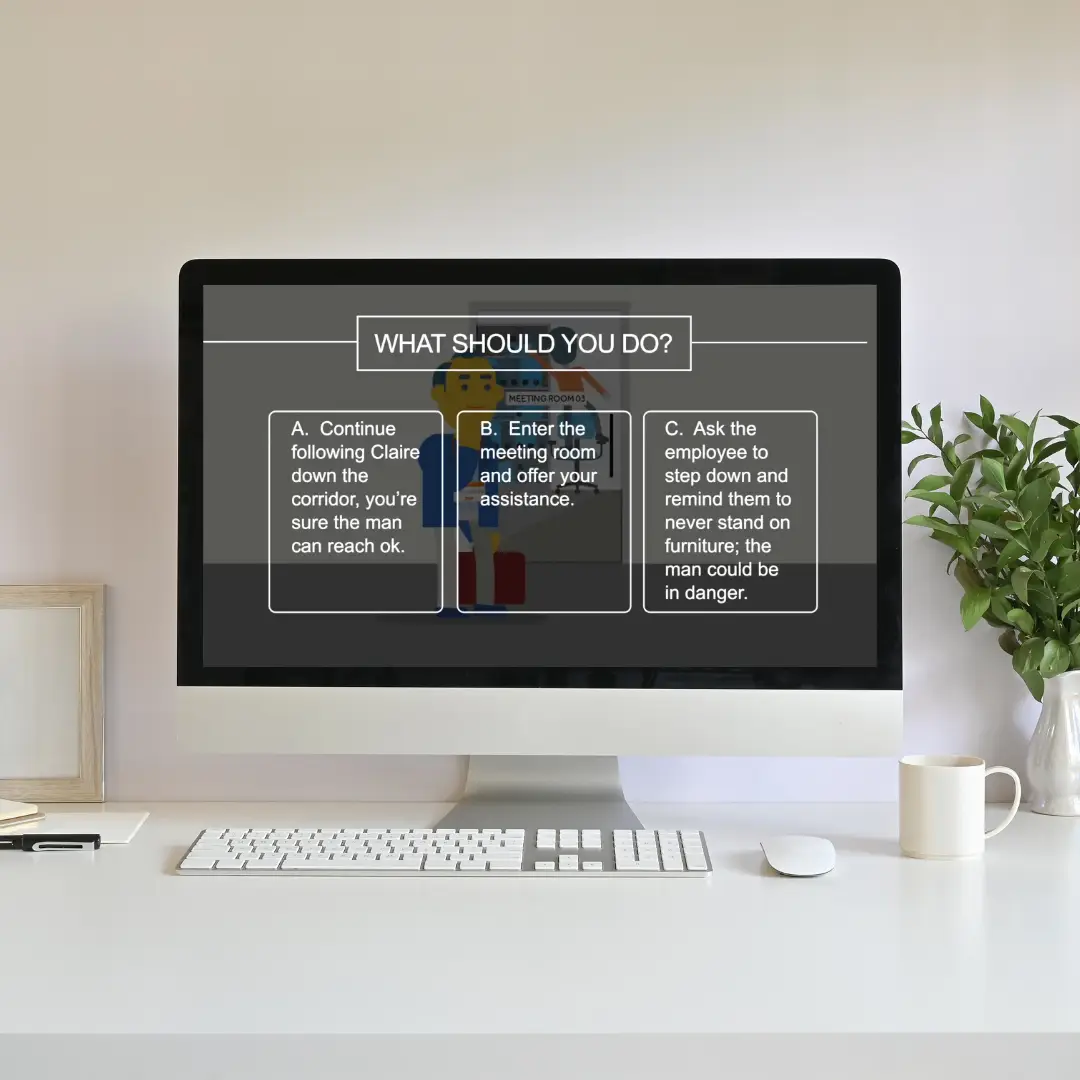
The number of interactions included in a module directly affects the overall e-learning cost. Simple interactions such as labelled images or light knowledge checks require limited design and development time. More advanced interactions such as branching scenarios, procedural tasks, or guided decision steps require more detailed planning, scripting, and repeated testing to ensure clarity and accuracy.
High interaction density also expands the quality assurance phase because more features must be tested on multiple devices. When organisations want a highly engaging experience, this can become a significant cost driver for e-learning.
Language Requirements
Translation can also influence the cost of e-learning, especially when a module is intended for a global workforce. Each language requires careful adaptation, not simple word substitution. Terminology and context must remain accurate.
After translation, e-learning providers need to integrate new text, update layouts, and correct spacing changes created by different word lengths. If narration is included, each language requires its own voice recordings, timing checks, and final editing.Every language also needs full testing to ensure correct text display and scoring behaviour.
A single language keeps the e-learning cost lower. Adding multiple languages can multiply the workload and affect how much the e-learning would cost for your organization.
Types of Interactive Media Included
The type of media included in a project is a major factor in determining the cost of e-learning. Basic images and icons are straightforward and remain affordable. Custom illustrations require more design time, and recorded videos require filming, editing, and integration.
Advanced assets such as animated sequences or 3D models require specialized skills and longer production cycles. Even a short 3D animated piece needs storyboarding, modelling or illustration, timing adjustments, and rendering.
Though this technically isn’t standard in most e-learning, premium e-learning providers like SHIIFT have a multi-disciplined talent team that can incorporate 3D animation segments into your e-learning to further increase interactivity.
Animated or 3D e-learning assets require specialized skills and long production cycles. Even simple animated movements require careful planning and refinement. Realistic sequences require modelling, texturing, lighting, and full rendering, all of which add hours to the project.
When animations demonstrate a procedure or represent equipment, accuracy becomes critical, which expands the review process. Custom 3D e-learning content often requires revisions to match client equipment, safety rules, or physical layouts. These bespoke assets significantly raise the cost of the e-learning compared with 2D visuals.
When a project relies heavily on custom media, each asset must be created, reviewed, adjusted, and tested inside the module. As media complexity increases, the custom e-learning cost rises accordingly.
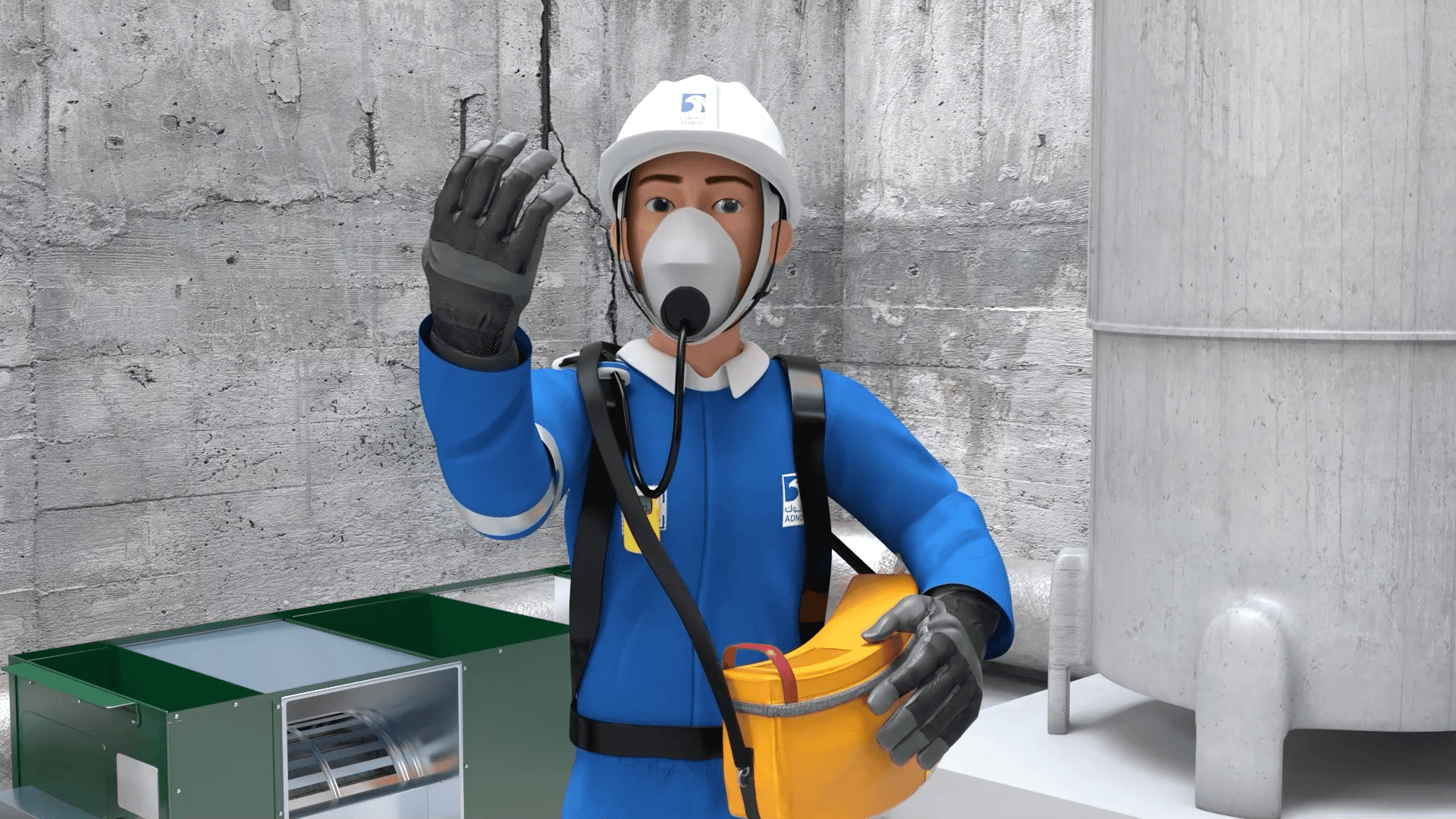
{caption}We created a 3D animated video for a H2S module in ADNOC’s elearning course
Module Length and Total Module Count
Longer modules increase the cost of e-learning because more content needs to be written, designed, illustrated, and tested. Additional minutes of learning require more screens, more visuals, and often more interactions. The total count of modules also has a strong compounding effect.
Even shorter modules add up when produced in large numbers because planning, design, and review cycles repeat for each one. Multi module training programs often require consistent visual standards and uniform navigation rules, which adds setup work at the beginning of the project.
While shared templates can provide efficiency, the total production time still scales with volume. As a result, the number of modules and their length remain core contributors to overall e-learning creation cost.
Content Creation Requirements
When the provider must create training content from scratch, one of the strongest cost factors appears. Defining learning objectives, extracting accurate information, writing instructional text, and shaping scenarios all require focused work.
Technical subjects may need extra time to understand processes and terminology. All written content must be validated by internal experts, which often leads to extended review cycles.
If the project includes worked examples, situational explanations, or applied scenarios, the writing phase becomes even larger. Projects with detailed source materials avoid much of this workload, while projects that begin with limited information require substantial writing and approval time.
Assessment and Quiz Complexity
Assessment design also affects the cost of e-learning. Simple questions such as multiple choice or basic matching remain inexpensive because they require minimal scripting. More advanced assessments, such as scenario based judgement tasks or adaptive question paths, require detailed planning and increased technical setup.
Each question may require variations in feedback, alternate scoring logic, and additional testing to ensure accurate performance tracking. Large assessments with many questions also increase writing, editing, and validation time.
When assessments are advanced and tied to behavioural measurement or scenario based decision making, they can affect how much the training might cost.
Audio Narration Requirements
Audio narration adds several stages to production and therefore increases the cost for e-learning production. Scripts must be timed precisely to match visuals. Voice artists must be selected and recorded, and the resulting audio requires editing, cleaning, and integration into the module. If any content changes occur after recording, new sessions may be required.
Multi language narration multiplies the effort because each version requires its own recording and alignment work. If narration is not required the module remains more cost efficient. When narration plays a central role in the training experience, it becomes a notable part of the cost of e-learning, especially if you’re looking for a premium voice actor, though nowadays, using AI tools like ElevenLabs can significantly reduce the cost for narration in e-learning, while only slightly lowering the quality and feel of the narration.
How Much Does SHIIFT eLearning Cost?
At SHIIFT, our training solutions are fully custom, and we have teams available to work on 3D animation, 2D animation, and e-learning development. Since every scope is different, it’s easier to calculate the development cost per module and come up with a total cost based on number of required modules in each specific tier of e-learning.
We offer 3 tiers of e-learning:
Basic e-learning
They are clear, functional, and well-structured, but limited in media and engagement. This level is most suited for compliance or foundation content where straightforward delivery is enough.
Cost: ~$15,000+ per module of around 25 minutes
Static diagrams and screenshots
AI voiceover
No animations
Simple assessments at the end of each module
Standard e-learning
They are more engaging and better suited to explaining processes where movement or step-by-step illustration improves understanding.
Cost: ~$20,000+ per module of around 25 minutes
Real voiceover narration
2D motion graphics and animated diagrams
Interactive knowledge checks throughout the module, with a full assessment at the end
Clearer presentation of systems and workflows than Basic
Premium e-learning
Premium modules use 3D animation and scenario-based interactivity to explain complex systems or safety-critical processes.
Cost: ~$30,000+ per module of around 25 minutes
Real voiceover narration
3D visualizations of equipment and processes
Scenario-based interactivity with decision points
Advanced use of audio, text, and graphics together
Best suited for critical content where deeper learner understanding is required
With this in mind, you might go for the basic tier if you’re aiming to save on initial costs, or you could also have a combination of the different tiers if you need multiple modules. If you need a lot of modules, buying in bulk can also reduce costs which will affect your overall decision.
If you’re interested in learning more about how your specific custom e-learning might cost, give us all the details by contacting us here or email us at hello@shiifttraining.com and we’ll work together to give you a detailed quote.
Solutions
Safety Training
Hazard recognition
Spot risks before incidents
/solutions/hazard-recognition-training
Solutions
Safety Training
Life-Saving Rules
Critical rules as decisions
/solutions/life-saving-rules-training
Solutions
Safety Training
Behavioral safety
Stop work authority, used
/solutions/behavioral-safety-training
Solutions
Safety Training
Hand safety
Fewer hand injuries
/solutions/hand-safety-training
Solutions
Safety Training
PPE selection & use
The right kit, worn right
/solutions/ppe-training
Solutions
Safety Training
H2S & gas awareness
The invisible hazard, visible
/solutions/h2s-gas-awareness-training
Solutions
Safety Training
Fire & emergency response
Beyond the routine drill
/solutions/fire-safety-emergency-response-training
Solutions
Safety Training
Toolbox talks
Five strong minutes weekly
/solutions/toolbox-talk-content
Solutions
Safety Training
Permit to work
PTW judgment scenarios
/solutions/permit-to-work-training
Solutions
Safety Training
Isolation & LOTO
Safe energy isolation
/solutions/isolation-lockout-tagout-training
Solutions
Safety Training
Confined space entry
Entries and rescue response
/solutions/confined-space-entry-training
Solutions
Safety Training
Working at height
Falls and dropped objects
/solutions/working-at-height-training
Solutions
Safety Training
Lifting & rigging
Safer critical lifts
/solutions/lifting-rigging-training
Solutions
Safety Training
Hot work
Sparks under control
/solutions/hot-work-training
Solutions
Safety Training
Line of fire
See the energy path
/solutions/line-of-fire-training
Solutions
Safety Training
Driver safety
Safer driving and journeys
/solutions/driver-safety-training
Solutions
Safety Training
Electrical safety
Safe isolation, arc flash aware
/solutions/electrical-safety-training
Solutions
Safety Training
Excavation work
Trenches and buried services
/solutions/excavation-safety-training
Solutions
Safety Training
Ergonomics
Strain prevention that sticks
/solutions/ergonomics-training
Solutions
Safety Training
Situational awareness
Noticing change on site
/solutions/situational-awareness-training
Solutions
Onboarding & People
Site orientation
Inductions before day one
/solutions/site-orientation-onboarding
Solutions
Onboarding & People
Expatriate workforce
Localized multilingual training
/solutions/expatriate-workforce-training
Solutions
Onboarding & People
Visitor inductions
Pre-arrival essentials
/solutions/visitor-induction-training
Solutions
Onboarding & People
Leadership training
Judgment, developed
/solutions/leadership-training
Solutions
Onboarding & People
Soft skills
Conversations that work
/solutions/soft-skills-training
Solutions
Onboarding & People
Safety leadership
Frontline supervisor skills
/solutions/safety-leadership-training
Solutions
Onboarding & People
Human factors
Error traps and defenses
/solutions/human-factors-training
Solutions
Operations & Technical
Process & procedures
Step-by-step competence
/solutions/process-procedure-training
Solutions
Operations & Technical
Operational readiness
Ready before start-up
/solutions/operational-readiness
Solutions
Operations & Technical
Technical training
Complex systems explained
/solutions/technical-training
Solutions
Operations & Technical
Control room & DCS
Alarms and upset response
/solutions/control-room-training
Solutions
Operations & Technical
Crane operation
Operators, banksmen, supervisors
/solutions/crane-operation-training
Solutions
Operations & Technical
Forklift operation
Operators, pedestrians, supervisors
/solutions/forklift-operation-training
Solutions
Operations & Technical
Maintenance & turnarounds
Outage preparation
/solutions/maintenance-turnaround-training
Solutions
Operations & Technical
Process safety
Barriers made visible
/solutions/process-safety-training
Solutions
Compliance & Modernization
Lessons learned (LFI)
Incidents into training
/solutions/lessons-learned-training
Solutions
Compliance & Modernization
Spill response
Environmental first response
/solutions/spill-response-training
Solutions
Compliance & Modernization
Hazardous materials
Storage, handling, transport
/solutions/hazardous-materials-training
Solutions
Compliance & Modernization
Security awareness
Physical and cyber vigilance
/solutions/security-awareness-training
Services
Content Production
Training Videos
Filmed through our global crew network
/services/workplace-safety-training-videos
A safety orientation film produced for Milestone Environmental Services.

Services
Content Production
2D & 3D Animation
Engineering-accurate visuals
/services/2d-3d-animation
From a 3D animation built to supplement an ADNOC e-learning module.

Services
Content Production
Safety Campaigns
Sustained behavior change
/services/safety-campaigns
The award-recognized Maersk hand safety campaign.

Services
Content Production
Training posters & print
Site-specific print & visual aids
/services/training-posters
A printed lessons learned handbook produced for Petroleum Development Oman.

Services
Content Production
PowerPoint Materials
Trainer-led deck rebuilds
/services/powerpoint-training-materials
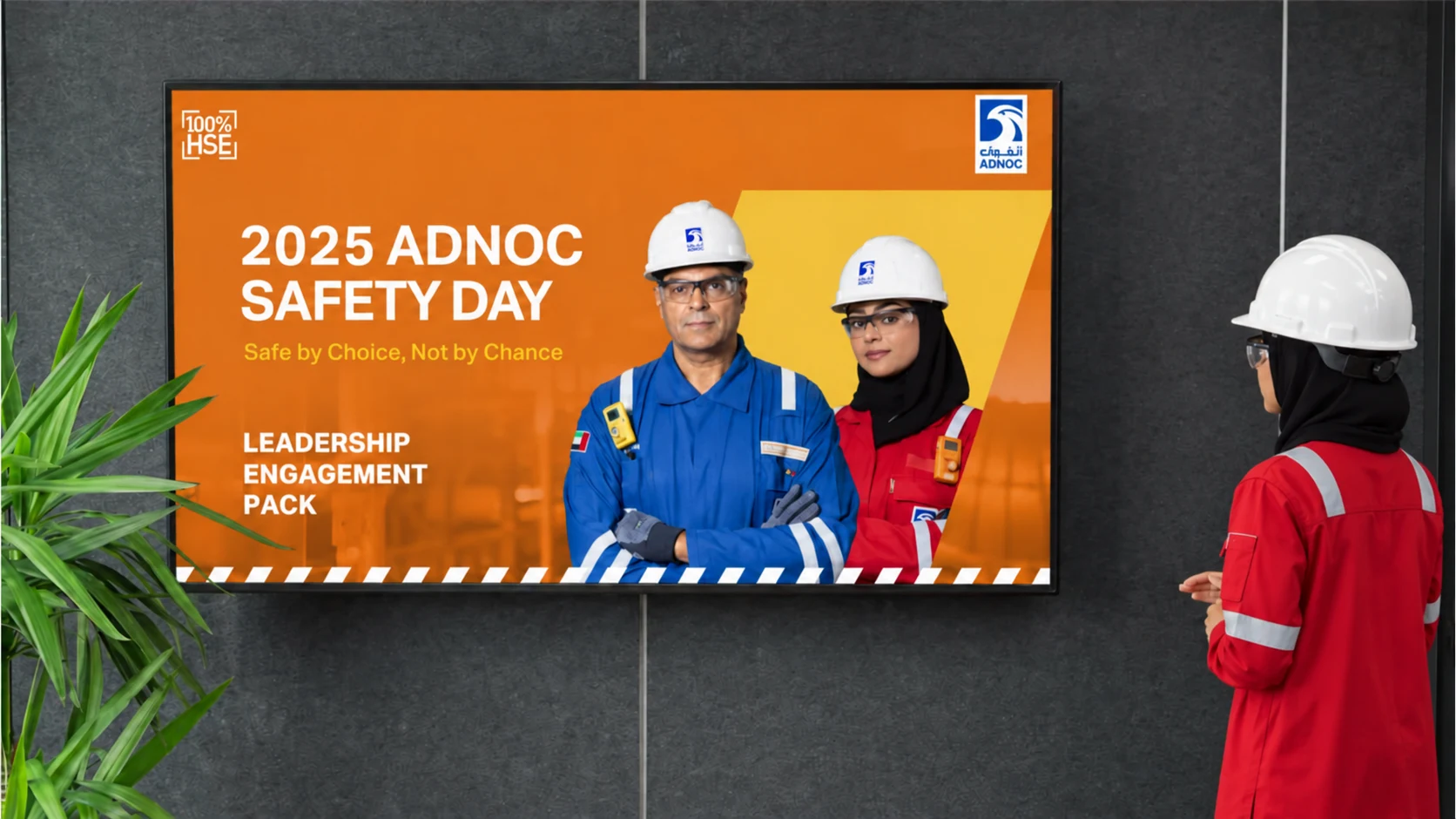
Presenting an ADNOC Safety Day engagement deck.
Services
Interactive Training
E-Learning
SCORM online modules
/services/e-learning
Scenario questions inside a client e-learning module.

Services
Interactive Training
Virtual Reality (VR)
Immersive headset training
/services/virtual-reality-vr-training
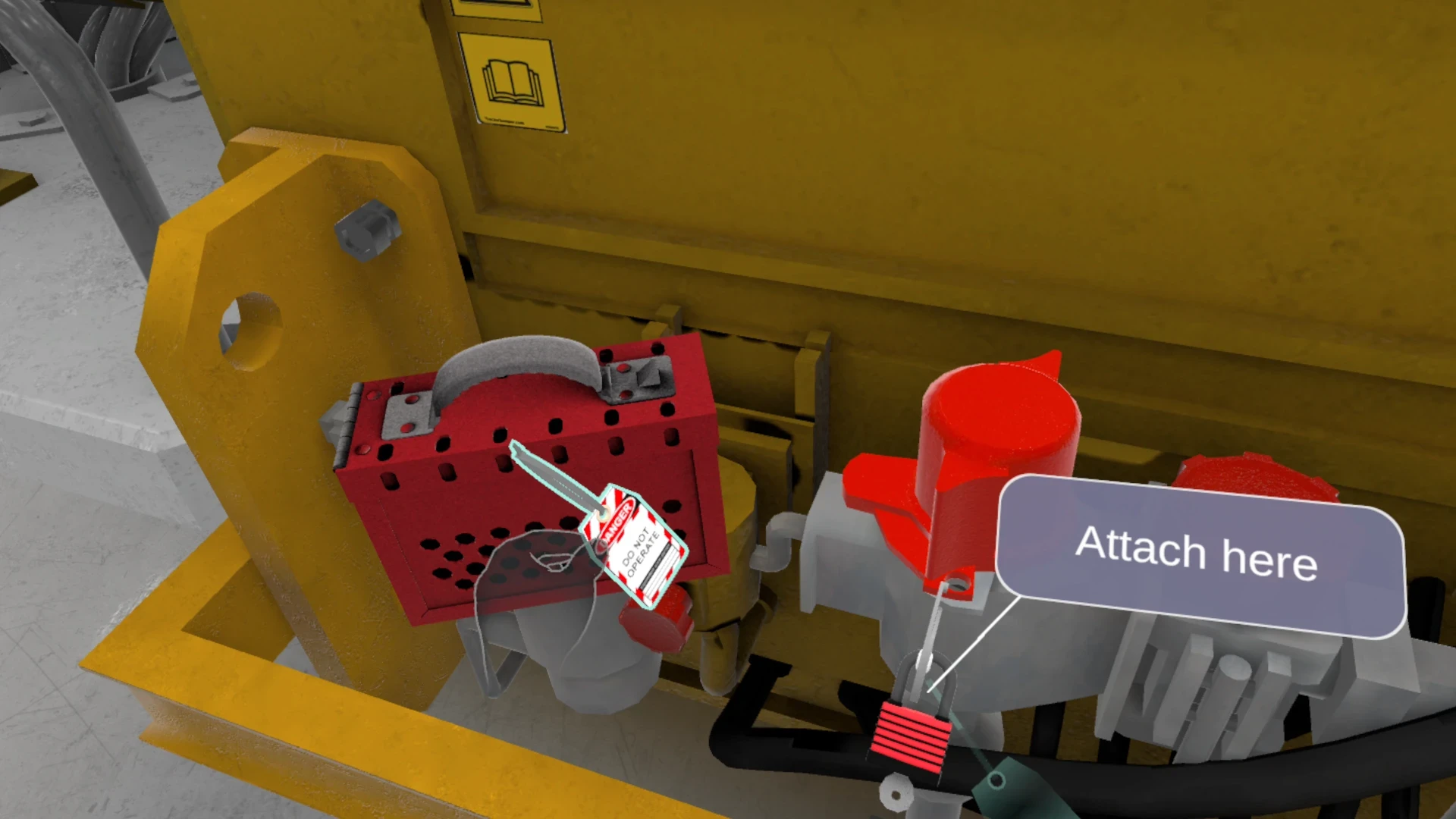
Lockout tagout training with full hand tracking in VR.
Services
Interactive Training
Flat-Screen Simulations
Desktop, web & mobile simulations
/services/flat-screen-simulation-training
SHIIFT simulations running on laptops and mobile devices.

Services
Interactive Training
Digital Twins
Navigable sites & equipment
/services/digital-twins
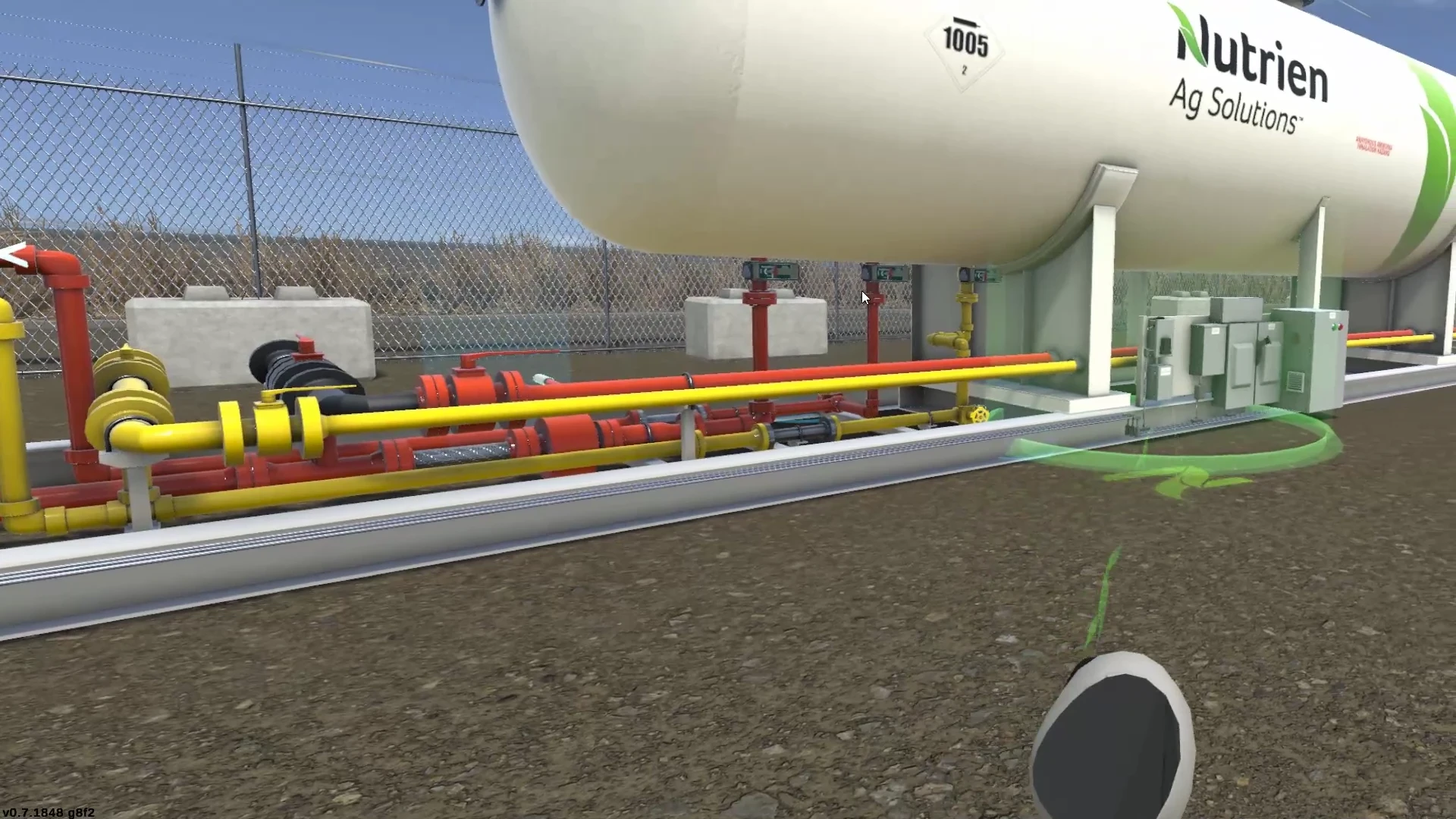
A navigable 3D replica of Nutrien's ammonia transfer plant.
Approach
How We Work
Our approach
Analysis, design, delivery, validation
/approach
Approach
How We Work
SCORM & LMS Integration
Tracking in your systems
/services/scorm-lms-integration
Approach
How We Work
Scenario-Based Assessments
Competency you can prove
/services/scenario-based-assessments