
Introduction
In traditional learning environments, employees and students are often passive recipients of information. They watch, listen, and take notes, but their engagement levels can be limited.
Interactive training, however, transforms this experience by turning passive participation into active involvement. When learners become participants rather than observers, retention rates rise dramatically, critical thinking improves, and real-world application becomes second nature.
In a fast-moving workplace, where skills must evolve quickly and continuously, interactive learning has become a defining feature of effective education and professional development.
What Is Interactive Training?
Interactive training is an educational approach that centers on learner participation. Instead of simply delivering information, it invites trainees to engage directly with concepts, systems, and scenarios. This can take many forms, digital simulations, quizzes, discussions, branching scenarios, or gamified modules, but the underlying principle is the same: learners must actively participate, so they have actions other than listening or reading.
In practical terms, a session becomes interactive when learners do more than consume content; they interact with it. This engagement may include decision-making, problem-solving, or physical manipulation of digital environments (for instance, using VR simulations to practice handling machinery). The emphasis on interaction bridges the gap between theory and experience, making learning memorable.
How is Interactive Training Usually Implemented?
Modern technology has enabled many forms of interactivity in training programs. Common formats include:
Scenario-based modules
Scenario-based training immerses learners in realistic situations that mirror challenges they might face on the job. Trainees are presented with a scenario and must make decisions based on their knowledge and judgment. Each decision triggers a specific outcome or feedback, allowing learners to see the consequences of their actions in a safe environment. This approach encourages critical thinking, problem-solving, and decision-making skills, making the learning experience far more engaging and memorable than passive instruction.
Virtual reality (VR) and augmented reality (AR) simulations
VR and AR simulations provide fully immersive environments where trainees can practice procedures, handle equipment, or respond to emergencies without real-world risk. In VR, users can interact with lifelike virtual objects and spaces, while AR overlays digital information on the real world, enhancing situational awareness. These simulations allow repeated practice, helping learners build muscle memory, confidence, and competence in tasks that are high-stakes or infrequent in real life, all while maintaining safety and minimizing operational disruption.
Gamified learning systems
Gamification training integrates game mechanics, such as points, levels, badges, and leaderboards, into training programs to make learning more engaging. By framing tasks as challenges and providing immediate feedback and rewards, gamified systems motivate learners to participate actively and persist through difficult content. This approach taps into natural human competitiveness and curiosity, increasing focus, participation, and ultimately, retention of knowledge compared with traditional training methods.
Interactive eLearning courses
Interactive eLearning courses go beyond static slides or videos by incorporating dynamic elements such as quizzes, clickable infographics, or drag-and-drop exercises. Learners interact with the material directly, testing their understanding in real time and receiving immediate feedback. This interactivity ensures that trainees remain mentally engaged throughout the course, reinforcing knowledge through active participation rather than passive observation.
Group workshops and live role-play
Collaborative workshops and role-play exercises place learners in group scenarios where they must communicate, problem-solve, and negotiate with peers. Acting out real-world situations helps participants practice soft skills, teamwork, and situational awareness in a controlled environment. By engaging with others, learners not only develop technical skills but also gain valuable insights into group dynamics and collaborative decision-making, which are critical in many workplace settings.
Microlearning challenges
Microlearning delivers content in short, focused bursts designed for quick comprehension and retention. These mobile-friendly challenges often include mini-quizzes, scenario snapshots, or interactive simulations that can be completed in minutes. Microlearning is especially effective for learners with limited time or attention spans, providing targeted reinforcement of key concepts while keeping engagement high. Frequent repetition in small doses also strengthens long-term memory and skill acquisition.
Across these formats, the common thread is active participation. Interactive training requires learners to observe, decide, respond, or create to progress. This engagement ensures the learning is not only understood but internalized, producing employees who are better prepared, more confident, and capable of applying knowledge effectively in real-world scenarios.
Benefits of Interactive Training
Interactive training offers significant advantages over traditional passive instruction. The most notable include:
Higher retention rates: Studies show that active engagement dramatically increases information retention. The more senses and actions involved, the longer knowledge endures.
Better problem-solving and critical thinking: Interactivity requires cognitive effort, enhancing analytical capacities and creative reasoning.
Realistic skill application: Learners practice concepts in realistic situations, helping translate theory into usable behavior on the job.
Personalized learning: Adaptive interactive tools adjust difficulty and learning paths based on user performance.
Immediate feedback: Learners see the results of their actions right away, closing the feedback loop and solidifying understanding.
Increased motivation: Gamified and participatory elements make the learning process feel enjoyable and purposeful.
In corporate contexts, interactive programs often result in measurable gains such as improved compliance accuracy, faster onboarding times, and reduced need for remedial training.
Why Is Interactive Training More Effective?
From a cognitive science perspective, active engagement promotes deep learning. Passive listening activates lower levels of processing, while active participation stimulates both analytical and experiential learning systems. Learners must retrieve, evaluate, and apply information rather than merely recognize it.
Interactive learning also leverages the testing effect, where retrieving information during problem-solving strengthens memory recall. By giving learners multiple opportunities to test knowledge under varying contexts, interactive training reinforces neural pathways associated with understanding and application.
Moreover, interactivity fosters emotional engagement. When individuals feel personally involved in an experience, solving a realistic problem, facing a virtual hazard, or earning a reward, they form a stronger connection to the content. Emotional relevance enhances memory retention and behavior change.
How to Make Your Training Interactive
Designing an interactive learning experience requires thoughtful planning. Interactivity should serve a purpose, enhancing understanding, evoking participation, or supporting skill transfer. Effective strategies include:
Integrate decision points: Allow learners to make meaningful choices during lessons, especially in scenarios simulating real challenges.
Incorporate branching paths: Create different outcomes based on user decisions to encourage exploration and accountability.
Use multimedia interactions: Video, quizzes, drag-and-drop elements, and clickable graphics make digital lessons more engaging.
Facilitate discussions: Group collaboration, live polls, and breakout exercises transform virtual or classroom settings into interactive spaces.
Provide instant feedback: Immediate responses strengthen learner confidence and correction of errors.
Promote reflection: Encourage learners to summarize or apply what they’ve learned in brief written or spoken reflections.
Technology platforms, particularly Virtual Reality (VR), AR, and AI-enabled learning systems, make these techniques scalable, reproducible, and easy to deploy across organizations.
If you’re interested specifically in making eLearning more interactive, we have an article that explores and focuses on how you can make your eLearning more interactive and enjoyable for your learners.
Key Components of Effective Interactive Training
Interactive learning succeeds when its design marries engagement with substantive educational value. Among the most consistently powerful components are scenario-based learning, gamification, feedback loops, and hands-on simulations.
Scenario-Based Learning
Interactive training is most effective when learners face realistic situations. Scenario-based modules allow them to make decisions and see the consequences, helping them understand how to apply knowledge safely in real-world contexts.
Immediate Feedback and Assessment
Timely feedback is essential. It reinforces correct actions, corrects mistakes, and keeps learners engaged. Assessments can be quizzes, simulation results, or scenario outcomes that show learners where they stand and what to improve.
Gamification Elements
Incorporating points, badges, levels, or challenges turns training into a motivating experience. Gamification encourages participation, persistence, and engagement, making learning more enjoyable and memorable.
Hands-On Practice and Simulations
Practice is key to skill-building. Whether through virtual simulations, AR/VR, or physical exercises, hands-on activities allow learners to gain experience, build confidence, and internalize procedures safely.
Adaptive Learning Paths
Effective interactive training adapts to the learner’s progress. Personalized modules focus on areas needing improvement, ensuring learners stay challenged but not overwhelmed, which improves retention and practical application.
Collaborative Learning
Training that includes group exercises, role-play, or problem-solving encourages teamwork, communication, and peer-to-peer learning. Collaborative approaches allow learners to see different perspectives and learn from one another.
Relevance and Context
Finally, training must reflect real job tasks. When exercises, simulations, or scenarios closely match actual work challenges, learners see the value of the training, increasing engagement and improving knowledge transfer to the workplace.
Are There Any Online Services That Can Help Me Make Interactive Training?
Yes, there are online services that can help you create interactive training efficiently.
For example, a SHIIFT Training enquiry can get you tailored solutions, including VR, eLearning, interactive video-based training, or interactive web-based simulations designed for real-world workplace application.
In addition, many platforms and tools allow you to build interactive courses, quizzes, and multimedia exercises that engage learners and reinforce practical skills. These services make it easier to develop professional, interactive training without needing extensive in-house resources.
Articulate 360 - Offers tools for scenario-based modules, quizzes, and interactive eLearning.
Adobe Captivate – Supports immersive simulations, responsive courses, and multimedia content.
iSpring Suite – Enables rapid creation of interactive slides, quizzes, and dialogue simulations.
SHIIFT Training Enquiry – Provides tailored, industry-specific interactive training solutions, including VR, PC simulations, or interactive eLearning designed for real-world workplace application. Check out our interactive training projects portfolio to see examples.
Examples of Interactive Training by SHIIFT
BHP HSE Interactive Video For BHP Billiton, we created an interactive video-based experience for onboarding employees, it uses 2D and 3D animation, and incorporates multiple-choice questions allowing employees to actively participate in the training. This interactive element makes the video much more engaging and effective.
Watch a trimmed clip of the video:
James Hardie’s Interactive Web-based Safety Simulation For James Hardie, we developed a simulation that can be directly accessed as a SCORM-compatible file on their LMS. It involves exploring a small jobsite and doing an immersive hazard hunt, answering multiple-choice questions for each one you find. This exploration, finding hazards, and answering questions throughout the experience involve a lot of interactive elements like active participation, simulations, immediate feedback, and gamification elements since it’s in a video-game style environment.
Watch the video below, or read the full James Hardie Jobsite Safety Training case study from our projects page.
Conclusion
Interactive training represents a decisive shift in how people learn, adapt, and retain new information. Its core power lies not in technology alone but in the human element of engagement, the drive to act, respond, and participate. Through interactivity, learning transforms from obligation to experience, from theoretical understanding to demonstrable competence.
Organizations adopting interactive methods position themselves to build stronger, more adaptable workforces. As automation and complexity rise across industries, the ability to think critically, respond to real-world dynamics, and continuously upskill will depend increasingly on active learning, fueled by technologies and designs that keep people involved every step of the way.
In the end, interactive training is a direct evolution of older learning methods, like reading writing from a chalkboard. It keeps pace with how modern learners think, connect, and grow.
Solutions
Safety Training
Hazard recognition
Spot risks before incidents
/solutions/hazard-recognition-training
Solutions
Safety Training
Life-Saving Rules
Critical rules as decisions
/solutions/life-saving-rules-training
Solutions
Safety Training
Behavioral safety
Stop work authority, used
/solutions/behavioral-safety-training
Solutions
Safety Training
Hand safety
Fewer hand injuries
/solutions/hand-safety-training
Solutions
Safety Training
PPE selection & use
The right kit, worn right
/solutions/ppe-training
Solutions
Safety Training
H2S & gas awareness
The invisible hazard, visible
/solutions/h2s-gas-awareness-training
Solutions
Safety Training
Fire & emergency response
Beyond the routine drill
/solutions/fire-safety-emergency-response-training
Solutions
Safety Training
Toolbox talks
Five strong minutes weekly
/solutions/toolbox-talk-content
Solutions
Safety Training
Permit to work
PTW judgment scenarios
/solutions/permit-to-work-training
Solutions
Safety Training
Isolation & LOTO
Safe energy isolation
/solutions/isolation-lockout-tagout-training
Solutions
Safety Training
Confined space entry
Entries and rescue response
/solutions/confined-space-entry-training
Solutions
Safety Training
Working at height
Falls and dropped objects
/solutions/working-at-height-training
Solutions
Safety Training
Lifting & rigging
Safer critical lifts
/solutions/lifting-rigging-training
Solutions
Safety Training
Hot work
Sparks under control
/solutions/hot-work-training
Solutions
Safety Training
Line of fire
See the energy path
/solutions/line-of-fire-training
Solutions
Safety Training
Driver safety
Safer driving and journeys
/solutions/driver-safety-training
Solutions
Safety Training
Electrical safety
Safe isolation, arc flash aware
/solutions/electrical-safety-training
Solutions
Safety Training
Excavation work
Trenches and buried services
/solutions/excavation-safety-training
Solutions
Safety Training
Ergonomics
Strain prevention that sticks
/solutions/ergonomics-training
Solutions
Safety Training
Situational awareness
Noticing change on site
/solutions/situational-awareness-training
Solutions
Onboarding & People
Site orientation
Inductions before day one
/solutions/site-orientation-onboarding
Solutions
Onboarding & People
Expatriate workforce
Localized multilingual training
/solutions/expatriate-workforce-training
Solutions
Onboarding & People
Visitor inductions
Pre-arrival essentials
/solutions/visitor-induction-training
Solutions
Onboarding & People
Leadership training
Judgment, developed
/solutions/leadership-training
Solutions
Onboarding & People
Soft skills
Conversations that work
/solutions/soft-skills-training
Solutions
Onboarding & People
Safety leadership
Frontline supervisor skills
/solutions/safety-leadership-training
Solutions
Onboarding & People
Human factors
Error traps and defenses
/solutions/human-factors-training
Solutions
Operations & Technical
Process & procedures
Step-by-step competence
/solutions/process-procedure-training
Solutions
Operations & Technical
Operational readiness
Ready before start-up
/solutions/operational-readiness
Solutions
Operations & Technical
Technical training
Complex systems explained
/solutions/technical-training
Solutions
Operations & Technical
Control room & DCS
Alarms and upset response
/solutions/control-room-training
Solutions
Operations & Technical
Crane operation
Operators, banksmen, supervisors
/solutions/crane-operation-training
Solutions
Operations & Technical
Forklift operation
Operators, pedestrians, supervisors
/solutions/forklift-operation-training
Solutions
Operations & Technical
Maintenance & turnarounds
Outage preparation
/solutions/maintenance-turnaround-training
Solutions
Operations & Technical
Process safety
Barriers made visible
/solutions/process-safety-training
Solutions
Compliance & Modernization
Lessons learned (LFI)
Incidents into training
/solutions/lessons-learned-training
Solutions
Compliance & Modernization
Spill response
Environmental first response
/solutions/spill-response-training
Solutions
Compliance & Modernization
Hazardous materials
Storage, handling, transport
/solutions/hazardous-materials-training
Solutions
Compliance & Modernization
Security awareness
Physical and cyber vigilance
/solutions/security-awareness-training
Services
Content Production
Training Videos
Filmed through our global crew network
/services/workplace-safety-training-videos
A safety orientation film produced for Milestone Environmental Services.

Services
Content Production
2D & 3D Animation
Engineering-accurate visuals
/services/2d-3d-animation
From a 3D animation built to supplement an ADNOC e-learning module.

Services
Content Production
Safety Campaigns
Sustained behavior change
/services/safety-campaigns
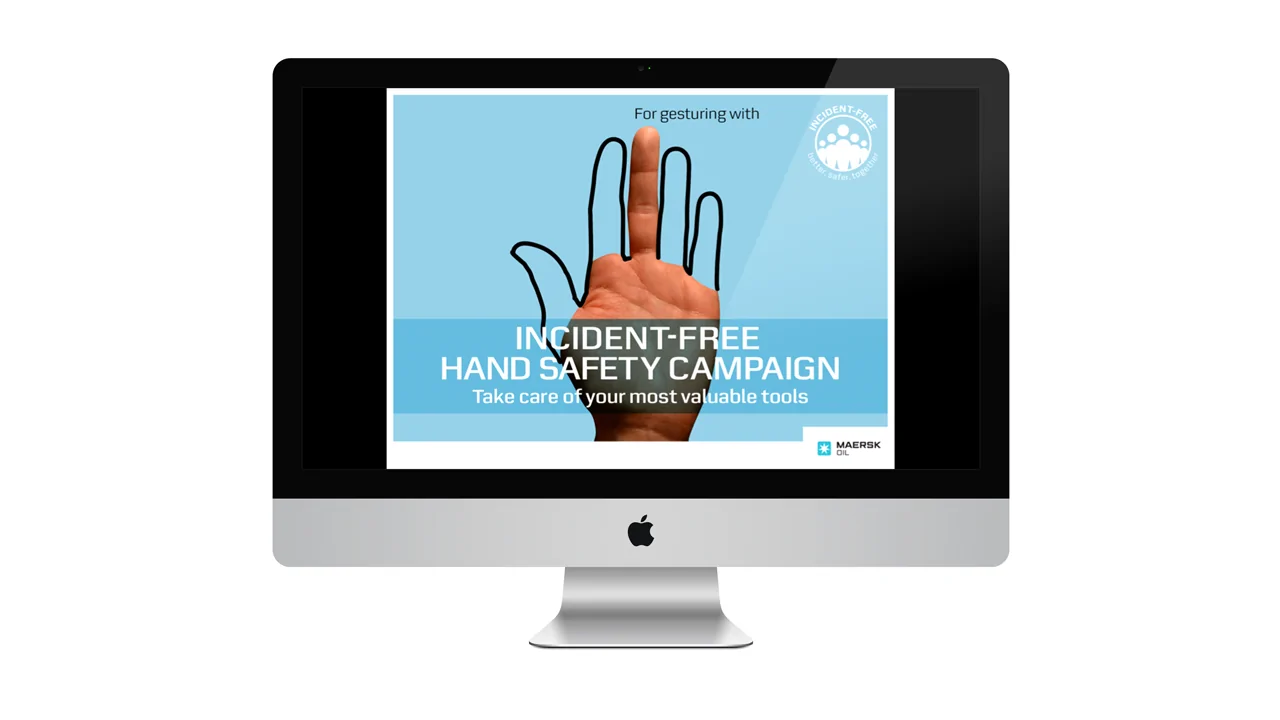
The award-recognized Maersk hand safety campaign.
Services
Content Production
Training posters & print
Site-specific print & visual aids
/services/training-posters
A printed lessons learned handbook produced for Petroleum Development Oman.

Services
Content Production
PowerPoint Materials
Trainer-led deck rebuilds
/services/powerpoint-training-materials
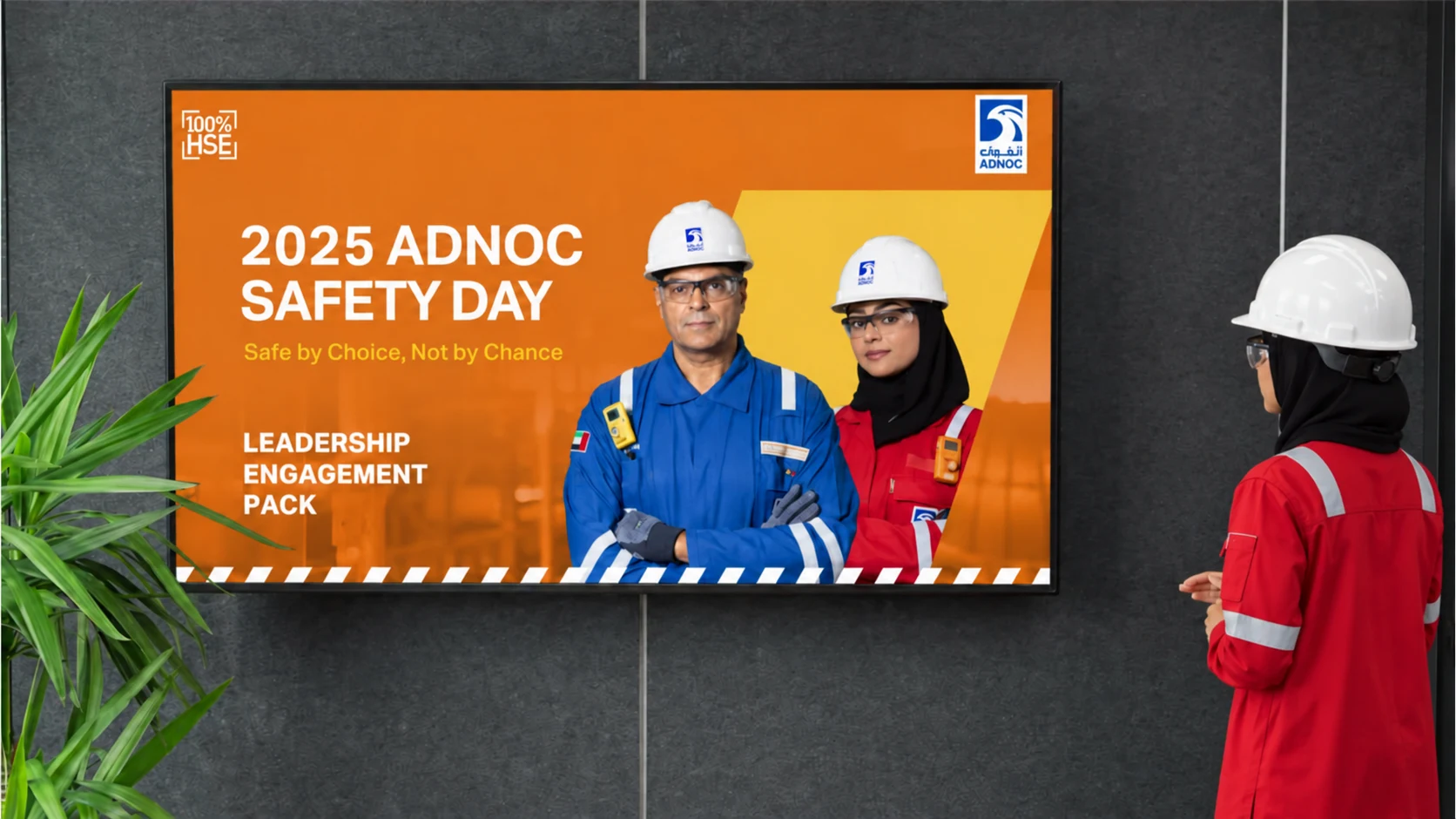
Presenting an ADNOC Safety Day engagement deck.
Services
Interactive Training
E-Learning
SCORM online modules
/services/e-learning
Scenario questions inside a client e-learning module.

Services
Interactive Training
Virtual Reality (VR)
Immersive headset training
/services/virtual-reality-vr-training
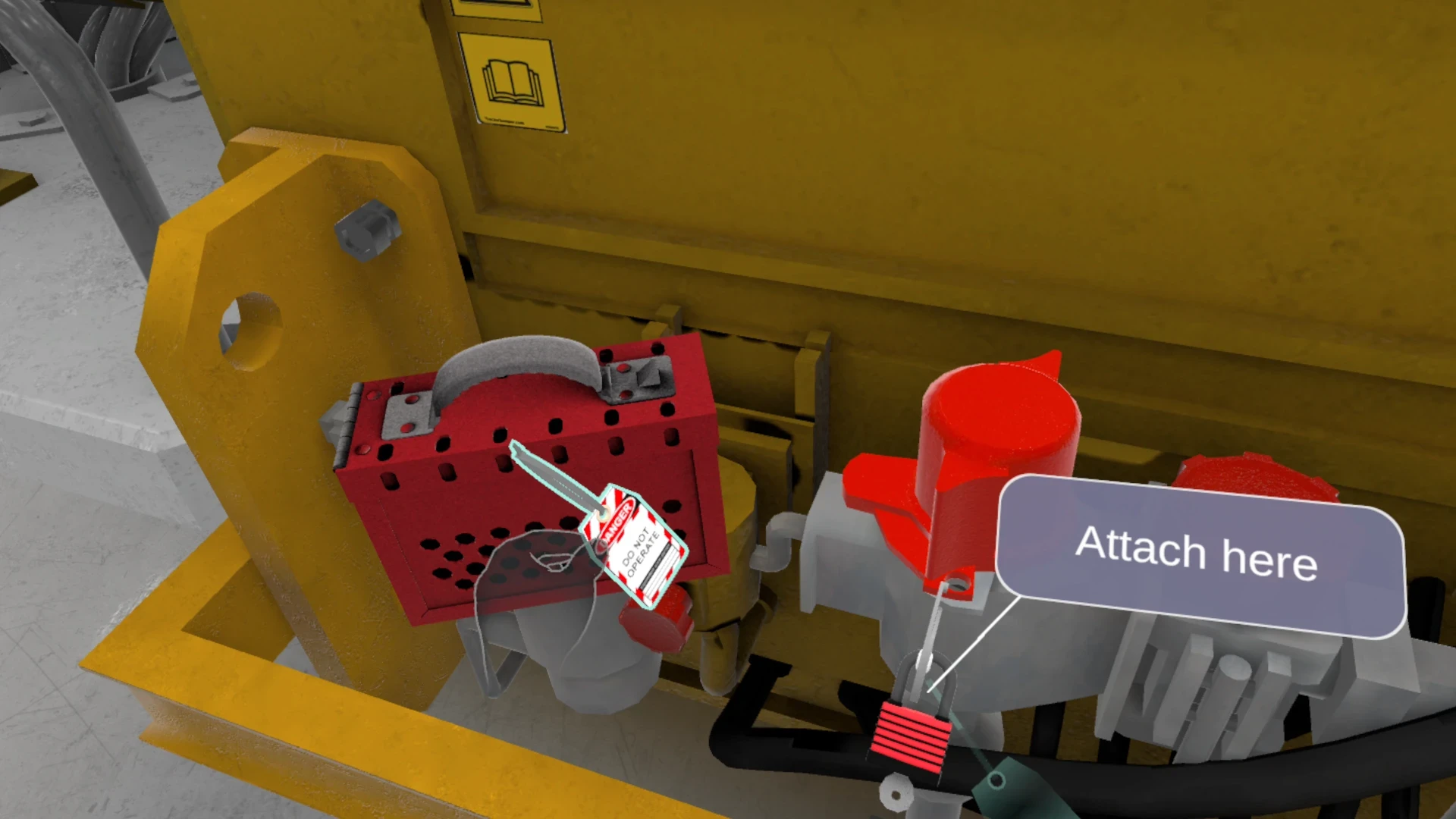
Lockout tagout training with full hand tracking in VR.
Services
Interactive Training
Flat-Screen Simulations
Desktop, web & mobile simulations
/services/flat-screen-simulation-training
SHIIFT simulations running on laptops and mobile devices.

Services
Interactive Training
Digital Twins
Navigable sites & equipment
/services/digital-twins
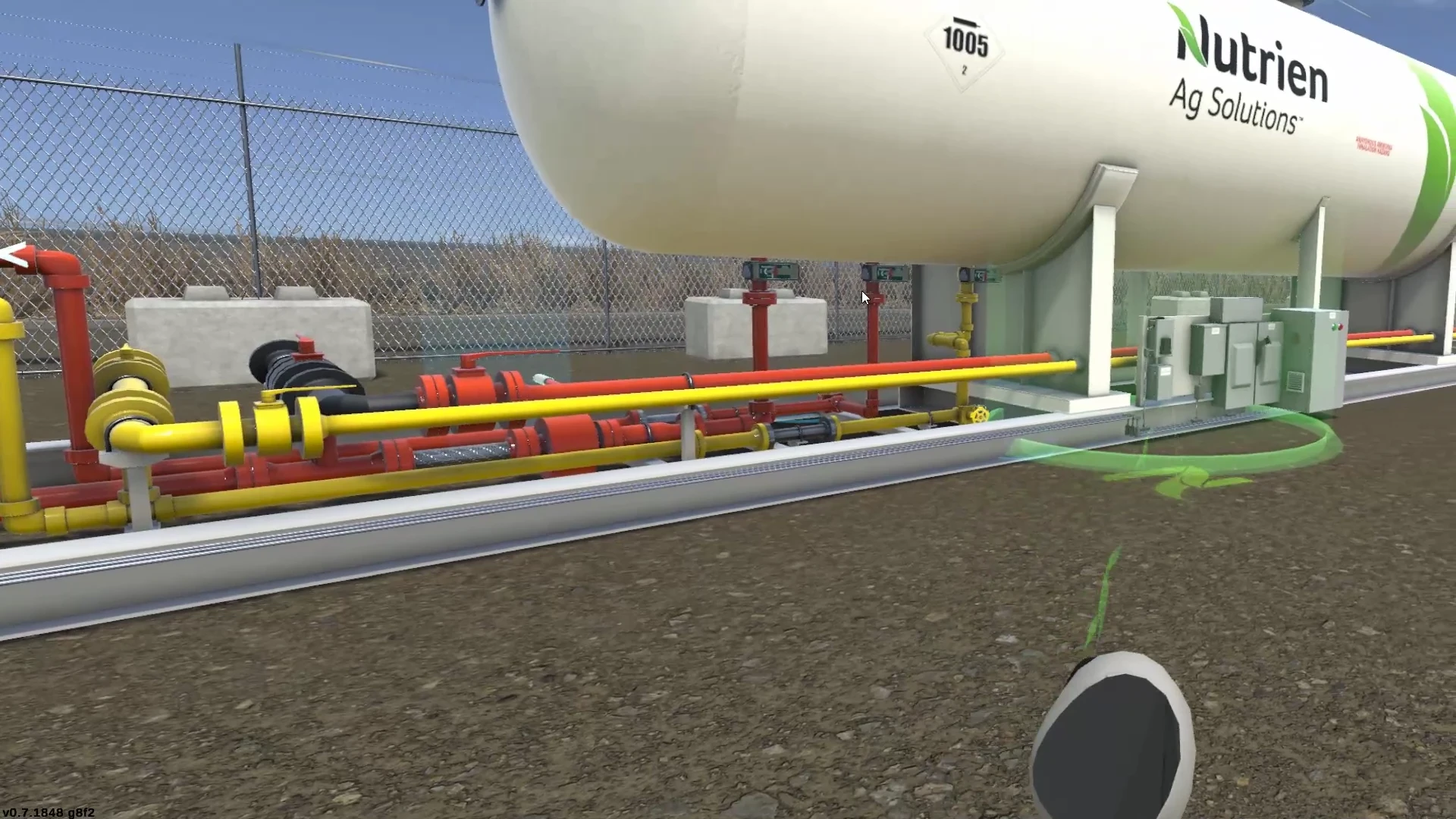
A navigable 3D replica of Nutrien's ammonia transfer plant.
Approach
How We Work
Our approach
Analysis, design, delivery, validation
/approach
Approach
How We Work
SCORM & LMS Integration
Tracking in your systems
/services/scorm-lms-integration
Approach
How We Work
Scenario-Based Assessments
Competency you can prove
/services/scenario-based-assessments