
Field crews in oil and gas basins, offshore rotations, drivers who start their shift at a depot hundreds of miles from head office and project teams spread across several countries all need the same safety and job training as people based at a main site. Getting them into a classroom is the hard part. Training a remote, dispersed workforce means solving practical problems around connectivity, scheduling, consistency and record keeping before any content is produced.
What makes training a dispersed workforce hard?
The challenges vary by operation. Common ones include:
Inconsistency. When each site or trainer delivers the material their own way, the message varies between sites.
Connectivity. Remote sites, vehicles, field camps and offshore facilities may have unreliable internet or none at all.
Shift and rotation patterns. Crews on long rotations or night shifts can't all attend a session at a fixed time.
Travel cost and downtime. Bringing people to a central training center takes them off the job and adds risk on the road.
Language and literacy. A dispersed workforce can include many first languages and literacy levels.
Local differences. Hazards, equipment, climate and emergency arrangements can differ between sites.
Record keeping. Keeping completion records is harder when training happens in many places.
How do you keep training consistent across sites?
Consistency starts with having one approved version of the core content. Whatever form it takes, every site should be working from the same source, under version control. One mistake to avoid is sending out a good central course and then letting each site edit and re-present it until several versions are in circulation. When a procedure changes, the master version is updated and old copies are withdrawn.
Some practical steps help:
Separate the core content, which is the same everywhere, from site-specific supplements that local teams add.
Give local trainers and supervisors a guide covering what must be said, what can be adapted, how to check understanding and what to record.
Use the same terminology and step numbering in training materials, procedures, signage and job aids.
Review a sample of local sessions or results periodically to spot drift.
Consistency also has a regulatory side. OSHA's 2010 policy statement on training employees in a language they understand says employers must instruct employees using a language and vocabulary they can understand, and notes that having training records doesn't mean employees understood the training. For a workforce spread across regions, that means checking the core content works for every audience it reaches, including people working in a second language.
How do you deliver training where connectivity is poor?
Plan for the worst connection your workforce has. Content that streams well at head office may not load at a wellsite or in a truck cab. Options for low or no connectivity include:
downloadable packages that run offline on a laptop or tablet and sync results when a connection returns;
content loaded onto site computers or local servers;
smaller file sizes and lower-bandwidth versions of video;
physical media such as preloaded video cards or USB drives;
printed materials and job aids that need no connection at all;
supervisor-led sessions using a presentation pack that runs offline.
Milestone Environmental Services shows how far offline delivery can go. Its workforce is largely field-based, operating across remote US sites including the Permian Basin and the Haynesville Shale, and the company had no learning management system in place. SHIIFT produced a series of 21 Milestone HSE orientation videos mixing live action, presenters, voiceover, text and animation, which were integrated into a new LMS. Milestone also asked for all the content on physical video cards with built-in screens, so the videos could be watched at field sites without internet access and supervisors could hand them directly to teams.
Whatever the delivery route, test it in real site conditions before rollout, because a course that works on the office network can fail on a satellite link.
Should remote training be on demand or scheduled?
Both have a place, and programs can combine them.
On-demand training lets people complete modules when their rotation or shift allows. It suits workforces spread across time zones and makes it possible to train new starters the day they arrive. The risks are that training gets pushed down the list, and that nobody is on hand to answer questions.
Scheduled training, whether live online or delivered on site by a supervisor or visiting trainer, creates a fixed point in the calendar and room for discussion. It's harder to organize across rotations and depends on the trainer's skill.
A blended approach can work well: core knowledge delivered on demand, followed by a short supervised session or practical check on site. The article on blended learning for workplaces covers how to combine the two.
How do you track completion across remote sites?
You need to know who has completed which training and whether they passed any assessment, with dates. There are several ways to collect that data:
An LMS. Digital content can send completion and scores to an LMS through SCORM. The guide to uploading a SCORM package to an LMS explains the process.
A web deployment without an LMS, with results collected in a spreadsheet or simple database. This suits organizations that don't have an LMS or don't want to route a single program through one.
Offline tracking that stores results on the device and uploads them later.
Supervisor sign-off for practical checks and trainer-led sessions, recorded on paper or in an app and entered centrally.
Completion is only part of the picture. Build in a short assessment or a supervisor check that confirms people can apply what they learned, especially for high-risk tasks.
How do you keep training relevant to each location?
People in a remote location will notice quickly if training shows a different climate or different equipment. Local relevance can come from:
filming or modeling real sites and equipment where possible;
site-specific modules covering local hazards, such as heat, wildlife, remote driving or extreme weather;
local emergency contacts, muster points, medical arrangements and evacuation routes;
language versions with subtitles or voiceovers for each audience;
visuals that work without much text for mixed-literacy groups.
The Milestone videos were designed to be as effective for employees in Guyana or the UAE as for anyone else, giving every viewer the same standard of instruction regardless of location.
Don't leave out the drive between sites
Training for remote crews can focus on the hazards at the work location, but for field workers who drive between sites, the road is a major risk in its own right. A NIOSH study of motor vehicle fatalities among oil and gas extraction workers, published in 2013, counted 202 workers killed in work-related crashes between 2003 and 2009. It found the industry's motor vehicle fatality rate was 8.5 times that of all private wage and salary workers, with the greatest risk among workers at small establishments of fewer than 20 workers and at well-servicing companies.
That makes journey management part of remote workforce training. It should cover route planning, check-in times on departure and arrival, managing fatigue on long drives and what to do after a breakdown outside cell coverage.
Supporting remote and lone workers after training
Dispersed workers can spend part of their day alone. The UK Health and Safety Executive defines lone workers as those who work by themselves without close or direct supervision, and its HSE guidance on training, supervising and monitoring lone workers says lone workers may need extra training because it's harder for them to get help. It also says UK employers must monitor lone workers and keep in touch with them, using methods such as agreed check-ins by phone or radio, alarm devices, supervisor visits and a reliable way to confirm they've returned to base, and should test those systems regularly.
Training for these workers should cover the limits of what they can do alone, when to stop and seek advice, how the check-in system works and what happens if they miss a call. Short refresher training delivered remotely can keep these arrangements fresh between site visits.
Common mistakes when training remote crews
Testing on the office network. Content that works at head office can stall on a satellite link or a phone signal at the edge of coverage.
Treating completion as competence. A completion record shows that a module was finished but doesn't show whether people can apply it.
Sending a central course with no local supplement. Crews notice when the hazards or emergency arrangements on screen aren't theirs.
Leaving supervisors without a guide. If supervisors are expected to check understanding, they need to know what to check and how to record it.
Overlooking travel and lone working. The risks between sites and outside supervision need training as much as the task itself.
Questions to settle before rolling out training to remote sites
Where will people complete the training, and what connection will they have there?
Which content is core and fixed, and which is added locally?
Who confirms understanding on site, and how is it recorded?
How will results get back from sites with no connection?
Which languages and literacy levels does the content need to work for?
How will updates reach every site and replace old versions?
Solutions
Safety Training
Hazard recognition
Spot risks before incidents
/solutions/hazard-recognition-training
Solutions
Safety Training
Life-Saving Rules
Critical rules as decisions
/solutions/life-saving-rules-training
Solutions
Safety Training
Behavioral safety
Stop work authority, used
/solutions/behavioral-safety-training
Solutions
Safety Training
Hand safety
Fewer hand injuries
/solutions/hand-safety-training
Solutions
Safety Training
PPE selection & use
The right kit, worn right
/solutions/ppe-training
Solutions
Safety Training
H2S & gas awareness
The invisible hazard, visible
/solutions/h2s-gas-awareness-training
Solutions
Safety Training
Fire & emergency response
Beyond the routine drill
/solutions/fire-safety-emergency-response-training
Solutions
Safety Training
Toolbox talks
Five strong minutes weekly
/solutions/toolbox-talk-content
Solutions
Safety Training
Permit to work
PTW judgment scenarios
/solutions/permit-to-work-training
Solutions
Safety Training
Isolation & LOTO
Safe energy isolation
/solutions/isolation-lockout-tagout-training
Solutions
Safety Training
Confined space entry
Entries and rescue response
/solutions/confined-space-entry-training
Solutions
Safety Training
Working at height
Falls and dropped objects
/solutions/working-at-height-training
Solutions
Safety Training
Lifting & rigging
Safer critical lifts
/solutions/lifting-rigging-training
Solutions
Safety Training
Hot work
Sparks under control
/solutions/hot-work-training
Solutions
Safety Training
Line of fire
See the energy path
/solutions/line-of-fire-training
Solutions
Safety Training
Driver safety
Safer driving and journeys
/solutions/driver-safety-training
Solutions
Safety Training
Electrical safety
Safe isolation, arc flash aware
/solutions/electrical-safety-training
Solutions
Safety Training
Excavation work
Trenches and buried services
/solutions/excavation-safety-training
Solutions
Safety Training
Ergonomics
Strain prevention that sticks
/solutions/ergonomics-training
Solutions
Safety Training
Situational awareness
Noticing change on site
/solutions/situational-awareness-training
Solutions
Onboarding & People
Site orientation
Inductions before day one
/solutions/site-orientation-onboarding
Solutions
Onboarding & People
Expatriate workforce
Localized multilingual training
/solutions/expatriate-workforce-training
Solutions
Onboarding & People
Visitor inductions
Pre-arrival essentials
/solutions/visitor-induction-training
Solutions
Onboarding & People
Leadership training
Judgment, developed
/solutions/leadership-training
Solutions
Onboarding & People
Soft skills
Conversations that work
/solutions/soft-skills-training
Solutions
Onboarding & People
Safety leadership
Frontline supervisor skills
/solutions/safety-leadership-training
Solutions
Onboarding & People
Human factors
Error traps and defenses
/solutions/human-factors-training
Solutions
Operations & Technical
Process & procedures
Step-by-step competence
/solutions/process-procedure-training
Solutions
Operations & Technical
Operational readiness
Ready before start-up
/solutions/operational-readiness
Solutions
Operations & Technical
Technical training
Complex systems explained
/solutions/technical-training
Solutions
Operations & Technical
Control room & DCS
Alarms and upset response
/solutions/control-room-training
Solutions
Operations & Technical
Crane operation
Operators, banksmen, supervisors
/solutions/crane-operation-training
Solutions
Operations & Technical
Forklift operation
Operators, pedestrians, supervisors
/solutions/forklift-operation-training
Solutions
Operations & Technical
Maintenance & turnarounds
Outage preparation
/solutions/maintenance-turnaround-training
Solutions
Operations & Technical
Process safety
Barriers made visible
/solutions/process-safety-training
Solutions
Compliance & Modernization
Lessons learned (LFI)
Incidents into training
/solutions/lessons-learned-training
Solutions
Compliance & Modernization
Spill response
Environmental first response
/solutions/spill-response-training
Solutions
Compliance & Modernization
Hazardous materials
Storage, handling, transport
/solutions/hazardous-materials-training
Solutions
Compliance & Modernization
Security awareness
Physical and cyber vigilance
/solutions/security-awareness-training
Services
Content Production
Training Videos
Filmed through our global crew network
/services/workplace-safety-training-videos
A safety orientation film produced for Milestone Environmental Services.
Services
Content Production
2D & 3D Animation
Engineering-accurate visuals
/services/2d-3d-animation
From a 3D animation built to supplement an ADNOC e-learning module.

Services
Content Production
Safety Campaigns
Sustained behavior change
/services/safety-campaigns
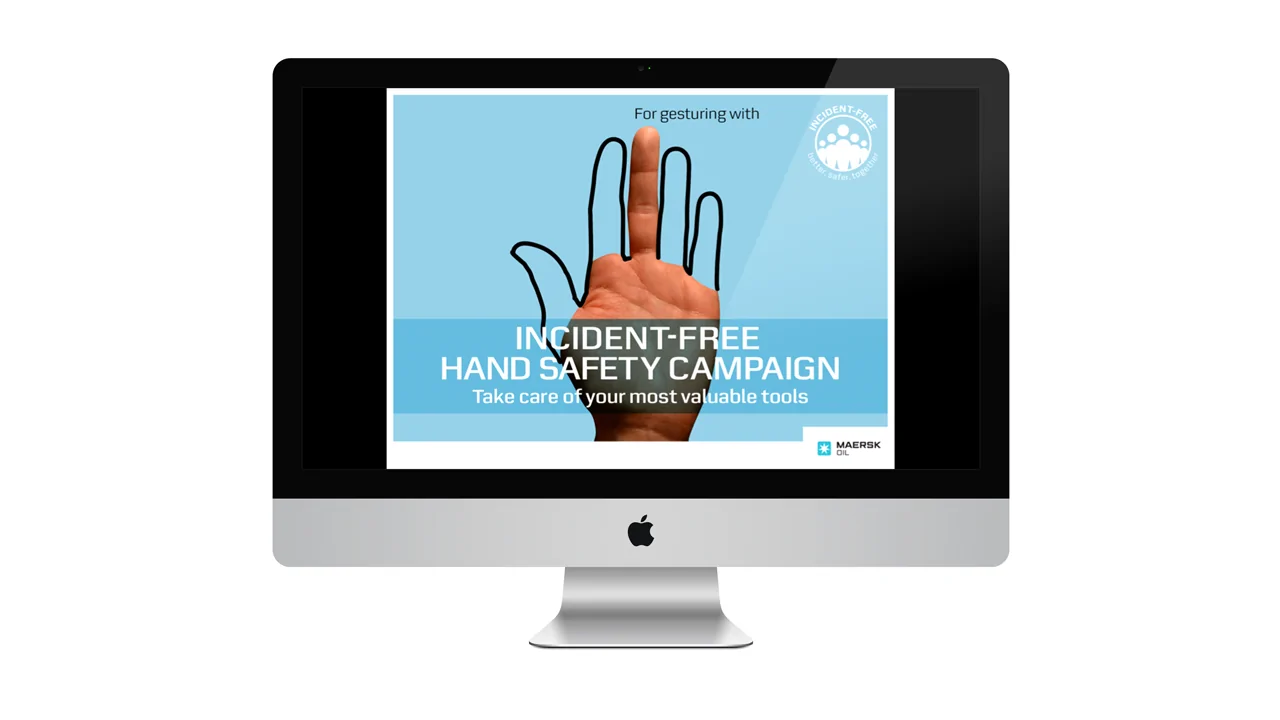
The award-recognized Maersk hand safety campaign.
Services
Content Production
Training posters & print
Site-specific print & visual aids
/services/training-posters
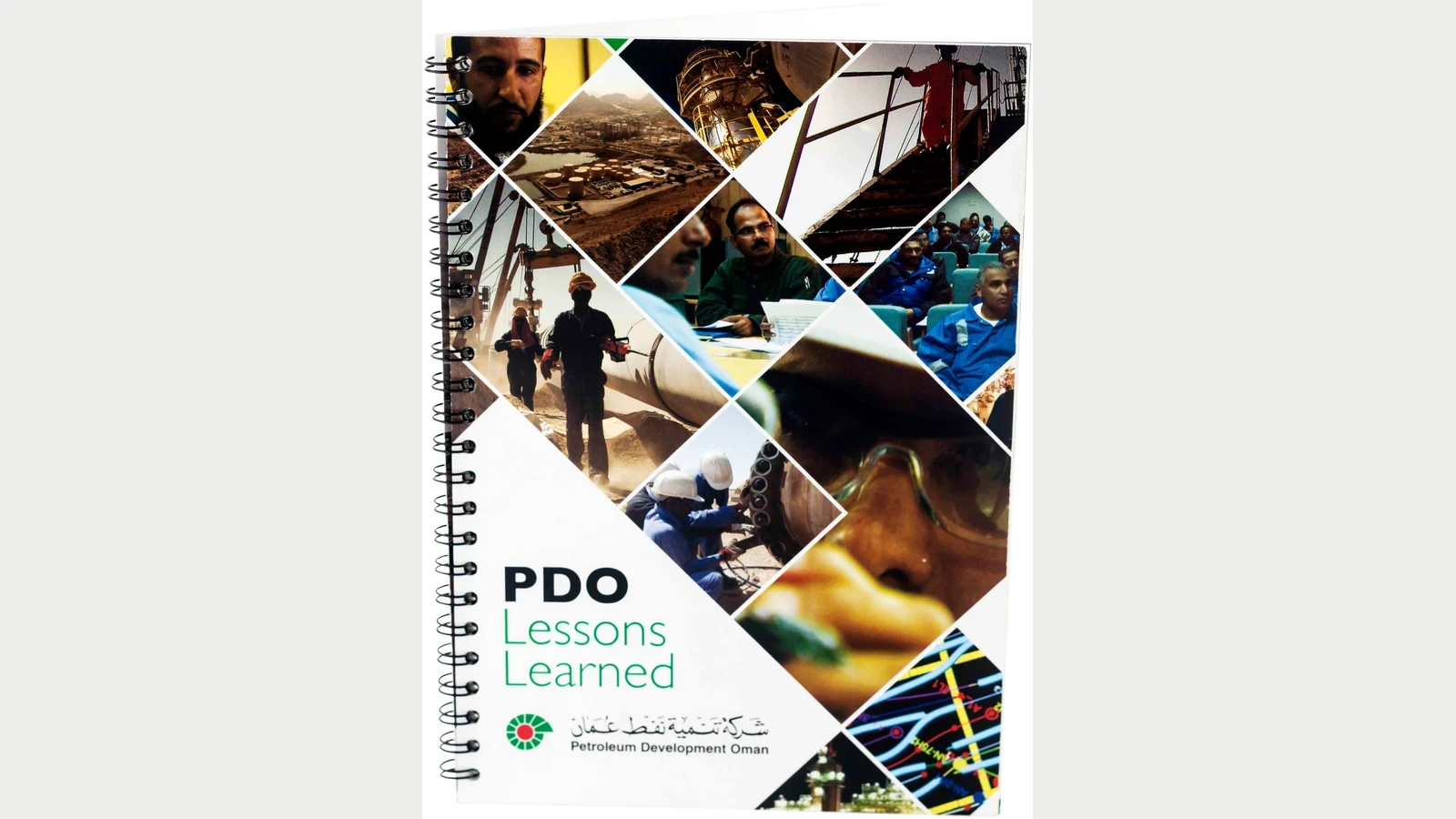
A printed lessons learned handbook produced for Petroleum Development Oman.
Services
Content Production
PowerPoint Materials
Trainer-led deck rebuilds
/services/powerpoint-training-materials
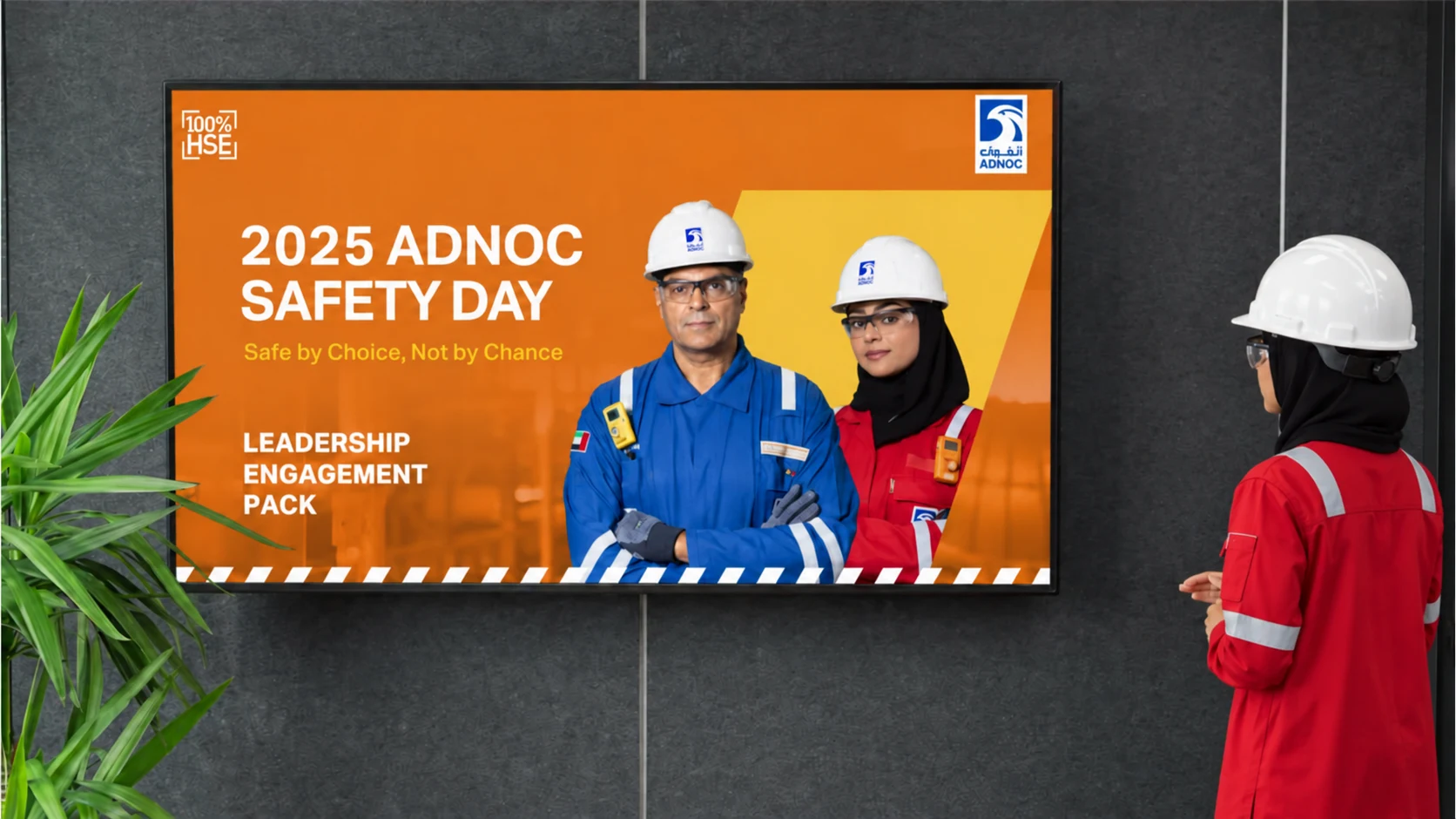
Presenting an ADNOC Safety Day engagement deck.
Services
Interactive Training
E-Learning
SCORM online modules
/services/e-learning
Scenario questions inside a client e-learning module.

Services
Interactive Training
Virtual Reality (VR)
Immersive headset training
/services/virtual-reality-vr-training
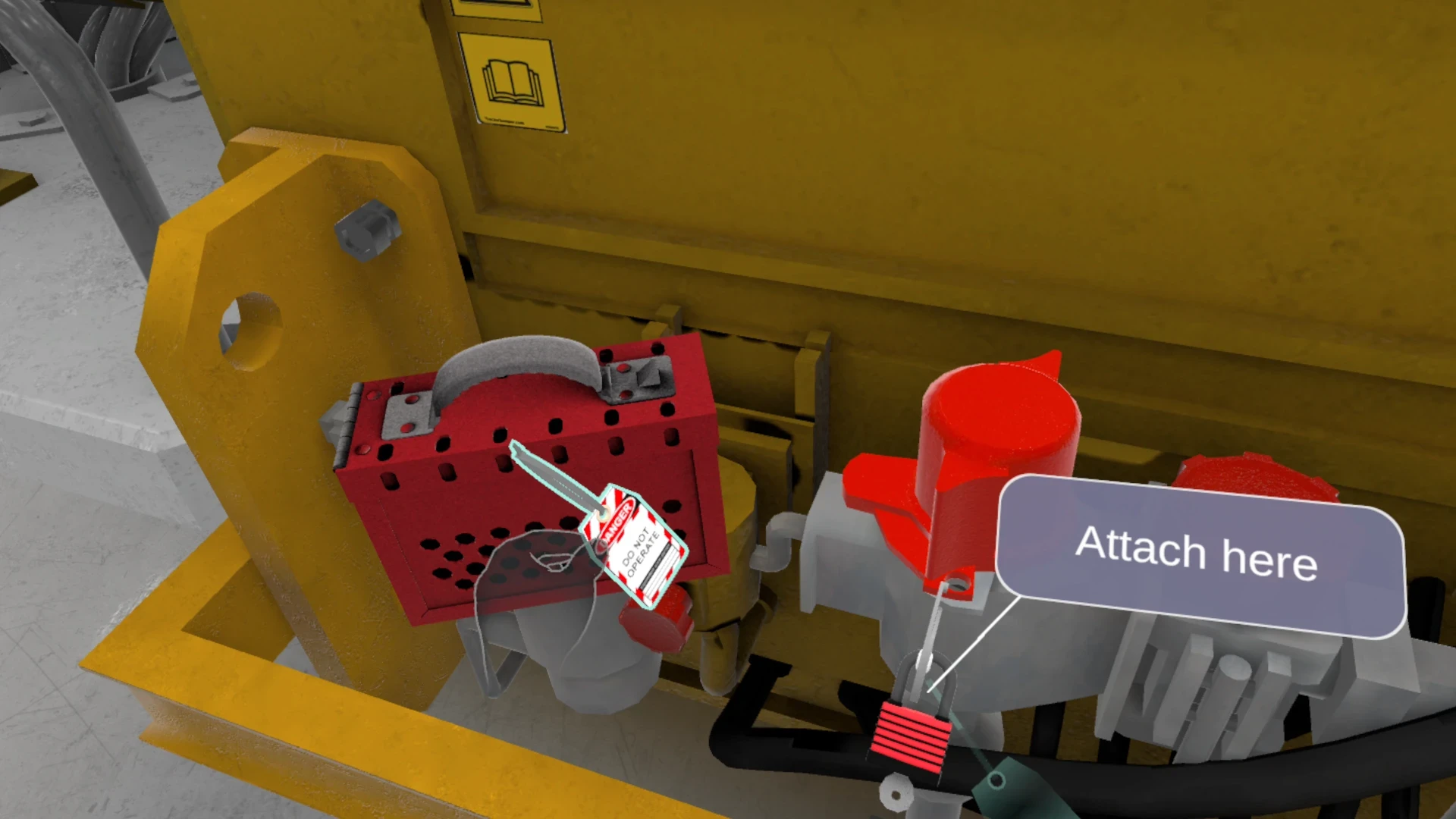
Lockout tagout training with full hand tracking in VR.
Services
Interactive Training
Flat-Screen Simulations
Desktop, web & mobile simulations
/services/flat-screen-simulation-training
SHIIFT simulations running on laptops and mobile devices.

Services
Interactive Training
Digital Twins
Navigable sites & equipment
/services/digital-twins
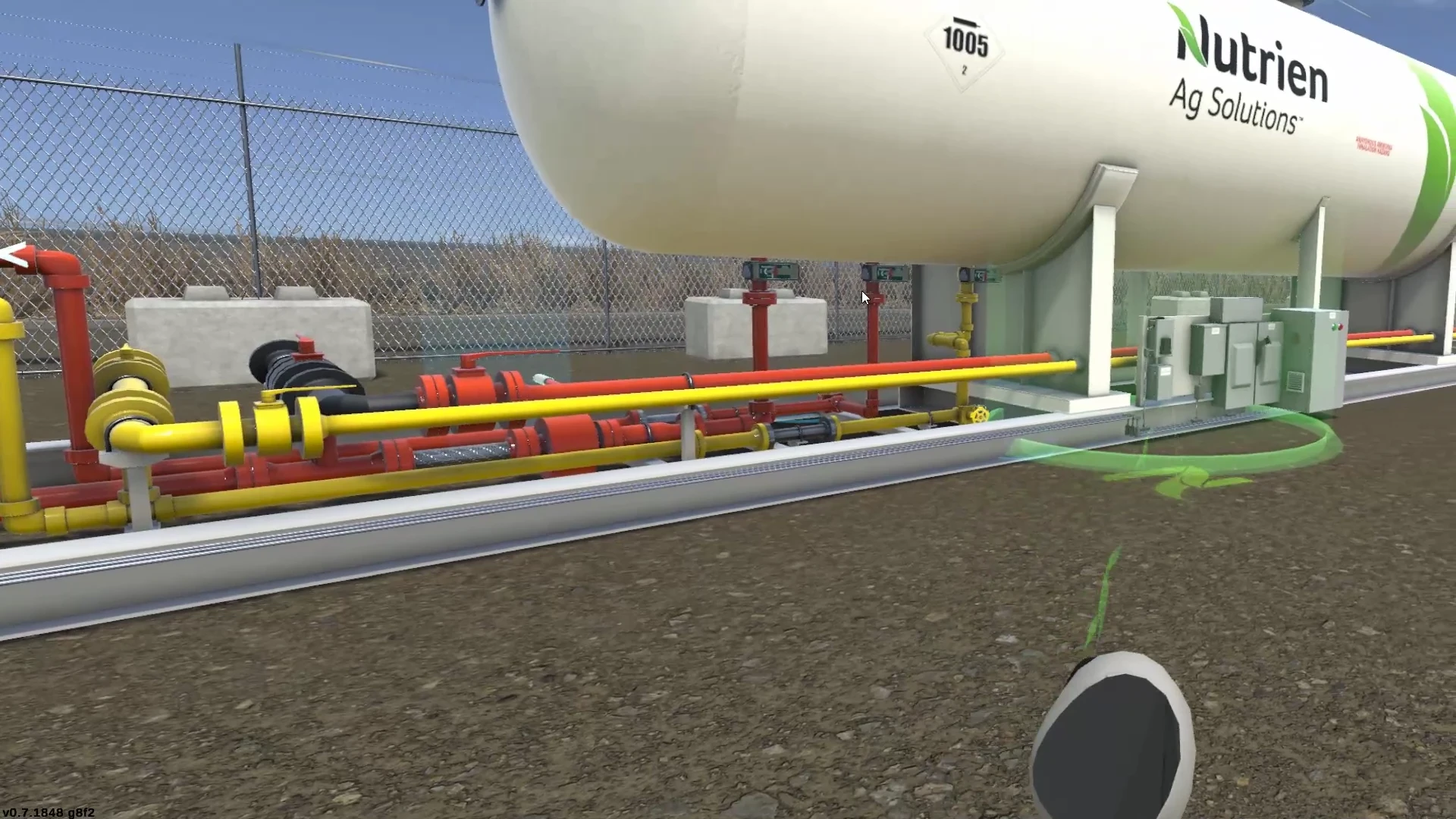
A navigable 3D replica of Nutrien's ammonia transfer plant.
Approach
How We Work
Our approach
Analysis, design, delivery, validation
/approach
Approach
How We Work
SCORM & LMS Integration
Tracking in your systems
/services/scorm-lms-integration
Approach
How We Work
Scenario-Based Assessments
Competency you can prove
/services/scenario-based-assessments