←
All articles
Article
Blended Learning: Why Mixing Digital and In‑Person Training Works Best
·

Introduction
Blended learning is the practice of combining digital and in‑person training approaches into a unified learning experience. In today’s workplace, many organisations lean heavily either toward fully remote digital training or traditional classroom instruction, but both approaches have limitations. Blended learning offers the flexibility of online learning while retaining the human, hands‑on benefits of face-to-face sessions. Because learners vary in how they absorb information, blending formats helps reach a wider spectrum of learners. It’s also more engaging: by interleaving more dynamic digital content with in‑person interaction, you can deliver necessary but perhaps less exciting material more effectively.
What Is Blended Learning?
Blended learning merges digital tools, like eLearning modules, video-based training, interactive quizzes, or simulations, with in‑person elements such as workshops, group discussions, mentoring, or hands‑on practice. The exact balance depends on the training goals and the learners. For example, a technical topic might begin with self‑paced online modules covering theory, followed by in‑person labs or role‑play sessions. Because no two learners are the same, blending opens the door to multimodal learning styles: some absorb best via visual or auditory digital content, others through hands‑on or discussion formats.
Why Blended Learning Works Best
First, blended learning offers flexibility and accessibility. Learners can progress through online modules at their own pace, revisit content, and schedule around work demands. The in‑person components then reinforce and cement learning, providing real‑time feedback, clarification, and social reinforcement. Second, it accommodates different learning preferences. Some people learn better by reading or watching, others by doing or discussing. Blended learning gives multiple entry points. Third, blended learning helps drive engagement: the more lively, interactive digital modules balance the more formal, sometimes dry, in‑person instruction. That interplay keeps learners motivated.
Key Benefits of Blended Learning for Employers
Higher Engagement Through Variety Alternating between in-person and digital activities keeps learners interested and reduces monotony.
Practical Application of Knowledge Concepts introduced online can be reinforced and practiced during face-to-face sessions, ensuring skills transfer to real work scenarios.
Stronger Peer Learning and Collaboration In-person sessions allow discussion, group exercises, and peer feedback that digital alone cannot provide.
Flexibility Without Losing Interaction Learners can absorb theory at their own pace digitally while still benefiting from hands-on practice and guidance in person.
Adaptive Learning Experiences Facilitators can adjust in-person sessions based on how learners performed or engaged with the digital content.
Balanced Delivery for Hard-to-Engage Content Less exciting or compliance-focused material can be reinforced through interactive discussions or exercises, increasing attention and retention.
Integrated Tracking of Progress and Understanding Digital modules provide measurable completion and comprehension data, which facilitators can use to guide in-person follow-ups effectively.
As clearly shown by the unique benefits of each approach, blending the two for a joint approach results in the best learning for your employees.
Real-world examples that demonstrate the impact of blended learning:
Intel used blended learning for technician equipment training, reducing time away from the factory by 60 % while achieving a benefits-cost ratio of 2.27 (OLJ Online Learning Journal).
Lufthansa shifted flight attendant training to a blended model using the imc Learning Suite, allowing theoretical modules online and practical in-person exercises in the classroom (imc Case Studies).
Mitsubishi Electric digitized around 80 % of its training content and retained 20 % in live virtual workshops, achieving a balance between flexibility and interaction (360Learning Blog).
When to Use Blended Learning
Blended learning is especially effective when topics require both theory and practice, such as technical training, safety procedures, or equipment handling. It also works well for onboarding programs, where digital content can introduce company history, policies, or core values, and in-person sessions can address culture, team interaction, or mentoring. Soft skills, leadership, and compliance training are also suited: the theory or rules can be covered digitally, and group discussions or scenario practice can happen in person.
Best Practices for Implementing Blended Learning
Define Clear Learning Objectives Establish what learners should know or be able to do by the end of the program. Clear goals guide both digital and in-person components and ensure alignment with business needs.
Select the Right Delivery Method for Each Topic Determine which content is best delivered digitally (concepts, theory, microlearning modules) and which requires in-person interaction (hands-on practice, discussions, role play).
Integrate Digital and In-Person Elements Seamlessly Ensure online and face-to-face components complement each other. Tie in-person activities directly to the concepts introduced digitally to reinforce understanding.
Keep Materials Consistent and Accessible Maintain a uniform style, terminology, and structure across all components. Provide easy access to materials so learners can revisit content as needed.
Train Facilitators Thoroughly Instructors should understand how to connect digital modules with in-person sessions, guide discussions, and adapt to learner needs.
Encourage Multimodal Engagement Cater to different learning styles by combining visual, auditory, kinesthetic, and social approaches throughout the program.
Balance Workload and Pacing Avoid overwhelming learners by spacing digital content and scheduling in-person sessions strategically. Allow flexibility where possible.
Make Mandatory Content Engaging Even required topics can be made more interactive through exercises, quizzes, or discussions to maintain attention and motivation. If you’re struggling with making mandatory training content engaging, get in touch with us and we can explore a solution I’m sure will work for you!
Common Mistakes to Avoid with Blended Learning
Even the best blended learning programs can fail if certain pitfalls are ignored. Avoiding these mistakes ensures learners stay engaged and gain maximum value:
Overloading Learners with Digital Content Pushing too many online modules at once can lead to cognitive overload, fatigue, and disengagement. Break content into manageable chunks and intersperse with in-person sessions to reinforce learning.
Failing to Integrate Digital and In-Person Components Online and face-to-face elements must feel connected. If digital modules feel isolated from in-person sessions, learners may struggle to see the practical application, reducing retention and engagement.
Neglecting to Evaluate Effectiveness Skipping evaluation can hide weak areas in your program. Monitor learner progress, gather feedback, and analyze outcomes to refine both digital and in-person elements.
Rigid Sequencing and Lack of Flexibility Forcing all learners to follow the exact same schedule can disadvantage those who learn at different paces. Allow self-paced completion of online content while maintaining structured in-person sessions for reinforcement.
Ignoring Learner Preferences and Styles Blended learning works best when it caters to multimodal learning, visual, auditory, kinesthetic, or social learners. Failing to provide multiple ways to engage risks leaving some learners behind.
Undertraining Facilitators In-person facilitators must understand how to link digital and face-to-face components smoothly. If instructors are unprepared, the sessions may feel disjointed or ineffective.
Overcomplicating the Technology Using complex platforms without clear guidance can frustrate learners. Keep tools intuitive and ensure support is available.
Neglecting Engagement in Mandatory Content Some regulatory or compliance topics are inherently dry. Use blended learning to combine interactive digital content with in-person exercises or discussion, keeping learners engaged without compromising essential training.
Closing Thoughts
Blended learning delivers an optimal approach for modern corporate training by combining flexibility, engagement, and effectiveness. It accommodates different learning styles, helps drive engagement by offsetting dry in-person instruction with more dynamic digital content, and strengthens outcomes for both learners and organisations. By considering examples like Intel, Lufthansa, and Mitsubishi Electric, it’s clear that thoughtfully implemented blended learning can save time, reduce costs, and improve results.
Solutions
Safety Training
Hazard recognition
Spot risks before incidents
/solutions/hazard-recognition-training
Solutions
Safety Training
Life-Saving Rules
Critical rules as decisions
/solutions/life-saving-rules-training
Solutions
Safety Training
Behavioral safety
Stop work authority, used
/solutions/behavioral-safety-training
Solutions
Safety Training
Hand safety
Fewer hand injuries
/solutions/hand-safety-training
Solutions
Safety Training
PPE selection & use
The right kit, worn right
/solutions/ppe-training
Solutions
Safety Training
H2S & gas awareness
The invisible hazard, visible
/solutions/h2s-gas-awareness-training
Solutions
Safety Training
Fire & emergency response
Beyond the routine drill
/solutions/fire-safety-emergency-response-training
Solutions
Safety Training
Toolbox talks
Five strong minutes weekly
/solutions/toolbox-talk-content
Solutions
Safety Training
Permit to work
PTW judgment scenarios
/solutions/permit-to-work-training
Solutions
Safety Training
Isolation & LOTO
Safe energy isolation
/solutions/isolation-lockout-tagout-training
Solutions
Safety Training
Confined space entry
Entries and rescue response
/solutions/confined-space-entry-training
Solutions
Safety Training
Working at height
Falls and dropped objects
/solutions/working-at-height-training
Solutions
Safety Training
Lifting & rigging
Safer critical lifts
/solutions/lifting-rigging-training
Solutions
Safety Training
Hot work
Sparks under control
/solutions/hot-work-training
Solutions
Safety Training
Line of fire
See the energy path
/solutions/line-of-fire-training
Solutions
Safety Training
Driver safety
Safer driving and journeys
/solutions/driver-safety-training
Solutions
Safety Training
Electrical safety
Safe isolation, arc flash aware
/solutions/electrical-safety-training
Solutions
Safety Training
Excavation work
Trenches and buried services
/solutions/excavation-safety-training
Solutions
Safety Training
Ergonomics
Strain prevention that sticks
/solutions/ergonomics-training
Solutions
Safety Training
Situational awareness
Noticing change on site
/solutions/situational-awareness-training
Solutions
Onboarding & People
Site orientation
Inductions before day one
/solutions/site-orientation-onboarding
Solutions
Onboarding & People
Expatriate workforce
Localized multilingual training
/solutions/expatriate-workforce-training
Solutions
Onboarding & People
Visitor inductions
Pre-arrival essentials
/solutions/visitor-induction-training
Solutions
Onboarding & People
Leadership training
Judgment, developed
/solutions/leadership-training
Solutions
Onboarding & People
Soft skills
Conversations that work
/solutions/soft-skills-training
Solutions
Onboarding & People
Safety leadership
Frontline supervisor skills
/solutions/safety-leadership-training
Solutions
Onboarding & People
Human factors
Error traps and defenses
/solutions/human-factors-training
Solutions
Operations & Technical
Process & procedures
Step-by-step competence
/solutions/process-procedure-training
Solutions
Operations & Technical
Operational readiness
Ready before start-up
/solutions/operational-readiness
Solutions
Operations & Technical
Technical training
Complex systems explained
/solutions/technical-training
Solutions
Operations & Technical
Control room & DCS
Alarms and upset response
/solutions/control-room-training
Solutions
Operations & Technical
Crane operation
Operators, banksmen, supervisors
/solutions/crane-operation-training
Solutions
Operations & Technical
Forklift operation
Operators, pedestrians, supervisors
/solutions/forklift-operation-training
Solutions
Operations & Technical
Maintenance & turnarounds
Outage preparation
/solutions/maintenance-turnaround-training
Solutions
Operations & Technical
Process safety
Barriers made visible
/solutions/process-safety-training
Solutions
Compliance & Modernization
Lessons learned (LFI)
Incidents into training
/solutions/lessons-learned-training
Solutions
Compliance & Modernization
Spill response
Environmental first response
/solutions/spill-response-training
Solutions
Compliance & Modernization
Hazardous materials
Storage, handling, transport
/solutions/hazardous-materials-training
Solutions
Compliance & Modernization
Security awareness
Physical and cyber vigilance
/solutions/security-awareness-training
Services
Content Production
Training Videos
Filmed through our global crew network
/services/workplace-safety-training-videos
A safety orientation film produced for Milestone Environmental Services.

Services
Content Production
2D & 3D Animation
Engineering-accurate visuals
/services/2d-3d-animation
From a 3D animation built to supplement an ADNOC e-learning module.

Services
Content Production
Safety Campaigns
Sustained behavior change
/services/safety-campaigns
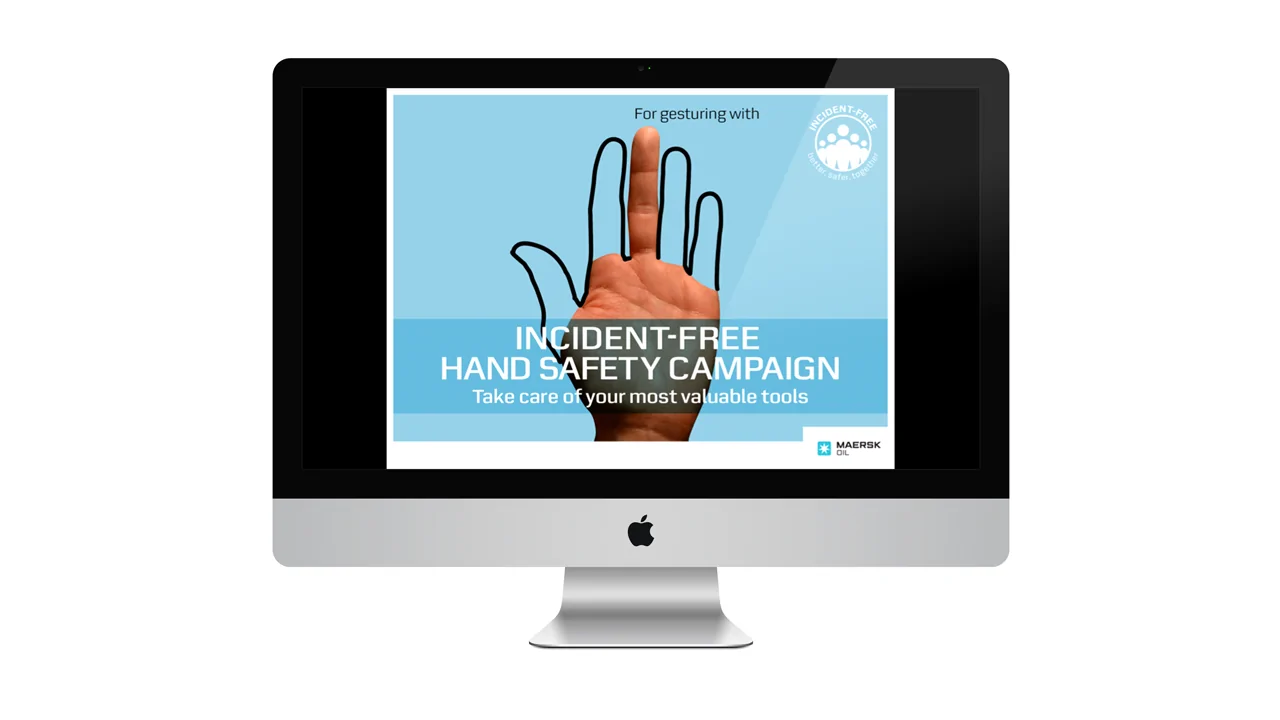
The award-recognized Maersk hand safety campaign.
Services
Content Production
Training posters & print
Site-specific print & visual aids
/services/training-posters
A printed lessons learned handbook produced for Petroleum Development Oman.

Services
Content Production
PowerPoint Materials
Trainer-led deck rebuilds
/services/powerpoint-training-materials
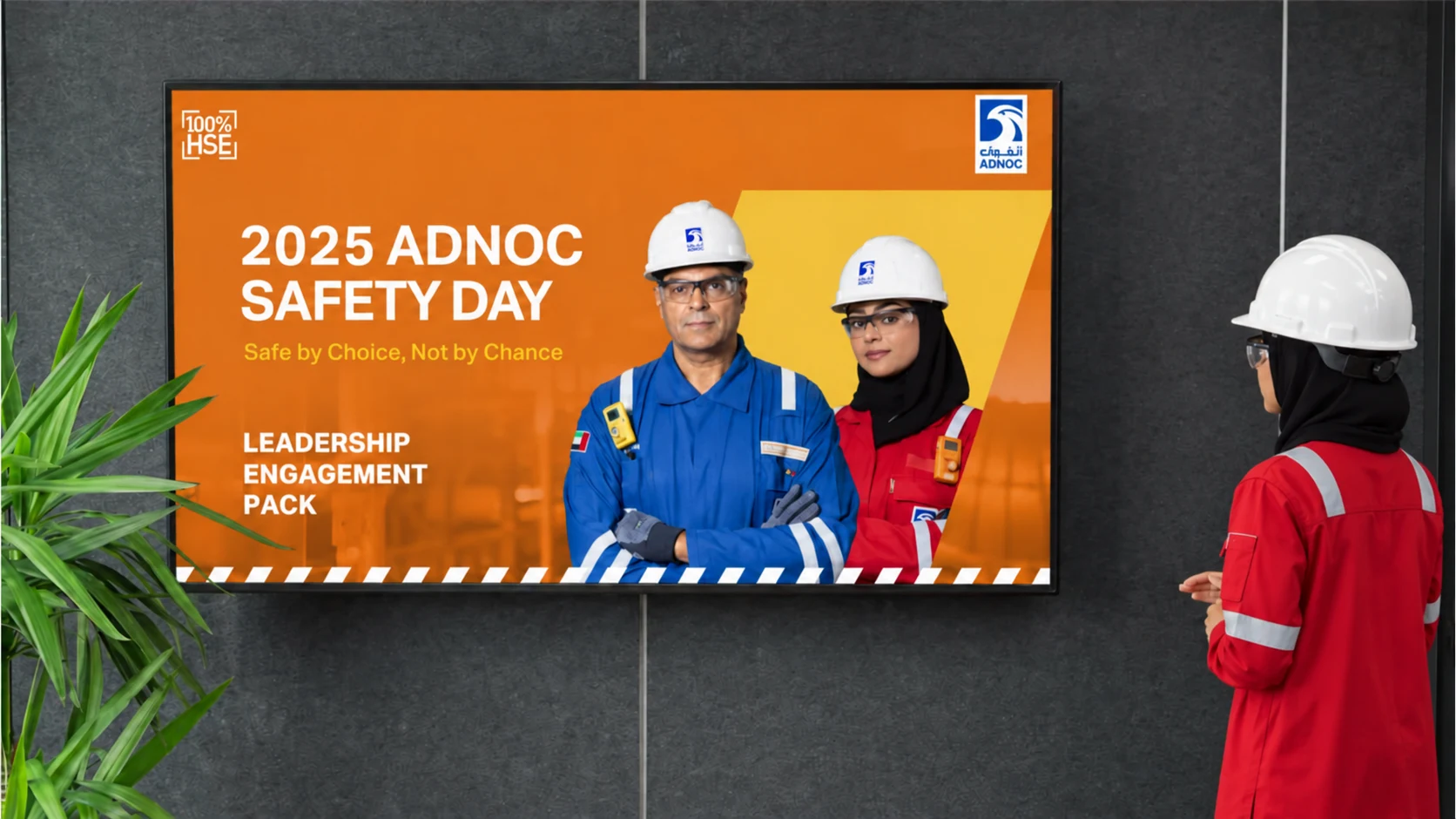
Presenting an ADNOC Safety Day engagement deck.
Services
Interactive Training
E-Learning
SCORM online modules
/services/e-learning
Scenario questions inside a client e-learning module.

Services
Interactive Training
Virtual Reality (VR)
Immersive headset training
/services/virtual-reality-vr-training
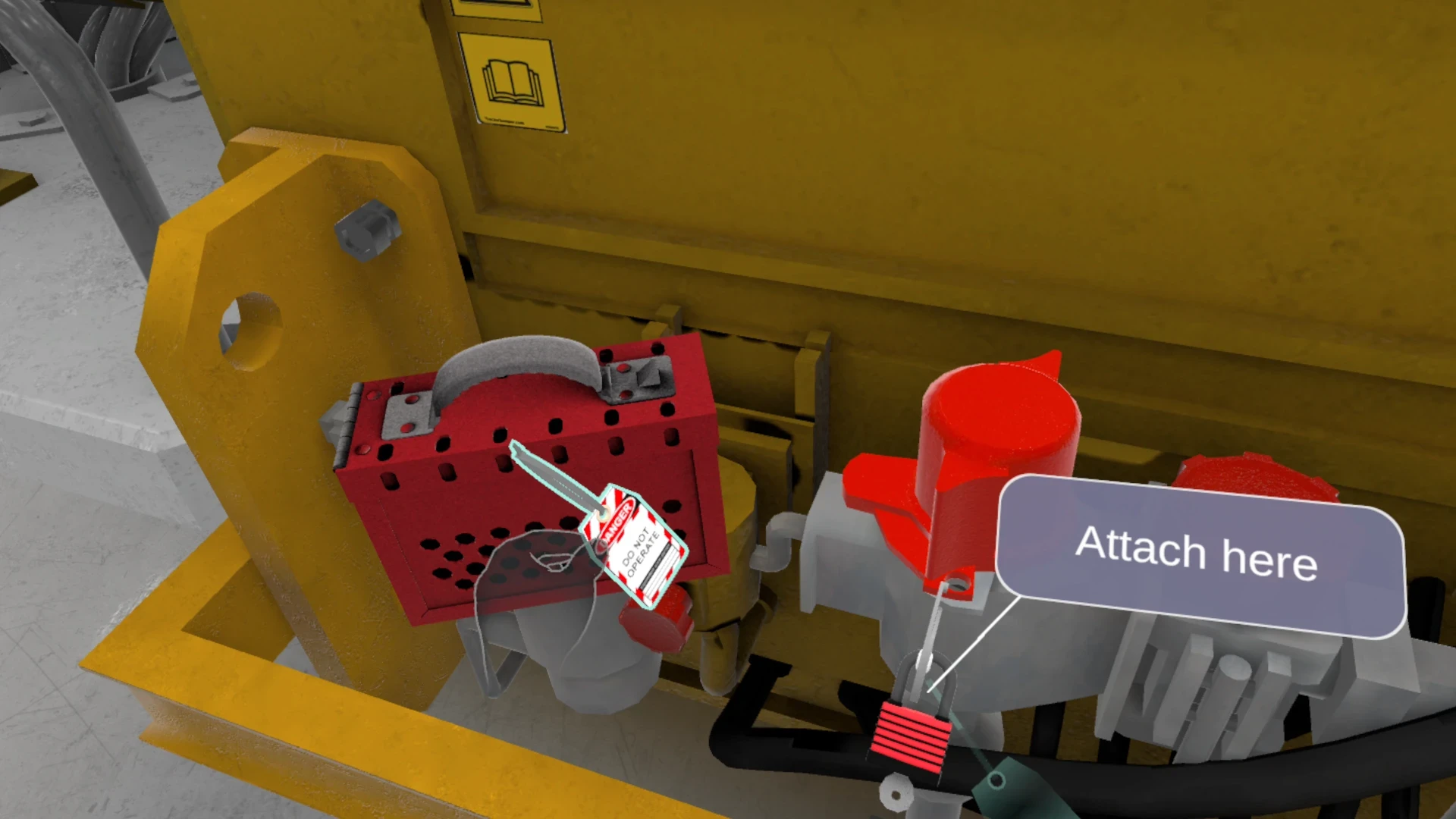
Lockout tagout training with full hand tracking in VR.
Services
Interactive Training
Flat-Screen Simulations
Desktop, web & mobile simulations
/services/flat-screen-simulation-training
SHIIFT simulations running on laptops and mobile devices.

Services
Interactive Training
Digital Twins
Navigable sites & equipment
/services/digital-twins
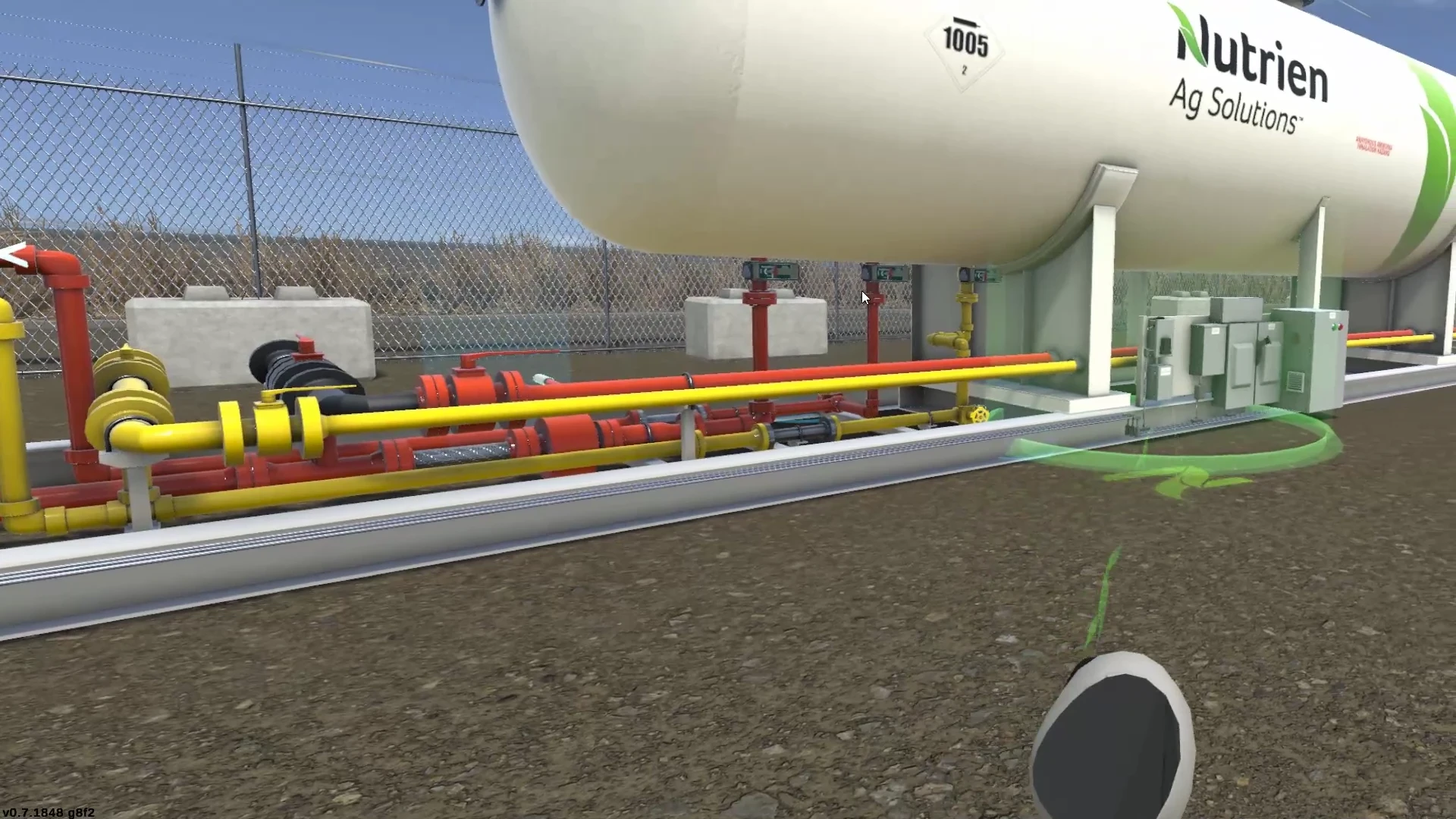
A navigable 3D replica of Nutrien's ammonia transfer plant.
Approach
How We Work
Our approach
Analysis, design, delivery, validation
/approach
Approach
How We Work
SCORM & LMS Integration
Tracking in your systems
/services/scorm-lms-integration
Approach
How We Work
Scenario-Based Assessments
Competency you can prove
/services/scenario-based-assessments