
This article explores in depth how to effectively onboard new employees into a business, whether it’s an office or a dangerous worksite.
What Does Onboarding Employees Mean?
Onboarding is the process of introducing new employees to your company, systems, and expectations. It sets the foundation for their success and plays a key role in improving retention and performance. Effective onboarding should feel structured but personal. It is not just about ticking boxes. It is about giving people the knowledge and confidence to contribute from day one. When done well, onboarding reduces early turnover, improves engagement, and increases time-to-productivity.
Sets the tone for the employee’s journey
Builds initial trust and confidence
Helps new hires feel welcome and valued
Clarifies roles and expectations early
Directly impacts retention and engagement
Reduces time needed to reach full productivity
Preboarding Essentials
Preboarding is the crucial phase that starts once a candidate accepts your job offer and continues until their official start date. This stage is often underestimated, but it can make a huge difference in reducing first-day nerves and setting a positive tone.
Key Preboarding Actions:
Send essential documents early: Share employment contracts, benefits information, and compliance forms in advance so new hires can review and sign them at their own pace.
Provide IT access and login details: Ensure they have access to email, HR systems, and any collaboration tools before day one.
Share a welcome pack: Include a personalized welcome email, a short video from the team or CEO, and an employee handbook.
Assign a mentor or buddy: Introduce a go-to person who can answer questions and offer support during the first weeks.
Clarify first-day logistics: Confirm start time, dress code (if any), parking or remote setup instructions, and a brief agenda for the first day.
Prepare equipment: If remote, ship laptops and peripherals in advance. For in-office roles, have their workspace ready.
These steps help new hires feel valued, informed, and excited before they even walk through the door (or log in for the first time), you never want your employee’s first-day experience to be waiting for their accounts and training material to be set up.

First Day Structure
The first day can be overwhelming for new employees, so it’s important to create a welcoming and organized experience. A well-structured first day builds confidence and sets the stage for a smooth transition.
Best Practices for Day One:
Personal welcome: Greet new hires personally, whether in person or via video call. A warm introduction to the team helps break the ice.
Tour and orientation: Offer a guided tour of the office or a virtual walkthrough of digital workspaces. Show them where to find resources, restrooms, and break areas.
Simple agenda: Provide a clear schedule for the first week, outlining training sessions, meetings, and key tasks.
Company overview: Explain your mission, vision, values, and organizational structure. Help them see how their role fits into the bigger picture.
Time for questions: Encourage open dialogue. Let new hires ask questions and share their first impressions.
Welcome gesture: A small gift, lunch invitation, or team coffee chat can make a big difference in making them feel at home.
Avoid overwhelming new hires with too much information at once, you don’t want them to have nothing to do, but you also need to avoid stressing the employee or making them question their decision to work for you. Focus on making the first day enjoyable and memorable.
The Five Cs of Onboarding
A comprehensive onboarding program should address the following five pillars, often called the “Five Cs”, used by HR professionals.
Compliance: Cover legal requirements, workplace safety, company policies, and contracts. This ensures new hires understand their rights and responsibilities.
Clarification: Clearly define job expectations, performance goals, and reporting lines. Remove ambiguity so employees know what success looks like.
Culture: Introduce your company’s values, communication style, and unwritten rules. Share stories or examples that illustrate your unique workplace culture.
Connection: Foster relationships with colleagues, managers, and mentors. Encourage participation in team meetings, social events, and internal networks.
Checkback: Schedule regular feedback sessions and progress reviews. Use these opportunities to answer questions, address concerns, and celebrate milestones.
Neglecting any of these areas can lead to confusion, disengagement, or early turnover. A balanced approach ensures new hires feel supported in every aspect of their transition.
Training and Development
Training is the cornerstone of a successful onboarding process. It equips new employees with the essential skills, knowledge, and confidence to perform their roles effectively and to grow within the organization. A well-structured training program not only accelerates the learning curve but also fosters employee engagement, satisfaction, and long-term retention.
Why Training Matters
Builds competence: Proper training ensures employees understand their job responsibilities and how to execute them efficiently.
Reduces errors: Well-trained employees make fewer mistakes, improving overall quality and safety.
Supports compliance: Training on legal, safety, and regulatory requirements protects both employees and the organization.
Enhances engagement: Employees who feel supported in their development are more motivated and committed.
Encourages career growth: Training lays the foundation for continuous learning and advancement opportunities.
Compliance and Safety Training
Covers workplace safety protocols, emergency procedures, and regulatory requirements.
Includes training on data privacy, anti-harassment policies, and ethical standards.
Ensures employees understand their rights and responsibilities to maintain a safe and lawful work environment.
Company Culture and Values
Introduces the organization’s mission, vision, and core values.
Shares stories, examples, and behaviors that embody the culture.
Encourages alignment between individual actions and company expectations.
Best Practices and Internal Policies
Details standard operating procedures, quality standards, and workflow processes.
Covers internal communication protocols, reporting structures, and performance expectations.
Provides clarity on tools, resources, and support systems available.
Technical and Role-Specific Skills
Offers hands-on training tailored to the specific job function.
Includes software tutorials, machinery operation, or specialized certifications.
Ensures employees have the practical skills required to perform their duties confidently.
Training Delivery Methods
To maximize effectiveness, training should be delivered using a variety of methods that cater to different learning styles and job requirements:
Blended Learning
Combines multiple training methods to create a comprehensive learning experience.
Balances flexibility with engagement and practical application.
Supports diverse learner preferences and complex training needs.
Instructor-Led Training (ILT)
Traditional classroom or virtual sessions led by experienced trainers.
Allows real-time interaction, Q&A, and group discussions.
Ideal for complex topics requiring detailed explanations or demonstrations.
On-the-Job Training (OJT)
Practical training conducted in the actual work environment.
Involves shadowing experienced colleagues and performing tasks under supervision.
Builds confidence through real-world experience and immediate feedback.
E-Learning and CBT
Self-paced online courses accessible anytime, anywhere.
Includes videos, quizzes, and interactive content to reinforce learning.
Enables tracking of progress and assessment of comprehension.
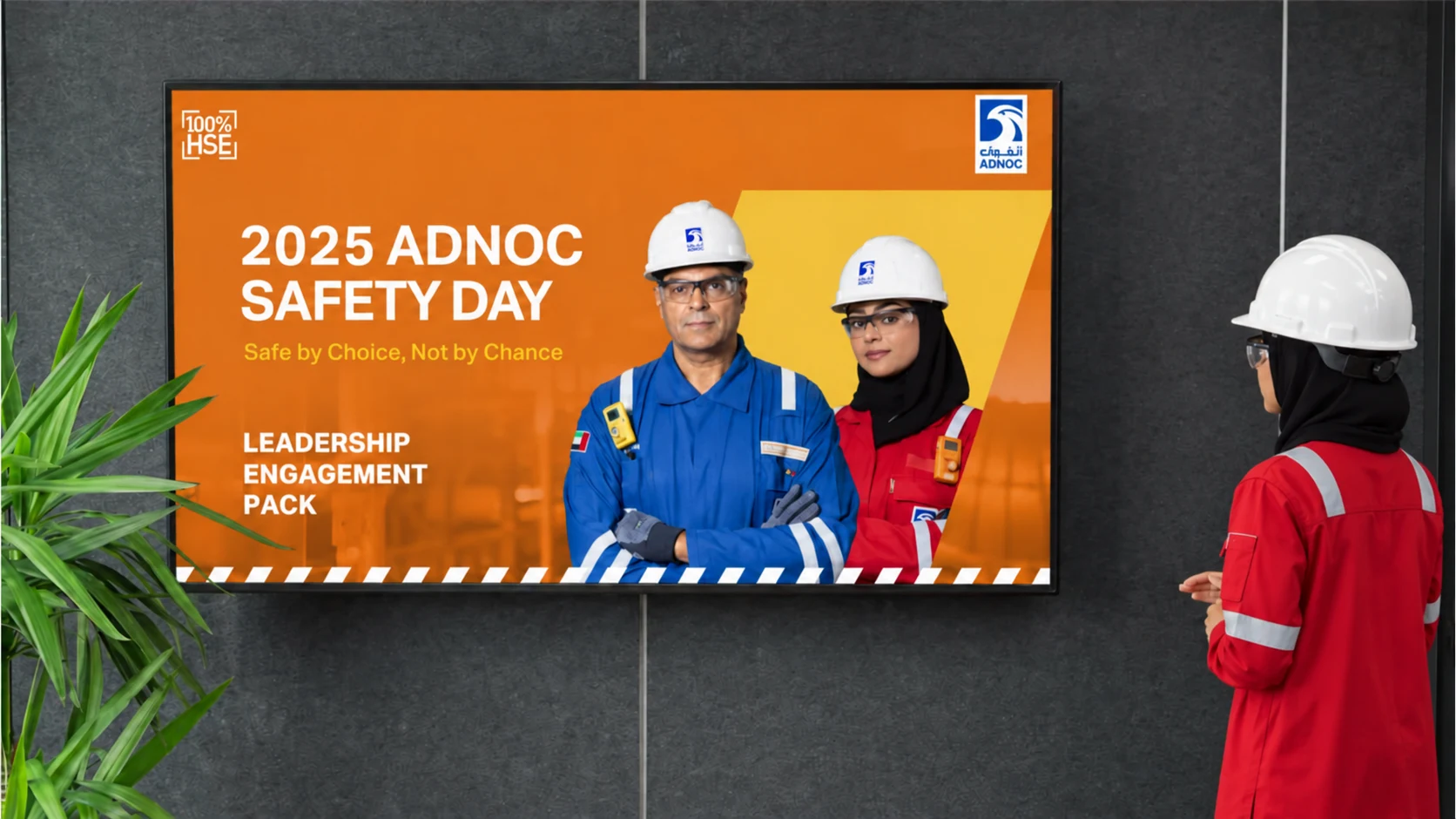
For ADNOC, we used our video and animation capabilities, combined with e-learning techniques like interactive content to create powerful e-learning modules that cover HSE, induction, safety culture and more to effectively onboard new employees with engaging content. Video and Animation-Based Training
Uses visual storytelling to simplify complex concepts.
Engages learners through dynamic content that is easy to remember.
Particularly effective for safety demonstrations, process overviews, and culture introductions.
For TotalEnergies, we created a 5-minute training video as part of an employee onboarding program for country relocation to a new office, and integrating into a new culture appropriately and safely. Learn more in the full case study, or enjoy this 20 second snippet below: Simulations and Virtual Reality (VR)
Provides immersive, risk-free environments to practice skills.
Useful for high-risk or technical roles where hands-on experience is critical.
Enhances retention by allowing repeated practice and scenario-based learning.
For Lanes Group, the UK’s leading utilities and infrastructure delivery partner and Thames Water, the UK’s largest water and wastewater company, we developed a one-of-a-kind Igloo VR simulation for onboarding their staff. They had issues with needing to reduce employee turnover and ended up seeing a +57% increase in staff retention and $1,500,000 in savings from recruitment and training costs. This simulation made their company a unique place to work at with a highly engaging training material for onboarding their staff.
Credit to Igloo Vision for the case study video: As experts in the digital training and development field, SHIIFT Training would be delighted to help you create your training resources whether you need eLearning, virtual reality, desktop simulations, video or animation, or a blend of it all. Get in touch if you’re interested!
Social Integration
Beyond training and logistics, employees need to feel like part of the team. Social integration helps them settle in and build trust. Encourage informal introductions and make time for one-to-one chats. A short welcome lunch or coffee with the team can go a long way. Include them in team meetings, group chats, and social platforms from day one. Strong early connections lead to higher engagement and lower turnover.
Informal introductions: Arrange one-on-one coffee chats, team lunches, or virtual meet-and-greets to help break the ice.
Mentorship programs: Pair new hires with experienced colleagues who can offer guidance and support.
Team participation: Include new employees in team meetings early on to let them get an understanding of the company’s current ongoing projects.
Strong early connections lead to higher engagement, faster integration, and lower turnover rates.

Tracking Progress
Onboarding shouldn’t end after the first week. Ongoing support and clear milestones help new hires stay on track and feel supported as they ramp up.
How to Track Progress:
Set 30, 60, and 90-day goals: Outline clear objectives for the first three months and review progress regularly.
One-to-one meetings: Schedule regular check-ins to offer feedback, answer questions, and address any challenges.
Training completion tracking: Use checklists or digital tools to monitor which modules or tasks have been completed.
Role clarity reviews: Revisit job expectations and adjust as needed based on the employee’s feedback and performance.
Identify support needs: Look for areas where additional coaching, resources, or training may be required.
This ongoing approach ensures new hires feel supported and can quickly become productive members of the team.
Common Onboarding Mistakes to Avoid
Even the best intentions can be undermined by common onboarding pitfalls. Avoid these mistakes to ensure your process is effective:
Overloading with information: Don’t try to cover everything at once. Spread out training and information over several weeks.
Lack of a point of contact: Every new hire should have a dedicated person they can turn to with questions or concerns.
No follow-up: Don’t disappear after the first week. Regular check-ins are essential for ongoing support.
Paperwork-focused onboarding: Onboarding is more than just forms and policies. Prioritize engagement and relationship-building.
Incomplete training or access: Ensure all necessary tools, systems, and resources are available from the start.
Review your onboarding process regularly and seek feedback to identify areas for improvement.
By now you should be well equipped with all the knowledge you need for a successful onboarding plan, good luck!
Solutions
Safety Training
Hazard recognition
Spot risks before incidents
/solutions/hazard-recognition-training
Solutions
Safety Training
Life-Saving Rules
Critical rules as decisions
/solutions/life-saving-rules-training
Solutions
Safety Training
Behavioral safety
Stop work authority, used
/solutions/behavioral-safety-training
Solutions
Safety Training
Hand safety
Fewer hand injuries
/solutions/hand-safety-training
Solutions
Safety Training
PPE selection & use
The right kit, worn right
/solutions/ppe-training
Solutions
Safety Training
H2S & gas awareness
The invisible hazard, visible
/solutions/h2s-gas-awareness-training
Solutions
Safety Training
Fire & emergency response
Beyond the routine drill
/solutions/fire-safety-emergency-response-training
Solutions
Safety Training
Toolbox talks
Five strong minutes weekly
/solutions/toolbox-talk-content
Solutions
Safety Training
Permit to work
PTW judgment scenarios
/solutions/permit-to-work-training
Solutions
Safety Training
Isolation & LOTO
Safe energy isolation
/solutions/isolation-lockout-tagout-training
Solutions
Safety Training
Confined space entry
Entries and rescue response
/solutions/confined-space-entry-training
Solutions
Safety Training
Working at height
Falls and dropped objects
/solutions/working-at-height-training
Solutions
Safety Training
Lifting & rigging
Safer critical lifts
/solutions/lifting-rigging-training
Solutions
Safety Training
Hot work
Sparks under control
/solutions/hot-work-training
Solutions
Safety Training
Line of fire
See the energy path
/solutions/line-of-fire-training
Solutions
Safety Training
Driver safety
Safer driving and journeys
/solutions/driver-safety-training
Solutions
Safety Training
Electrical safety
Safe isolation, arc flash aware
/solutions/electrical-safety-training
Solutions
Safety Training
Excavation work
Trenches and buried services
/solutions/excavation-safety-training
Solutions
Safety Training
Ergonomics
Strain prevention that sticks
/solutions/ergonomics-training
Solutions
Safety Training
Situational awareness
Noticing change on site
/solutions/situational-awareness-training
Solutions
Onboarding & People
Site orientation
Inductions before day one
/solutions/site-orientation-onboarding
Solutions
Onboarding & People
Expatriate workforce
Localized multilingual training
/solutions/expatriate-workforce-training
Solutions
Onboarding & People
Visitor inductions
Pre-arrival essentials
/solutions/visitor-induction-training
Solutions
Onboarding & People
Leadership training
Judgment, developed
/solutions/leadership-training
Solutions
Onboarding & People
Soft skills
Conversations that work
/solutions/soft-skills-training
Solutions
Onboarding & People
Safety leadership
Frontline supervisor skills
/solutions/safety-leadership-training
Solutions
Onboarding & People
Human factors
Error traps and defenses
/solutions/human-factors-training
Solutions
Operations & Technical
Process & procedures
Step-by-step competence
/solutions/process-procedure-training
Solutions
Operations & Technical
Operational readiness
Ready before start-up
/solutions/operational-readiness
Solutions
Operations & Technical
Technical training
Complex systems explained
/solutions/technical-training
Solutions
Operations & Technical
Control room & DCS
Alarms and upset response
/solutions/control-room-training
Solutions
Operations & Technical
Crane operation
Operators, banksmen, supervisors
/solutions/crane-operation-training
Solutions
Operations & Technical
Forklift operation
Operators, pedestrians, supervisors
/solutions/forklift-operation-training
Solutions
Operations & Technical
Maintenance & turnarounds
Outage preparation
/solutions/maintenance-turnaround-training
Solutions
Operations & Technical
Process safety
Barriers made visible
/solutions/process-safety-training
Solutions
Compliance & Modernization
Lessons learned (LFI)
Incidents into training
/solutions/lessons-learned-training
Solutions
Compliance & Modernization
Spill response
Environmental first response
/solutions/spill-response-training
Solutions
Compliance & Modernization
Hazardous materials
Storage, handling, transport
/solutions/hazardous-materials-training
Solutions
Compliance & Modernization
Security awareness
Physical and cyber vigilance
/solutions/security-awareness-training
Services
Content Production
Training Videos
Filmed through our global crew network
/services/workplace-safety-training-videos
A safety orientation film produced for Milestone Environmental Services.

Services
Content Production
2D & 3D Animation
Engineering-accurate visuals
/services/2d-3d-animation
From a 3D animation built to supplement an ADNOC e-learning module.

Services
Content Production
Safety Campaigns
Sustained behavior change
/services/safety-campaigns
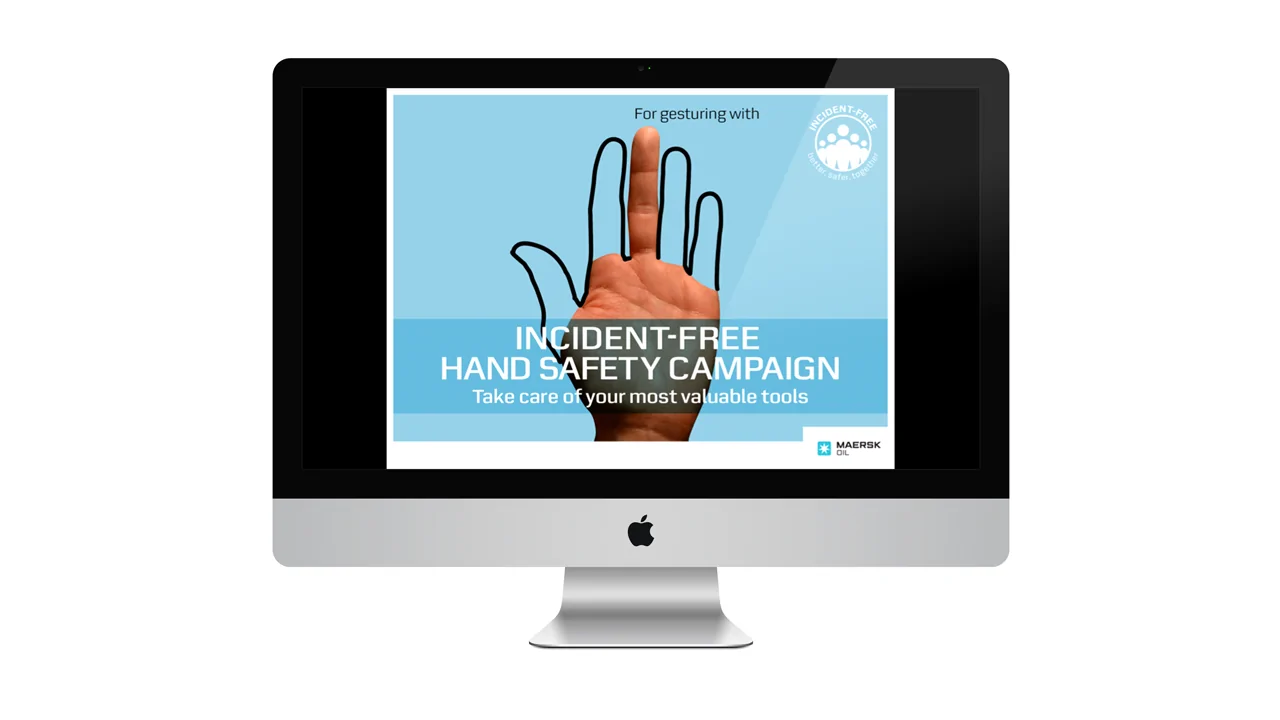
The award-recognized Maersk hand safety campaign.
Services
Content Production
Training posters & print
Site-specific print & visual aids
/services/training-posters
A printed lessons learned handbook produced for Petroleum Development Oman.

Services
Content Production
PowerPoint Materials
Trainer-led deck rebuilds
/services/powerpoint-training-materials
Presenting an ADNOC Safety Day engagement deck.
Services
Interactive Training
E-Learning
SCORM online modules
/services/e-learning
Scenario questions inside a client e-learning module.

Services
Interactive Training
Virtual Reality (VR)
Immersive headset training
/services/virtual-reality-vr-training
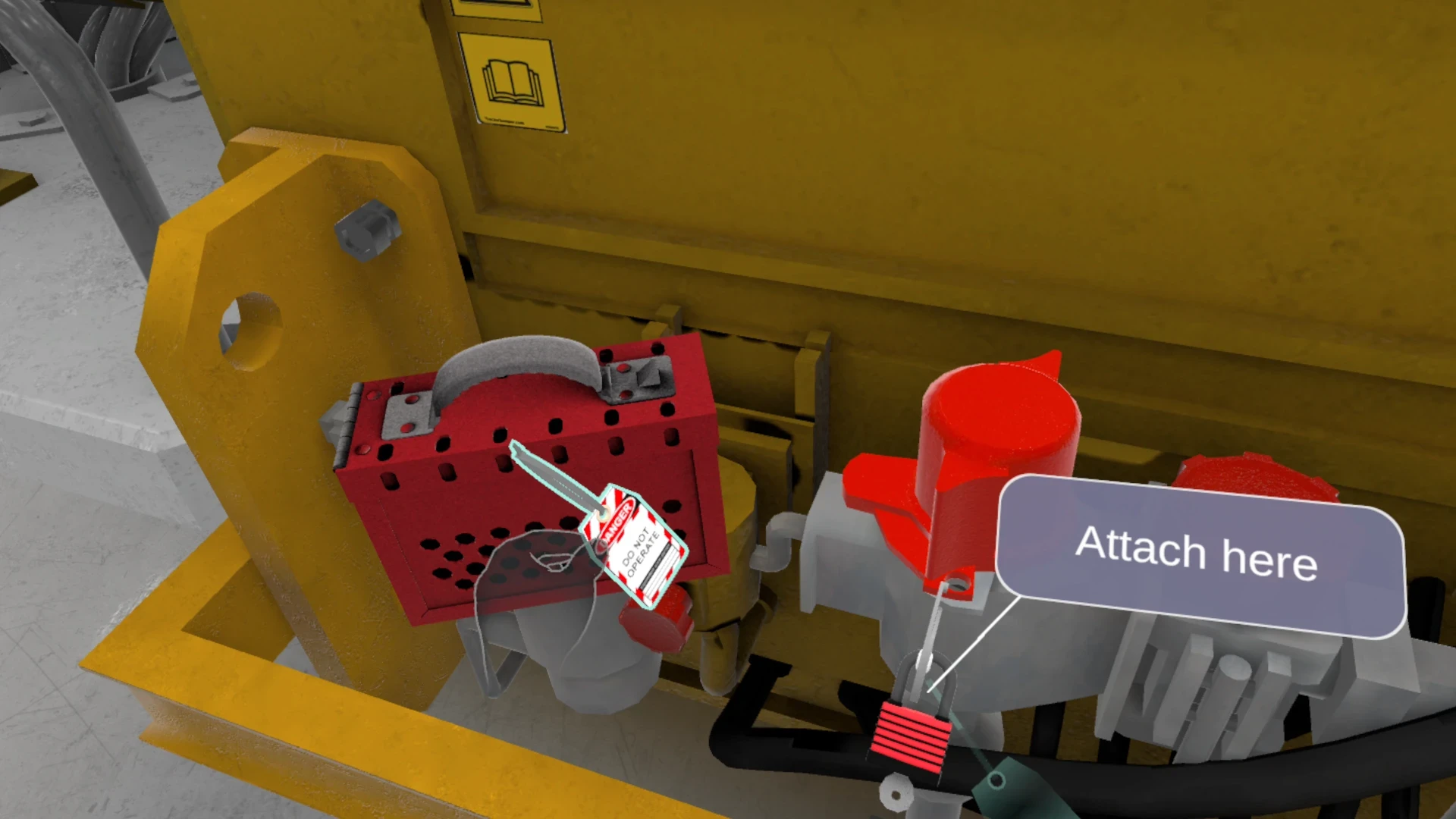
Lockout tagout training with full hand tracking in VR.
Services
Interactive Training
Flat-Screen Simulations
Desktop, web & mobile simulations
/services/flat-screen-simulation-training
SHIIFT simulations running on laptops and mobile devices.

Services
Interactive Training
Digital Twins
Navigable sites & equipment
/services/digital-twins
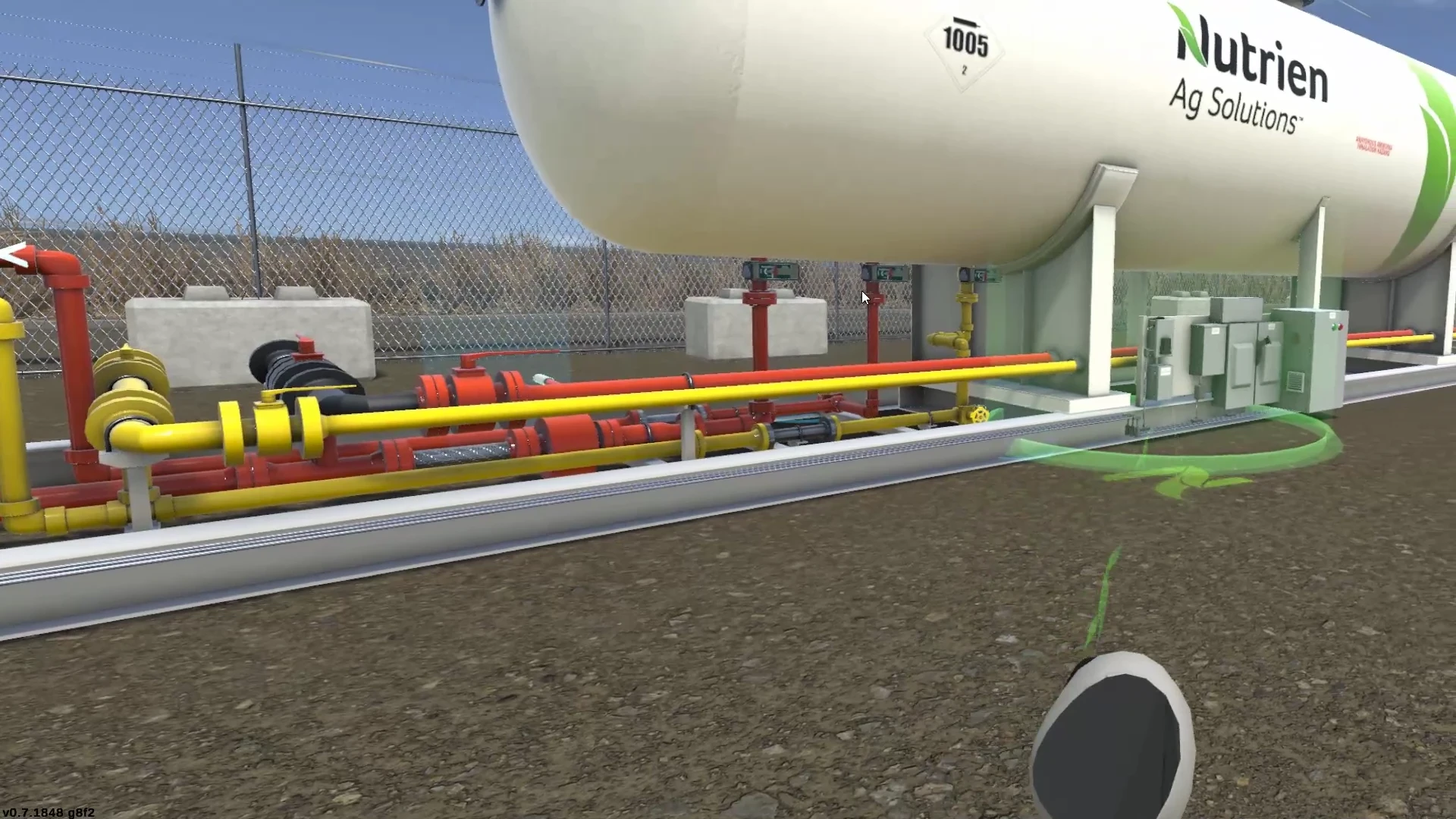
A navigable 3D replica of Nutrien's ammonia transfer plant.
Approach
How We Work
Our approach
Analysis, design, delivery, validation
/approach
Approach
How We Work
SCORM & LMS Integration
Tracking in your systems
/services/scorm-lms-integration
Approach
How We Work
Scenario-Based Assessments
Competency you can prove
/services/scenario-based-assessments