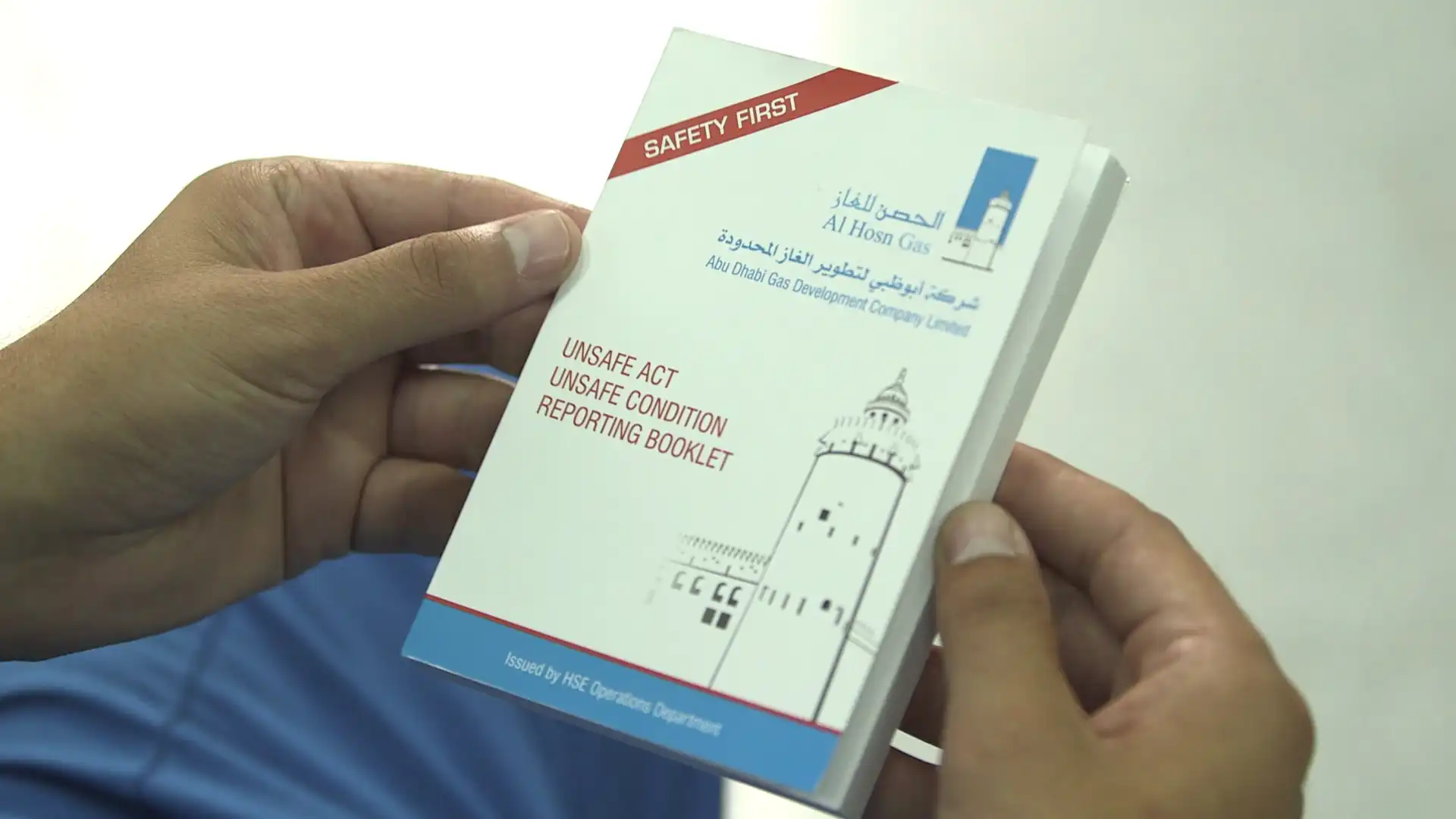
According to OSHA data on hydrogen sulfide health effects, hydrogen sulfide (H2S) can disable a worker within a breath or two at high concentrations, and the warning sign people expect, the smell of rotten eggs, can disappear before the danger does. That combination puts a lot of weight on training. Workers need to know how the gas behaves, where it collects, what their detectors are telling them and what to do in the first seconds of an alarm, without ever having met the real thing.
What is hydrogen sulfide and where is it found?
Hydrogen sulfide is a colorless, flammable gas with a rotten egg smell, and the OSHA hydrogen sulfide fact sheet describes it as extremely hazardous. It's heavier than air, so it can travel along the ground and build up in low-lying areas and confined spaces such as sewers and manure pits. OSHA's hydrogen sulfide safety topic page lists industries where it's used or produced, including oil and gas refining, mining, tanning, pulp and paper processing and rayon manufacturing.
It's also explosive. OSHA's page on hydrogen sulfide hazards gives its explosive range in air as 4.3 to 45 percent, so a release can be a fire and explosion hazard as well as a toxic one.
What are the H2S exposure limits?
Several bodies publish limits, and they differ. Training should explain which ones apply to your operation and how they relate to the alarm settings on your detectors. The figures below are as listed on OSHA's hydrogen sulfide standards page:
OSHA general industry: a 20 ppm ceiling, with exposures up to 50 ppm allowed for a single period of up to 10 minutes if no other measurable exposure occurs during the 8-hour shift
OSHA construction: 10 ppm as an 8-hour time-weighted average (TWA)
OSHA shipyards: 10 ppm as an 8-hour TWA
NIOSH recommended exposure limit: a 10 ppm ceiling over 10 minutes
ACGIH threshold limit value: 1 ppm as an 8-hour TWA, with a 5 ppm short-term exposure limit
NIOSH immediately dangerous to life or health (IDLH): 100 ppm
An operator may also adopt a company limit stricter than the legal minimum. Whatever the numbers are on your site, workers should hear them in plain terms: what each alarm level means and what they're expected to do when it sounds. Training should get workers to act at once when the monitor alarms, without having to recall the ceiling limit.
How does H2S affect the body at different concentrations?
OSHA's table of hydrogen sulfide health effects by concentration includes a few points worth building into training:
At 2 to 5 ppm, prolonged exposure may cause nausea, watering eyes, headaches or loss of sleep.
At 100 ppm, breathing can be altered and drowsiness can set in after 15 to 30 minutes.
At 500 to 700 ppm, people can stagger and collapse within 5 minutes.
At 700 to 1,000 ppm, unconsciousness can follow within one or two breaths, and death within minutes.
The speed at the top of that range is the reason H2S procedures focus so hard on detection and immediate escape. There's no time to investigate or wait to see whether symptoms develop.

Why can't workers rely on the smell of H2S?
The rotten egg smell is real at low concentrations, and people learn to associate it with the gas. The problem is olfactory fatigue. OSHA's hydrogen sulfide hazards page notes a loss of smell after 2 to 15 minutes at 100 ppm. The OSHA H2S fact sheet warns that at high concentrations the ability to smell the gas can be lost instantly, and tells workers not to rely on their sense of smell to detect it.
This message needs emphasis in any H2S course, because it runs against instinct. A worker who smelled the gas a minute ago and now smells nothing may assume it has cleared. Training needs to replace that assumption with the rule that only a detector reading shows whether the gas has cleared.
H2S detection and alarms
Workers in H2S areas need to understand both the personal monitor they carry and the fixed detection around them. Training should cover:
Where to wear a personal monitor so it samples the air they're breathing
The checks required before use, following the manufacturer's instructions and your site procedure
What each alarm level sounds and looks like, on personal monitors and on fixed systems
The site-wide alarm and how it differs from other alarms on site
What to do on each alarm, in order, with no room for interpretation
Because the gas is heavier than air, workers should also understand why readings can be higher in pits, trenches, diked areas and other low points than at head height nearby.
H2S escape routes and wind direction
When an alarm sounds, the escape route matters as much as the speed. For toxic, flammable gases such as H2S, the US DOT Emergency Response Guidebook (Guide 117) tells people to stay upwind and uphill, and warns that gases heavier than air spread along the ground and collect in low or confined areas. Your site procedure will set the exact escape direction. Training should make sure every worker can:
Find the nearest windsock from any part of the site and read it quickly
Choose a route that keeps them out of the gas, following the site's escape rules
Avoid low ground where the gas can collect
Use escape breathing equipment if the site issues it
Reach the right muster point and report in for the headcount

Wind changes through the day, and a muster point that's safe in one wind direction may not be safe in another. That's one reason a site may designate more than one, and why workers need to understand the logic behind the choice as well as the location.
Site-specific training helps here. When Al Hosn Gas needed to induct a large incoming workforce at the Shah Gas Development in Abu Dhabi, where high-concentration hydrogen sulfide was among the main hazards, the Shah Gas HSE induction film was shot on site in real operational areas, including control rooms and emergency muster points. A companion series of language-neutral 3D animations covered the Life Saving Rules, including one on H2S.
How do you rescue someone without becoming a casualty?
The instinct to run to a collapsed colleague is strong, and with H2S it can produce a second victim. OSHA's hydrogen sulfide safety page warns that the gas can overcome unprepared workers almost immediately, including rescue workers. The OSHA H2S fact sheet says never to attempt a rescue in an area that may contain H2S without appropriate respiratory protection and without being trained to perform that rescue.
Training for everyone in an H2S area should cover raising the alarm, staying out of the gas, keeping others back and directing the trained response team to the casualty. Training for the people who will carry out rescues goes further, covering breathing apparatus, working in pairs, the rescue plan for the specific area and the handover to medical care. The article on the true cost of a confined space incident looks at how unplanned rescues turn one casualty into several.
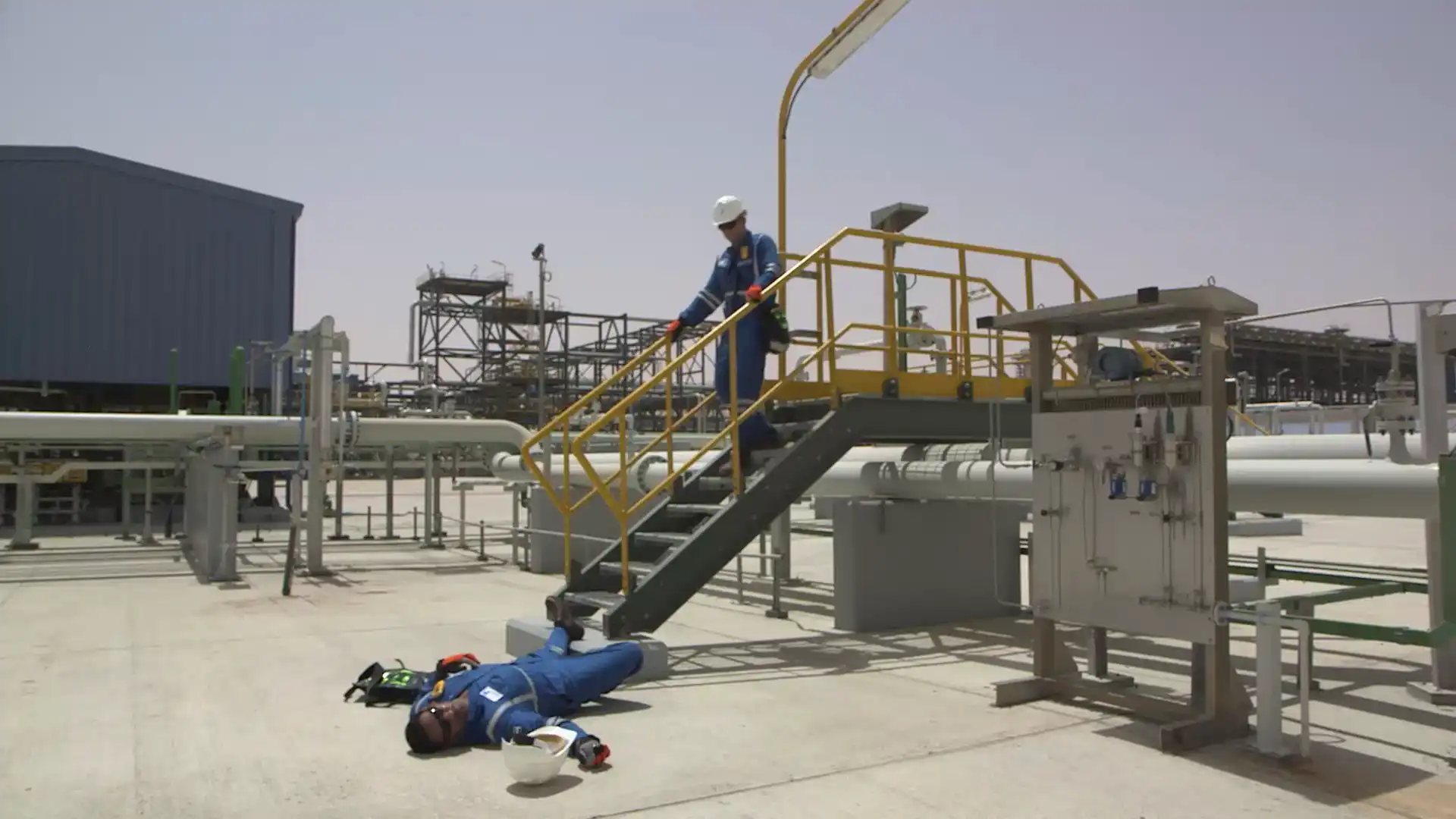
{caption}Still taken from Al Hosn Gas's Shah Gas HSE induction film
Where does H2S training fall short?
The weak spots in H2S training sit where the right response contradicts instinct or habit. Watch for these:
Teaching exposure limits as numbers to memorize, without tying each one to an alarm level and an action
Leaving smell as an informal backup, so workers trust their nose when the detector and the nose disagree
Treating an alarm as a prompt to find the source, when the procedure says to leave first
Teaching one muster point as a location to remember, without the wind logic that decides which one to use
Covering rescue in a sentence, so the instinct to help a collapsed colleague goes unchallenged
Training once at induction, then relying on memory for a hazard that may not alarm for months
Why is H2S hard to train?
You can't expose people to the gas to show them what it does. It's invisible, and a worker may go a long time between a real alarm and their last training session. A table of exposure limits on its own doesn't prepare anyone for an alarm going off while they're halfway up a stair tower in a crosswind.
Training can make the hazard visible. It can show a plume moving with the wind, gas pooling in a pit, a monitor reading climbing as someone walks toward a leak, or a rescuer collapsing beside the person they went in for. It can also put learners at decision points, such as which way to go and whether to enter, and show the consequence of each choice. That content then needs backing on site with regular escape drills, so the route is walked as well as seen, and with refresher training scheduled before knowledge fades.
The training also has to work for everyone who enters H2S areas, whatever their language or education. In the ADNOC HSE e-learning program, H2S was one of the topics alongside life-saving rules, offshore induction, ergonomics and driving safety, built for a workforce with many languages and differing levels of education.

{caption}Still taken from ADNOC's HSE e-learning program
What should an H2S safety training program cover?
As a checklist, a complete program covers:
Properties of H2S: heavier than air, flammable, explosive and toxic
Where it occurs on your site, including low points and confined spaces
The exposure limits and alarm levels that apply to your operation
Health effects and how fast they develop at high concentrations
Olfactory fatigue and why smell isn't a warning system
Personal and fixed detection, where to wear a monitor, pre-use checks and alarm responses
Escape routes, wind direction, escape breathing equipment and muster
The rescue plan, and the rule that untrained, unprotected people stay out
Permits and procedures for H2S areas on your site
Escape drills and a refresher schedule
Each item should be taught in terms of your site, your equipment, your alarm settings and your procedures, using the methods in hazard recognition training to ground it in what people will meet on the job.
Solutions
Safety Training
Hazard recognition
Spot risks before incidents
/solutions/hazard-recognition-training
Solutions
Safety Training
Life-Saving Rules
Critical rules as decisions
/solutions/life-saving-rules-training
Solutions
Safety Training
Behavioral safety
Stop work authority, used
/solutions/behavioral-safety-training
Solutions
Safety Training
Hand safety
Fewer hand injuries
/solutions/hand-safety-training
Solutions
Safety Training
PPE selection & use
The right kit, worn right
/solutions/ppe-training
Solutions
Safety Training
H2S & gas awareness
The invisible hazard, visible
/solutions/h2s-gas-awareness-training
Solutions
Safety Training
Fire & emergency response
Beyond the routine drill
/solutions/fire-safety-emergency-response-training
Solutions
Safety Training
Toolbox talks
Five strong minutes weekly
/solutions/toolbox-talk-content
Solutions
Safety Training
Permit to work
PTW judgment scenarios
/solutions/permit-to-work-training
Solutions
Safety Training
Isolation & LOTO
Safe energy isolation
/solutions/isolation-lockout-tagout-training
Solutions
Safety Training
Confined space entry
Entries and rescue response
/solutions/confined-space-entry-training
Solutions
Safety Training
Working at height
Falls and dropped objects
/solutions/working-at-height-training
Solutions
Safety Training
Lifting & rigging
Safer critical lifts
/solutions/lifting-rigging-training
Solutions
Safety Training
Hot work
Sparks under control
/solutions/hot-work-training
Solutions
Safety Training
Line of fire
See the energy path
/solutions/line-of-fire-training
Solutions
Safety Training
Driver safety
Safer driving and journeys
/solutions/driver-safety-training
Solutions
Safety Training
Electrical safety
Safe isolation, arc flash aware
/solutions/electrical-safety-training
Solutions
Safety Training
Excavation work
Trenches and buried services
/solutions/excavation-safety-training
Solutions
Safety Training
Ergonomics
Strain prevention that sticks
/solutions/ergonomics-training
Solutions
Safety Training
Situational awareness
Noticing change on site
/solutions/situational-awareness-training
Solutions
Onboarding & People
Site orientation
Inductions before day one
/solutions/site-orientation-onboarding
Solutions
Onboarding & People
Expatriate workforce
Localized multilingual training
/solutions/expatriate-workforce-training
Solutions
Onboarding & People
Visitor inductions
Pre-arrival essentials
/solutions/visitor-induction-training
Solutions
Onboarding & People
Leadership training
Judgment, developed
/solutions/leadership-training
Solutions
Onboarding & People
Soft skills
Conversations that work
/solutions/soft-skills-training
Solutions
Onboarding & People
Safety leadership
Frontline supervisor skills
/solutions/safety-leadership-training
Solutions
Onboarding & People
Human factors
Error traps and defenses
/solutions/human-factors-training
Solutions
Operations & Technical
Process & procedures
Step-by-step competence
/solutions/process-procedure-training
Solutions
Operations & Technical
Operational readiness
Ready before start-up
/solutions/operational-readiness
Solutions
Operations & Technical
Technical training
Complex systems explained
/solutions/technical-training
Solutions
Operations & Technical
Control room & DCS
Alarms and upset response
/solutions/control-room-training
Solutions
Operations & Technical
Crane operation
Operators, banksmen, supervisors
/solutions/crane-operation-training
Solutions
Operations & Technical
Forklift operation
Operators, pedestrians, supervisors
/solutions/forklift-operation-training
Solutions
Operations & Technical
Maintenance & turnarounds
Outage preparation
/solutions/maintenance-turnaround-training
Solutions
Operations & Technical
Process safety
Barriers made visible
/solutions/process-safety-training
Solutions
Compliance & Modernization
Lessons learned (LFI)
Incidents into training
/solutions/lessons-learned-training
Solutions
Compliance & Modernization
Spill response
Environmental first response
/solutions/spill-response-training
Solutions
Compliance & Modernization
Hazardous materials
Storage, handling, transport
/solutions/hazardous-materials-training
Solutions
Compliance & Modernization
Security awareness
Physical and cyber vigilance
/solutions/security-awareness-training
Services
Content Production
Training Videos
Filmed through our global crew network
/services/workplace-safety-training-videos
A safety orientation film produced for Milestone Environmental Services.

Services
Content Production
2D & 3D Animation
Engineering-accurate visuals
/services/2d-3d-animation
From a 3D animation built to supplement an ADNOC e-learning module.

Services
Content Production
Safety Campaigns
Sustained behavior change
/services/safety-campaigns
The award-recognized Maersk hand safety campaign.
Services
Content Production
Training posters & print
Site-specific print & visual aids
/services/training-posters
A printed lessons learned handbook produced for Petroleum Development Oman.
Services
Content Production
PowerPoint Materials
Trainer-led deck rebuilds
/services/powerpoint-training-materials
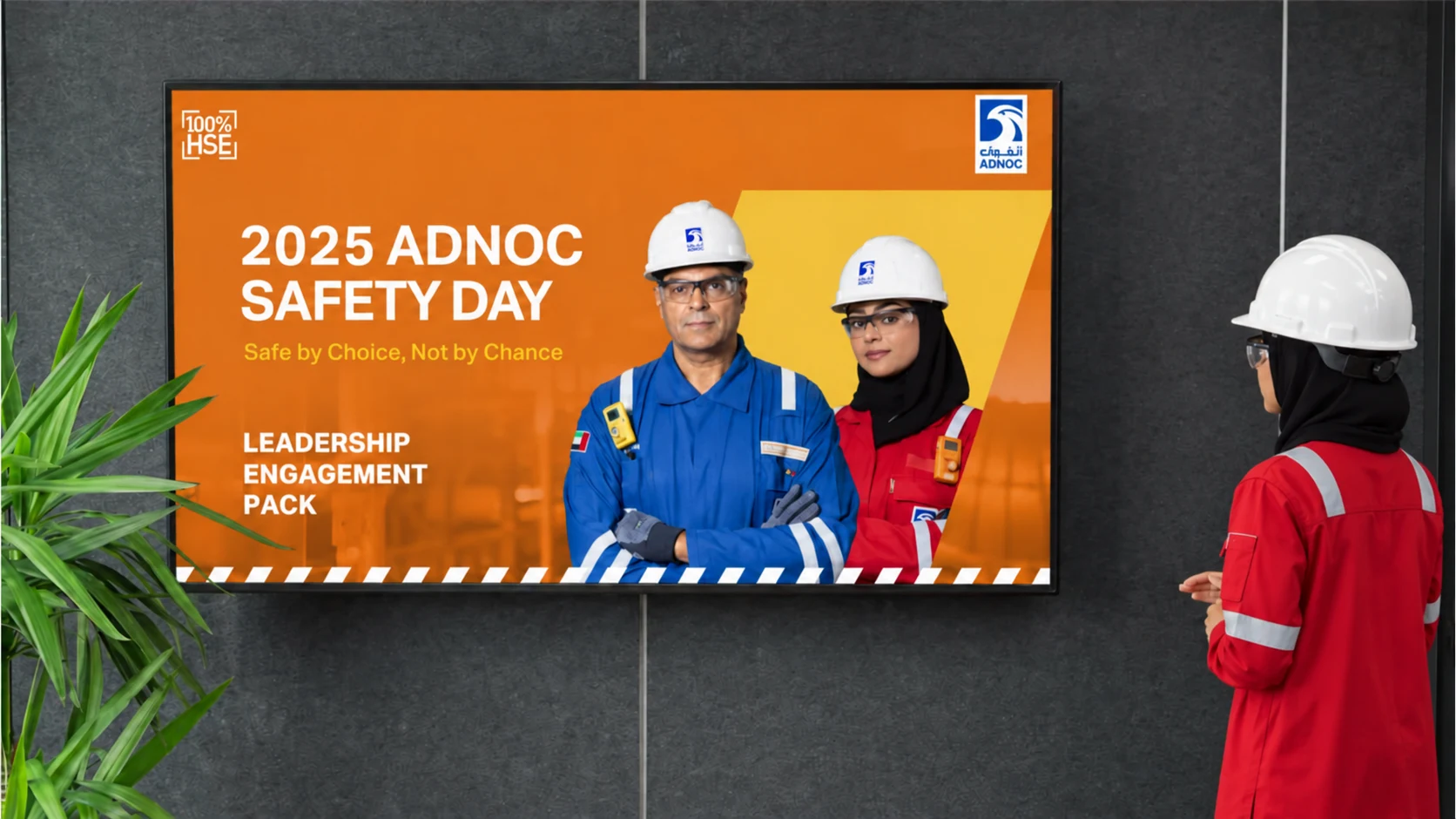
Presenting an ADNOC Safety Day engagement deck.
Services
Interactive Training
E-Learning
SCORM online modules
/services/e-learning
Scenario questions inside a client e-learning module.

Services
Interactive Training
Virtual Reality (VR)
Immersive headset training
/services/virtual-reality-vr-training
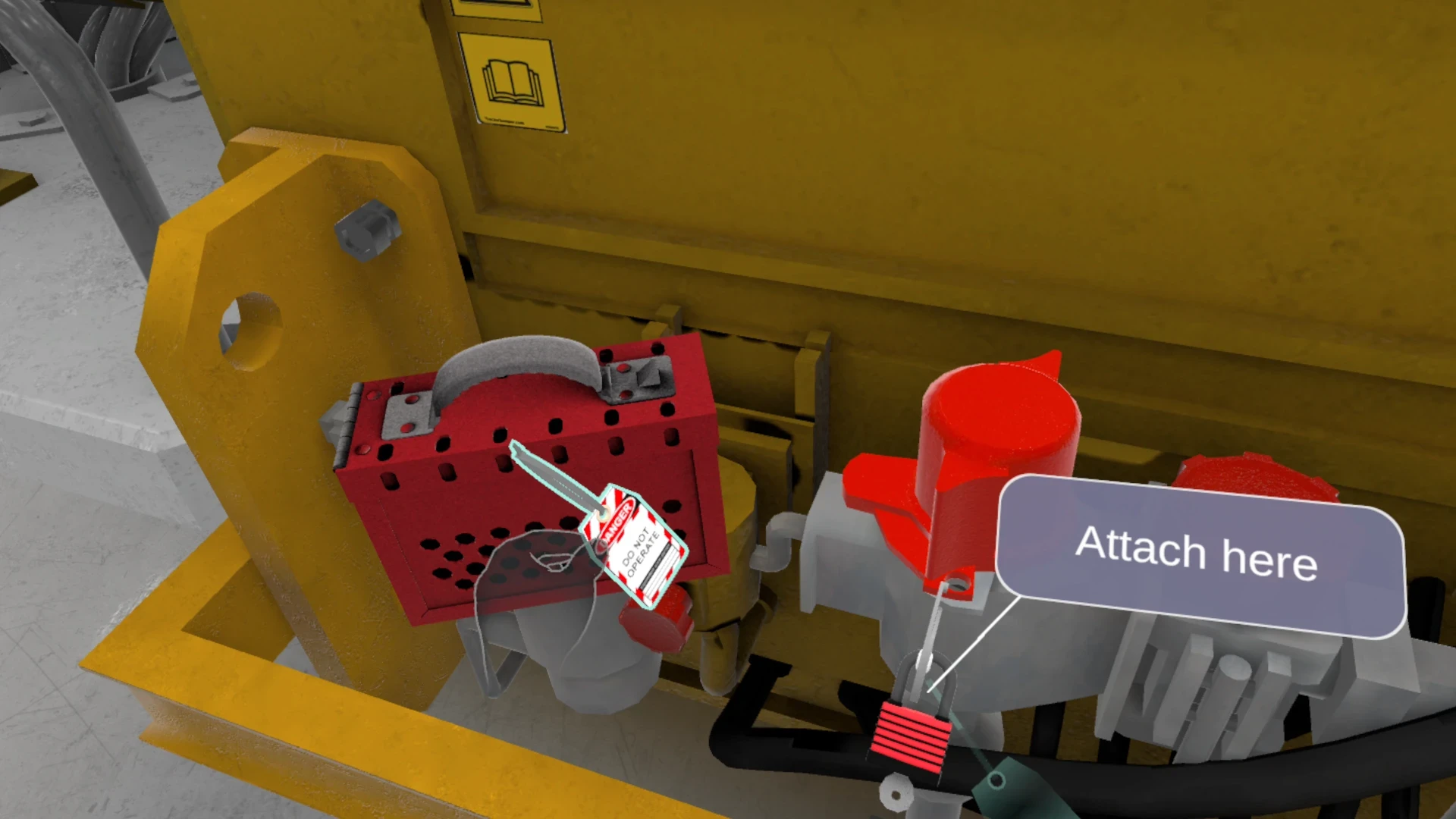
Lockout tagout training with full hand tracking in VR.
Services
Interactive Training
Flat-Screen Simulations
Desktop, web & mobile simulations
/services/flat-screen-simulation-training
SHIIFT simulations running on laptops and mobile devices.

Services
Interactive Training
Digital Twins
Navigable sites & equipment
/services/digital-twins
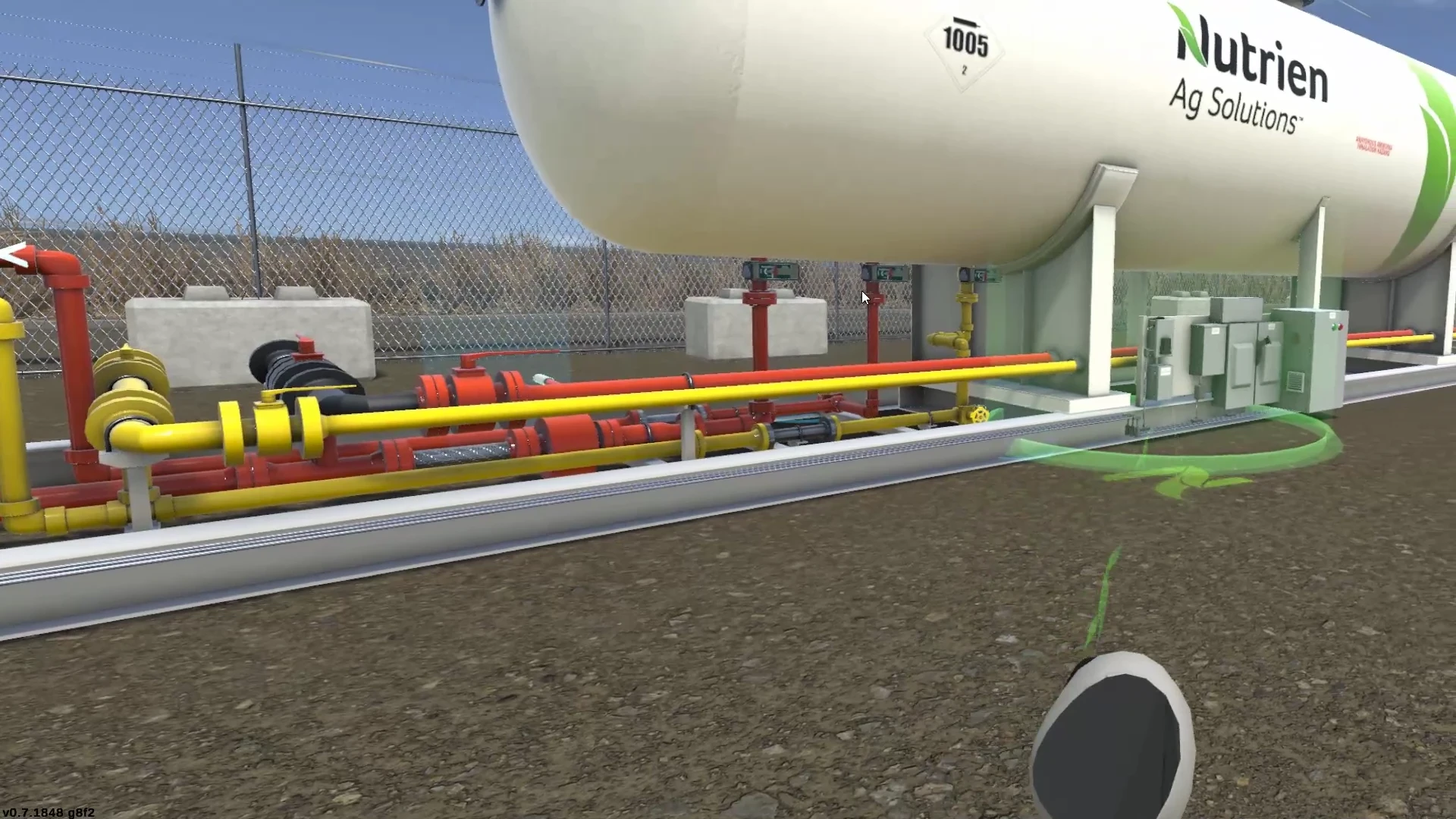
A navigable 3D replica of Nutrien's ammonia transfer plant.
Approach
How We Work
Our approach
Analysis, design, delivery, validation
/approach
Approach
How We Work
SCORM & LMS Integration
Tracking in your systems
/services/scorm-lms-integration
Approach
How We Work
Scenario-Based Assessments
Competency you can prove
/services/scenario-based-assessments