
Introduction
Hazard recognition training is a crucial part of safety training in any high-risk workplace like in a manufacturing or construction environment. The best way to train in hazard recognition is making users aware of important safety rules and risks that are involved in their workplace. After being taught on each potential hazard, risk spotting exercises are a great solution for hazard recognition training.
Implementing risk spotting exercises give workers structured practice in seeing what they might otherwise overlook, helping them identify unsafe conditions before they escalate into near misses or recordable incidents. These exercises turn hazard recognition from a one-time briefing into a repeatable habit that supports day‑to‑day safety.
What Does Hazard Recognition Mean in Safety Training?
Hazard recognition is the skill of noticing conditions, behaviors, and situations that could cause harm before an incident occurs. It underpins effective safety performance because workers who can quickly spot risks are far more likely to prevent injuries, damage, and disruption.
In a workplace context, hazard recognition is the deliberate process of scanning tasks, tools, equipment, environments, and behaviors to identify anything that has the potential to cause harm. It includes both obvious issues, such as missing machine guards or liquid on the floor, and subtler cues like poor lighting, awkward body positions, or a rushed work pace.
The purpose of hazard recognition is to identify potential sources of harm early enough that controls can be applied, eliminating the hazard where possible or reducing the associated risk to an acceptable level. This process connects directly to risk assessment and control: workers spot a potential hazard, consider who might be harmed and how, and then act through controls, reporting, or stopping the job if necessary.
After risk assessment, it’s important that employees are trained to recognize hazards by practicing situational awareness so that if they notice an active hazard, it can be dealt with.
Why Is It Important to Learn Hazard Recognition
Early identification of hazards helps prevent injuries, equipment damage, quality issues, and unplanned downtime, etc, by stopping incidents before they start. When workers are trained to pause and look for what could go wrong, they are better able to intervene by fixing the issue, escalating it, or adjusting the task before someone gets hurt.
This skill is critical in high‑risk industries such as construction, manufacturing, energy, mining, and many other industrial sectors where exposure to hazards is frequent and the consequences of error can be severe. At the same time but on a smaller scale, hazard recognition also matters in everyday tasks like office work, driving between sites, or using handheld tools, where slips, trips, strains, or vehicle collisions are common if risks go unnoticed.
Regulators and industry standards expect organizations to take a proactive approach to hazard identification, making it a core part of occupational health and safety management. Learning hazard recognition equips workers to contribute to these expectations by actively spotting, reporting, and helping to control risks.
What Makes Hazard Recognition Training Effective?
Hazard recognition training is effective because it relies on experiential practice and repetition to build lasting habits. When workers repeatedly engage with realistic scenarios, they strengthen the mental “pattern recognition” needed to quickly notice when something looks wrong or out of place.
Practical scenarios, such as reviewing photos, video clips, or walk‑throughs, improve situational awareness by forcing participants to actively scan, question, and prioritize what they see. Instead of passively listening to rules, they practice applying them in context.
Structured exercises also improve decision making and hazard prioritization by guiding workers through questions like: “What is the most serious hazard here?”, “Who could be harmed?”, and “What should be done first?”. Over time, these exercises help workers move from vague concern (“this doesn’t look right”) to clear action (“this guard is missing; the machine must be isolated and reported”).
Core Elements of an Effective Approach to Hazard Recognition Training
An effective hazard recognition program starts with clear learning objectives that are adapted to job roles. For example, line operators may focus on machine guarding and ergonomics, while drivers emphasize traffic management, loading, and fatigue indicators. The clearer the expected outcomes, the easier it is to design impactful exercises and measure progress.
Immediate feedback is another core element. After each exercise, facilitators should reveal all hazards, explain why each matters, and discuss what controls should be in place. Highlighting missed hazards without blame encourages learning and helps workers update their mental models.
Exercises should align with existing safety procedures and reporting processes so that workers understand not only how to spot hazards, but also how to record them, who to notify, and what steps to take. This integration ensures training reinforces the broader safety management system rather than sitting in isolation.
Include a mix of exercise formats such as images, videos, site walk sessions and immersive simulations to build pattern recognition for each individual. Each worker learns best in different formats, but generally the more engaging the training is, the more effective it will be in preparing staff for recognizing hazards.
How to Implement Hazard Recognition Training
Use Job-Specific Hazard Lists: Identify the most common and high-risk hazards for each role and use them as the foundation for exercises.
Integrate into Safety Meetings: Include short hazard spotting activities or discussions during toolbox talks, briefings, or shift starts.
Interactive Visual Tools: Use photos, videos, diagrams, or VR simulations to show real-world hazards and allow workers to practise identifying them.
Scenario-Based Exercises: Create short task-based scenarios or “spot the hazard” challenges to test recognition skills in a controlled environment.
Peer Observation Programs: Encourage employees to observe coworkers during tasks, identify potential hazards, and discuss findings.
Knowledge Sharing Assets: Develop case studies, infographics, or short videos highlighting hazards and controls to reinforce learning across teams.
Continuous Updates: Regularly update training content with new hazards, near misses, or site changes to keep exercises relevant.
Real-World Hazard Recognition Training Examples
TotalEnergies TotalEnergies have developed multiple interactive hazard recognition trainings using risk hunt exercises for their WDfS (World Day for Safety), they’ve used multiple formats with 2D or 3D still images paired with answer sheets as well as interactive software that allow employees to engage with learning their 12 golden rules for safety. (Not created by SHIIFT) James Hardie
For James Hardie, SHIIFT created an immersive risk hunt exercise that was uploaded directly into their LMS for optimal tracking and ease of access for each of their users. James Hardie approached us with the goal of training their non-construction worker staff via an engaging format so they can learn best practice for safety when visiting one of their sites, and was also used in their annual Zero Harm Safety Month.
Challenges and Considerations with Hazard Recognition Training
Over‑familiarity with sites: Workers in the same area for years may “stop seeing” hazards as they blend into the background. Rotating exercises, changing perspectives, and using fresh images or routes can help.
Balancing realism and complexity: Scenarios must be realistic without overwhelming participants. Including too many hazards or very rare cases can reduce engagement. A mix of obvious and subtle hazards with a clear learning focus keeps exercises effective.
Consistency across locations and shifts: Ensuring all teams receive the same quality of training can be difficult, particularly in multi-site organizations. Standardized core materials with local customization often work best.
Time constraints: Finding time for training can be challenging. Embedding short hazard recognition exercises into existing meetings or briefings helps maintain regular practice.
Objective measurement of competence: Attendance alone is insufficient. Practical assessments, scenario scores, quality of hazard reports, and observed behavior in the field provide better insight into workers’ ability to recognize and act on hazards.
Conclusion
Structured hazard recognition practice turns “looking around” into a disciplined safety habit. By regularly engaging workers in risk spotting exercises, organizations strengthen awareness, improve decision‑making, and create a consistent expectation that hazards will be noticed and addressed.
When hazard recognition becomes part of everyday work, incident rates tend to fall and a proactive safety culture takes root. Consistent hazard recognition training ensures workers won’t know what to look out or only during a risk assessment before work starts, but also to avoid risks themselves and call them out if they notice a risk after the work has started.
Solutions
Safety Training
Hazard recognition
Spot risks before incidents
/solutions/hazard-recognition-training
Solutions
Safety Training
Life-Saving Rules
Critical rules as decisions
/solutions/life-saving-rules-training
Solutions
Safety Training
Behavioral safety
Stop work authority, used
/solutions/behavioral-safety-training
Solutions
Safety Training
Hand safety
Fewer hand injuries
/solutions/hand-safety-training
Solutions
Safety Training
PPE selection & use
The right kit, worn right
/solutions/ppe-training
Solutions
Safety Training
H2S & gas awareness
The invisible hazard, visible
/solutions/h2s-gas-awareness-training
Solutions
Safety Training
Fire & emergency response
Beyond the routine drill
/solutions/fire-safety-emergency-response-training
Solutions
Safety Training
Toolbox talks
Five strong minutes weekly
/solutions/toolbox-talk-content
Solutions
Safety Training
Permit to work
PTW judgment scenarios
/solutions/permit-to-work-training
Solutions
Safety Training
Isolation & LOTO
Safe energy isolation
/solutions/isolation-lockout-tagout-training
Solutions
Safety Training
Confined space entry
Entries and rescue response
/solutions/confined-space-entry-training
Solutions
Safety Training
Working at height
Falls and dropped objects
/solutions/working-at-height-training
Solutions
Safety Training
Lifting & rigging
Safer critical lifts
/solutions/lifting-rigging-training
Solutions
Safety Training
Hot work
Sparks under control
/solutions/hot-work-training
Solutions
Safety Training
Line of fire
See the energy path
/solutions/line-of-fire-training
Solutions
Safety Training
Driver safety
Safer driving and journeys
/solutions/driver-safety-training
Solutions
Safety Training
Electrical safety
Safe isolation, arc flash aware
/solutions/electrical-safety-training
Solutions
Safety Training
Excavation work
Trenches and buried services
/solutions/excavation-safety-training
Solutions
Safety Training
Ergonomics
Strain prevention that sticks
/solutions/ergonomics-training
Solutions
Safety Training
Situational awareness
Noticing change on site
/solutions/situational-awareness-training
Solutions
Onboarding & People
Site orientation
Inductions before day one
/solutions/site-orientation-onboarding
Solutions
Onboarding & People
Expatriate workforce
Localized multilingual training
/solutions/expatriate-workforce-training
Solutions
Onboarding & People
Visitor inductions
Pre-arrival essentials
/solutions/visitor-induction-training
Solutions
Onboarding & People
Leadership training
Judgment, developed
/solutions/leadership-training
Solutions
Onboarding & People
Soft skills
Conversations that work
/solutions/soft-skills-training
Solutions
Onboarding & People
Safety leadership
Frontline supervisor skills
/solutions/safety-leadership-training
Solutions
Onboarding & People
Human factors
Error traps and defenses
/solutions/human-factors-training
Solutions
Operations & Technical
Process & procedures
Step-by-step competence
/solutions/process-procedure-training
Solutions
Operations & Technical
Operational readiness
Ready before start-up
/solutions/operational-readiness
Solutions
Operations & Technical
Technical training
Complex systems explained
/solutions/technical-training
Solutions
Operations & Technical
Control room & DCS
Alarms and upset response
/solutions/control-room-training
Solutions
Operations & Technical
Crane operation
Operators, banksmen, supervisors
/solutions/crane-operation-training
Solutions
Operations & Technical
Forklift operation
Operators, pedestrians, supervisors
/solutions/forklift-operation-training
Solutions
Operations & Technical
Maintenance & turnarounds
Outage preparation
/solutions/maintenance-turnaround-training
Solutions
Operations & Technical
Process safety
Barriers made visible
/solutions/process-safety-training
Solutions
Compliance & Modernization
Lessons learned (LFI)
Incidents into training
/solutions/lessons-learned-training
Solutions
Compliance & Modernization
Spill response
Environmental first response
/solutions/spill-response-training
Solutions
Compliance & Modernization
Hazardous materials
Storage, handling, transport
/solutions/hazardous-materials-training
Solutions
Compliance & Modernization
Security awareness
Physical and cyber vigilance
/solutions/security-awareness-training
Services
Content Production
Training Videos
Filmed through our global crew network
/services/workplace-safety-training-videos
A safety orientation film produced for Milestone Environmental Services.

Services
Content Production
2D & 3D Animation
Engineering-accurate visuals
/services/2d-3d-animation
From a 3D animation built to supplement an ADNOC e-learning module.

Services
Content Production
Safety Campaigns
Sustained behavior change
/services/safety-campaigns
The award-recognized Maersk hand safety campaign.

Services
Content Production
Training posters & print
Site-specific print & visual aids
/services/training-posters
A printed lessons learned handbook produced for Petroleum Development Oman.

Services
Content Production
PowerPoint Materials
Trainer-led deck rebuilds
/services/powerpoint-training-materials
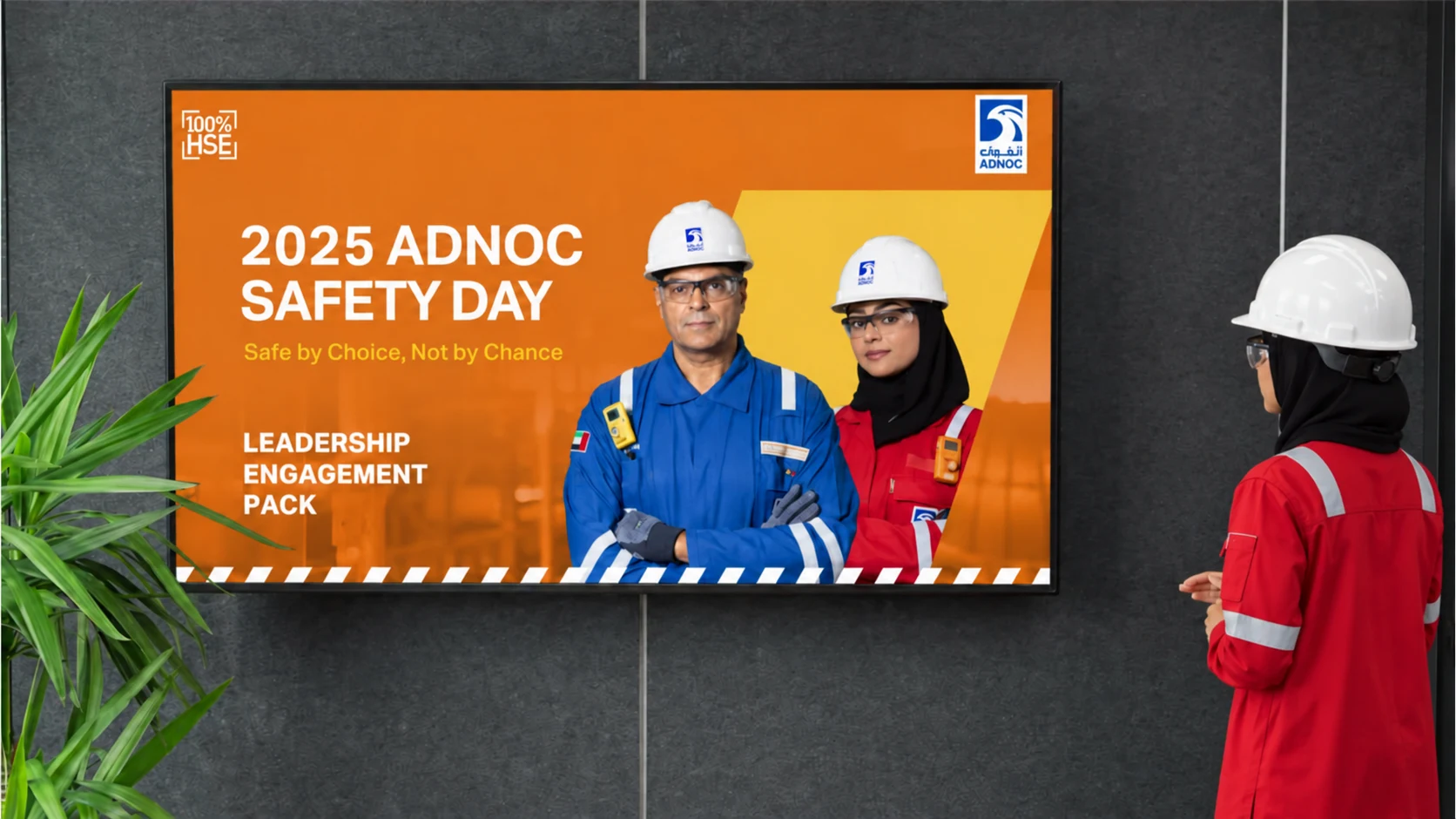
Presenting an ADNOC Safety Day engagement deck.
Services
Interactive Training
E-Learning
SCORM online modules
/services/e-learning
Scenario questions inside a client e-learning module.

Services
Interactive Training
Virtual Reality (VR)
Immersive headset training
/services/virtual-reality-vr-training
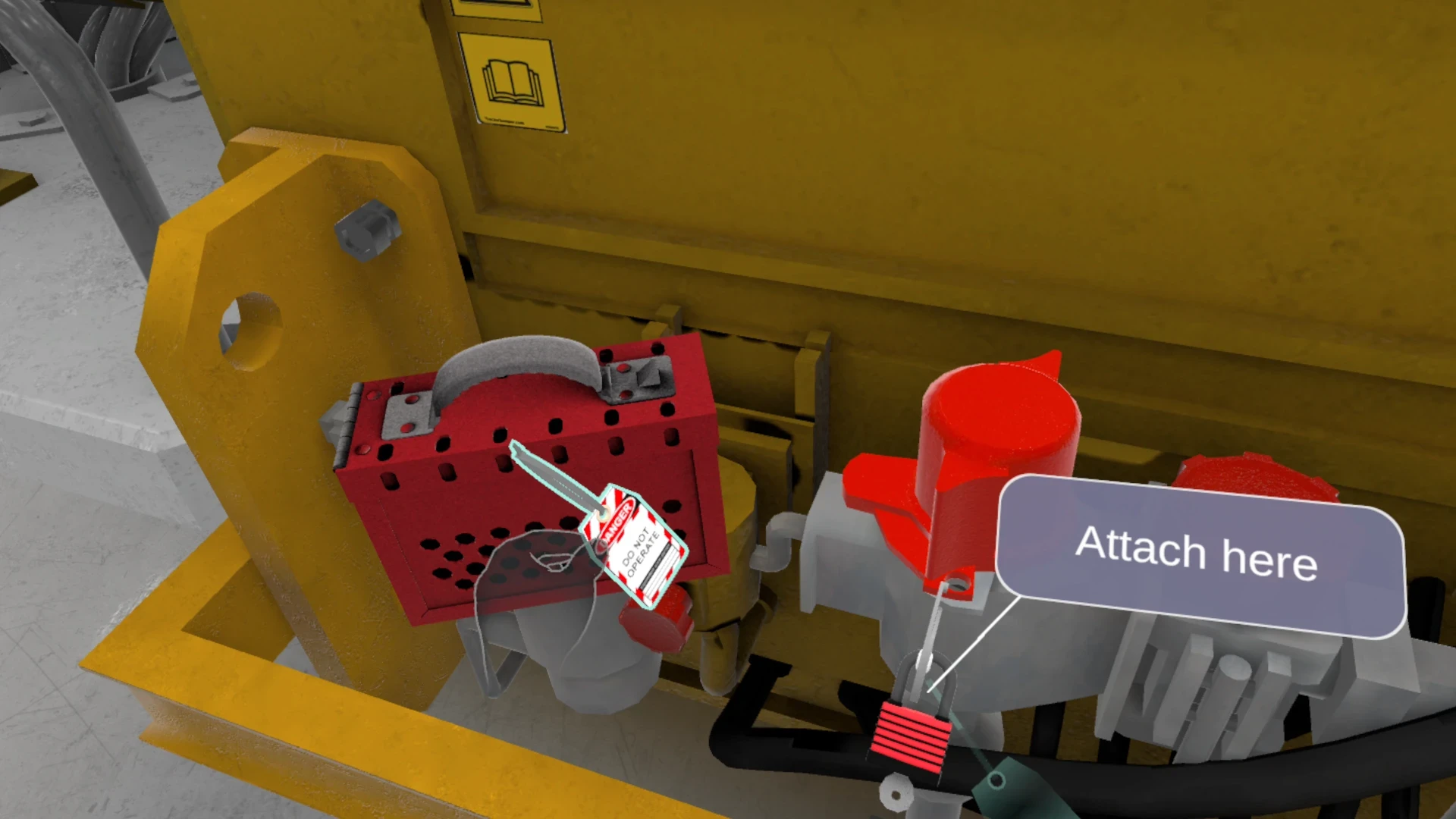
Lockout tagout training with full hand tracking in VR.
Services
Interactive Training
Flat-Screen Simulations
Desktop, web & mobile simulations
/services/flat-screen-simulation-training
SHIIFT simulations running on laptops and mobile devices.

Services
Interactive Training
Digital Twins
Navigable sites & equipment
/services/digital-twins
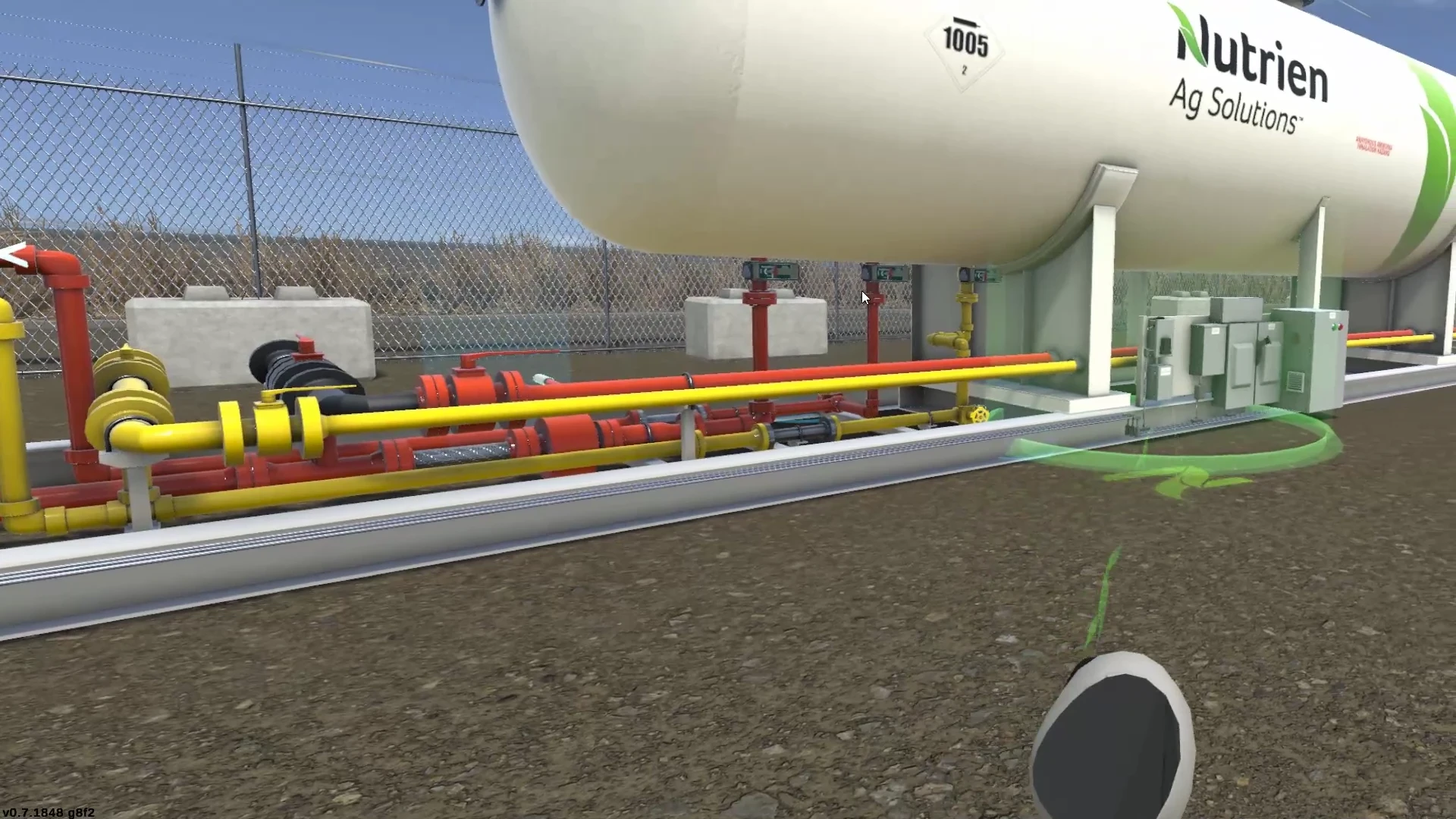
A navigable 3D replica of Nutrien's ammonia transfer plant.
Approach
How We Work
Our approach
Analysis, design, delivery, validation
/approach
Approach
How We Work
SCORM & LMS Integration
Tracking in your systems
/services/scorm-lms-integration
Approach
How We Work
Scenario-Based Assessments
Competency you can prove
/services/scenario-based-assessments