Leadership will want to know whether a safety training program worked. Completion rates and post-course survey scores are easy to report, but they don't say whether people are working more safely. Injury numbers matter, but on their own they move slowly and are shaped by many things besides training.
What can safety training realistically change?
It helps to start with honest expectations. A 2012 Institute for Work & Health systematic review of OHS training effectiveness, published in the Scandinavian Journal of Work, Environment & Health, found strong evidence that occupational health and safety training improves worker safety behaviors. It found insufficient evidence of an effect on health outcomes such as injuries and illnesses. The authors recommended that workplaces continue to deliver training because it changes how people work, and cautioned that large impacts on health shouldn't be expected from training alone.
For evaluation, that means behavior is the most reliable place to look for a training effect. Injury rates still matter, but they depend on equipment, supervision, workload and many other factors, so they work best as one part of a wider picture.
What is the Kirkpatrick model?
The Kirkpatrick model is a well-established framework for evaluating training. It was developed by Donald Kirkpatrick and is now maintained by Kirkpatrick Partners, whose overview of the four-level Kirkpatrick Model sets out the definitions below. The model has four levels:
Level 1, reaction: the degree to which participants find the training engaging and relevant to their jobs.
Level 2, learning: the degree to which participants acquire the intended knowledge, skills, attitudes, confidence and commitment.
Level 3, behavior: the degree to which participants apply what they learned when they're back on the job.
Level 4, results: the degree to which targeted outcomes occur as a result of the training program.
The levels are linked. People who find training irrelevant are less likely to learn from it, and people who learn but don't apply what they learned won't change any results. Kirkpatrick Partners advises starting with Level 4 when planning a program and working back toward Level 1, so every part of the training is designed around the result the organization wants.

What are leading and lagging indicators?
OSHA's guidance on leading indicators describes lagging indicators as measures of events that have already happened, such as injury and fatality rates. Leading indicators are proactive measures that can show whether safety activities are working before an incident happens. OSHA's view is that a good safety and health program uses leading indicators to drive change and lagging indicators to measure effectiveness.
One way to connect the two models is to treat injury data as Level 4 and the leading indicators as Levels 2 and 3, where you can see whether people know the right things and are doing them before any change shows up in injury data.
What can you measure at each level?
Reaction
Reaction can be measured with short surveys straight after training. Make the questions specific. Asking whether the content reflected the respondent's own site and tasks, whether anything was unclear, whether it was the right length and what they'll do differently tells you more than a satisfaction score. Free-text answers can show problems that a numeric score doesn't capture.
Learning
Learning can be measured with:
knowledge checks before and after training, so you can see the change;
scenario-based questions that ask what the person would do in a situation on site;
practical assessments where people carry out a task or procedure in front of an assessor;
results from interactive scenarios, such as decisions made and steps completed;
follow-up checks a few weeks later to see what was retained.
Digital training can capture this data automatically and send it to an LMS through SCORM. It can also be collected through a lightweight web deployment with results in a spreadsheet. The guide to uploading a SCORM package to an LMS covers the first route.
Behavior
Behavior is where safety training has the strongest evidence of effect, and it takes more effort to measure than reaction or learning. Options include:
structured observations of the specific behaviors the training targeted, such as correct isolation or use of a spotter;
audits of permits and pre-task risk assessments;
supervisor checks during the first weeks after training;
rates of hazard reports and near-miss reports, which can rise when awareness improves;
findings from inspections and toolbox talks.
Choose a small number of behaviors that matter most for the risk the training addresses, and measure those consistently. Observations need clear criteria so different supervisors record the same thing in the same way.
Results
Lagging measures at this level include injury and incident rates, lost time, equipment damage and regulatory findings. They're the outcomes leadership cares about, but they need careful reading. On a single site, serious incidents can be too infrequent for a change in the numbers to mean much over a year. Other changes running at the same time, such as new equipment or staffing changes, also affect the results. Reporting results alongside the leading indicators from Levels 2 and 3 gives a more honest picture than injury data alone.
Why should you set measures before production?
Evaluation is far easier when it's planned at the start. Agreeing the measures before content is produced means:
the training can be designed around specific behaviors instead of general awareness of a topic;
assessments and data capture can be built into the content from the start;
you can collect a baseline before rollout, so there's something to compare against;
supervisors know what they're expected to observe and reinforce;
everyone agrees what success looks like before results come in.
A simple planning sequence, working back from Level 4 as Kirkpatrick Partners recommends, looks like this:
Define the result you want, such as fewer hand injuries in a particular area or fewer isolation errors.
Identify the behaviors on the job that would produce that result.
Decide what people need to know and be able to do to perform those behaviors.
Design training that is relevant and engaging enough for people to take it seriously.
Choose a measure for each level and agree how and when the data will be collected.
Record a baseline before rollout.
The article on what instructional design is covers how learning objectives are written and linked to assessment.
Common mistakes when evaluating safety training
Stopping at completion. A completion record shows attendance. It doesn't show learning or behavior change.
Relying on injury rates alone. Small numbers and outside factors can hide a real improvement or suggest one that isn't there.
Measuring too much. A long list of measures that nobody reviews is less useful than a few that are tracked and acted on.
No baseline. Without a starting point, there's nothing to compare the results with.
Ignoring the work environment. If equipment or procedures make the safe behavior difficult, training can't fix that, and the evaluation should say so.
Evaluating once and moving on. Skills fade, so behavior measures are worth repeating and can show when refresher training is due.
The article on common mistakes in employee training looks at related pitfalls in program design.
What a good evaluation plan looks like
Before a safety training program goes into production, a sound evaluation plan should be able to answer yes to each of these:
Is there a named result the program is meant to support, agreed with leadership?
Are the on-the-job behaviors that drive that result written down and observable?
Does each level have one or two measures, with an owner and a collection date?
Has a baseline been recorded for the behavior and result measures?
Are assessments built into the training itself?
Do supervisors know what to observe and how to record it?
Will results be reported with leading and lagging indicators side by side?
Solutions
Safety Training
Hazard recognition
Spot risks before incidents
/solutions/hazard-recognition-training
Solutions
Safety Training
Life-Saving Rules
Critical rules as decisions
/solutions/life-saving-rules-training
Solutions
Safety Training
Behavioral safety
Stop work authority, used
/solutions/behavioral-safety-training
Solutions
Safety Training
Hand safety
Fewer hand injuries
/solutions/hand-safety-training
Solutions
Safety Training
PPE selection & use
The right kit, worn right
/solutions/ppe-training
Solutions
Safety Training
H2S & gas awareness
The invisible hazard, visible
/solutions/h2s-gas-awareness-training
Solutions
Safety Training
Fire & emergency response
Beyond the routine drill
/solutions/fire-safety-emergency-response-training
Solutions
Safety Training
Toolbox talks
Five strong minutes weekly
/solutions/toolbox-talk-content
Solutions
Safety Training
Permit to work
PTW judgment scenarios
/solutions/permit-to-work-training
Solutions
Safety Training
Isolation & LOTO
Safe energy isolation
/solutions/isolation-lockout-tagout-training
Solutions
Safety Training
Confined space entry
Entries and rescue response
/solutions/confined-space-entry-training
Solutions
Safety Training
Working at height
Falls and dropped objects
/solutions/working-at-height-training
Solutions
Safety Training
Lifting & rigging
Safer critical lifts
/solutions/lifting-rigging-training
Solutions
Safety Training
Hot work
Sparks under control
/solutions/hot-work-training
Solutions
Safety Training
Line of fire
See the energy path
/solutions/line-of-fire-training
Solutions
Safety Training
Driver safety
Safer driving and journeys
/solutions/driver-safety-training
Solutions
Safety Training
Electrical safety
Safe isolation, arc flash aware
/solutions/electrical-safety-training
Solutions
Safety Training
Excavation work
Trenches and buried services
/solutions/excavation-safety-training
Solutions
Safety Training
Ergonomics
Strain prevention that sticks
/solutions/ergonomics-training
Solutions
Safety Training
Situational awareness
Noticing change on site
/solutions/situational-awareness-training
Solutions
Onboarding & People
Site orientation
Inductions before day one
/solutions/site-orientation-onboarding
Solutions
Onboarding & People
Expatriate workforce
Localized multilingual training
/solutions/expatriate-workforce-training
Solutions
Onboarding & People
Visitor inductions
Pre-arrival essentials
/solutions/visitor-induction-training
Solutions
Onboarding & People
Leadership training
Judgment, developed
/solutions/leadership-training
Solutions
Onboarding & People
Soft skills
Conversations that work
/solutions/soft-skills-training
Solutions
Onboarding & People
Safety leadership
Frontline supervisor skills
/solutions/safety-leadership-training
Solutions
Onboarding & People
Human factors
Error traps and defenses
/solutions/human-factors-training
Solutions
Operations & Technical
Process & procedures
Step-by-step competence
/solutions/process-procedure-training
Solutions
Operations & Technical
Operational readiness
Ready before start-up
/solutions/operational-readiness
Solutions
Operations & Technical
Technical training
Complex systems explained
/solutions/technical-training
Solutions
Operations & Technical
Control room & DCS
Alarms and upset response
/solutions/control-room-training
Solutions
Operations & Technical
Crane operation
Operators, banksmen, supervisors
/solutions/crane-operation-training
Solutions
Operations & Technical
Forklift operation
Operators, pedestrians, supervisors
/solutions/forklift-operation-training
Solutions
Operations & Technical
Maintenance & turnarounds
Outage preparation
/solutions/maintenance-turnaround-training
Solutions
Operations & Technical
Process safety
Barriers made visible
/solutions/process-safety-training
Solutions
Compliance & Modernization
Lessons learned (LFI)
Incidents into training
/solutions/lessons-learned-training
Solutions
Compliance & Modernization
Spill response
Environmental first response
/solutions/spill-response-training
Solutions
Compliance & Modernization
Hazardous materials
Storage, handling, transport
/solutions/hazardous-materials-training
Solutions
Compliance & Modernization
Security awareness
Physical and cyber vigilance
/solutions/security-awareness-training
Services
Content Production
Training Videos
Filmed through our global crew network
/services/workplace-safety-training-videos
A safety orientation film produced for Milestone Environmental Services.

Services
Content Production
2D & 3D Animation
Engineering-accurate visuals
/services/2d-3d-animation
From a 3D animation built to supplement an ADNOC e-learning module.

Services
Content Production
Safety Campaigns
Sustained behavior change
/services/safety-campaigns
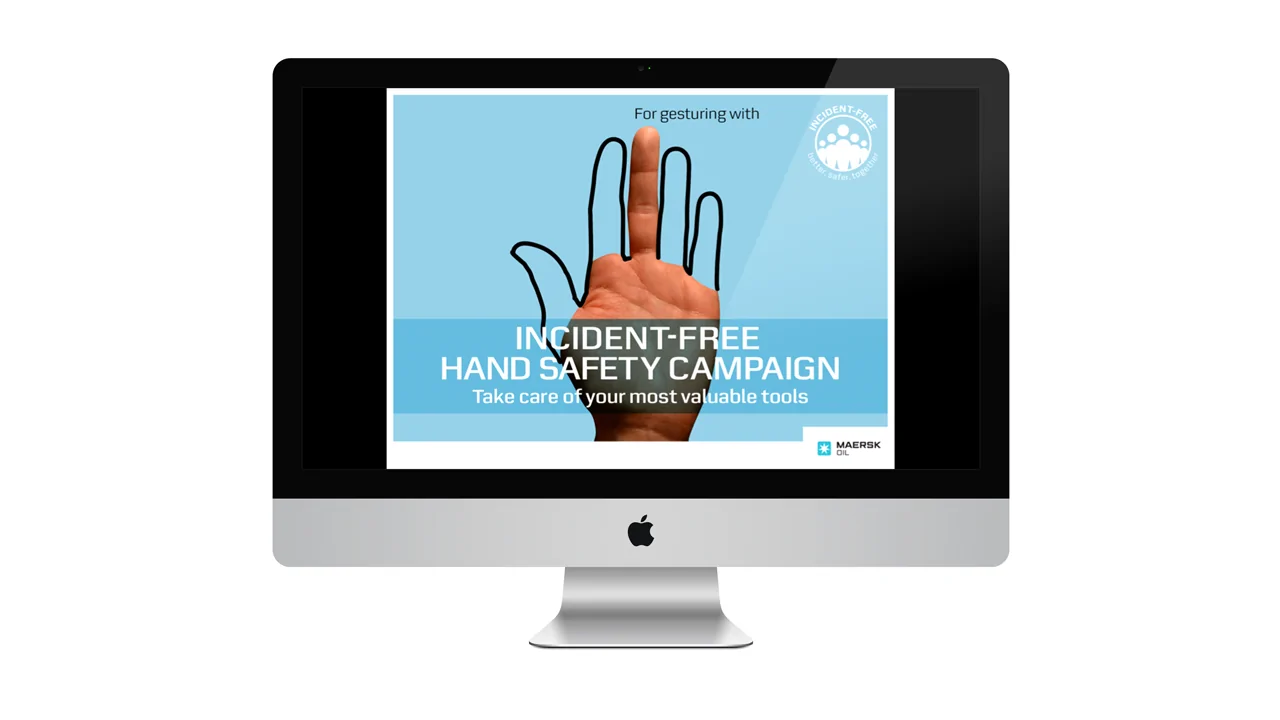
The award-recognized Maersk hand safety campaign.
Services
Content Production
Training posters & print
Site-specific print & visual aids
/services/training-posters
A printed lessons learned handbook produced for Petroleum Development Oman.

Services
Content Production
PowerPoint Materials
Trainer-led deck rebuilds
/services/powerpoint-training-materials
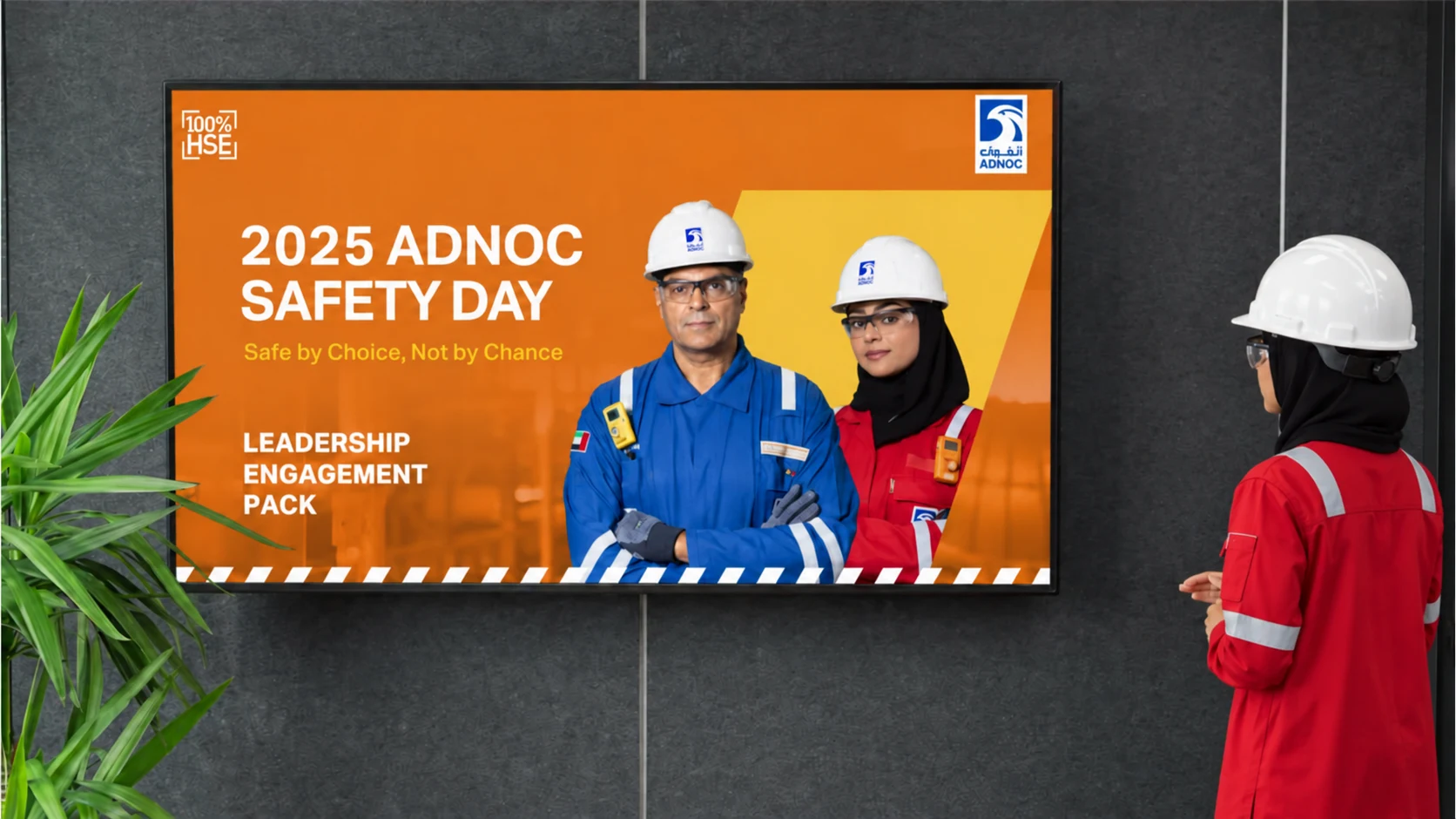
Presenting an ADNOC Safety Day engagement deck.
Services
Interactive Training
E-Learning
SCORM online modules
/services/e-learning
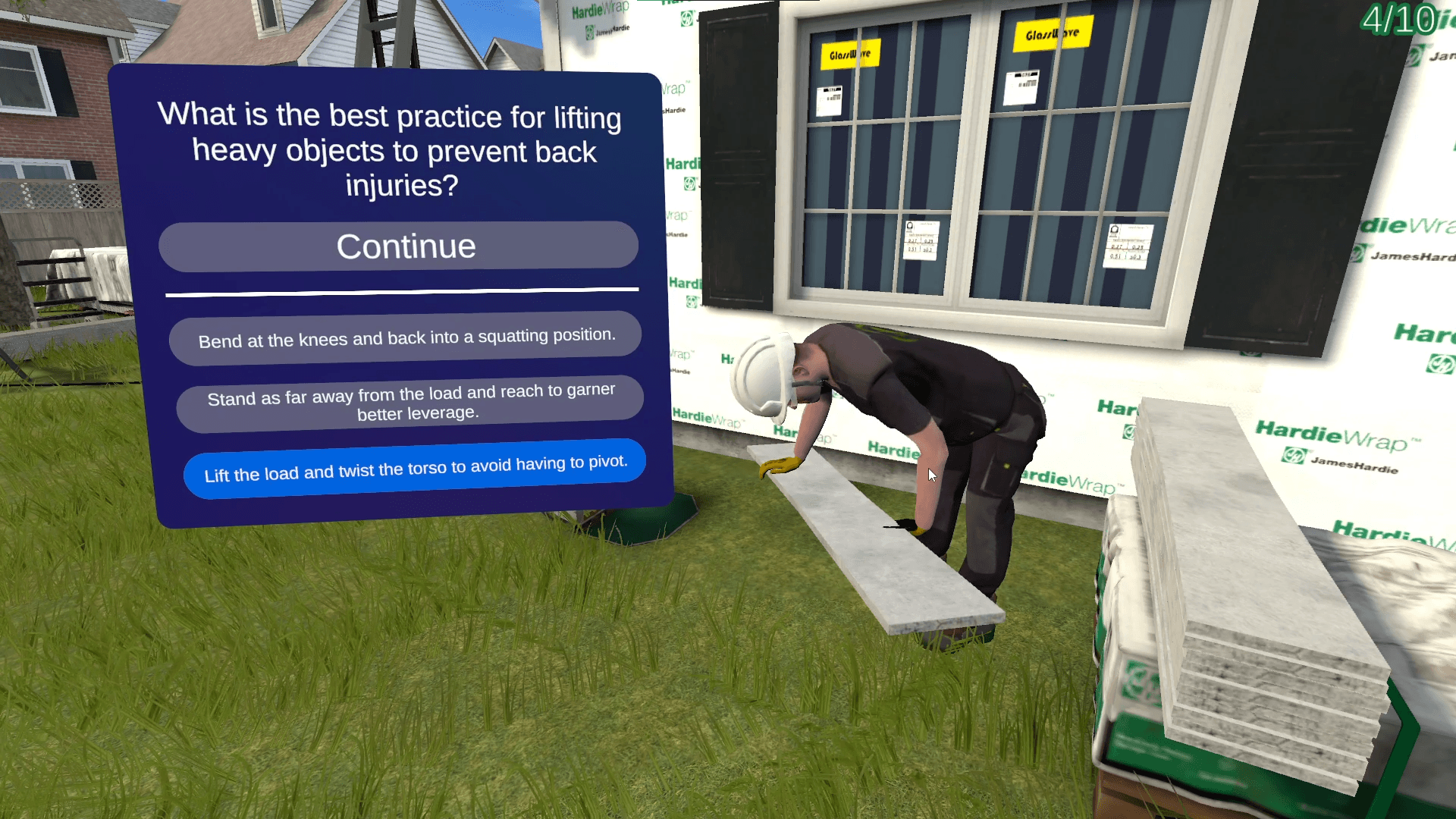
Scenario questions inside a client e-learning module.

Services
Interactive Training
Virtual Reality (VR)
Immersive headset training
/services/virtual-reality-vr-training
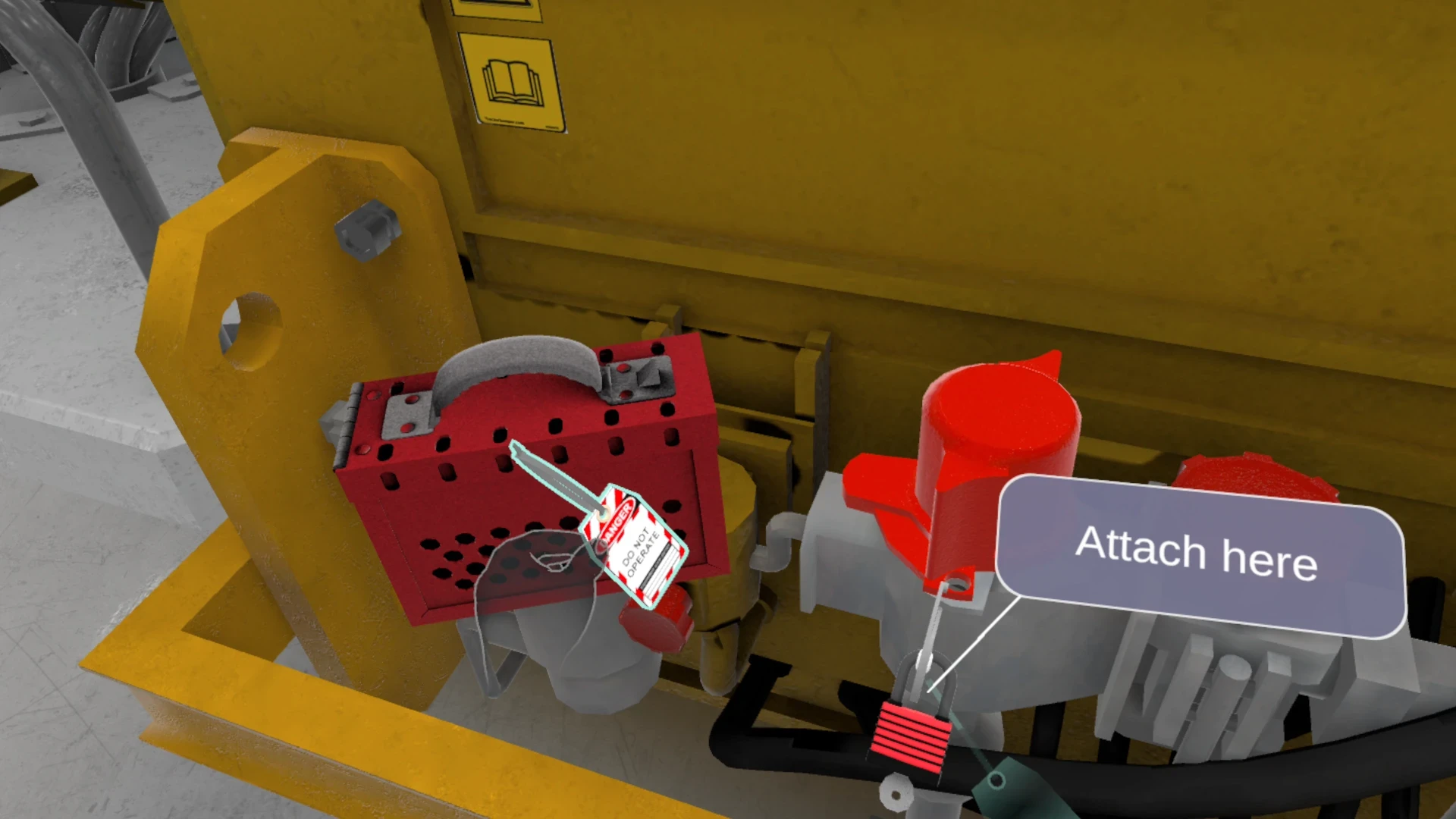
Lockout tagout training with full hand tracking in VR.
Services
Interactive Training
Flat-Screen Simulations
Desktop, web & mobile simulations
/services/flat-screen-simulation-training
SHIIFT simulations running on laptops and mobile devices.

Services
Interactive Training
Digital Twins
Navigable sites & equipment
/services/digital-twins
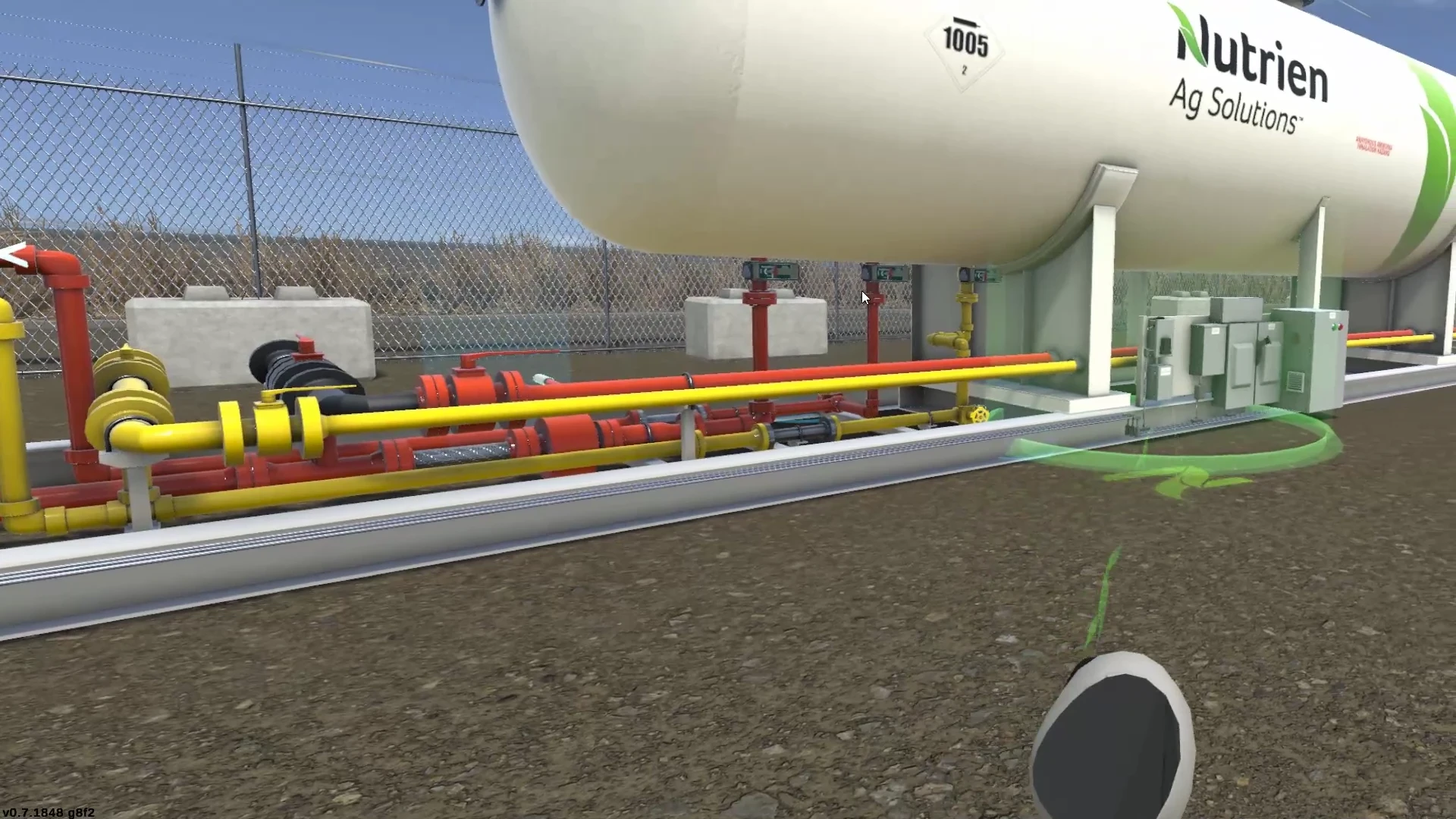
A navigable 3D replica of Nutrien's ammonia transfer plant.
Approach
How We Work
Our approach
Analysis, design, delivery, validation
/approach
Approach
How We Work
SCORM & LMS Integration
Tracking in your systems
/services/scorm-lms-integration
Approach
How We Work
Scenario-Based Assessments
Competency you can prove
/services/scenario-based-assessments