
A worker can spend a whole career without seeing a well control incident, a tanker rollover, a toxic gas release or a person overboard, and still be expected to act correctly in the first minutes if one happens. These are rare, high-consequence events: they don't happen often enough for anyone to learn them on the job, and when they do happen, a wrong decision can cost lives.
What counts as a rare, high-consequence event?
These are events with a low chance of happening on any given day and a severe outcome when they do. Examples across high-risk industries include:
Loss of well control or a large gas release on an oil and gas facility.
A tanker rollover or a railroad crossing incident for hazmat drivers.
A runaway reaction in a chemical process.
A crane failure or structural collapse on a construction site.
A worker collapsing inside a confined space.
A fire in a warehouse or distribution center.
A collision between a vehicle and a pedestrian in a busy yard.
What they share is that the first few minutes of response shape the outcome, and that, because the events are rare, the people on shift may never have dealt with one before.

Why can't experience teach rare events?
On-the-job learning depends on repetition. People get good at the tasks they do every shift because they see the normal pattern and its variations again and again. A rare event gives people no repetition, and the first one a worker sees may be a real emergency.
Even when people are trained, skills they don't use fade. A meta-analysis of skill decay and retention by Arthur and colleagues, drawing on 53 published articles, found that skill loss grows with the length of time a skill goes unused, and that cognitive and accuracy-based tasks were more prone to decay than physical and speed-based ones. A 2025 meta-analysis of procedural skill retention and decay estimated that half of the initial gains in skill were lost after about 6.5 months for accuracy-based measures and about 13 months for speed-based measures.
Emergency response to a rare event can be an accuracy-based, decision-heavy task carried out by people who learned it once, years ago, which puts it at high risk of decay.
Two other factors make rare events harder to handle:
Early warning signs get explained away. If a pressure reading has drifted before and nothing happened, the next drift looks normal too.
The people who handled the last occurrence may have moved on or retired, taking what they learned with them.
How do you find the rare events worth training for?
A company's own incident record is too small to show every event that could happen on its sites. Looking wider gives a fuller list:
Your own incident and near-miss reports, especially high-potential events that caused no harm this time but could have.
Industry safety data. IOGP publishes annual safety performance indicators for the oil and gas industry, with separate reports on fatal incidents and high-potential events.
Shared incident databases such as the CCPS Process Safety Incident Database, which member companies use to share lessons from process safety incidents.
Public investigation reports, such as the U.S. Chemical Safety Board's incident investigations and safety videos, which include animated reconstructions of many of the incidents it investigates.
Your own hazard studies: HAZOP, bow-tie analysis, safety cases and emergency response plans all name events that haven't happened yet.
Experienced staff, who can describe close calls that were never written down.
Once you have a list, prioritize by how severe the outcome could be, how fast people need to act, whether the right response is counterintuitive and whether people would recognize the early signs. An event where the correct action feels wrong in the moment, such as not entering a space to help a collapsed colleague, is a strong candidate for training.
Write each selected event up as a short brief: what triggers it, the first signs, the correct immediate actions, the wrong responses people are likely to reach for and who is involved. That brief becomes the basis for the scenario and for the assessment criteria.
How to design scenarios for rare events
Good scenarios start from the decision point. Work out what the person must notice and what they must do in the first minutes, then build the scenario around those moments. The general approach is covered in our article on scenario-based safety training. For rare events, these points matter most:
Show the early cues. Training should teach recognition as well as response, so include the signs that come before the event.
Show the consequences of wrong choices. People learn the reason behind a rule when they see what happens without it.
Include ambiguity. Real events come with incomplete information, failed radios, conflicting instructions and people who don't respond as expected.
Vary the scenario. Running the same situation with different starting conditions helps people learn the principle instead of memorizing one sequence.
Match your sites. Equipment, procedures, alarms and site layout should look like what people will face on the job.
Assess the decisions. A score or a record of choices shows whether people can act correctly without prompts.
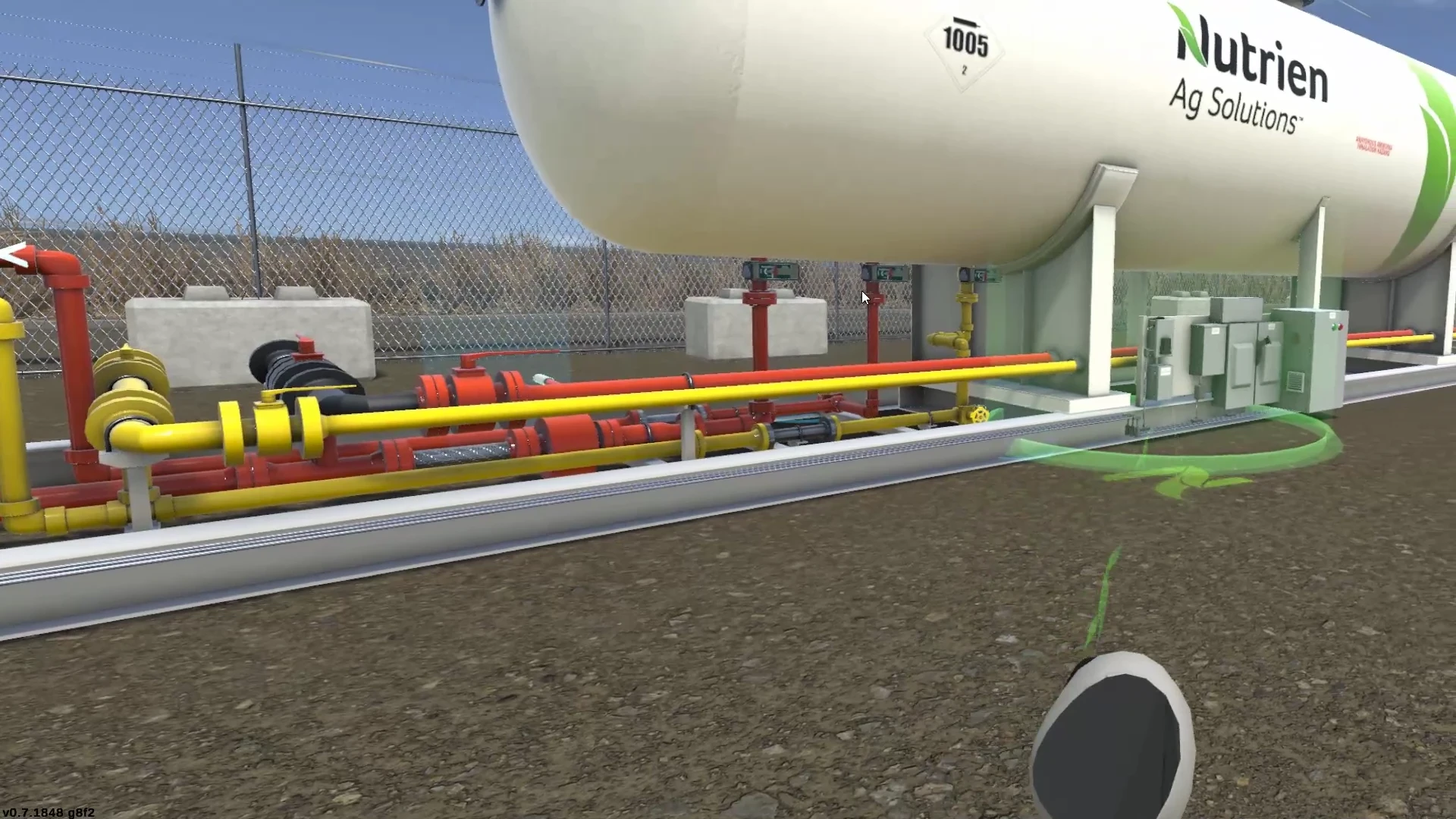
Nutrien's hazmat truck drivers had no specific training for some uncommon accident types because those accidents were so rare. The seven driving scenarios built around the accidents Nutrien identified included high center of gravity turns, a level railroad crossing, cargo securing and soft shoulders on a narrow road, and each scenario offered an instructional training phase and a practice phase without hints, with a separate final assessment mode.

{caption}Still taken from Nutrien's hazmat driver training scenarios
Training decision-making under pressure
In an emergency, people make decisions quickly and with incomplete information. Training gives people a pattern to recognize when the real event comes.
Training for decisions under pressure can include:
Immediate actions that people learn until they can carry them out without stopping to think, such as raising the alarm and moving upwind.
Clear stop-work authority, so nobody waits for permission to stop a job that's going wrong.
Communication protocols, including repeating back instructions and confirming who is doing what.
Team roles, so each person knows their job when the alarm sounds.
Debriefs after each scenario, where people talk through why they made each choice.
Our article on situational awareness training goes further into how people notice and interpret what's happening around them.
How to keep rare-event skills current
Because these skills fade without use, a single course at induction won't hold, and a yearly refresher may come too late for accuracy-based skills. Approaches that help include:
Short, frequent refreshers in place of one long annual session.
Drills and tabletop exercises that walk teams through the first minutes of an event.
New scenarios added when an incident happens elsewhere in the industry.
Assessment results tracked over time, so you can see which skills are slipping.
Our article on refresher training covers how to plan intervals, and learning from incidents covers how to turn events elsewhere into training content.
Common mistakes in rare-event training
Rare-event training can go wrong in ways that are easy to predict and avoid:
Teaching the emergency procedure as text without the cues that should trigger it. People can recite the steps and still not recognize the moment to start them.
Training once at induction and assuming the skill will be there years later.
Scenarios that always go to plan, with working radios, clear information, a cooperative crew and no second problem developing at the same time.
Training individuals but never the team, so nobody has run through the handover to the emergency responders who arrive later.
Testing knowledge with multiple-choice questions when the skill that matters is making a decision under time pressure.
Choosing events only from the company's own history, which misses the events that haven't happened there yet.
Questions to settle before building rare-event training
Before any content is produced, the answers to these questions shape everything that follows:
Which events are on the list, and what evidence put them there?
For each event, what must people notice, and what must they do in the first few minutes?
Which wrong responses might people reach for, and how will the training show where they lead?
Who needs to be trained: the person who discovers the event, the team that responds or both?
How will decisions be assessed, and what result counts as competent?
How often will people go through the training again, and what will trigger an update to the scenarios?
Solutions
Safety Training
Hazard recognition
Spot risks before incidents
/solutions/hazard-recognition-training
Solutions
Safety Training
Life-Saving Rules
Critical rules as decisions
/solutions/life-saving-rules-training
Solutions
Safety Training
Behavioral safety
Stop work authority, used
/solutions/behavioral-safety-training
Solutions
Safety Training
Hand safety
Fewer hand injuries
/solutions/hand-safety-training
Solutions
Safety Training
PPE selection & use
The right kit, worn right
/solutions/ppe-training
Solutions
Safety Training
H2S & gas awareness
The invisible hazard, visible
/solutions/h2s-gas-awareness-training
Solutions
Safety Training
Fire & emergency response
Beyond the routine drill
/solutions/fire-safety-emergency-response-training
Solutions
Safety Training
Toolbox talks
Five strong minutes weekly
/solutions/toolbox-talk-content
Solutions
Safety Training
Permit to work
PTW judgment scenarios
/solutions/permit-to-work-training
Solutions
Safety Training
Isolation & LOTO
Safe energy isolation
/solutions/isolation-lockout-tagout-training
Solutions
Safety Training
Confined space entry
Entries and rescue response
/solutions/confined-space-entry-training
Solutions
Safety Training
Working at height
Falls and dropped objects
/solutions/working-at-height-training
Solutions
Safety Training
Lifting & rigging
Safer critical lifts
/solutions/lifting-rigging-training
Solutions
Safety Training
Hot work
Sparks under control
/solutions/hot-work-training
Solutions
Safety Training
Line of fire
See the energy path
/solutions/line-of-fire-training
Solutions
Safety Training
Driver safety
Safer driving and journeys
/solutions/driver-safety-training
Solutions
Safety Training
Electrical safety
Safe isolation, arc flash aware
/solutions/electrical-safety-training
Solutions
Safety Training
Excavation work
Trenches and buried services
/solutions/excavation-safety-training
Solutions
Safety Training
Ergonomics
Strain prevention that sticks
/solutions/ergonomics-training
Solutions
Safety Training
Situational awareness
Noticing change on site
/solutions/situational-awareness-training
Solutions
Onboarding & People
Site orientation
Inductions before day one
/solutions/site-orientation-onboarding
Solutions
Onboarding & People
Expatriate workforce
Localized multilingual training
/solutions/expatriate-workforce-training
Solutions
Onboarding & People
Visitor inductions
Pre-arrival essentials
/solutions/visitor-induction-training
Solutions
Onboarding & People
Leadership training
Judgment, developed
/solutions/leadership-training
Solutions
Onboarding & People
Soft skills
Conversations that work
/solutions/soft-skills-training
Solutions
Onboarding & People
Safety leadership
Frontline supervisor skills
/solutions/safety-leadership-training
Solutions
Onboarding & People
Human factors
Error traps and defenses
/solutions/human-factors-training
Solutions
Operations & Technical
Process & procedures
Step-by-step competence
/solutions/process-procedure-training
Solutions
Operations & Technical
Operational readiness
Ready before start-up
/solutions/operational-readiness
Solutions
Operations & Technical
Technical training
Complex systems explained
/solutions/technical-training
Solutions
Operations & Technical
Control room & DCS
Alarms and upset response
/solutions/control-room-training
Solutions
Operations & Technical
Crane operation
Operators, banksmen, supervisors
/solutions/crane-operation-training
Solutions
Operations & Technical
Forklift operation
Operators, pedestrians, supervisors
/solutions/forklift-operation-training
Solutions
Operations & Technical
Maintenance & turnarounds
Outage preparation
/solutions/maintenance-turnaround-training
Solutions
Operations & Technical
Process safety
Barriers made visible
/solutions/process-safety-training
Solutions
Compliance & Modernization
Lessons learned (LFI)
Incidents into training
/solutions/lessons-learned-training
Solutions
Compliance & Modernization
Spill response
Environmental first response
/solutions/spill-response-training
Solutions
Compliance & Modernization
Hazardous materials
Storage, handling, transport
/solutions/hazardous-materials-training
Solutions
Compliance & Modernization
Security awareness
Physical and cyber vigilance
/solutions/security-awareness-training
Services
Content Production
Training Videos
Filmed through our global crew network
/services/workplace-safety-training-videos
A safety orientation film produced for Milestone Environmental Services.

Services
Content Production
2D & 3D Animation
Engineering-accurate visuals
/services/2d-3d-animation
From a 3D animation built to supplement an ADNOC e-learning module.

Services
Content Production
Safety Campaigns
Sustained behavior change
/services/safety-campaigns
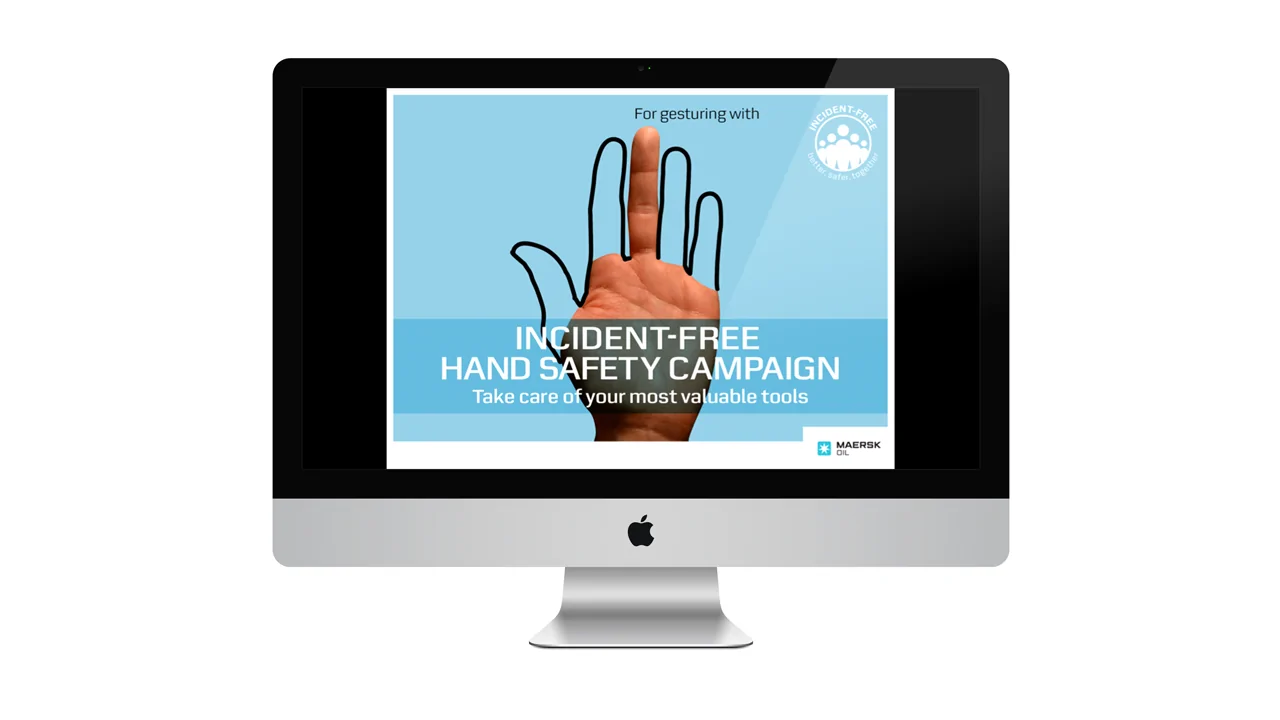
The award-recognized Maersk hand safety campaign.
Services
Content Production
Training posters & print
Site-specific print & visual aids
/services/training-posters
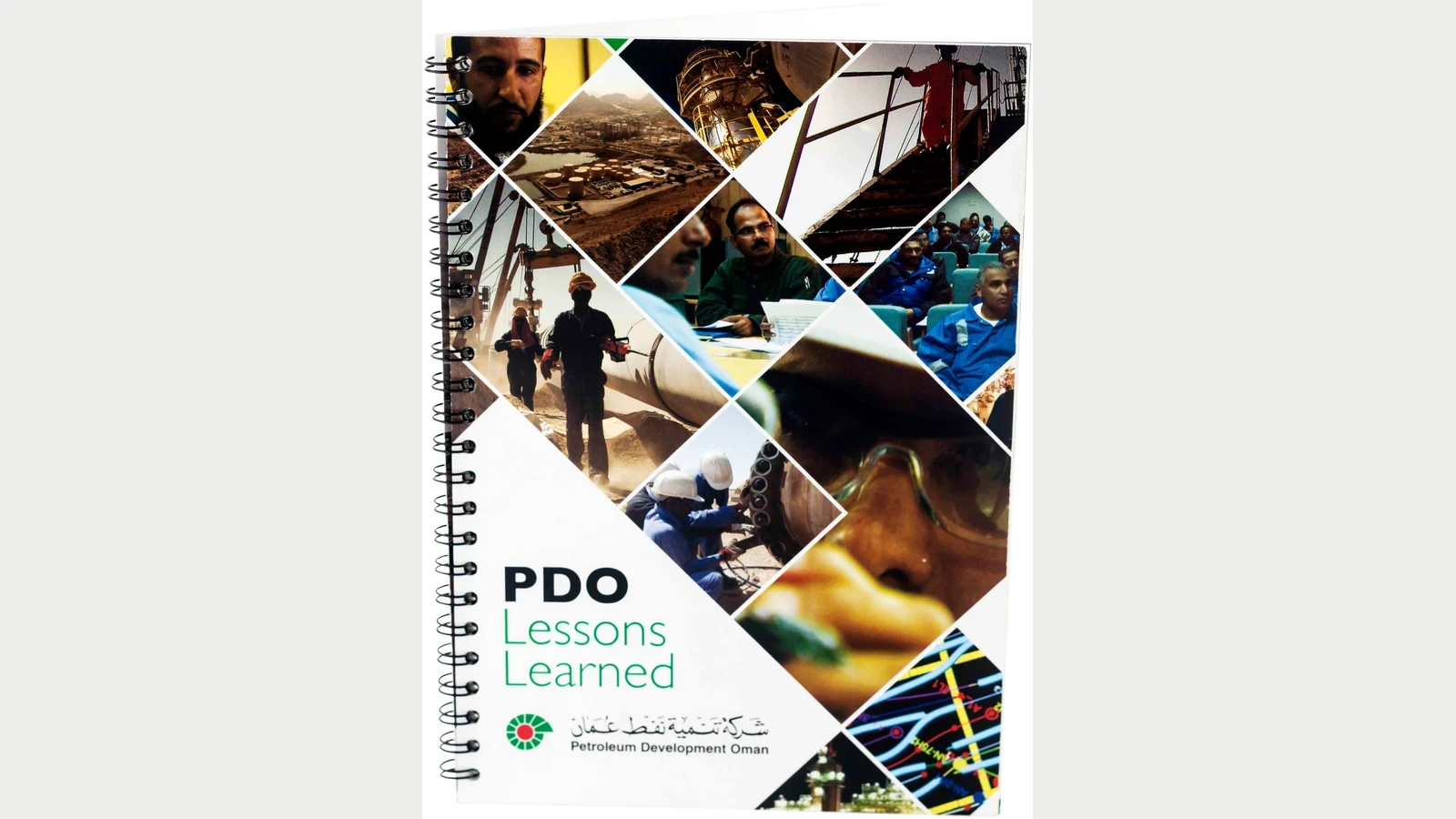
A printed lessons learned handbook produced for Petroleum Development Oman.
Services
Content Production
PowerPoint Materials
Trainer-led deck rebuilds
/services/powerpoint-training-materials
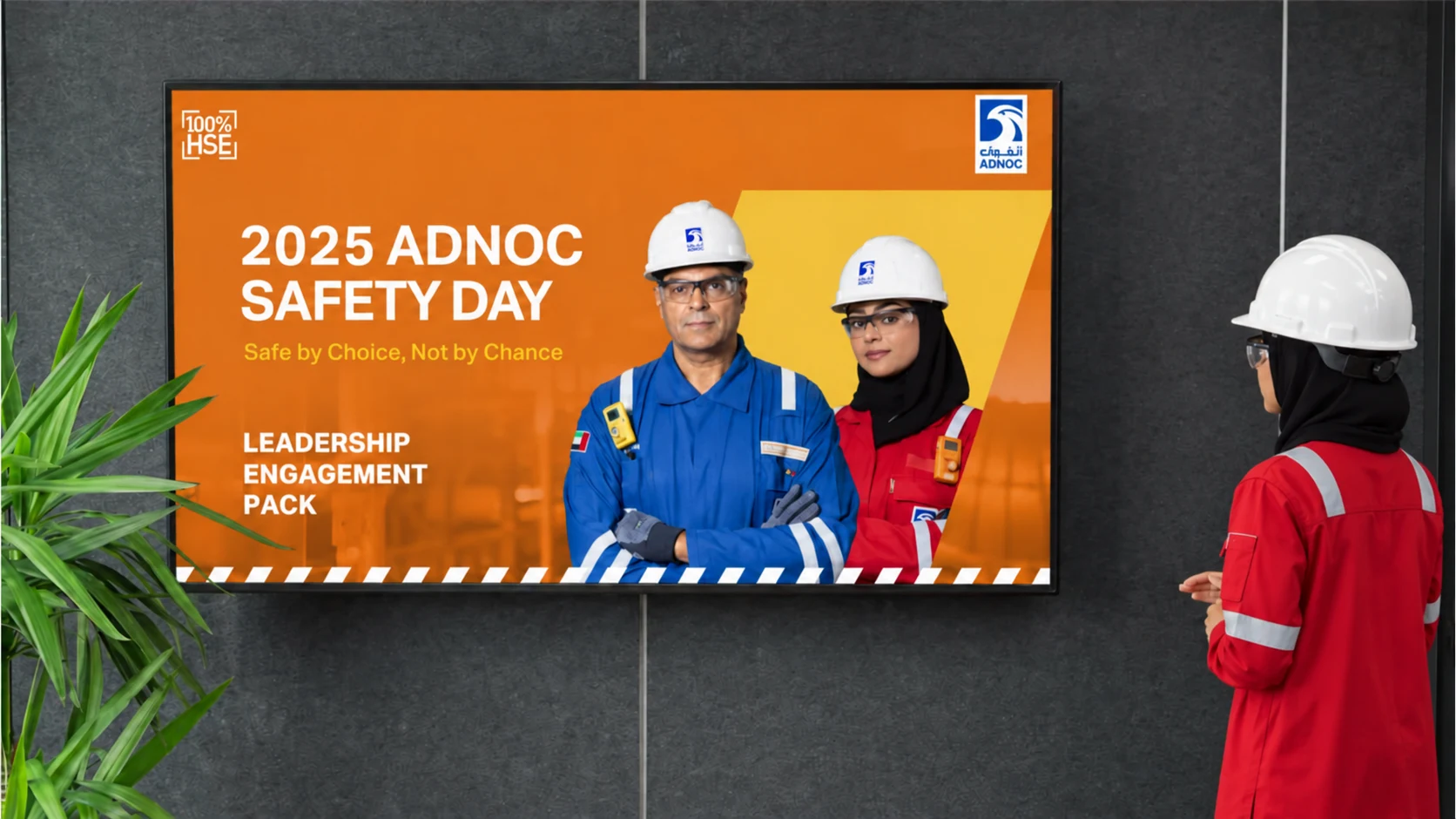
Presenting an ADNOC Safety Day engagement deck.
Services
Interactive Training
E-Learning
SCORM online modules
/services/e-learning
Scenario questions inside a client e-learning module.

Services
Interactive Training
Virtual Reality (VR)
Immersive headset training
/services/virtual-reality-vr-training
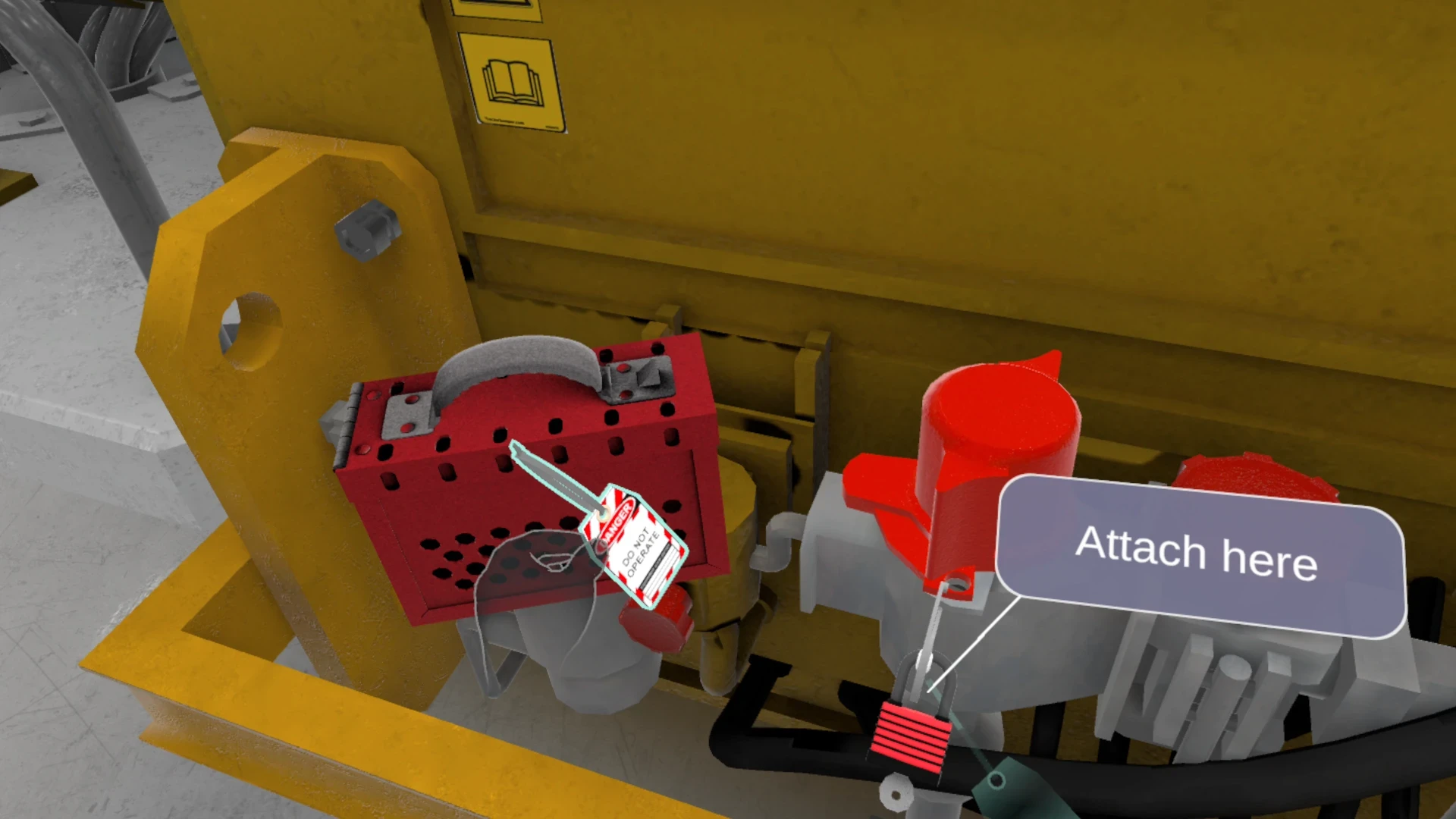
Lockout tagout training with full hand tracking in VR.
Services
Interactive Training
Flat-Screen Simulations
Desktop, web & mobile simulations
/services/flat-screen-simulation-training
SHIIFT simulations running on laptops and mobile devices.

Services
Interactive Training
Digital Twins
Navigable sites & equipment
/services/digital-twins
A navigable 3D replica of Nutrien's ammonia transfer plant.
Approach
How We Work
Our approach
Analysis, design, delivery, validation
/approach
Approach
How We Work
SCORM & LMS Integration
Tracking in your systems
/services/scorm-lms-integration
Approach
How We Work
Scenario-Based Assessments
Competency you can prove
/services/scenario-based-assessments