
A delivery operation may rely on drivers it didn't hire directly, such as agency drivers covering busy periods or subcontractors running whole routes. They work out of your depots and deliver to your customers' sites, and each one arrives with a different level of experience and a different idea of how things are done.
Why are new and third-party drivers a higher risk?
Driving experience affects crash risk. A Virginia Tech Transportation Institute study of commercial driver risk by age and experience, based on data from more than 9,000 commercial motor vehicle drivers, found that the first year of driving a commercial vehicle carries higher risk for crashes and moving violations, regardless of the driver's age. The same study found that driving experience mattered more than age for overall risk.
Third-party drivers add another layer. A driver who's licensed and experienced may still be new to your vehicles, your depots, your customers' sites and your rules. Experience on the road doesn't transfer to a yard layout they've never seen or a loading bay with its own reversing procedure.
A license doesn't cover the specifics of your operation either. FMCSA's entry-level driver training rules, explained on the FMCSA Training Provider Registry for entry-level driver training, set the minimum federal training that new drivers must complete before taking certain commercial driver's license tests. That training can't teach a driver where your loading bays are or which yards run one-way systems. Company training has to fill that gap.
What should a delivery driver training program cover?
The detail will vary by vehicle and operation, but a baseline program for new and third-party drivers should cover the following areas.
Vehicle checks before every shift
The federal pre-trip inspection rule (49 CFR 396.13) requires commercial drivers to be satisfied that a vehicle is in safe operating condition before driving it, and to review the last driver vehicle inspection report where one is required. Training should show the check in the order your form follows: tires, lights, mirrors, brakes, fluid levels and load area. It should also cover defect reporting and the point at which a vehicle must stay in the depot.
Maneuvering and reversing
Blind spots behind and around vehicles aren't obvious to workers on foot, and OSHA's backover prevention guidance points to internal traffic control plans that tell drivers where to go and can reduce the need to back up. In Great Britain, HSE's workplace transport reversing factsheet reports that nearly a quarter of all deaths involving workplace transport occur during reversing.
Where a spotter guides the vehicle, OSHA's backover solutions page says spotters and drivers should agree on hand signals before backing, and that drivers should stop immediately if they lose sight of the spotter. Spotters should also keep visual contact with the driver throughout. Training should teach the specific maneuvers your drivers will make, such as reversing onto a loading bay or an offset reverse into a tight space, step by step, with the checks that come before each one. Where nobody is available to guide, drivers need a clear rule to get out and look.
When DPD Group needed training for new trainees and third-party drivers to reduce collisions, the DPD driver training application broke the offset reverse maneuver into steps, with hotspots around the vehicle and a top-down camera so drivers could see its position from every side.

Yard and depot safety
Depots mix vehicles, pedestrians, forklifts and trailers in tight spaces. New drivers need to know the yard layout, speed limits, one-way systems, pedestrian routes and where they're allowed to walk once they leave the cab. They also need the rules for coupling and uncoupling, wheel stops, loading bay procedures and securing the vehicle before leaving the cab, where these apply. The guide to warehouse safety tips covers the wider hazards of the spaces drivers move through.
Load security
A poorly secured load can shift under braking or fall when the doors open. Under the federal cargo inspection rule (49 CFR 392.9), drivers of trucks and truck tractors must inspect the cargo and its securement devices within the first 50 miles of a trip, then reexamine them during the trip at the intervals the rule sets, for example after 3 hours or 150 miles of driving, whichever comes first. Training should show how loads are secured in your vehicles, what equipment is provided, how to check a load after a stop and how to open doors on a load that may have moved.
Route and site familiarity
A new driver on an unfamiliar route is looking for addresses as well as hazards. Training can prepare them with route-specific information: restricted access, low bridges, difficult turns, customer sites with their own rules and places where reversing is unavoidable. Where routes change, drivers need a way to get this information before they set off.
Parking and making the delivery
A delivery driver spends part of every shift outside the cab. Training should cover where and how to park safely, applying the parking brake and switching off before leaving the vehicle, getting in and out using the steps and handholds, and handling parcels or roll carts on ramps and liftgates. It should also cover the hazards at the customer's door, such as uneven steps, wet surfaces, poor lighting and dogs, along with what to do when a delivery point looks unsafe. Because these tasks repeat through every shift, training should set out the safe method clearly from a driver's first day.
On-road behavior
The baseline should also cover the behaviors behind road crashes: speed, distraction, cell phone use, fatigue and journey planning. The article on distracted driving awareness looks at one of these in more depth.
How do you keep driver training consistent across depots and contractors?
Without a shared standard, depots can drift apart in what they cover, and a subcontractor's drivers may only get what their own employer provides. These steps help keep training consistent:
Build one core program that every driver completes, whoever employs them
Add short depot-specific modules for layout, routes, local rules and contacts
Write completion of the core program into contracts with agencies and subcontractors
Make the training available before a driver's first shift, on devices they already have where possible
Provide it in the languages your drivers speak
Keep one controlled version, so that a procedure change reaches every depot at the same time
The guide to onboarding new employees effectively covers the wider onboarding process that driver training sits inside.
Where do driver training programs go wrong?
These gaps show up in driver training programs, and the first two fall hardest on agency and subcontracted drivers:
Assuming a valid license means a driver knows your depots and your customers' sites
Inducting employees thoroughly while agency and subcontracted drivers get a shorter briefing at the gate
Teaching reversing as a general skill, without the specific bays and blind spots of each site
Signing a driver off on a course completion record alone, with no observed drive
Updating a procedure at one depot and leaving the old version in use at the others
How should delivery drivers be assessed and signed off?
A course alone doesn't show that a driver can reverse a box truck onto a loading bay. A sound sign-off process combines a knowledge check with an observed assessment in the vehicle, carried out by a competent assessor against a standard checklist. Records should show who was assessed, by whom, on what vehicle and when.
Knowledge checks can be short and tied to what was just covered. In the Schneider National driver training program, each module ran under 15 minutes and covered topics such as pre-trip checks and yard skills, and each was followed by multiple-choice questions so training staff could see what drivers had retained.
Sign-off shouldn't be permanent. Reassessment makes sense after an incident, a long break from driving, a move to a different vehicle type or a change to the procedure. Periodic refresher training keeps the baseline current as procedures change.
A sign-off checklist for new and third-party drivers
Core program completed, including vehicle checks, reversing, yard rules and load security
Depot-specific module completed for each depot the driver will use
Knowledge check passed
Observed pre-trip inspection completed on the vehicle type they'll drive
Observed reversing maneuvers completed at the actual bays they'll use
Route briefing given for the first routes they'll run
Record signed by the assessor and filed, with a date set for reassessment
Solutions
Safety Training
Hazard recognition
Spot risks before incidents
/solutions/hazard-recognition-training
Solutions
Safety Training
Life-Saving Rules
Critical rules as decisions
/solutions/life-saving-rules-training
Solutions
Safety Training
Behavioral safety
Stop work authority, used
/solutions/behavioral-safety-training
Solutions
Safety Training
Hand safety
Fewer hand injuries
/solutions/hand-safety-training
Solutions
Safety Training
PPE selection & use
The right kit, worn right
/solutions/ppe-training
Solutions
Safety Training
H2S & gas awareness
The invisible hazard, visible
/solutions/h2s-gas-awareness-training
Solutions
Safety Training
Fire & emergency response
Beyond the routine drill
/solutions/fire-safety-emergency-response-training
Solutions
Safety Training
Toolbox talks
Five strong minutes weekly
/solutions/toolbox-talk-content
Solutions
Safety Training
Permit to work
PTW judgment scenarios
/solutions/permit-to-work-training
Solutions
Safety Training
Isolation & LOTO
Safe energy isolation
/solutions/isolation-lockout-tagout-training
Solutions
Safety Training
Confined space entry
Entries and rescue response
/solutions/confined-space-entry-training
Solutions
Safety Training
Working at height
Falls and dropped objects
/solutions/working-at-height-training
Solutions
Safety Training
Lifting & rigging
Safer critical lifts
/solutions/lifting-rigging-training
Solutions
Safety Training
Hot work
Sparks under control
/solutions/hot-work-training
Solutions
Safety Training
Line of fire
See the energy path
/solutions/line-of-fire-training
Solutions
Safety Training
Driver safety
Safer driving and journeys
/solutions/driver-safety-training
Solutions
Safety Training
Electrical safety
Safe isolation, arc flash aware
/solutions/electrical-safety-training
Solutions
Safety Training
Excavation work
Trenches and buried services
/solutions/excavation-safety-training
Solutions
Safety Training
Ergonomics
Strain prevention that sticks
/solutions/ergonomics-training
Solutions
Safety Training
Situational awareness
Noticing change on site
/solutions/situational-awareness-training
Solutions
Onboarding & People
Site orientation
Inductions before day one
/solutions/site-orientation-onboarding
Solutions
Onboarding & People
Expatriate workforce
Localized multilingual training
/solutions/expatriate-workforce-training
Solutions
Onboarding & People
Visitor inductions
Pre-arrival essentials
/solutions/visitor-induction-training
Solutions
Onboarding & People
Leadership training
Judgment, developed
/solutions/leadership-training
Solutions
Onboarding & People
Soft skills
Conversations that work
/solutions/soft-skills-training
Solutions
Onboarding & People
Safety leadership
Frontline supervisor skills
/solutions/safety-leadership-training
Solutions
Onboarding & People
Human factors
Error traps and defenses
/solutions/human-factors-training
Solutions
Operations & Technical
Process & procedures
Step-by-step competence
/solutions/process-procedure-training
Solutions
Operations & Technical
Operational readiness
Ready before start-up
/solutions/operational-readiness
Solutions
Operations & Technical
Technical training
Complex systems explained
/solutions/technical-training
Solutions
Operations & Technical
Control room & DCS
Alarms and upset response
/solutions/control-room-training
Solutions
Operations & Technical
Crane operation
Operators, banksmen, supervisors
/solutions/crane-operation-training
Solutions
Operations & Technical
Forklift operation
Operators, pedestrians, supervisors
/solutions/forklift-operation-training
Solutions
Operations & Technical
Maintenance & turnarounds
Outage preparation
/solutions/maintenance-turnaround-training
Solutions
Operations & Technical
Process safety
Barriers made visible
/solutions/process-safety-training
Solutions
Compliance & Modernization
Lessons learned (LFI)
Incidents into training
/solutions/lessons-learned-training
Solutions
Compliance & Modernization
Spill response
Environmental first response
/solutions/spill-response-training
Solutions
Compliance & Modernization
Hazardous materials
Storage, handling, transport
/solutions/hazardous-materials-training
Solutions
Compliance & Modernization
Security awareness
Physical and cyber vigilance
/solutions/security-awareness-training
Services
Content Production
Training Videos
Filmed through our global crew network
/services/workplace-safety-training-videos
A safety orientation film produced for Milestone Environmental Services.

Services
Content Production
2D & 3D Animation
Engineering-accurate visuals
/services/2d-3d-animation
From a 3D animation built to supplement an ADNOC e-learning module.

Services
Content Production
Safety Campaigns
Sustained behavior change
/services/safety-campaigns
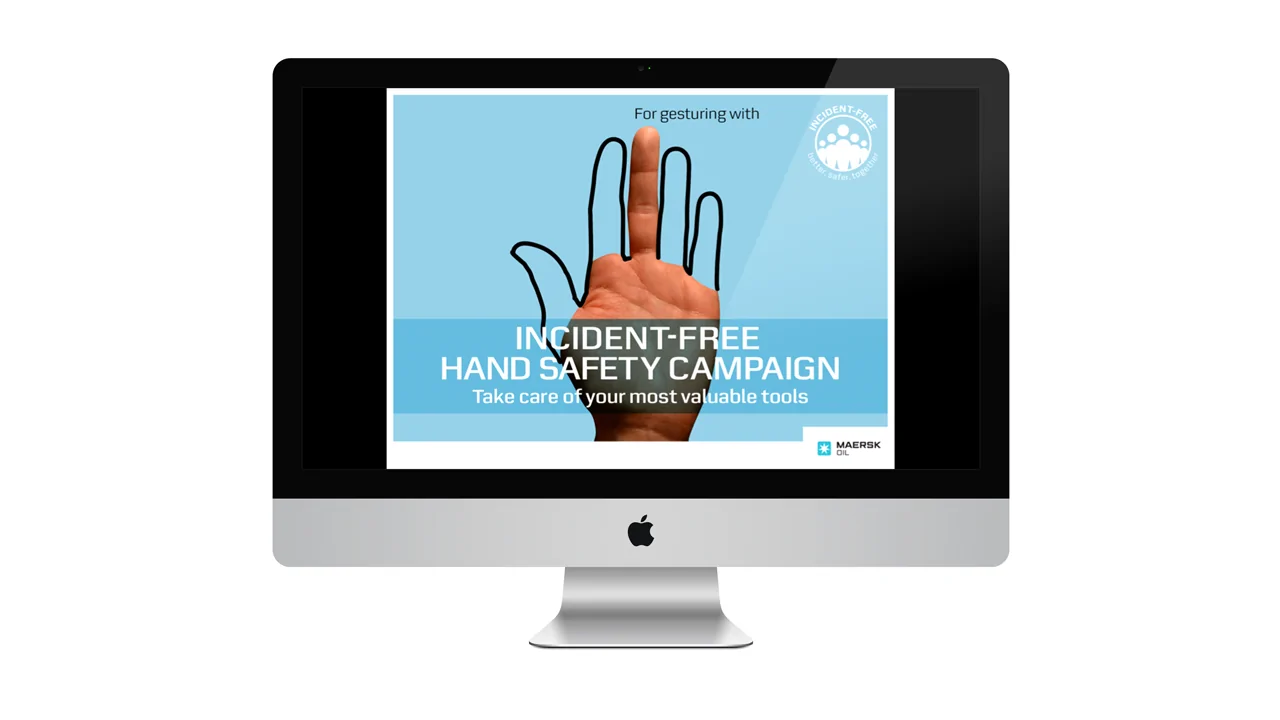
The award-recognized Maersk hand safety campaign.
Services
Content Production
Training posters & print
Site-specific print & visual aids
/services/training-posters
A printed lessons learned handbook produced for Petroleum Development Oman.

Services
Content Production
PowerPoint Materials
Trainer-led deck rebuilds
/services/powerpoint-training-materials
Presenting an ADNOC Safety Day engagement deck.

Services
Interactive Training
E-Learning
SCORM online modules
/services/e-learning
Scenario questions inside a client e-learning module.

Services
Interactive Training
Virtual Reality (VR)
Immersive headset training
/services/virtual-reality-vr-training
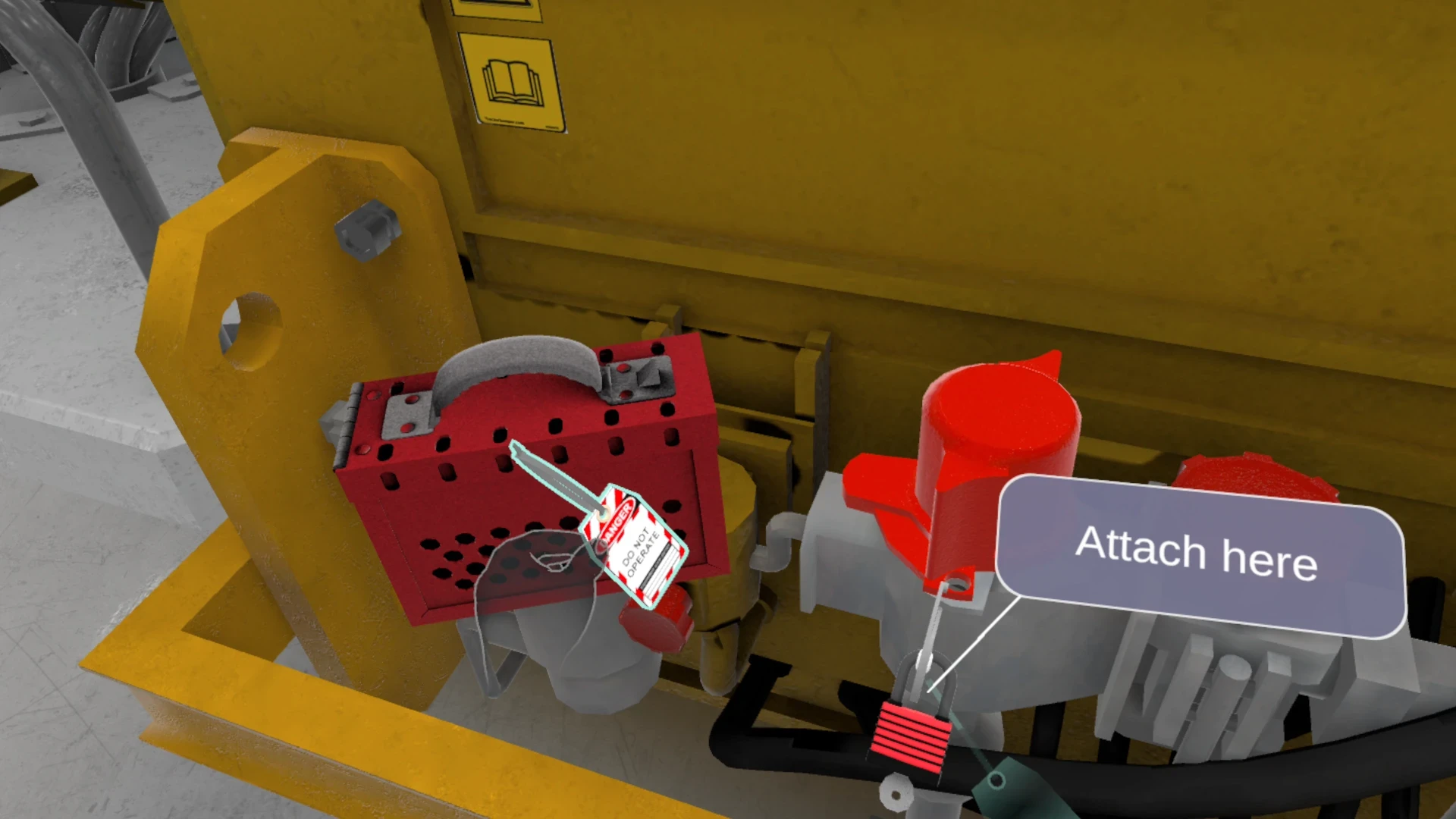
Lockout tagout training with full hand tracking in VR.
Services
Interactive Training
Flat-Screen Simulations
Desktop, web & mobile simulations
/services/flat-screen-simulation-training
SHIIFT simulations running on laptops and mobile devices.

Services
Interactive Training
Digital Twins
Navigable sites & equipment
/services/digital-twins
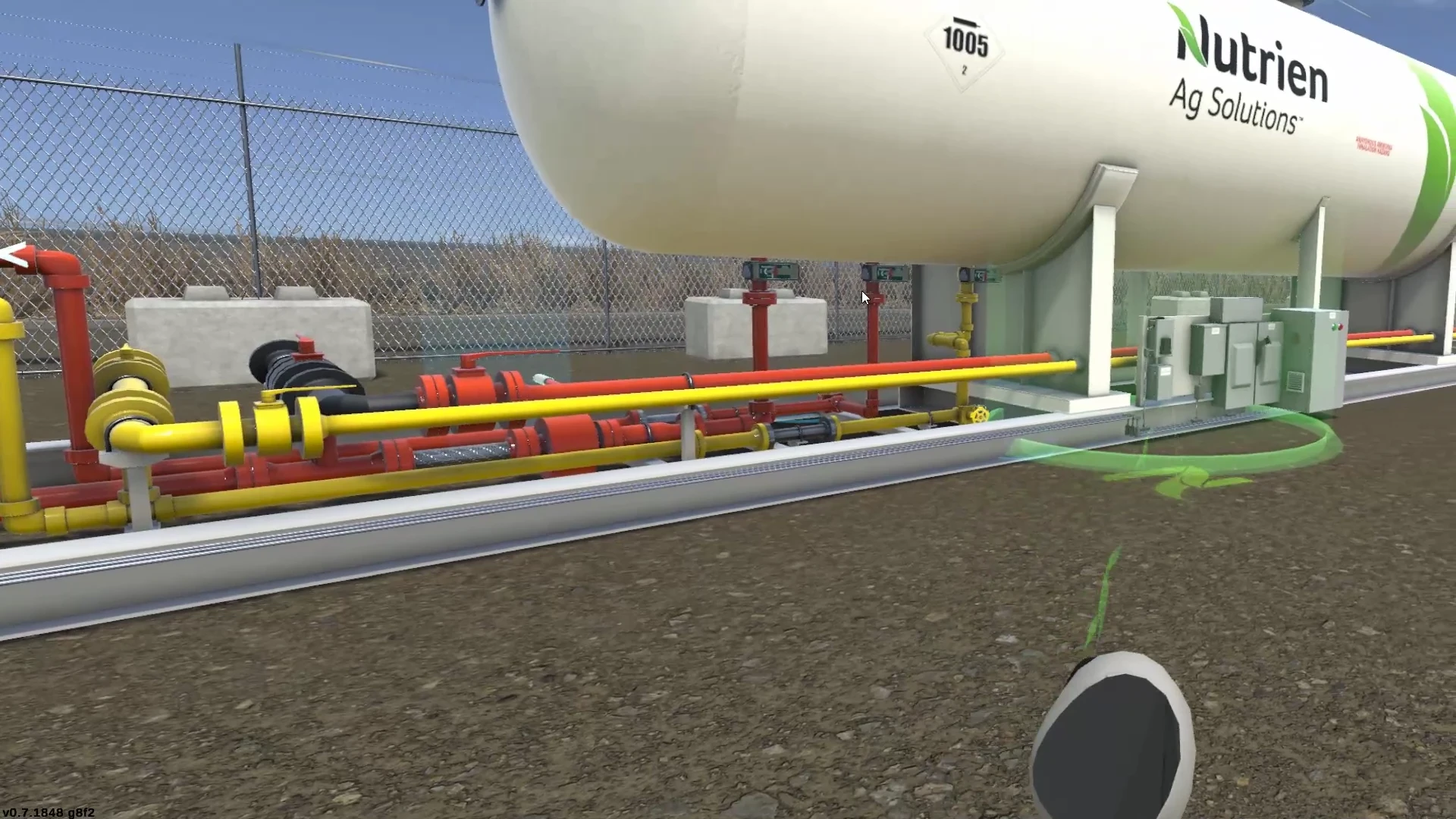
A navigable 3D replica of Nutrien's ammonia transfer plant.
Approach
How We Work
Our approach
Analysis, design, delivery, validation
/approach
Approach
How We Work
SCORM & LMS Integration
Tracking in your systems
/services/scorm-lms-integration
Approach
How We Work
Scenario-Based Assessments
Competency you can prove
/services/scenario-based-assessments