
Water and sewer crews enter confined spaces as part of routine work: manholes, wet wells, lifting and pumping stations, sewer chambers, tanks and valve pits. The atmosphere in these spaces can change between one visit and the next, and a space that tested safe last week can hold a lethal atmosphere this week. Confined space training for water and sewer workers has to prepare people for that, and it has to prepare the people standing at the top of the ladder as well as those going down it.
One gap to watch for is training that focuses on entrants and treats attendants and supervisors as an afterthought, even though the attendant's decisions decide whether one casualty becomes several.
What counts as a confined space?
Under OSHA's permit-required confined spaces standard (29 CFR 1910.146), a confined space is "large enough and so configured that an employee can bodily enter and perform assigned work." It "has limited or restricted means for entry or exit" and "is not designed for continuous employee occupancy." A permit-required confined space is a confined space with one or more further hazards, such as containing, or having the potential to contain, a hazardous atmosphere. Sewer chambers and wet wells can meet that definition because sewage gives off gases as it breaks down.
What hazards do sewer confined spaces present?
Sewer and wastewater spaces can present all of the following hazards:
Hydrogen sulfide (H2S), produced as sewage decomposes. OSHA's guidance on hydrogen sulfide exposure warns that people can lose the ability to smell H2S while it's still present (olfactory fatigue), and that at high concentrations the sense of smell can be lost instantly (olfactory paralysis). Smell can't be trusted as a warning.
Oxygen deficiency. OSHA's definition of a hazardous atmosphere treats an atmosphere with less than 19.5% oxygen as hazardous.
Flammable atmospheres, including methane. OSHA 1910.146's hazardous atmosphere definition treats flammable gas above 10% of its lower flammable limit as hazardous.
Oxygen enrichment above 23.5%, which OSHA's permit space standard also treats as hazardous, and which raises the risk of fire.
Flooding and engulfment, from rainfall upstream or from pumps starting while people are inside.
Biological hazards. CDC guidance on protecting workers who handle human waste notes that these workers may be at increased risk of waterborne diseases, and recommends hygiene measures and protective equipment. It also suggests considering vaccinations such as hepatitis A and hepatitis B in consultation with health authorities.
Heat buildup in poorly ventilated spaces.
Electrical hazards from damaged cables and equipment in damp conditions.
Restricted movement, which slows escape and complicates rescue.
What does OSHA 1910.146 require?
In US general industry, the text of 29 CFR 1910.146 requires employers with permit spaces to run a written permit space program. Points that training needs to reflect include:
An entry permit that identifies the space, the purpose of entry, its authorized duration, the people involved in the entry by role, the hazards and the acceptable entry conditions.
A permit duration that doesn't exceed the time needed for the task.
Atmospheric testing before entry, in a set order.
An attendant outside the space for the whole entry.
Rescue arrangements, including retrieval systems where they don't increase the overall risk.
Training before an employee is first assigned duties under the standard, and again before a change in assigned duties.
Retraining whenever the employer has reason to believe procedures aren't being followed.
Confined space work in construction, such as building new sewer connections, falls under a separate rule, OSHA's confined spaces in construction standard (29 CFR 1926 Subpart AA).
Can the job be done without entering?
For sewer crews, the first question in training is whether the job can be done from the surface, using cameras, remote sampling, jetting equipment or long-handled tools. Every entry that's avoided removes the exposure entirely, so crews should be trained to ask this question before a permit is raised and supervisors should be ready to support the answer when it means a slower job. Only after that does the training move on to how to enter safely.
How should atmospheric testing be done?
OSHA's permit space testing requirement tells employers to "test first for oxygen, then for combustible gases and vapors, and then for toxic gases and vapors." Workers should understand the order and the reasons behind each step of the testing routine:
Test from outside the space before anyone enters.
Test at different depths, because gases settle at different levels. The confined space training video for Abu Dhabi Sewerage Services Company (ADSSC) shows the gas detector used at several depths, down to the bottom of the space, before and during entry.
Use a detector that has been bump tested and calibrated to the manufacturer's instructions.
Keep monitoring during the entry, because conditions can change while people are inside.
Record the readings on the permit.
Never rely on smell to judge whether a space is safe.

What role does ventilation play?
Forced-air ventilation can clear a hazardous atmosphere and keep fresh air moving while people work. OSHA's standard allows alternate procedures only when the employer can show that the only hazard is an actual or potential hazardous atmosphere and that continuous forced-air ventilation alone keeps the space safe. Under those procedures, no one can enter until ventilation has eliminated any hazardous atmosphere, the air must be directed to where people are working, the supply must come from a clean source, and the atmosphere must be tested periodically during entry to confirm that ventilation is preventing a hazardous atmosphere from building up. These conditions are set out in the alternate entry procedures in OSHA 1910.146(c)(5).
Training should make clear that ventilation is a control, and that testing still has to confirm it's working. Placing the fan intake away from vehicle exhausts and generators is part of the same lesson.
Why does confined space rescue planning matter so much?
According to a NIOSH alert on preventing deaths in confined spaces, more than 60% of confined space fatalities occur among would-be rescuers. A colleague goes down to help someone who has collapsed at the bottom of a chamber and is overcome by the same atmosphere.
Rescue planning has to be done before entry, and training has to cover it:
Who will carry out a rescue, and how quickly they can reach the site. OSHA's rescue service requirements call on employers to evaluate whether a rescue service can respond in a timely manner.
Retrieval systems, such as a harness and lifeline attached to a winch, that allow non-entry rescue.
Breathing apparatus and resuscitation equipment, and who is trained to use them.
How to raise the alarm and what information to give emergency services.
Drills, so the plan is tested before it's needed.

{caption}Still taken from ADSSC's confined space safety video
What does a confined space attendant do?
The attendant stays outside the space and calls for rescue, so that a single casualty doesn't lead to others. Under the attendant duties in OSHA 1910.146, the attendant:
Remains outside the permit space for the whole entry until relieved by another attendant.
Keeps an accurate count of who is inside.
Stays in communication with entrants to monitor their status, and orders them out when conditions change.
Summons rescue and emergency services as soon as entrants may need help.
Warns unauthorized people to stay away from the space while entry is underway.
Tells anyone who has entered without authorization to leave, and informs the entrants and the entry supervisor.
An attendant may enter to attempt a rescue only where the employer's program allows it. The attendant must also be trained and equipped for rescue, and must first be relieved by another attendant. Attendant training needs as much attention as entrant training, because an attendant who goes in to help can become a second casualty.
Common gaps in confined space training
Confined space training can meet the letter of the standard and still leave crews unprepared. Gaps worth checking for include:
Generic spaces. Training built around a tank in a factory doesn't show a crew what a wet well or a lifting station looks like from the top of the ladder.
Testing taught as a button press. People need to know what each reading means and what to do when one changes mid-entry.
Rescue covered on paper only. A rescue plan nobody has run through will be slower and less certain than one crews have drilled.
Attendants treated as spare hands. The attendant's role is a full-time job for the length of the entry, and training should say so.
Isolation skipped. Entries that need pumps or other equipment isolated also call for lockout-tagout.
ADSSC's 3D animated confined space safety video addresses the first of these gaps. In just under 5 minutes, it shows H2S forming as sewage decomposes, methane buildup, oxygen deficiency, sudden sewage flooding and other hazards in 3D chambers and lifting stations built to reflect ADSSC's real working environments, then walks through control measures including permits, atmosphere testing, rescue planning and an attendant stationed outside. It's now part of ADSSC's official training materials.
Spotting the conditions that turn a routine job dangerous is a skill in its own right, covered in our article on hazard recognition training, and the business impact of getting it wrong is covered in the true cost of a confined space incident.
What good confined space training looks like
A sewer crew that has been trained well can answer these questions for any entry they make:
Could this job be done from the surface instead?
What hazards does this space have, and which could develop while we're inside?
What do the gas readings need to be before we enter, and what reading means we leave?
Who is the attendant, and what will they do if something goes wrong?
How will someone be pulled out without anyone else going in, and how long will that take?
Who has authority to stop the entry, and how do they do it?
Solutions
Safety Training
Hazard recognition
Spot risks before incidents
/solutions/hazard-recognition-training
Solutions
Safety Training
Life-Saving Rules
Critical rules as decisions
/solutions/life-saving-rules-training
Solutions
Safety Training
Behavioral safety
Stop work authority, used
/solutions/behavioral-safety-training
Solutions
Safety Training
Hand safety
Fewer hand injuries
/solutions/hand-safety-training
Solutions
Safety Training
PPE selection & use
The right kit, worn right
/solutions/ppe-training
Solutions
Safety Training
H2S & gas awareness
The invisible hazard, visible
/solutions/h2s-gas-awareness-training
Solutions
Safety Training
Fire & emergency response
Beyond the routine drill
/solutions/fire-safety-emergency-response-training
Solutions
Safety Training
Toolbox talks
Five strong minutes weekly
/solutions/toolbox-talk-content
Solutions
Safety Training
Permit to work
PTW judgment scenarios
/solutions/permit-to-work-training
Solutions
Safety Training
Isolation & LOTO
Safe energy isolation
/solutions/isolation-lockout-tagout-training
Solutions
Safety Training
Confined space entry
Entries and rescue response
/solutions/confined-space-entry-training
Solutions
Safety Training
Working at height
Falls and dropped objects
/solutions/working-at-height-training
Solutions
Safety Training
Lifting & rigging
Safer critical lifts
/solutions/lifting-rigging-training
Solutions
Safety Training
Hot work
Sparks under control
/solutions/hot-work-training
Solutions
Safety Training
Line of fire
See the energy path
/solutions/line-of-fire-training
Solutions
Safety Training
Driver safety
Safer driving and journeys
/solutions/driver-safety-training
Solutions
Safety Training
Electrical safety
Safe isolation, arc flash aware
/solutions/electrical-safety-training
Solutions
Safety Training
Excavation work
Trenches and buried services
/solutions/excavation-safety-training
Solutions
Safety Training
Ergonomics
Strain prevention that sticks
/solutions/ergonomics-training
Solutions
Safety Training
Situational awareness
Noticing change on site
/solutions/situational-awareness-training
Solutions
Onboarding & People
Site orientation
Inductions before day one
/solutions/site-orientation-onboarding
Solutions
Onboarding & People
Expatriate workforce
Localized multilingual training
/solutions/expatriate-workforce-training
Solutions
Onboarding & People
Visitor inductions
Pre-arrival essentials
/solutions/visitor-induction-training
Solutions
Onboarding & People
Leadership training
Judgment, developed
/solutions/leadership-training
Solutions
Onboarding & People
Soft skills
Conversations that work
/solutions/soft-skills-training
Solutions
Onboarding & People
Safety leadership
Frontline supervisor skills
/solutions/safety-leadership-training
Solutions
Onboarding & People
Human factors
Error traps and defenses
/solutions/human-factors-training
Solutions
Operations & Technical
Process & procedures
Step-by-step competence
/solutions/process-procedure-training
Solutions
Operations & Technical
Operational readiness
Ready before start-up
/solutions/operational-readiness
Solutions
Operations & Technical
Technical training
Complex systems explained
/solutions/technical-training
Solutions
Operations & Technical
Control room & DCS
Alarms and upset response
/solutions/control-room-training
Solutions
Operations & Technical
Crane operation
Operators, banksmen, supervisors
/solutions/crane-operation-training
Solutions
Operations & Technical
Forklift operation
Operators, pedestrians, supervisors
/solutions/forklift-operation-training
Solutions
Operations & Technical
Maintenance & turnarounds
Outage preparation
/solutions/maintenance-turnaround-training
Solutions
Operations & Technical
Process safety
Barriers made visible
/solutions/process-safety-training
Solutions
Compliance & Modernization
Lessons learned (LFI)
Incidents into training
/solutions/lessons-learned-training
Solutions
Compliance & Modernization
Spill response
Environmental first response
/solutions/spill-response-training
Solutions
Compliance & Modernization
Hazardous materials
Storage, handling, transport
/solutions/hazardous-materials-training
Solutions
Compliance & Modernization
Security awareness
Physical and cyber vigilance
/solutions/security-awareness-training
Services
Content Production
Training Videos
Filmed through our global crew network
/services/workplace-safety-training-videos
A safety orientation film produced for Milestone Environmental Services.

Services
Content Production
2D & 3D Animation
Engineering-accurate visuals
/services/2d-3d-animation
From a 3D animation built to supplement an ADNOC e-learning module.

Services
Content Production
Safety Campaigns
Sustained behavior change
/services/safety-campaigns
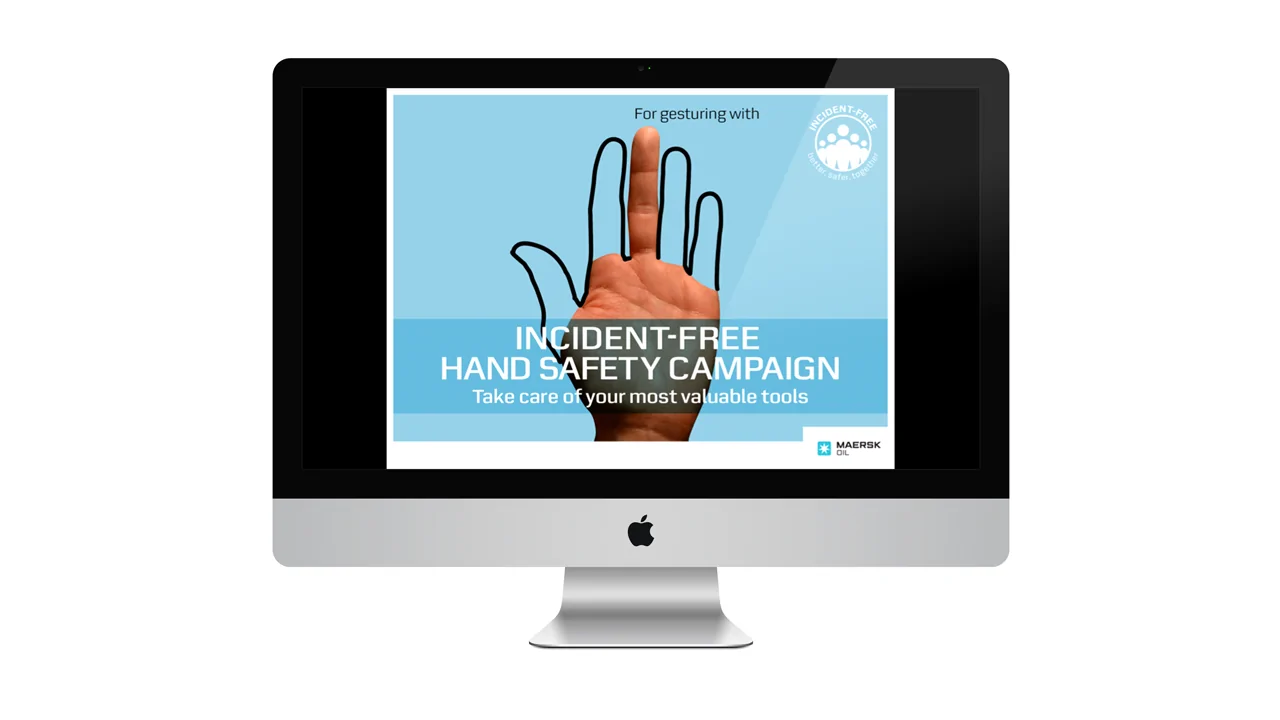
The award-recognized Maersk hand safety campaign.
Services
Content Production
Training posters & print
Site-specific print & visual aids
/services/training-posters
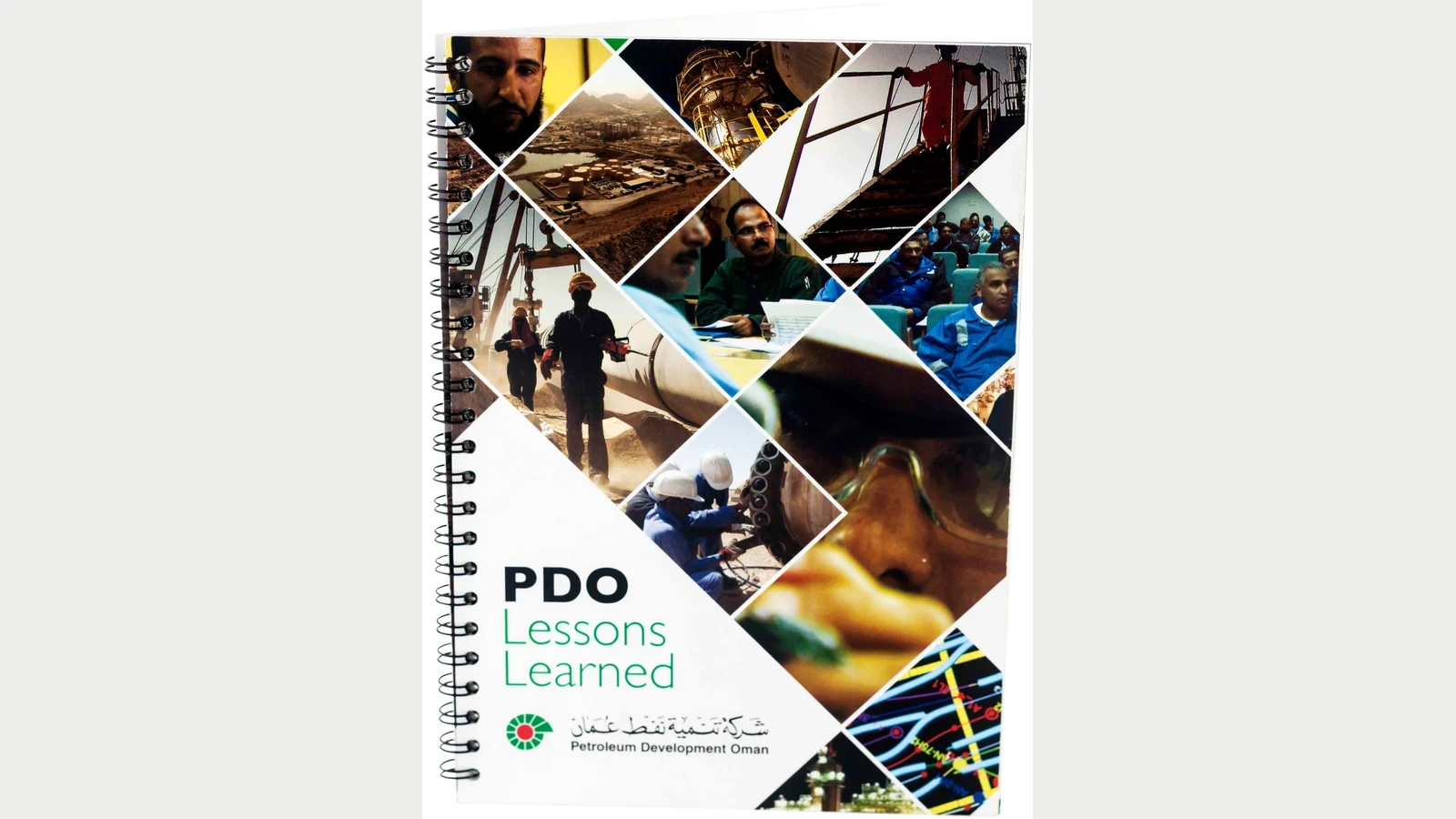
A printed lessons learned handbook produced for Petroleum Development Oman.
Services
Content Production
PowerPoint Materials
Trainer-led deck rebuilds
/services/powerpoint-training-materials
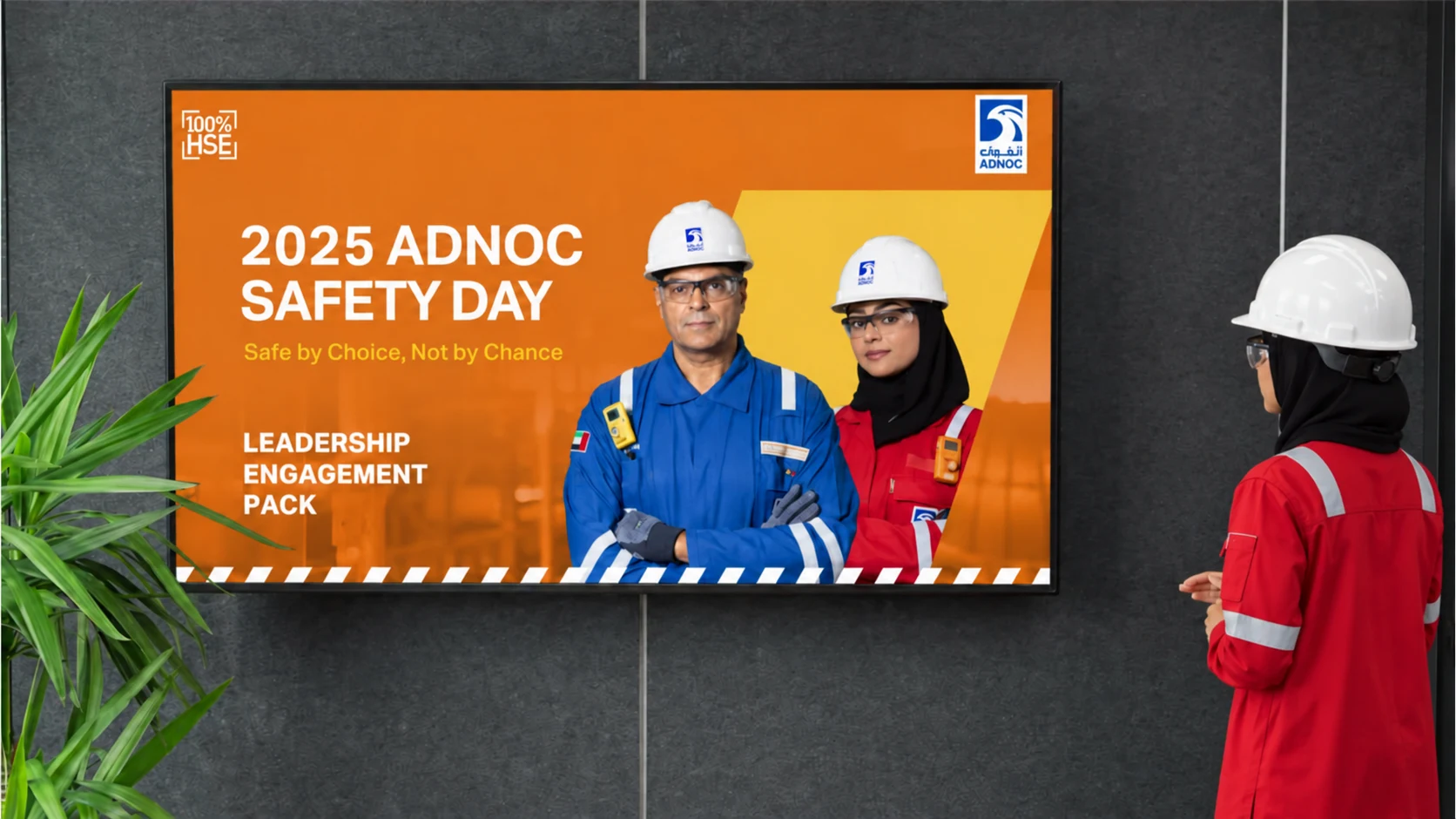
Presenting an ADNOC Safety Day engagement deck.
Services
Interactive Training
E-Learning
SCORM online modules
/services/e-learning
Scenario questions inside a client e-learning module.

Services
Interactive Training
Virtual Reality (VR)
Immersive headset training
/services/virtual-reality-vr-training
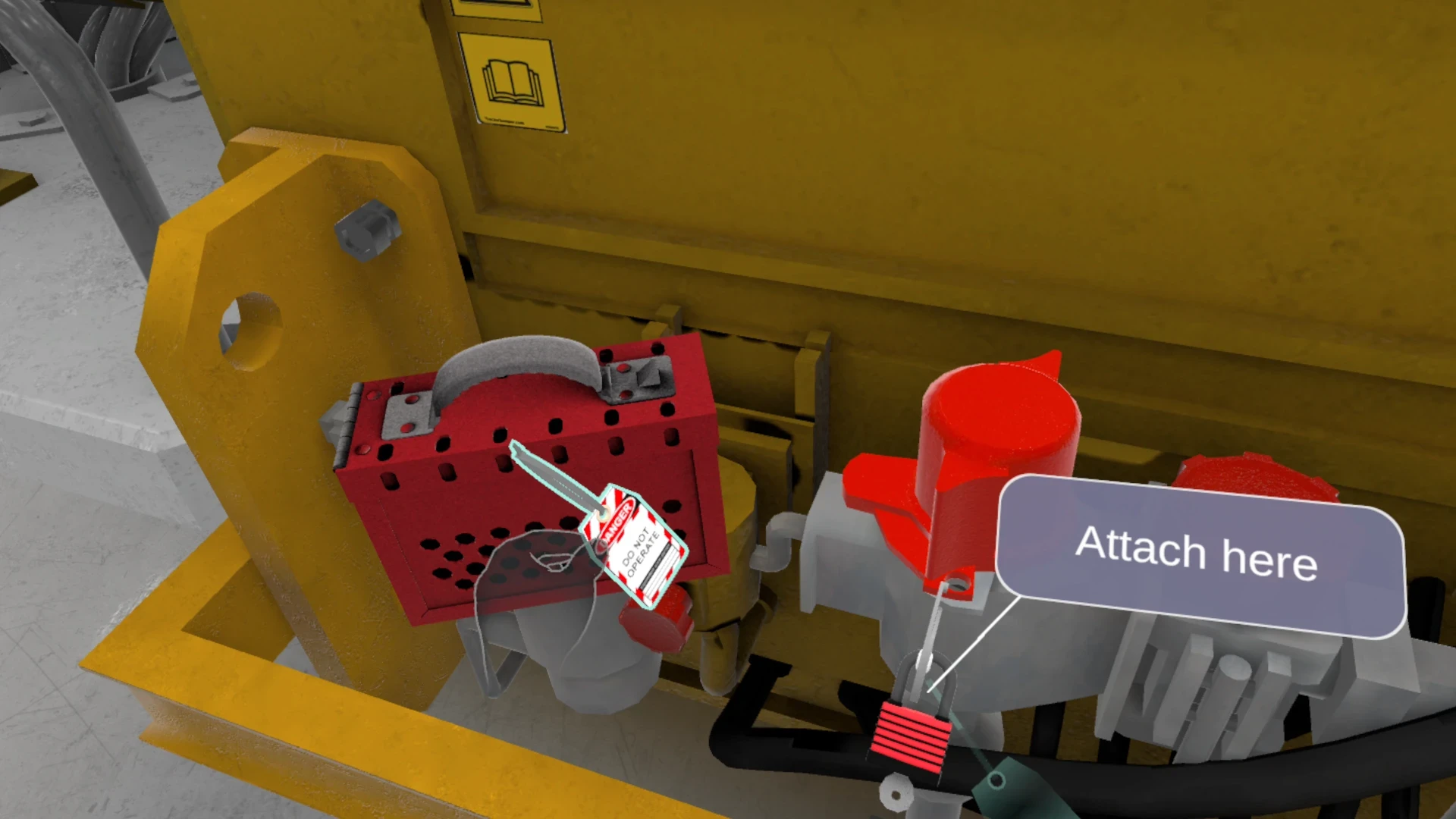
Lockout tagout training with full hand tracking in VR.
Services
Interactive Training
Flat-Screen Simulations
Desktop, web & mobile simulations
/services/flat-screen-simulation-training
SHIIFT simulations running on laptops and mobile devices.

Services
Interactive Training
Digital Twins
Navigable sites & equipment
/services/digital-twins
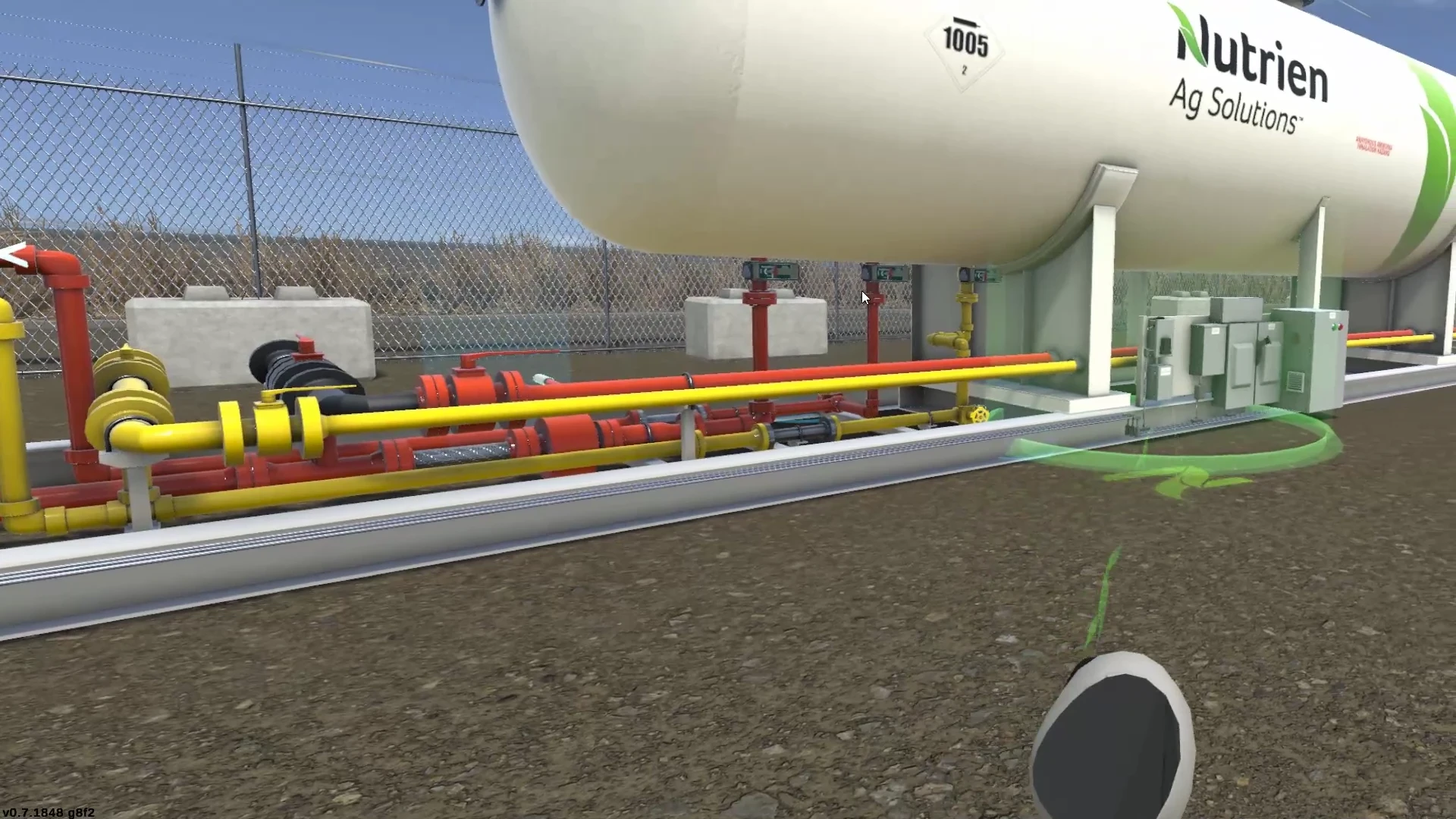
A navigable 3D replica of Nutrien's ammonia transfer plant.
Approach
How We Work
Our approach
Analysis, design, delivery, validation
/approach
Approach
How We Work
SCORM & LMS Integration
Tracking in your systems
/services/scorm-lms-integration
Approach
How We Work
Scenario-Based Assessments
Competency you can prove
/services/scenario-based-assessments