
Process safety is the part of safety management that deals with rare, catastrophic events, such as fires, explosions, toxic gas releases and vessel ruptures, that can kill many people at once and reach well beyond the site fence. It's a specialist field, yet decisions made by planners, buyers, managers and office staff can all weaken or strengthen the systems that keep hazardous materials where they belong.
What is process safety?
A widely used definition comes from the Center for Chemical Process Safety (CCPS), which describes process safety as "a disciplined framework for managing the integrity of hazardous operating systems and processes" through good design and operating practices. As the IChemE Safety Centre's summary of the CCPS process safety definition sets out, process safety deals with preventing and controlling incidents that could release hazardous materials or energy, causing toxic effects or fires and explosions.
US regulation frames it in similar terms. OSHA's Process Safety Management standard (29 CFR 1910.119) is aimed at preventing or minimizing the consequences of catastrophic releases of toxic, reactive, flammable or explosive chemicals. It applies to processes involving highly hazardous chemicals, where a process means any activity involving those chemicals, including their use, storage, manufacturing, handling or on-site movement.
What's the difference between process safety and personal safety?
Personal safety, sometimes called occupational safety, covers the hazards that injure individuals during their work: slips and trips, hand injuries, dropped objects, lifting and carrying, and similar events. These incidents happen more frequently, and the consequences fall mainly on one person. They're measured through injury rates.
Process safety covers loss of containment and loss of control over hazardous materials or energy. These events happen far less often, and when they do the consequences can include multiple fatalities, harm to the surrounding community, environmental damage and the loss of the facility. They're measured with process safety indicators, such as counts of process safety events ranked by severity, a tiered approach set out in API RP 754 and described in the API guide to reporting Tier 1 and Tier 2 process safety events.
The two overlap, and a site needs both. The difference matters because the controls are different. PPE and housekeeping control personal-safety hazards, while relief valves, alarms, shutdown systems and containment control process hazards.
What are major accident hazards?
The PSM standard defines a catastrophic release as "a major uncontrolled emission, fire, or explosion, involving one or more highly hazardous chemicals, that presents serious danger to employees in the workplace" (OSHA PSM definitions, 29 CFR 1910.119(b)). On a typical process site, the hazards that can lead to one include:
Releases of flammable gas or liquid that ignite as a fire or vapor cloud explosion
Releases of toxic gases such as hydrogen sulfide, ammonia, chlorine or hydrogen fluoride
Overpressure and rupture of vessels, piping, heat exchangers or storage tanks
Runaway chemical reactions
Uncontrolled releases of stored energy, such as high-pressure steam
How do barriers and layers of protection work?
Process safety relies on several independent barriers between a hazard and a major accident, so that no single failure leads straight to disaster. A typical sequence of layers includes:
Inherently safer design, such as smaller inventories or less hazardous materials
The basic process control system that keeps the process within its operating limits
Alarms and the operator's response to them
Safety instrumented systems that shut the process down automatically
Physical protection such as relief valves and rupture disks
Secondary containment such as dikes and berms
Emergency response on site and in the community
Barriers can degrade without anyone noticing. An alarm gets bypassed during a startup and nobody restores it. A maintenance task slips into next quarter's backlog. A spare part arrives that isn't to specification. A procedure is changed without anyone reviewing the effect. Each degradation on its own may look minor, and the risk builds when several line up. The OSHA PSM standard addresses this through elements that include process hazard analysis, operating procedures, training, mechanical integrity, management of change and incident investigation. It also requires refresher training for employees operating a process at least every three years.

Why doesn't a good personal-safety record prove process safety?
The explosions at BP's Texas City refinery on March 23, 2005, killed 15 workers and injured 180 others, according to the CSB investigation of the BP Texas City refinery explosion. The Department of Energy safety advisory on the BP Texas City accident describes how, during the startup of an isomerization unit, a distillation tower and its blowdown drum were overfilled with flammable liquid hydrocarbons, which were released to atmosphere and ignited. Alarms and gauges that could have warned operators had failed to work through lack of repair, and the fatalities occurred in and around temporary trailers placed too close to the process units.

{caption}Photo from the U.S. Chemical Safety Board's investigation of the 2005 BP Texas City explosion
After the disaster, BP formed an independent panel chaired by former Secretary of State James A. Baker III to review its five US refineries. The DOE summary of the Baker Panel findings records that BP focused on personal safety more than process safety and relied on personal injury rate data as a process safety performance indicator, which created a false sense of confidence that process safety risks were being addressed. The CSB's recommendations to BP included using leading and lagging process safety indicators to measure safety performance at its refineries.
A low injury rate shows that people are avoiding personal injuries. It says nothing about whether the relief valves have been tested, whether alarms are working, whether inspections are up to date or whether the last management of change review was done properly. Each of these needs its own process safety indicator.
Why does process safety matter to non-technical staff?
Process safety failures can trace back to decisions made far from the control room. A buyer substitutes a cheaper gasket that isn't rated for the service. A planner defers an inspection to hit a budget. A manager approves a staffing change without considering the effect on emergency response. An office worker in a contractor's team signs off paperwork without checking it. None of these people may think of themselves as part of process safety.
The PSM standard's employee participation and contractor requirements reflect this. Employee participation is one of its required elements, alongside the technical ones, and the standard covers contractors working on or near covered processes. For a process safety program to work, people in support roles need a basic understanding of the major hazards on their site and how their own decisions connect to them.
How do you make process safety relevant to everyone?
Process safety training for operators and engineers goes deep into hazard analysis, operating limits, safeguards and management of change. A wider audience needs something different. Some approaches that help:
Explain process safety in plain language, with a clear definition and without acronyms
Use real incidents, such as Texas City, to show how small decisions combine into a disaster, as covered in learning from incidents training
Frame the subject around each person's role by asking what process safety means for the work they do
Show the barriers on your own site and who maintains each one
Give people a way to raise concerns and show them what happens when they do
Role framing can work across a whole organization. For its Global Safety Appreciation Day, Hess Corporation commissioned a 2D animated process safety film built around the question "What does process safety mean to me?", aimed at both field teams and office-based staff. The script avoided dense technical detail, and teams used the film to start safety discussions in local meetings and toolbox talks.
Short, regular reminders keep the subject alive between formal courses. A safety moment at the start of a meeting can cover one barrier or one recent near miss, and hazard recognition training helps people spot the early signs that a barrier is weakening.
Common misconceptions about process safety
"Our injury rate is low, so we're safe." Injury rates measure personal safety. Texas City showed what happens when they're read as a measure of process safety.
"Process safety is the engineers' job." Purchasing, planning, staffing and contractor decisions all affect the barriers.
"Nothing has happened here, so the barriers are fine." Barriers degrade silently, and the absence of incidents says little about their condition.
"A bypass is temporary." Without a management of change review, a temporary bypass can become the permanent state of the plant.
What good process safety awareness looks like
An organization where process safety is understood beyond the control room tends to show these signs:
People in every role can name the major hazards on their site
Staff outside operations can explain how their own decisions connect to the barriers
Process safety indicators are reported alongside injury rates, at the same level of attention
Bypasses, overdue inspections, deferred maintenance and impaired alarms are tracked and visible to management
Changes to equipment, chemicals, procedures and staffing go through a management of change review
Lessons from incidents and near misses, including those at other companies, are shared across the workforce
Solutions
Safety Training
Hazard recognition
Spot risks before incidents
/solutions/hazard-recognition-training
Solutions
Safety Training
Life-Saving Rules
Critical rules as decisions
/solutions/life-saving-rules-training
Solutions
Safety Training
Behavioral safety
Stop work authority, used
/solutions/behavioral-safety-training
Solutions
Safety Training
Hand safety
Fewer hand injuries
/solutions/hand-safety-training
Solutions
Safety Training
PPE selection & use
The right kit, worn right
/solutions/ppe-training
Solutions
Safety Training
H2S & gas awareness
The invisible hazard, visible
/solutions/h2s-gas-awareness-training
Solutions
Safety Training
Fire & emergency response
Beyond the routine drill
/solutions/fire-safety-emergency-response-training
Solutions
Safety Training
Toolbox talks
Five strong minutes weekly
/solutions/toolbox-talk-content
Solutions
Safety Training
Permit to work
PTW judgment scenarios
/solutions/permit-to-work-training
Solutions
Safety Training
Isolation & LOTO
Safe energy isolation
/solutions/isolation-lockout-tagout-training
Solutions
Safety Training
Confined space entry
Entries and rescue response
/solutions/confined-space-entry-training
Solutions
Safety Training
Working at height
Falls and dropped objects
/solutions/working-at-height-training
Solutions
Safety Training
Lifting & rigging
Safer critical lifts
/solutions/lifting-rigging-training
Solutions
Safety Training
Hot work
Sparks under control
/solutions/hot-work-training
Solutions
Safety Training
Line of fire
See the energy path
/solutions/line-of-fire-training
Solutions
Safety Training
Driver safety
Safer driving and journeys
/solutions/driver-safety-training
Solutions
Safety Training
Electrical safety
Safe isolation, arc flash aware
/solutions/electrical-safety-training
Solutions
Safety Training
Excavation work
Trenches and buried services
/solutions/excavation-safety-training
Solutions
Safety Training
Ergonomics
Strain prevention that sticks
/solutions/ergonomics-training
Solutions
Safety Training
Situational awareness
Noticing change on site
/solutions/situational-awareness-training
Solutions
Onboarding & People
Site orientation
Inductions before day one
/solutions/site-orientation-onboarding
Solutions
Onboarding & People
Expatriate workforce
Localized multilingual training
/solutions/expatriate-workforce-training
Solutions
Onboarding & People
Visitor inductions
Pre-arrival essentials
/solutions/visitor-induction-training
Solutions
Onboarding & People
Leadership training
Judgment, developed
/solutions/leadership-training
Solutions
Onboarding & People
Soft skills
Conversations that work
/solutions/soft-skills-training
Solutions
Onboarding & People
Safety leadership
Frontline supervisor skills
/solutions/safety-leadership-training
Solutions
Onboarding & People
Human factors
Error traps and defenses
/solutions/human-factors-training
Solutions
Operations & Technical
Process & procedures
Step-by-step competence
/solutions/process-procedure-training
Solutions
Operations & Technical
Operational readiness
Ready before start-up
/solutions/operational-readiness
Solutions
Operations & Technical
Technical training
Complex systems explained
/solutions/technical-training
Solutions
Operations & Technical
Control room & DCS
Alarms and upset response
/solutions/control-room-training
Solutions
Operations & Technical
Crane operation
Operators, banksmen, supervisors
/solutions/crane-operation-training
Solutions
Operations & Technical
Forklift operation
Operators, pedestrians, supervisors
/solutions/forklift-operation-training
Solutions
Operations & Technical
Maintenance & turnarounds
Outage preparation
/solutions/maintenance-turnaround-training
Solutions
Operations & Technical
Process safety
Barriers made visible
/solutions/process-safety-training
Solutions
Compliance & Modernization
Lessons learned (LFI)
Incidents into training
/solutions/lessons-learned-training
Solutions
Compliance & Modernization
Spill response
Environmental first response
/solutions/spill-response-training
Solutions
Compliance & Modernization
Hazardous materials
Storage, handling, transport
/solutions/hazardous-materials-training
Solutions
Compliance & Modernization
Security awareness
Physical and cyber vigilance
/solutions/security-awareness-training
Services
Content Production
Training Videos
Filmed through our global crew network
/services/workplace-safety-training-videos
A safety orientation film produced for Milestone Environmental Services.

Services
Content Production
2D & 3D Animation
Engineering-accurate visuals
/services/2d-3d-animation
From a 3D animation built to supplement an ADNOC e-learning module.

Services
Content Production
Safety Campaigns
Sustained behavior change
/services/safety-campaigns
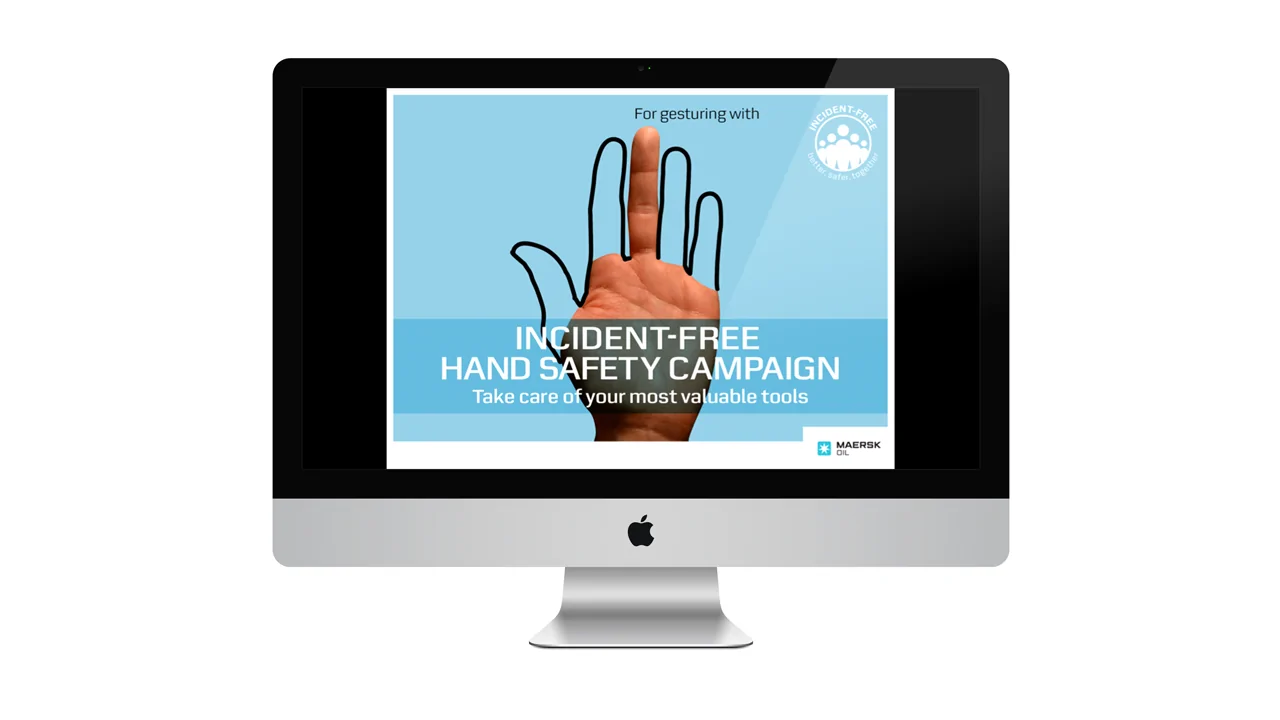
The award-recognized Maersk hand safety campaign.
Services
Content Production
Training posters & print
Site-specific print & visual aids
/services/training-posters
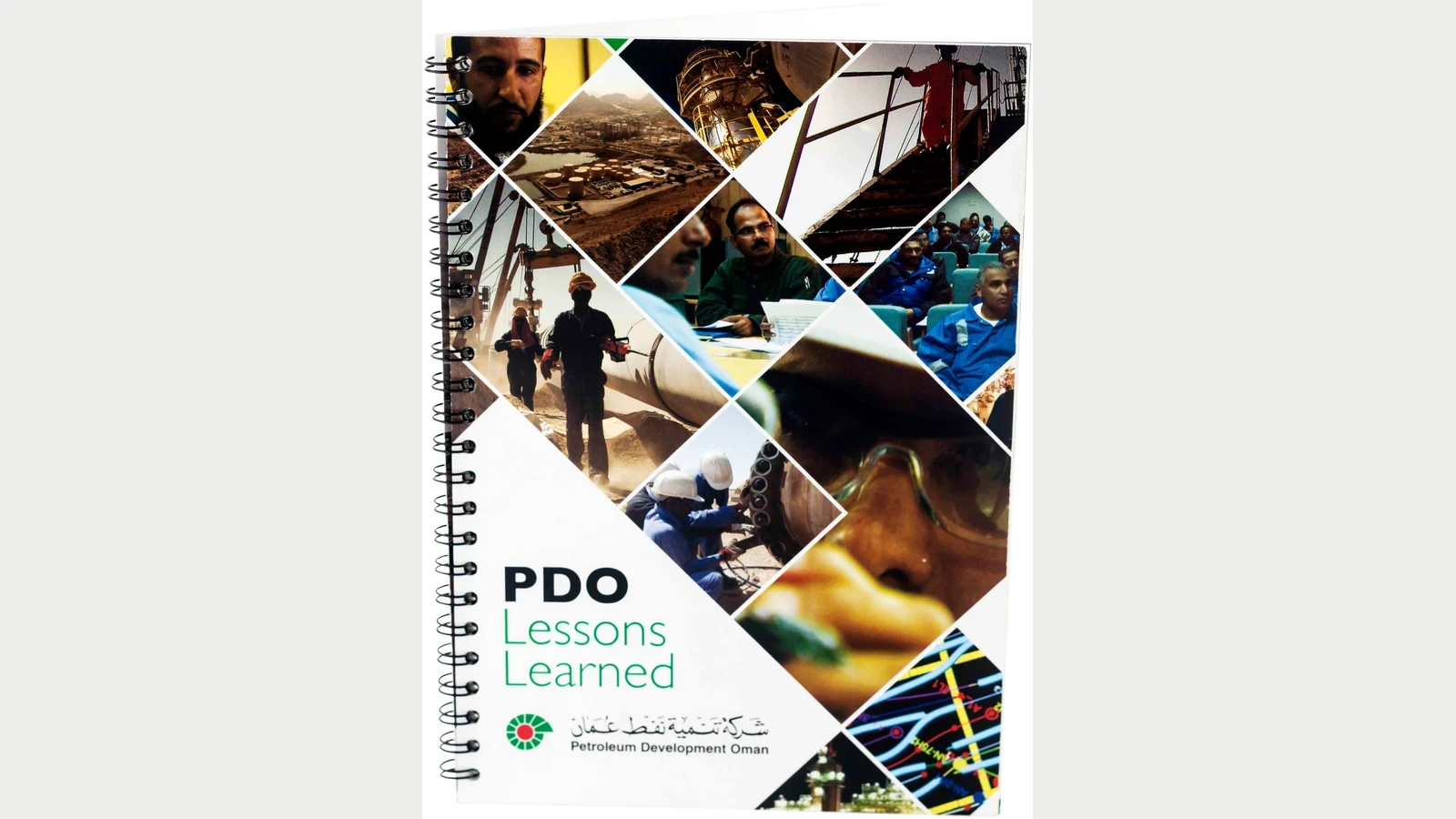
A printed lessons learned handbook produced for Petroleum Development Oman.
Services
Content Production
PowerPoint Materials
Trainer-led deck rebuilds
/services/powerpoint-training-materials
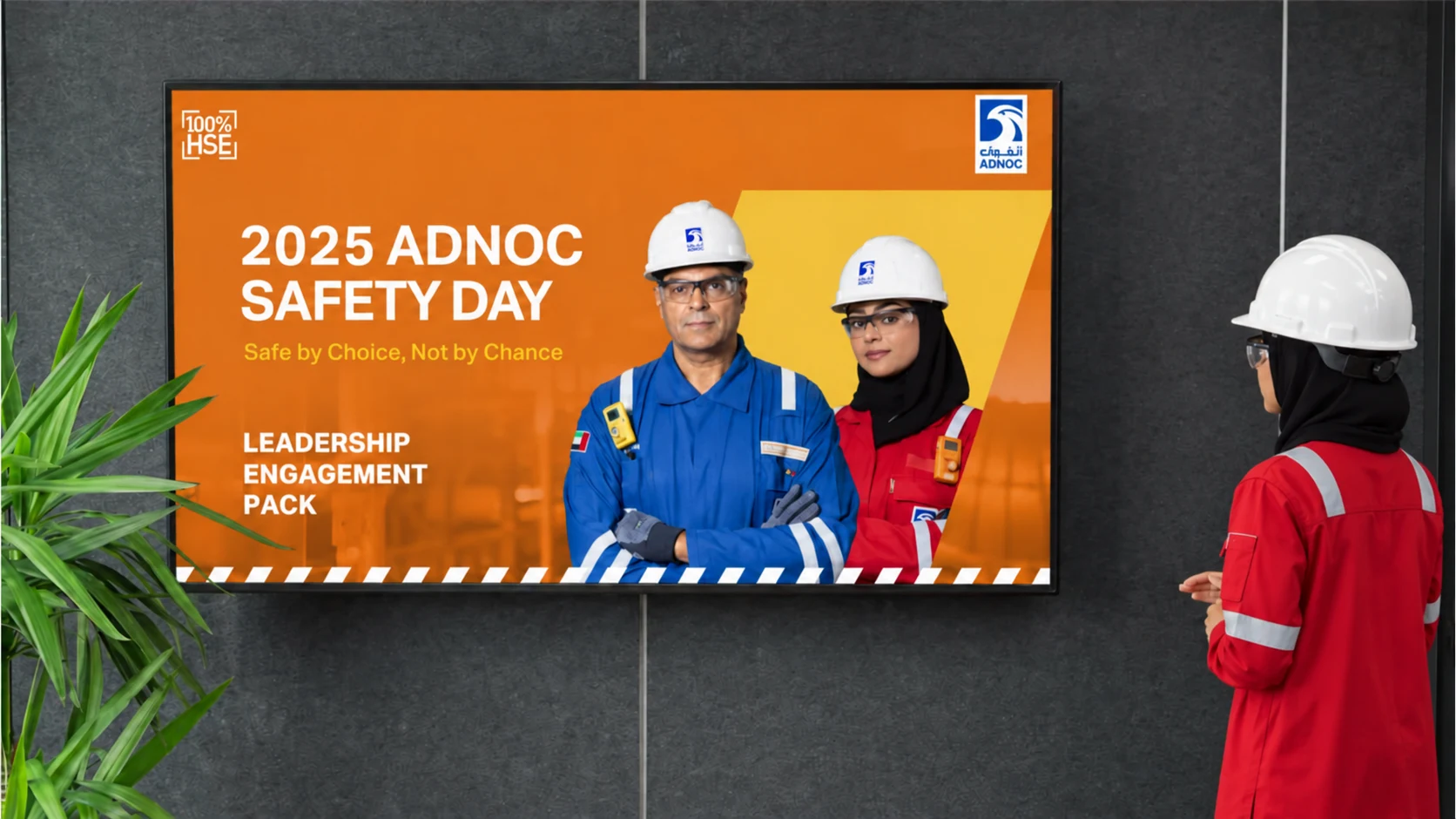
Presenting an ADNOC Safety Day engagement deck.
Services
Interactive Training
E-Learning
SCORM online modules
/services/e-learning
Scenario questions inside a client e-learning module.

Services
Interactive Training
Virtual Reality (VR)
Immersive headset training
/services/virtual-reality-vr-training
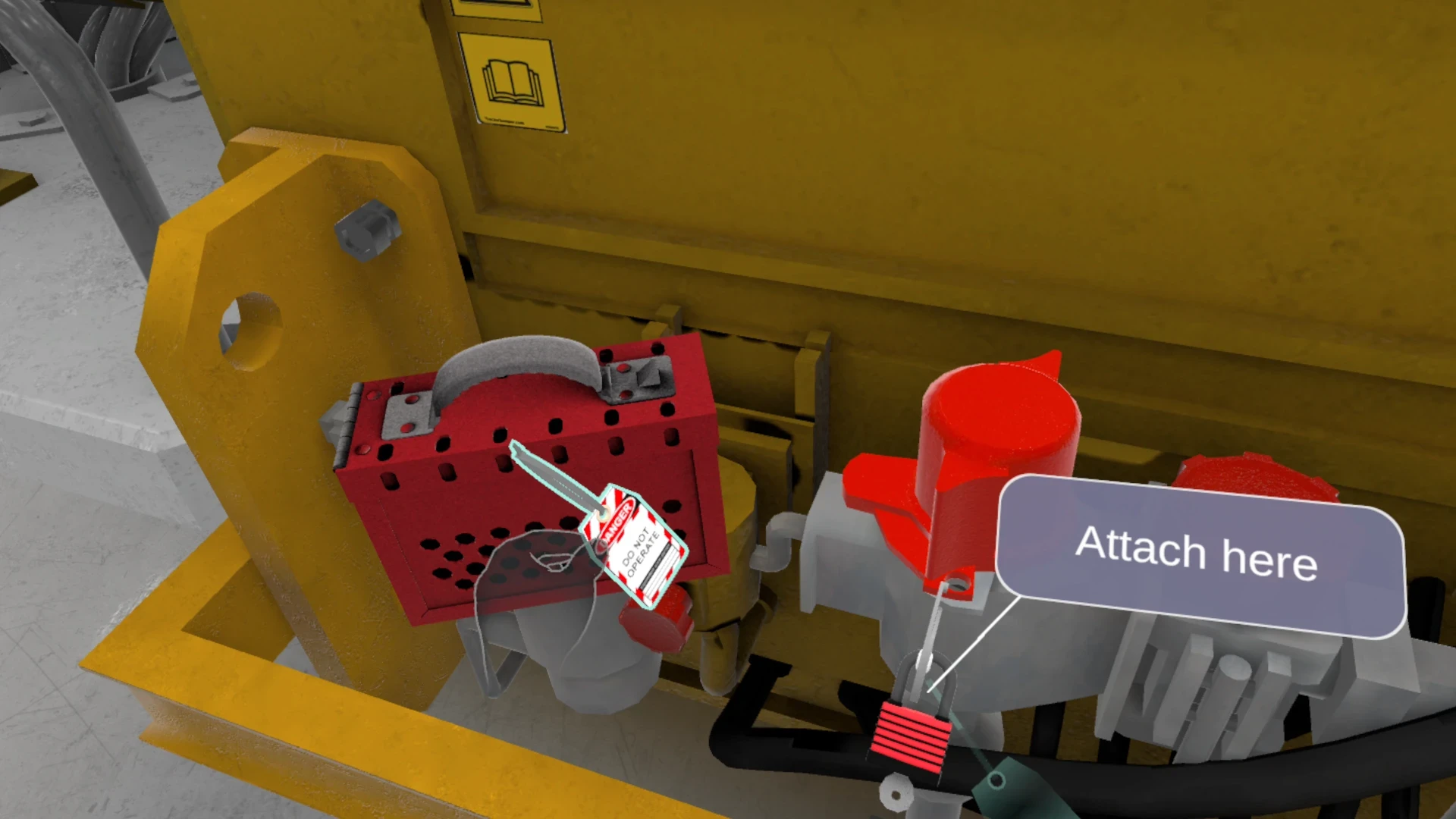
Lockout tagout training with full hand tracking in VR.
Services
Interactive Training
Flat-Screen Simulations
Desktop, web & mobile simulations
/services/flat-screen-simulation-training
SHIIFT simulations running on laptops and mobile devices.

Services
Interactive Training
Digital Twins
Navigable sites & equipment
/services/digital-twins
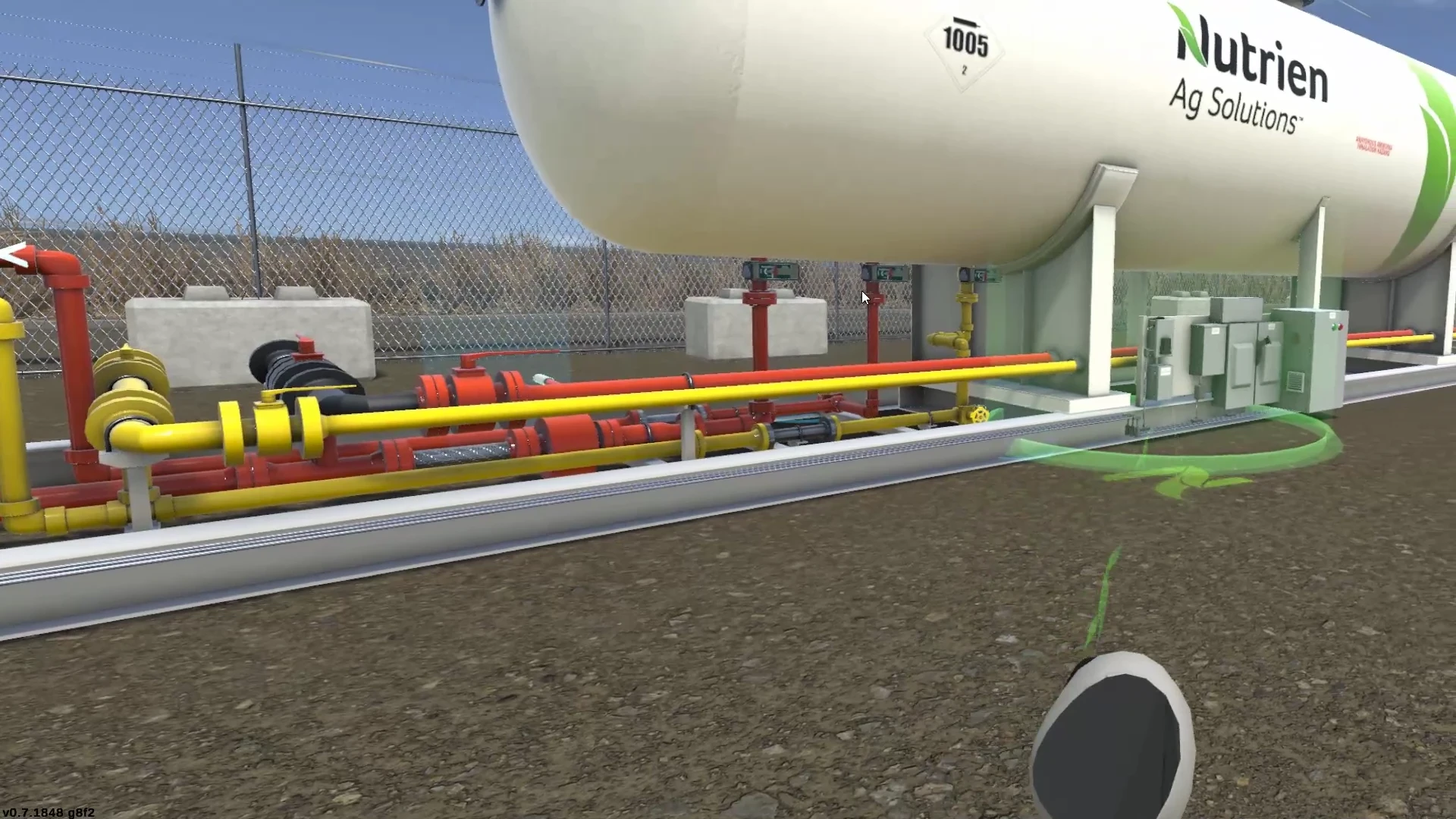
A navigable 3D replica of Nutrien's ammonia transfer plant.
Approach
How We Work
Our approach
Analysis, design, delivery, validation
/approach
Approach
How We Work
SCORM & LMS Integration
Tracking in your systems
/services/scorm-lms-integration
Approach
How We Work
Scenario-Based Assessments
Competency you can prove
/services/scenario-based-assessments