Introduction
Immersive learning or immersive training is a modern approach to workforce and skills development that goes beyond traditional classroom or video-based methods. Instead of passively consuming information, learners interact with realistic, simulated environments that replicate real-world scenarios. This type of training has gained significant traction across industries because it allows employees to develop skills, practice critical tasks, and retain knowledge more effectively while reducing risk.
By combining technology, psychology, and instructional design, immersive learning creates experiences that feel tangible and engaging. Organizations are increasingly adopting these solutions to address the growing need for skilled personnel, particularly in industries with high-risk environments or complex procedures.
What is Immersive Learning?
Immersive training can be defined as any learning experience that fully engages participants through interactive simulations or virtual environments. Unlike traditional methods that rely on lectures, slides, or manuals, immersive training places learners in a dynamic environment where they actively participate in the learning process.
Key technologies that enable immersive learning include:
The defining characteristic of immersive learning is its ability to replicate real-world experiences in a controlled, interactive environment. Learners are not just observing; they are making decisions, reacting to consequences, and engaging their senses to reinforce learning.
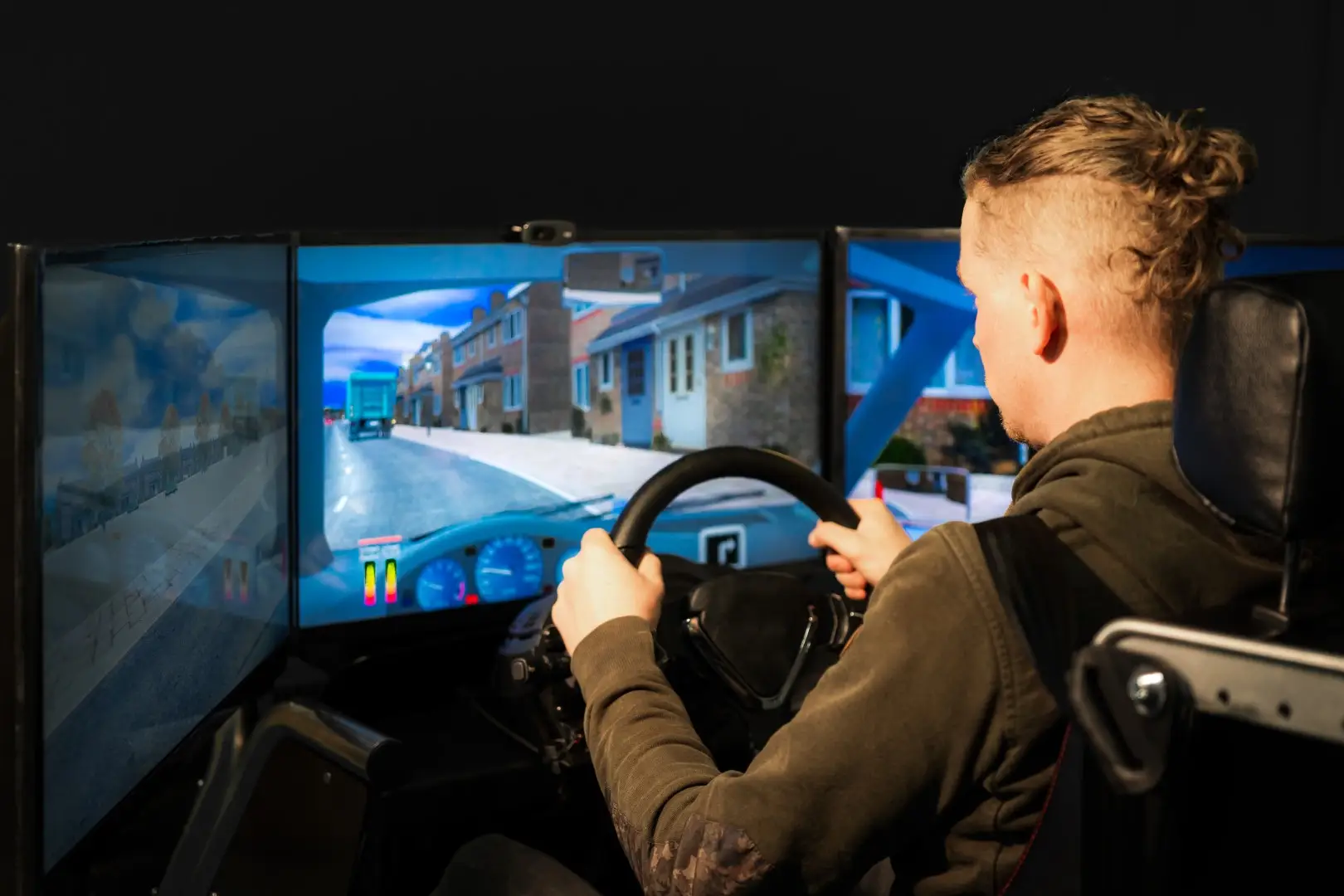
Example of immersive learning using physical equipment and screen-based simulations
How Immersive Learning Works
Immersive learning works by creating a sense of presence, or the feeling that learners are “inside” the scenario. This is achieved through technology that engages multiple senses and provides interactive feedback.
- Realistic Environments: Learners are placed in simulations that mirror real-world conditions. This could be a virtual manufacturing floor, an operating room, a hazardous worksite, or even a corporate office for onboarding purposes. Realistic environments help learners become familiar with procedures and protocols before encountering real-life situations.
- Scenario-Based Learning: Immersive training often uses branching scenarios where learners’ decisions determine outcomes. This approach allows participants to experience cause-and-effect relationships safely, making mistakes without real-world consequences.
- Multi-Sensory Engagement: Visual, auditory, and sometimes haptic feedback are integrated to make experiences more tangible. For example, in a VR driver training program, learners can see and hear the environment, feel the controls (if using physical steering wheel), and navigate obstacles as if they were on the actual site.
- Instant Feedback and Assessment: Immersive training platforms often track performance metrics in real time. This can include task completion, response times, errors, and decision-making patterns. Instant feedback enables learners to correct mistakes immediately, improving retention and skill acquisition.
Benefits of Immersive Learning
The advantages of immersive training are well-documented and extend across industries and job types:
- Improved Knowledge Retention: Studies indicate that immersive training significantly increases retention compared to traditional methods. Engaging multiple senses and practicing in realistic scenarios helps the brain store and recall information more effectively.
- Safe Practice for High-Risk Tasks: Employees can perform dangerous procedures or operate complex machinery without risk to themselves or others. This is especially valuable in industries like manufacturing, energy, construction, and healthcare.
- Scalable and Consistent Training: Immersive programs can be deployed across multiple locations, ensuring all learners receive consistent instruction. Unlike traditional classroom sessions, the same training module can be repeated for hundreds of employees with identical quality.
- Simulating Rare or Complex Scenarios: Certain situations, such as emergency evacuations, surgical complications, or critical equipment failures, occur infrequently in real life but require skillful responses. Immersive training allows learners to practice these high-stakes scenarios repeatedly in a safe, controlled environment.
- Increased Engagement and Motivation: Interactivity and gamified elements in immersive training keep learners engaged. Unlike passive methods, learners are actively involved, which can improve focus and reduce training fatigue.
We’ve written an in-depth article on which benefits garner the most value out of VR training for industries looking to make the most out of their investments.
Applications of Immersive Learning Across Industries
Immersive training isn’t limited to a single sector. Its flexibility and effectiveness make it applicable to many industries:
- Manufacturing and Industrial Safety: Manufacturing industry workers can practice operating machinery, performing maintenance, or navigating hazardous environments without physical risk. Immersive modules can also enforce safety protocols, reducing accidents and downtime.
- Healthcare and Surgery: VR and AR simulations allow medical professionals to rehearse surgical procedures, practice patient care, and manage emergency scenarios. Surgeons can refine techniques before performing on actual patients, improving outcomes and reducing errors. Research shows that immersive learning, such as VR-based training, can significantly improve skill acquisition and knowledge retention in medical education, particularly in primary learning objectives.
- Transportation and Logistics: Drivers, pilots, and operators can train for complex scenarios, such as difficult weather conditions or emergency situations, in fully simulated environments. This enhances preparedness without exposing them to real-world risks.
- Corporate Onboarding and Soft Skills Development: Immersive training can guide new employees through company processes, culture, and expectations in interactive ways. Simulations can also teach communication, negotiation, or leadership skills in realistic scenarios.
Comparison to Traditional Training
Traditional training methods, such as classroom lectures, slide presentations, or pre-recorded videos, have limitations. They often rely on passive learning, which can lead to lower retention and engagement.
Immersive training addresses these challenges by:
- Providing hands-on experience rather than theoretical knowledge.
- Allowing mistakes in a risk-free environment, which accelerates learning.
- Enabling personalized pacing and adaptive feedback, tailoring the experience to individual learners.
By combining experiential learning with technology, immersive training helps learners acquire practical skills that are directly applicable to their work.
Closing Thoughts
Immersive learning is a transformative approach that equips learners with practical skills, knowledge retention, and confidence in high-stakes environments. By using VR, AR, mixed reality, and simulations, organizations can create interactive, realistic, and safe training experiences. The benefits include safer workplaces, more skilled employees, and better overall performance across industries.
As organizations face evolving challenges and the need for highly skilled personnel, immersive learning/training provides a future-focused solution that outperforms traditional methods. For industries ranging from healthcare to manufacturing to corporate development, investing in immersive learning is a strategic step toward preparing employees for the demands of the modern workplace.