Introduction
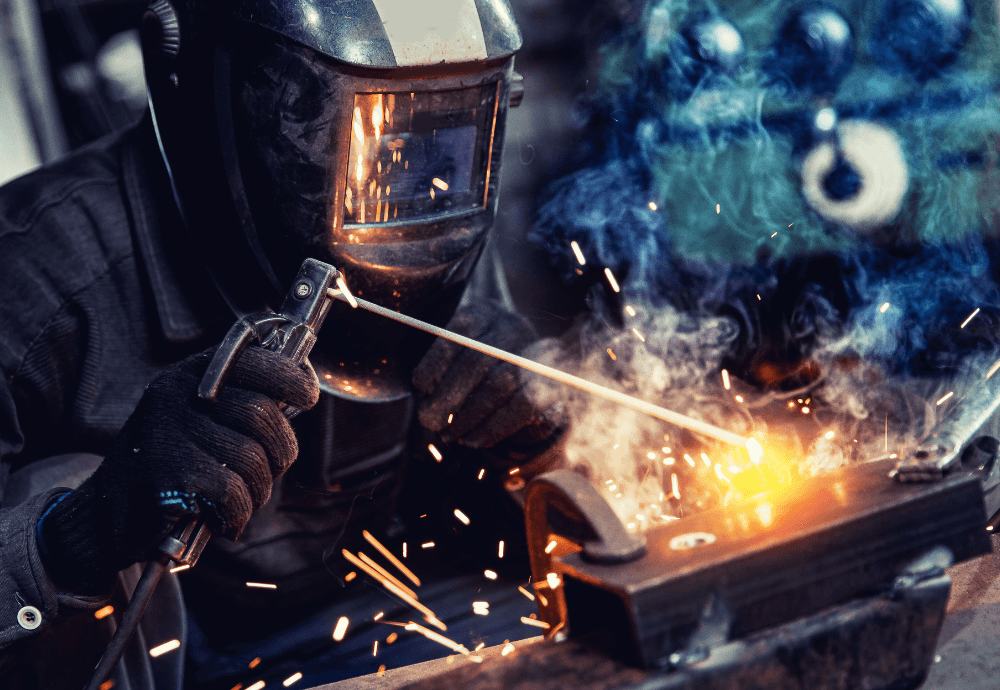
In manufacturing environments, precision, safety, and speed are everything. But traditional training methods—printed manuals, slide decks, and buddy systems—often fall short of preparing employees for high-risk or technical scenarios. That’s where Virtual Reality (VR) is stepping in to transform the game.
VR training in manufacturing allows workers to practice procedures, operate machinery, and react to emergencies in fully immersive environments—without risking lives or halting production. It’s not just a flashy upgrade; it’s a smarter, safer, and more cost-effective approach to workforce development.
In case you aren’t familiar with VR Training, have a look at these pages to help you understand more before delving deeper into this article covering how it’s been transforming the manufacturing industry:
What are the Benefits of VR Training in Manufacturing?
The manufacturing industry runs on precision, process, and performance—so getting training right is critical. VR offers a more immersive and efficient way to teach both technical skills and safety procedures.
It allows workers to learn by doing, practice in high-risk scenarios without real-world consequences, and retain information more effectively than through traditional methods. Below are some of the key benefits VR brings to manufacturing training environments.
Enhanced Safety Training Without the Risks
Manufacturing jobs often involve hazardous equipment, moving parts, high temperatures, or chemical exposure. VR allows trainees to safely experience and respond to emergencies like:
Machinery malfunctions
Chemical spills
Electrical hazards
Improper lockout/tagout procedures
The majority of workplace injuries can be prevented with proper injury prevention/safety training, in 2023 alone, the U.S experienced 222,698 preventable deaths, 62 million injuries, and over $1,000,000,000,000 (One trillion) in injury costs.
VR helps safety managers tremendously by allowing consuming a unique medium of media, where they are immersed in an virtual experience. VR bridges the gap that’s missing in standard training by offering repeatable, high-fidelity simulations in a risk-free space. VR offers a unique experience where users can actually experience hazards as they happen or right before they happen without the consequences that exist in the real world, like losing a limb in excruciating pain, or death.
VR allows trainees to experience the shock and develop an appropriate level of caution rather than brushing off safety advice as something that won’t happen to them because ‘they’ve done it a thousand times before’.
The fact that VR training boosts safety in manufacturing has been proven dozens of times, a particular case study I’d like to highlight is Ford’s implementation of VR training for manufacturing safety that saw a whopping 70% decrease in production line related injuries.
Quicker Adaptation to Process or Equipment Changes
In manufacturing, new machinery and process updates are common—but training workers to operate unfamiliar systems quickly and safely is often a bottleneck. Traditional training can lag behind, especially when new equipment isn’t physically available or when multiple shifts need consistent instruction.
VR training solves this by allowing companies to develop immersive, up-to-date training modules as soon as changes are finalized. Workers can begin training before the equipment is even installed, gaining hands-on experience in a realistic virtual environment. They can learn new procedures, troubleshoot systems, and even rehearse emergency responses—all without tying up real machines or production time.
This becomes even more important as manufacturing moves toward automation and digital transformation. According to the 2024 Deloitte and The Manufacturing Institute Skills Gap Report, there’s been a 75% increase in demand for simulation software skills, highlighting how critical immersive tech is becoming to future-ready training.
Faster Onboarding and Skill Development
Onboarding new employees in manufacturing can be time-consuming, often requiring extensive hands-on training and supervision. VR training accelerates this process by providing immersive, interactive learning experiences that allow new hires to acquire skills more quickly and confidently. According to a study by PwC, VR learners complete training four times faster than those in traditional classroom settings. Moreover, these learners are 275% more confident in applying their skills post-training. In the manufacturing sector, companies like United Rentals have reported a ~50% reduction in training time when utilizing VR training programs. This efficiency enables new employees to become productive members of the team more rapidly, reducing downtime and increasing overall operational efficiency.
Reduced Downtime and Error Rates
Errors in manufacturing can lead to significant downtime, product defects, and financial losses. VR training addresses this issue by allowing employees to practice procedures and operations in a virtual environment, reducing the likelihood of mistakes on the production floor.
. Furthermore, immersive VR training environments have been shown to improve information retention by 80%, leading to enhanced performance and reduced production costs.
Real-World Examples of VR in Manufacturing
Lockout/Tagout Training:
SHIIFT created an interactive simulation where users identify energy sources, use PPE, isolate hazards, and follow proper lockout/tagout procedures. The environment simulates realistic sounds, visual cues, and potential consequences of skipping steps—creating deeper engagement and stronger recall. This product has different versions catered to different clients of ours, including Daikin Global, the leading manufacturer of air conditioning units who’ve reported positive feedback from their employees in regards to their VR lockout tagout training.
Assembly Line Practice:
Training workers on new production lines can be costly and time-consuming—especially if the physical setup is still being finalized. To solve this, several automotive and electronics manufacturers now use VR simulations to help new hires and cross-functional teams walk through full assembly tasks before the line is physically operational.
A study by Ford showed that implementing virtual production line training helped reduce employee injuries by 70% during a new model launch. Users can explore ergonomic risks, test different work sequences, and build muscle memory before ever touching real equipment.
Emergency Response Training:
VR enables manufacturing teams to practice emergency protocols—such as fire outbreaks, chemical spills, or equipment failures—in a safe, controlled environment. This immersive training improves decision-making and reaction times during real emergencies.
A study titled ”From Risk to Readiness: VR-Based Safety Training for Industrial Hazards” implemented VR simulations at the IPLOM refinery in Busalla, Italy. Using Unreal Engine and Meta Quest headsets, the training mirrored real-world refinery conditions, including emergency response procedures. Participants reported increased confidence and preparedness in handling emergencies, indicating the effectiveness of VR in safety training.
Additionally, a randomized controlled trial published in Frontiers in Virtual Reality demonstrated that VR-based emergency medical training significantly enhanced participants’ performance in managing multi-casualty injuries from traffic accidents. The VR group showed superior outcomes in on-site assessment, triage accuracy, and transportation decision-making compared to traditional training methods .
These findings underscore VR’s potential to provide realistic, repeatable, and impactful emergency response training, ultimately enhancing safety and preparedness in manufacturing environments.
Future Use Cases to Watch: VR Training and the Manufacturing Sector
VR training for the manufacturing industry is advancing at a steady pace, but there ar some less explored use cases of VR training that we’re likely to see more of in the future of VR training and the manufacturing sector.
Collaborative VR Training Across Facilities
Some manufacturing processes require multiple people working in sync—whether for safety, efficiency, or regulatory compliance. Future VR training environments will allow trainees to work together in real-time, even if they’re in different physical locations.
Take, for example, a two-person maintenance task where one operator isolates the energy sources while the other performs a physical inspection. In a VR simulation, each user can perform their respective duties, communicate via built-in voice chat, and coordinate steps in real time—just like they would on the shop floor.
Tasks like two-person lockout/tagout, coordinated crane operations, or tandem rigging procedures can be rehearsed virtually. Trainees learn not only how to perform their role, but also how to coordinate with a partner, a skill that traditional solo training often overlooks.
This approach builds trust, reinforces procedural timing, and ensures that both people understand the other’s responsibilities, which is critical in scenarios where a single misstep could cause injury or equipment damage.
AI-Enhanced Personalised Learning Paths
Not every trainee needs the same content in the same way. Some may struggle with procedural memory, while others need help with hazard recognition. Future VR training platforms will likely use AI to personalize learning based on individual performance.
If a user repeatedly misses a lockout step, the system can automatically introduce additional practice rounds.
High performers can be fast-tracked to more complex simulations, maintaining engagement and reducing training time.
Over time, AI can map company-wide skill gaps, recommend targeted training, and even predict potential safety risks based on how employees interact with the simulations. This kind of adaptive learning could make VR training not just a tool for compliance, but a true driver of operational excellence.
Closing Thoughts
The manufacturing industry is built on precision, efficiency, and safety. VR training supports all three, by offering immersive, repeatable, and measurable training that accelerates onboarding, minimizes risk, and boosts long-term retention.
As the technology becomes more affordable and accessible, forward-thinking manufacturers are already integrating VR into their workforce development strategies. It’s not just the future of training—it’s the future of manufacturing itself.
Solutions
Safety Training
Hazard recognition
Spot risks before incidents
/solutions/hazard-recognition-training
Solutions
Safety Training
Life-Saving Rules
Critical rules as decisions
/solutions/life-saving-rules-training
Solutions
Safety Training
Behavioral safety
Stop work authority, used
/solutions/behavioral-safety-training
Solutions
Safety Training
Hand safety
Fewer hand injuries
/solutions/hand-safety-training
Solutions
Safety Training
PPE selection & use
The right kit, worn right
/solutions/ppe-training
Solutions
Safety Training
H2S & gas awareness
The invisible hazard, visible
/solutions/h2s-gas-awareness-training
Solutions
Safety Training
Fire & emergency response
Beyond the routine drill
/solutions/fire-safety-emergency-response-training
Solutions
Safety Training
Toolbox talks
Five strong minutes weekly
/solutions/toolbox-talk-content
Solutions
Safety Training
Permit to work
PTW judgment scenarios
/solutions/permit-to-work-training
Solutions
Safety Training
Isolation & LOTO
Safe energy isolation
/solutions/isolation-lockout-tagout-training
Solutions
Safety Training
Confined space entry
Entries and rescue response
/solutions/confined-space-entry-training
Solutions
Safety Training
Working at height
Falls and dropped objects
/solutions/working-at-height-training
Solutions
Safety Training
Lifting & rigging
Safer critical lifts
/solutions/lifting-rigging-training
Solutions
Safety Training
Hot work
Sparks under control
/solutions/hot-work-training
Solutions
Safety Training
Line of fire
See the energy path
/solutions/line-of-fire-training
Solutions
Safety Training
Driver safety
Safer driving and journeys
/solutions/driver-safety-training
Solutions
Safety Training
Electrical safety
Safe isolation, arc flash aware
/solutions/electrical-safety-training
Solutions
Safety Training
Excavation work
Trenches and buried services
/solutions/excavation-safety-training
Solutions
Safety Training
Ergonomics
Strain prevention that sticks
/solutions/ergonomics-training
Solutions
Safety Training
Situational awareness
Noticing change on site
/solutions/situational-awareness-training
Solutions
Onboarding & People
Site orientation
Inductions before day one
/solutions/site-orientation-onboarding
Solutions
Onboarding & People
Expatriate workforce
Localized multilingual training
/solutions/expatriate-workforce-training
Solutions
Onboarding & People
Visitor inductions
Pre-arrival essentials
/solutions/visitor-induction-training
Solutions
Onboarding & People
Leadership training
Judgment, developed
/solutions/leadership-training
Solutions
Onboarding & People
Soft skills
Conversations that work
/solutions/soft-skills-training
Solutions
Onboarding & People
Safety leadership
Frontline supervisor skills
/solutions/safety-leadership-training
Solutions
Onboarding & People
Human factors
Error traps and defenses
/solutions/human-factors-training
Solutions
Operations & Technical
Process & procedures
Step-by-step competence
/solutions/process-procedure-training
Solutions
Operations & Technical
Operational readiness
Ready before start-up
/solutions/operational-readiness
Solutions
Operations & Technical
Technical training
Complex systems explained
/solutions/technical-training
Solutions
Operations & Technical
Control room & DCS
Alarms and upset response
/solutions/control-room-training
Solutions
Operations & Technical
Crane operation
Operators, banksmen, supervisors
/solutions/crane-operation-training
Solutions
Operations & Technical
Forklift operation
Operators, pedestrians, supervisors
/solutions/forklift-operation-training
Solutions
Operations & Technical
Maintenance & turnarounds
Outage preparation
/solutions/maintenance-turnaround-training
Solutions
Operations & Technical
Process safety
Barriers made visible
/solutions/process-safety-training
Solutions
Compliance & Modernization
Lessons learned (LFI)
Incidents into training
/solutions/lessons-learned-training
Solutions
Compliance & Modernization
Spill response
Environmental first response
/solutions/spill-response-training
Solutions
Compliance & Modernization
Hazardous materials
Storage, handling, transport
/solutions/hazardous-materials-training
Solutions
Compliance & Modernization
Security awareness
Physical and cyber vigilance
/solutions/security-awareness-training
Services
Content Production
Training Videos
Filmed through our global crew network
/services/workplace-safety-training-videos
A safety orientation film produced for Milestone Environmental Services.

Services
Content Production
2D & 3D Animation
Engineering-accurate visuals
/services/2d-3d-animation
From a 3D animation built to supplement an ADNOC e-learning module.

Services
Content Production
Safety Campaigns
Sustained behavior change
/services/safety-campaigns
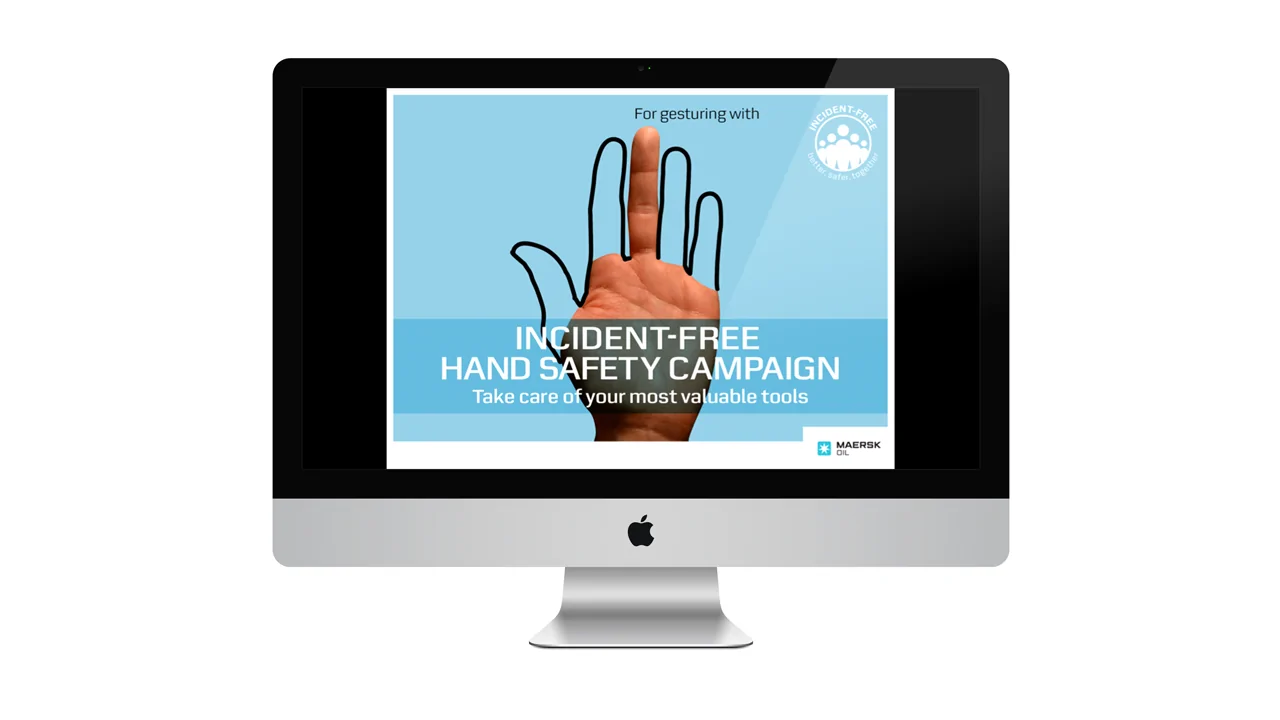
The award-recognized Maersk hand safety campaign.
Services
Content Production
Training posters & print
Site-specific print & visual aids
/services/training-posters
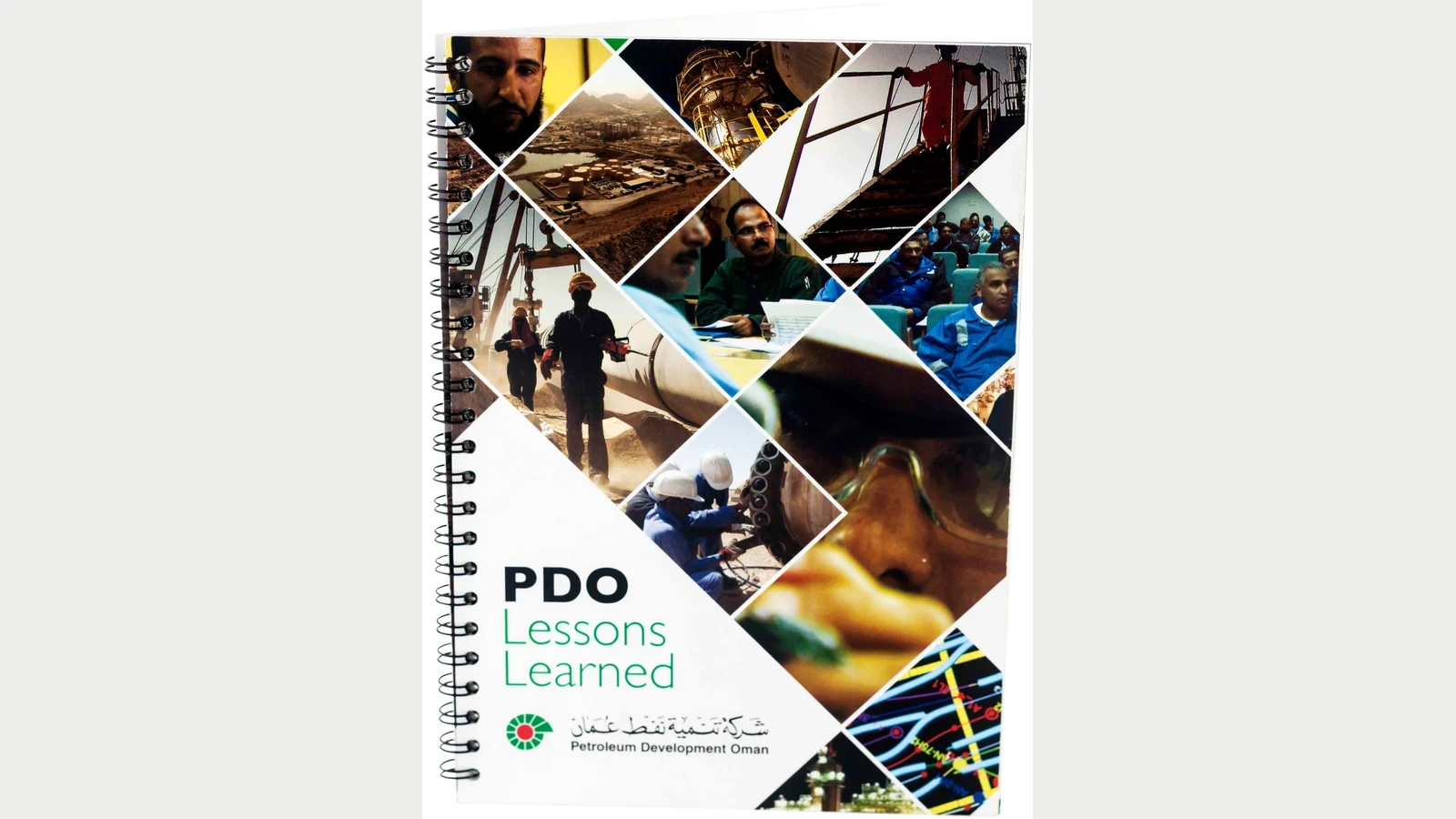
A printed lessons learned handbook produced for Petroleum Development Oman.
Services
Content Production
PowerPoint Materials
Trainer-led deck rebuilds
/services/powerpoint-training-materials
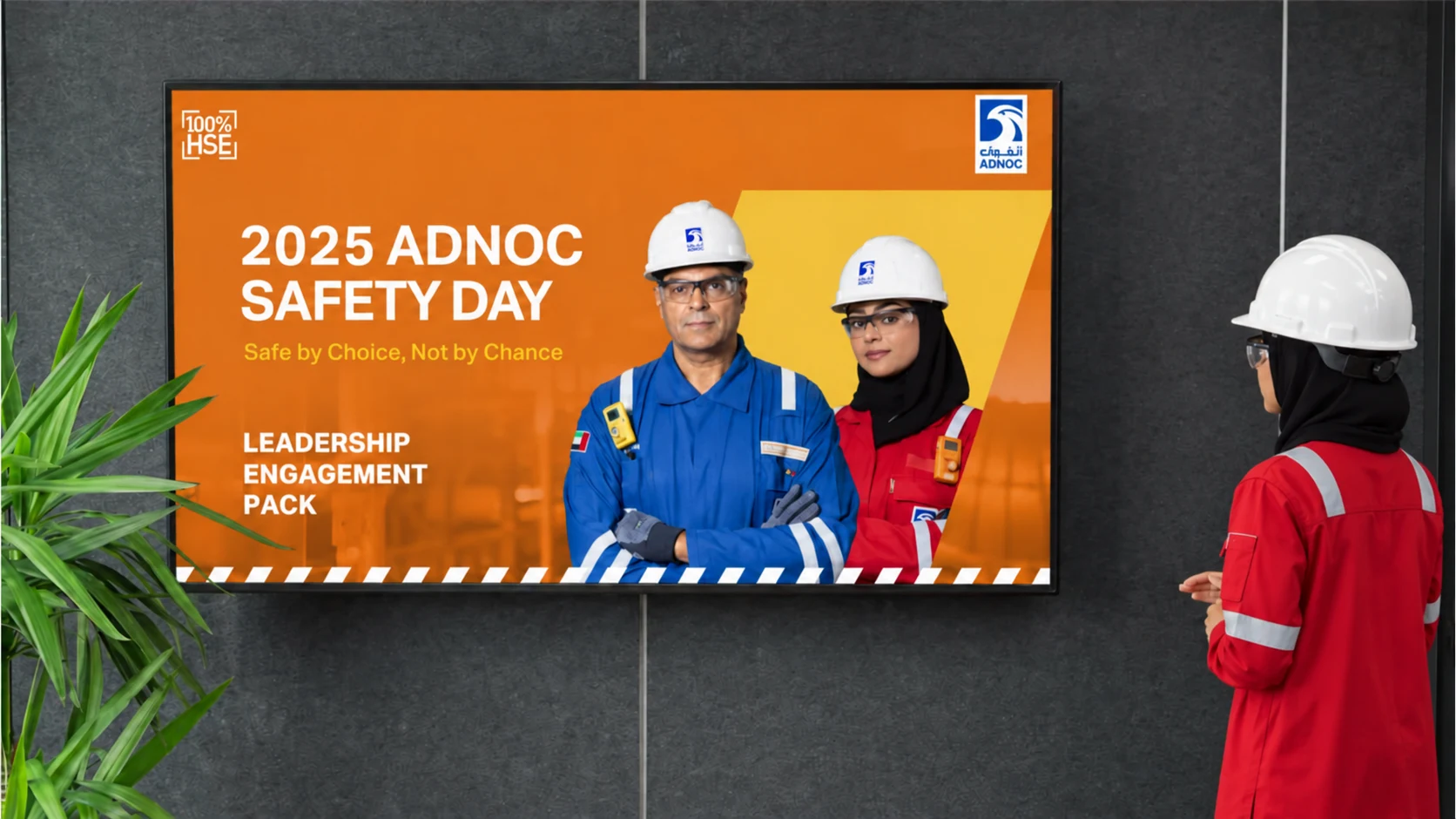
Presenting an ADNOC Safety Day engagement deck.
Services
Interactive Training
E-Learning
SCORM online modules
/services/e-learning
Scenario questions inside a client e-learning module.

Services
Interactive Training
Virtual Reality (VR)
Immersive headset training
/services/virtual-reality-vr-training
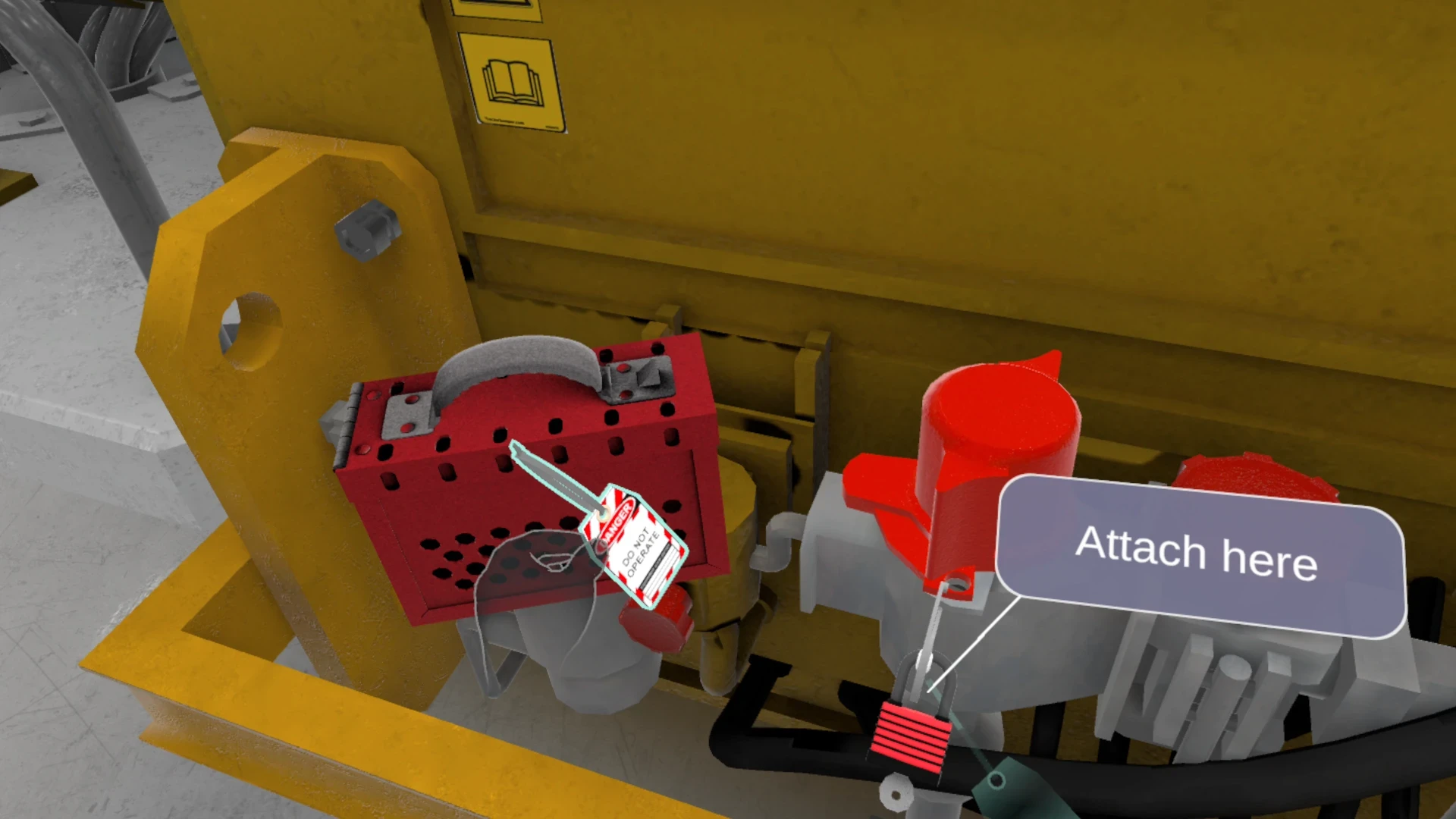
Lockout tagout training with full hand tracking in VR.
Services
Interactive Training
Flat-Screen Simulations
Desktop, web & mobile simulations
/services/flat-screen-simulation-training
SHIIFT simulations running on laptops and mobile devices.

Services
Interactive Training
Digital Twins
Navigable sites & equipment
/services/digital-twins
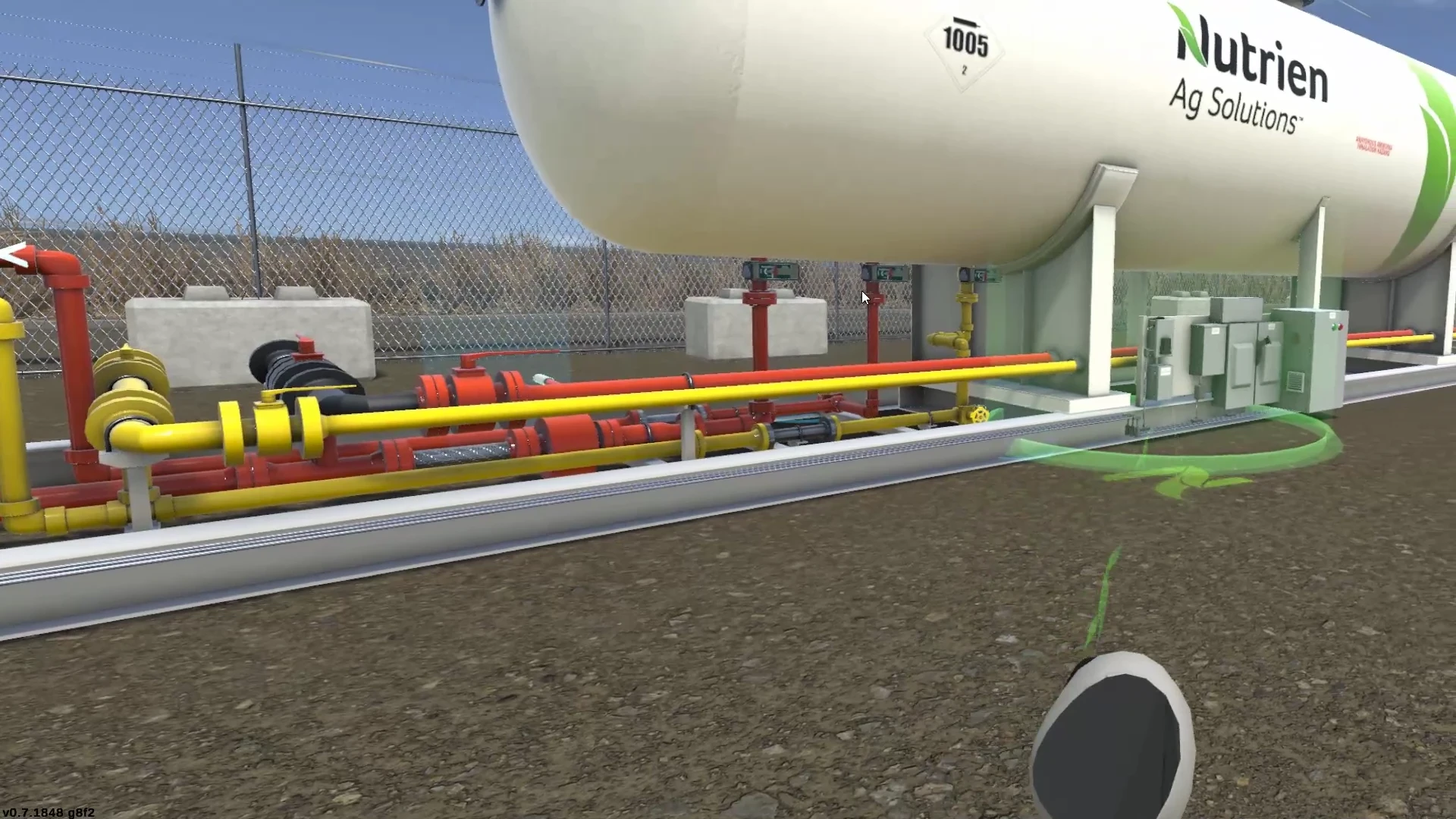
A navigable 3D replica of Nutrien's ammonia transfer plant.
Approach
How We Work
Our approach
Analysis, design, delivery, validation
/approach
Approach
How We Work
SCORM & LMS Integration
Tracking in your systems
/services/scorm-lms-integration
Approach
How We Work
Scenario-Based Assessments
Competency you can prove
/services/scenario-based-assessments