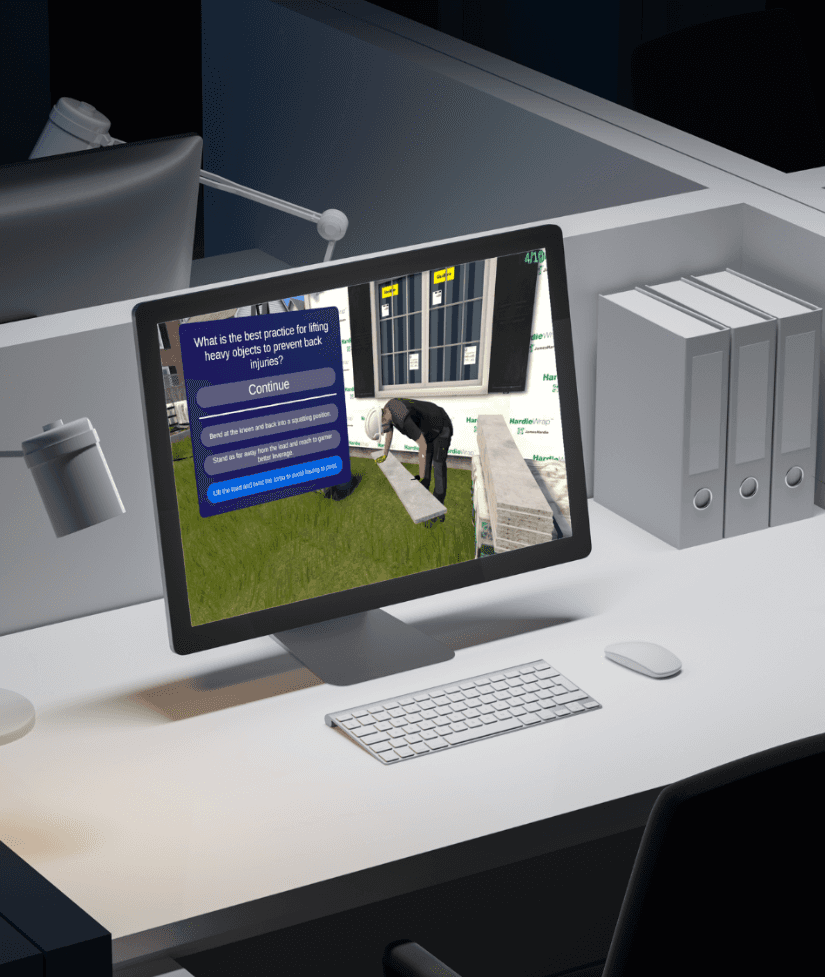
Video games use psychological principles to create highly engaging and rewarding experiences. Traditional training methods often lack this level of immersion. By understanding game design, we can enhance corporate training and learning software to make it more effective and enjoyable, by transforming it into gamified learning.
In this post, we study successful game psychology techniques used in video game creation to engage their users and how we can mindfully incorporate the same techniques for training employees.
What Is Gamified Training?
Gamified training integrates game-like elements, like points, leaderboards, challenges, or rewards into learning/training experiences boost user engagement and motivation. By incorporating competition, progress tracking, and instant feedback, gamification makes training more interactive and enjoyable compared to conventional training methods, increasing learner knowledge retention and motivation to actually participate and engage with the training. Whether used in corporate training or safety programs like our case study below, gamified training transforms passive learning into an enjoyable and effective experience.
Does Gamified Training Get Successful Results?
Yes, gamified training has been proven to enhance learning outcomes by increasing engagement, motivation, and retention. Studies show that learners are more likely to complete training and apply what they’ve learned when game mechanics are involved. Elements like rewards and challenges tap into intrinsic motivation, encouraging repeated practice and deeper learning. Many organizations report higher participation rates, improved performance, and better knowledge retention when using gamification in their training programs.
Dissecting The Hit Game Balatro: A Case Study in Game Psychology
A great example of a video game I’ve been playing a lot personally, is Balatro. Balatro masterfully blends sound, reward systems, and psychological engagement. Every small interaction, from gaining points to progressing, is paired with satisfying sound effects and animations. The repetition of these sounds that appear during scoring conditions the brain to find joy in even minor interactions that are part of the game.
Music shifts dramatically upon failure, reinforcing the weight of losing and changing the vibe of the music.
The soundtrack quickly restarts with a transition from the ‘game over screen’ soundtrack upon starting a new game, fueling the “one more try” loop.
Losing can unlock new content, ensuring players always feel a sense of progress. After all, each session has to end somewhere.
Feedback through sound and visuals makes even small actions feel rewarding.
These little features are all part of what makes Balatro’s gameplay loop so addicting for gamers, but when it comes to training employees, we don’t want them to be addicted.
We want them to be engaged and learning effectively, so how can we borrow some of the techniques used in gaming, to make small interactions more enjoyable and keeping users engaged for longer?
The Role of Sound Effects & Music in Gamified Training
Games use small, rewarding audio cues to reinforce habit formation. A well-timed sound effect can make even minor achievements feel meaningful. Background music can also shift emotions. Calm soundtracks help with onboarding, while intense music builds urgency during challenges.
Sound effects provide instant gratification, reinforcing progress.
Music sets the tone for different training scenarios.
Well-placed audio cues can improve focus and engagement.
Training simulations benefit from dynamic sound design to create immersion.
Below, I explore how the same techniques used in games like Balatro can actually be implemented in training and how they’ve been used in one of my favorite SHIIFT training solutions, James Hardie’s Jobsite Safety Training. Music:
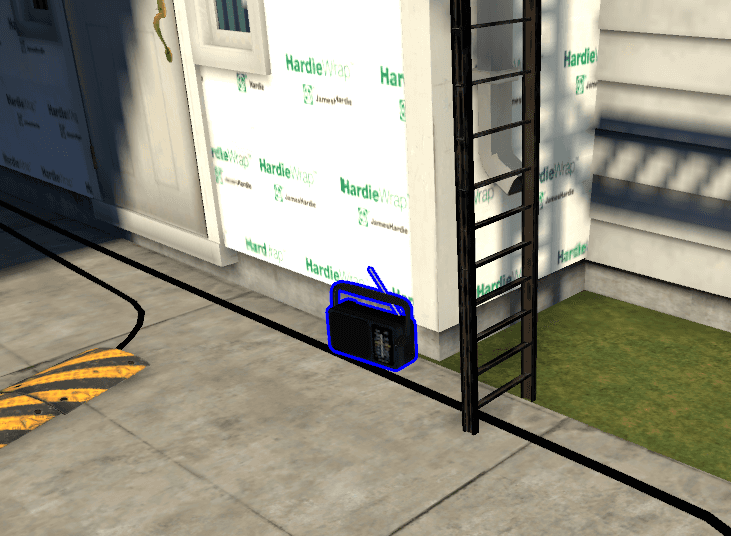
Music isn’t commonly seen in training, since most simulations focus their soundtracks fully on being immersive and so there’s not always room for music. In James Hardie’s Jobsite Safety Training, we use an ambient music style that plays ‘in the background’ via a radio that’s on the Job Site. In real life, not all job sites will allow music, but this was a way to include music which can help a lot with keeping users engaged in the training, while still being immersive as the sound comes from a radio on the Job Site.
It chooses between a selection different music tracks, and some curious users might have noticed they can actually click the radio to change the soundtrack choice.
Sound Effects:
We use lots of sound effects in James Hardie’s Jobsite Safety Training, some are immersive sound effects, and some are interactive sound effects.
By that I mean, immersive sound effects that involve the sound of a vehicle’s engine, planks being put away, machinery and equipment being used, etc. A Job Site simulation should feel noisy and play the same sounds you’d expect to hear in a real Job Site, these sorts of sounds are to be expected in any decent simulation.
Interactive sound effects on the other hand are only triggered by the user’s interactions, the expected actions that a learner would take such as highlighting over an interactable animation, clicking the answer to a multiple choice question, or getting the answer wrong or right.
All these sound effects add a layer of depth to the user’s experience and have a huge impact on how engaged the user is that you can only really understand after directly comparing a flat, boring experience without sound effects, to one with sound effects. Animations: Of course animations are used throughout the Job Site, and they would need to exist in a simulation, but how about using small animations for interactive elements, similar to Balatro and other successful video games.
In James Hardie’s Jobsite Safety Training, we use these animations for teleporting from location to location, user interface, selecting animated characters or objects, etc. These small animations are designed to have a minor yet satisfying experience throughout the learner’s experience in the application.

How Positive and Negative Feedback Shapes Learning in Training and Behaviors in the Real World Behavioral psychology, particularly Skinner’s behaviorism, explains how reinforcement and punishment shape learning. In games, progress bars, score multipliers, and failure screens all influence motivation.
Positive reinforcement (Congratulatory voiceovers, positive SFX for correct question answers, points, achievements, unlocks and associated animations and SFX) encourage repeated behaviors.
Negative reinforcement (answering a safety question correctly to switch an unsafe animation into a safe animation, or performing tasks safely to avoid hazards) reinforce safe habits and following best practice.
Constructive failure messages help learners see mistakes as learning opportunities.
Structured feedback loops in training can improve retention and motivation.
In James Hardie’s Jobsite Safety Training, the sound effect for positive reinforcement sounds happy, for correct answers. The sound effect for wrong answers is more abrupt and blunt.
Why ‘Losing’ Can Be Just as Rewarding as Winning in Gamified Training
Many successful games use the concept of “losing forward,” ensuring players still feel progress even when they fail. Balatro, for example, allows players to unlock new content after a loss, making failure a stepping stone rather than a setback. This is a common concept particularly in roguelike games where the user is expected to fail a lot and continuously improve when they start from the beginning.
Failure should feel like a learning opportunity, not punishment.
Games like Balatro provide rewards after failure, such as unlockable content.
Framing failure as progress fosters resilience and continuous learning.
In a gamified safety scenario, ‘losing’ can be as simple as getting a question incorrect, or getting too many incorrect and being scored a fail at the final results.
To encourage continuous learning, training systems can have unlockable content like badges allocated to a learner’s user profile to indicate they’ve gotten a good result in a specific learning topic such as Working at Height related risks. This could motivate learners to repeat the module again to earn the rest of the badges, and while doing so, the learning material they repeat sticks in their minds more effectively.
How Training Simulations Can Learn from Game Life & Death Mechanics
In video games, a “Game Over” screen isn’t necessarily discouraging—it often signals a chance to try again with new knowledge. This creates a loop where players learn from failure, refine their strategies, and improve.
“Death” in games often means resetting and trying again, not actual loss. - In traditional eLearning, if it’s too boring this and you realise you didn’t pass the first time, it can be a dreadful thought that you may have to spend a long time on the training again.
Creating a sense of progression, even after failure, keeps engagement high. – Unlockable content like badges, star rating on a modules, etc can be beneficial for competitive learners, or completionists who enjoy unlocking everything in an experience.
Instant vs. Delayed Gratification in Training
Instant rewards, such as sound cues and animations, keep learners engaged in the moment. However, long-term progress, such as unlocking new modules or earning certifications, provides lasting motivation. Gamified learning should balance both types of gratification to maintain engagement without overwhelming learners with too many immediate rewards.
Micro-rewards (animations, sounds) keep learners motivated.
Larger, long-term goals (badges, certificates, competitive victories) create a deeper sense of achievement.
The right balance prevents distraction while maintaining engagement.
Ensuring Gamified Training Remains Productive &Amp; Engaging
Gamification should enhance learning, not distract from it. Engagement should never turn into addiction, and training should feel rewarding but not compulsive.
Training should use game mechanics to encourage learning, not overindulgence.
Reward systems should align with real-world skills and progress.
Overuse of game elements can shift focus away from actual learning.
The goal is to make training effective, not just entertaining.
But how do we ensure the training is used as a productive learning tool, and not a tool for escapism like video games tend to be?
It’s crucial strike a balance between incorporating fun elements as a secondary part of the training rather than the main goal. We need to create training with a hint of gamification, not video games with a hint of learning material.
This is simple for training developers, since they understand the core goals of a training module when they create it from the ground up, similar to game developers who understand that the core goal for their games is user enjoyment.
Closing Thoughts
Understanding video game psychology allows us to design better training experiences. By using well-placed feedback, sound effects, and failure mechanics, we can create training programs that feel rewarding without being distracting and without using any of the less healthy facets of video game psychology like addictive design.
The future of gamified learning lies in harnessing these principles while maintaining a strong focus on educational outcomes for employees.
Solutions
Safety Training
Hazard recognition
Spot risks before incidents
/solutions/hazard-recognition-training
Solutions
Safety Training
Life-Saving Rules
Critical rules as decisions
/solutions/life-saving-rules-training
Solutions
Safety Training
Behavioral safety
Stop work authority, used
/solutions/behavioral-safety-training
Solutions
Safety Training
Hand safety
Fewer hand injuries
/solutions/hand-safety-training
Solutions
Safety Training
PPE selection & use
The right kit, worn right
/solutions/ppe-training
Solutions
Safety Training
H2S & gas awareness
The invisible hazard, visible
/solutions/h2s-gas-awareness-training
Solutions
Safety Training
Fire & emergency response
Beyond the routine drill
/solutions/fire-safety-emergency-response-training
Solutions
Safety Training
Toolbox talks
Five strong minutes weekly
/solutions/toolbox-talk-content
Solutions
Safety Training
Permit to work
PTW judgment scenarios
/solutions/permit-to-work-training
Solutions
Safety Training
Isolation & LOTO
Safe energy isolation
/solutions/isolation-lockout-tagout-training
Solutions
Safety Training
Confined space entry
Entries and rescue response
/solutions/confined-space-entry-training
Solutions
Safety Training
Working at height
Falls and dropped objects
/solutions/working-at-height-training
Solutions
Safety Training
Lifting & rigging
Safer critical lifts
/solutions/lifting-rigging-training
Solutions
Safety Training
Hot work
Sparks under control
/solutions/hot-work-training
Solutions
Safety Training
Line of fire
See the energy path
/solutions/line-of-fire-training
Solutions
Safety Training
Driver safety
Safer driving and journeys
/solutions/driver-safety-training
Solutions
Safety Training
Electrical safety
Safe isolation, arc flash aware
/solutions/electrical-safety-training
Solutions
Safety Training
Excavation work
Trenches and buried services
/solutions/excavation-safety-training
Solutions
Safety Training
Ergonomics
Strain prevention that sticks
/solutions/ergonomics-training
Solutions
Safety Training
Situational awareness
Noticing change on site
/solutions/situational-awareness-training
Solutions
Onboarding & People
Site orientation
Inductions before day one
/solutions/site-orientation-onboarding
Solutions
Onboarding & People
Expatriate workforce
Localized multilingual training
/solutions/expatriate-workforce-training
Solutions
Onboarding & People
Visitor inductions
Pre-arrival essentials
/solutions/visitor-induction-training
Solutions
Onboarding & People
Leadership training
Judgment, developed
/solutions/leadership-training
Solutions
Onboarding & People
Soft skills
Conversations that work
/solutions/soft-skills-training
Solutions
Onboarding & People
Safety leadership
Frontline supervisor skills
/solutions/safety-leadership-training
Solutions
Onboarding & People
Human factors
Error traps and defenses
/solutions/human-factors-training
Solutions
Operations & Technical
Process & procedures
Step-by-step competence
/solutions/process-procedure-training
Solutions
Operations & Technical
Operational readiness
Ready before start-up
/solutions/operational-readiness
Solutions
Operations & Technical
Technical training
Complex systems explained
/solutions/technical-training
Solutions
Operations & Technical
Control room & DCS
Alarms and upset response
/solutions/control-room-training
Solutions
Operations & Technical
Crane operation
Operators, banksmen, supervisors
/solutions/crane-operation-training
Solutions
Operations & Technical
Forklift operation
Operators, pedestrians, supervisors
/solutions/forklift-operation-training
Solutions
Operations & Technical
Maintenance & turnarounds
Outage preparation
/solutions/maintenance-turnaround-training
Solutions
Operations & Technical
Process safety
Barriers made visible
/solutions/process-safety-training
Solutions
Compliance & Modernization
Lessons learned (LFI)
Incidents into training
/solutions/lessons-learned-training
Solutions
Compliance & Modernization
Spill response
Environmental first response
/solutions/spill-response-training
Solutions
Compliance & Modernization
Hazardous materials
Storage, handling, transport
/solutions/hazardous-materials-training
Solutions
Compliance & Modernization
Security awareness
Physical and cyber vigilance
/solutions/security-awareness-training
Services
Content Production
Training Videos
Filmed through our global crew network
/services/workplace-safety-training-videos
A safety orientation film produced for Milestone Environmental Services.

Services
Content Production
2D & 3D Animation
Engineering-accurate visuals
/services/2d-3d-animation
From a 3D animation built to supplement an ADNOC e-learning module.

Services
Content Production
Safety Campaigns
Sustained behavior change
/services/safety-campaigns
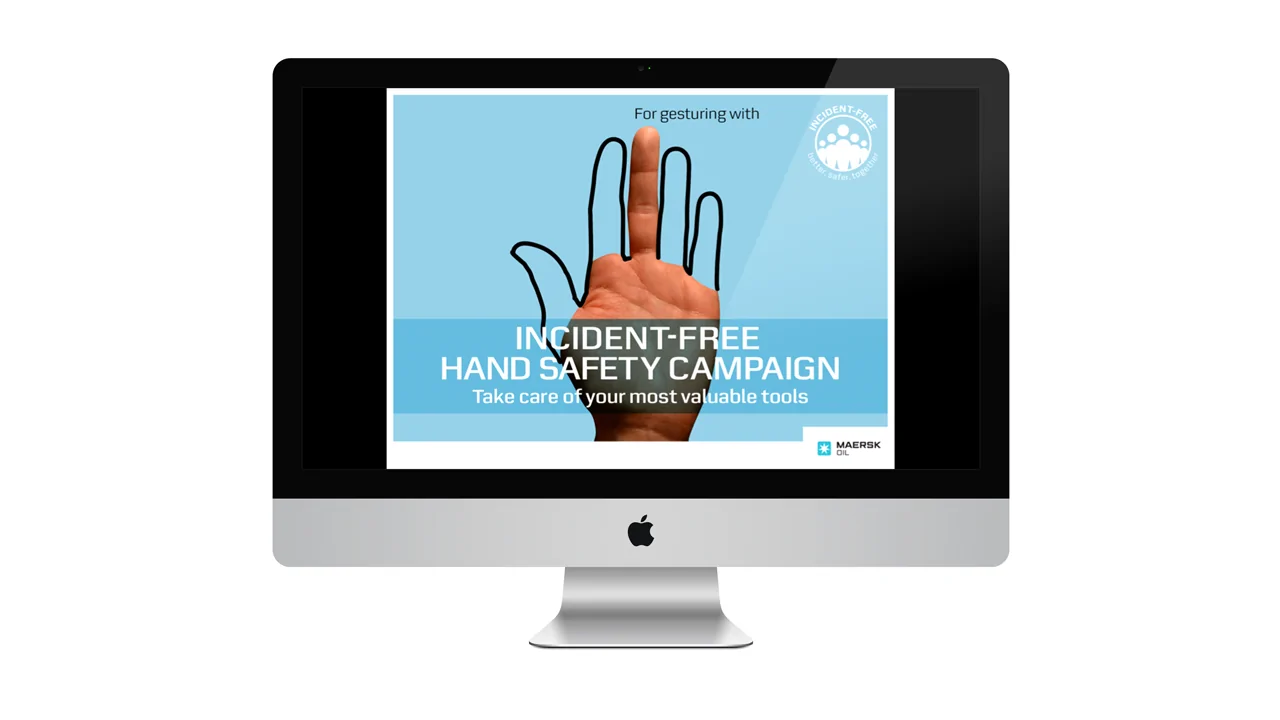
The award-recognized Maersk hand safety campaign.
Services
Content Production
Training posters & print
Site-specific print & visual aids
/services/training-posters
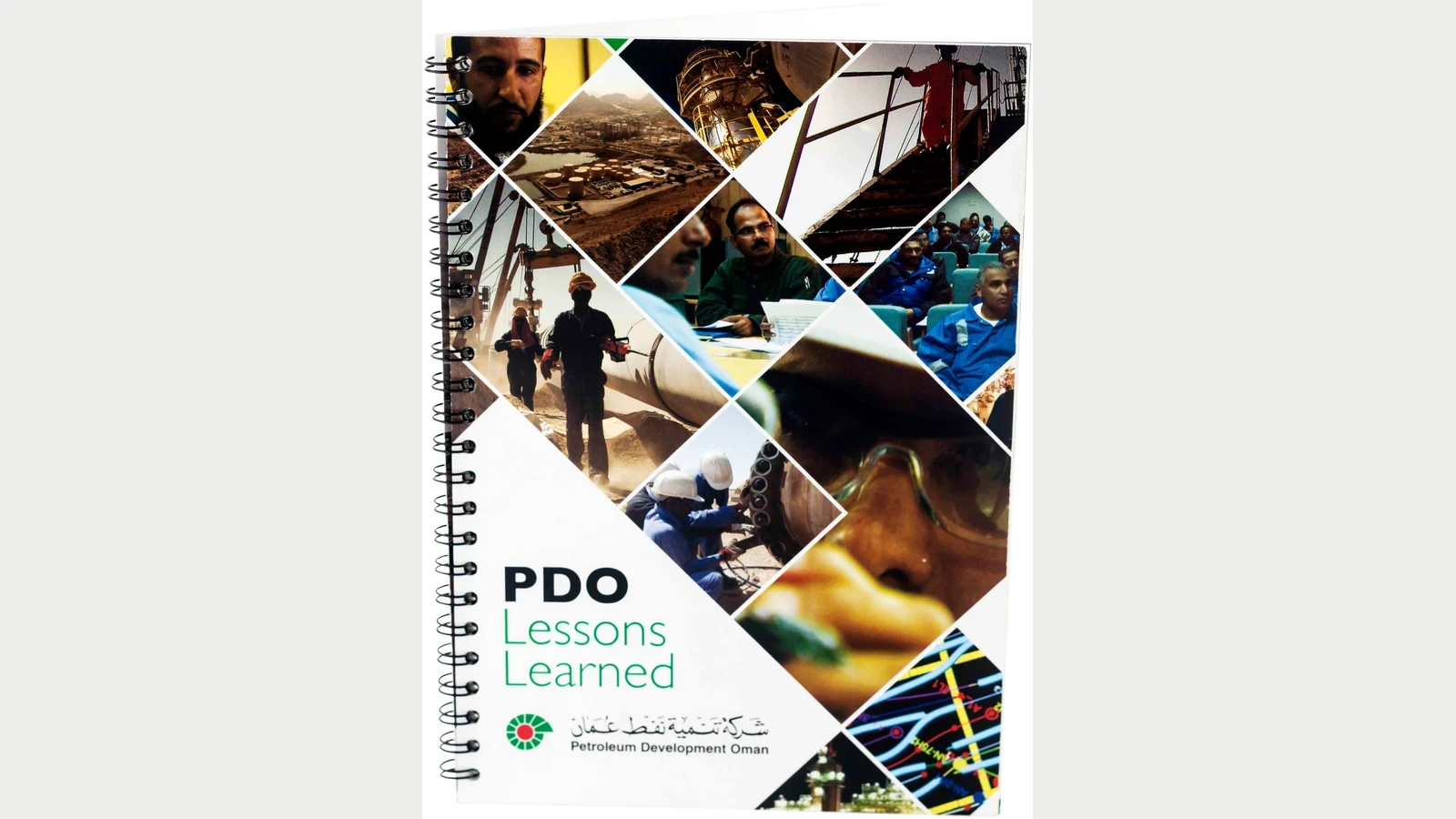
A printed lessons learned handbook produced for Petroleum Development Oman.
Services
Content Production
PowerPoint Materials
Trainer-led deck rebuilds
/services/powerpoint-training-materials
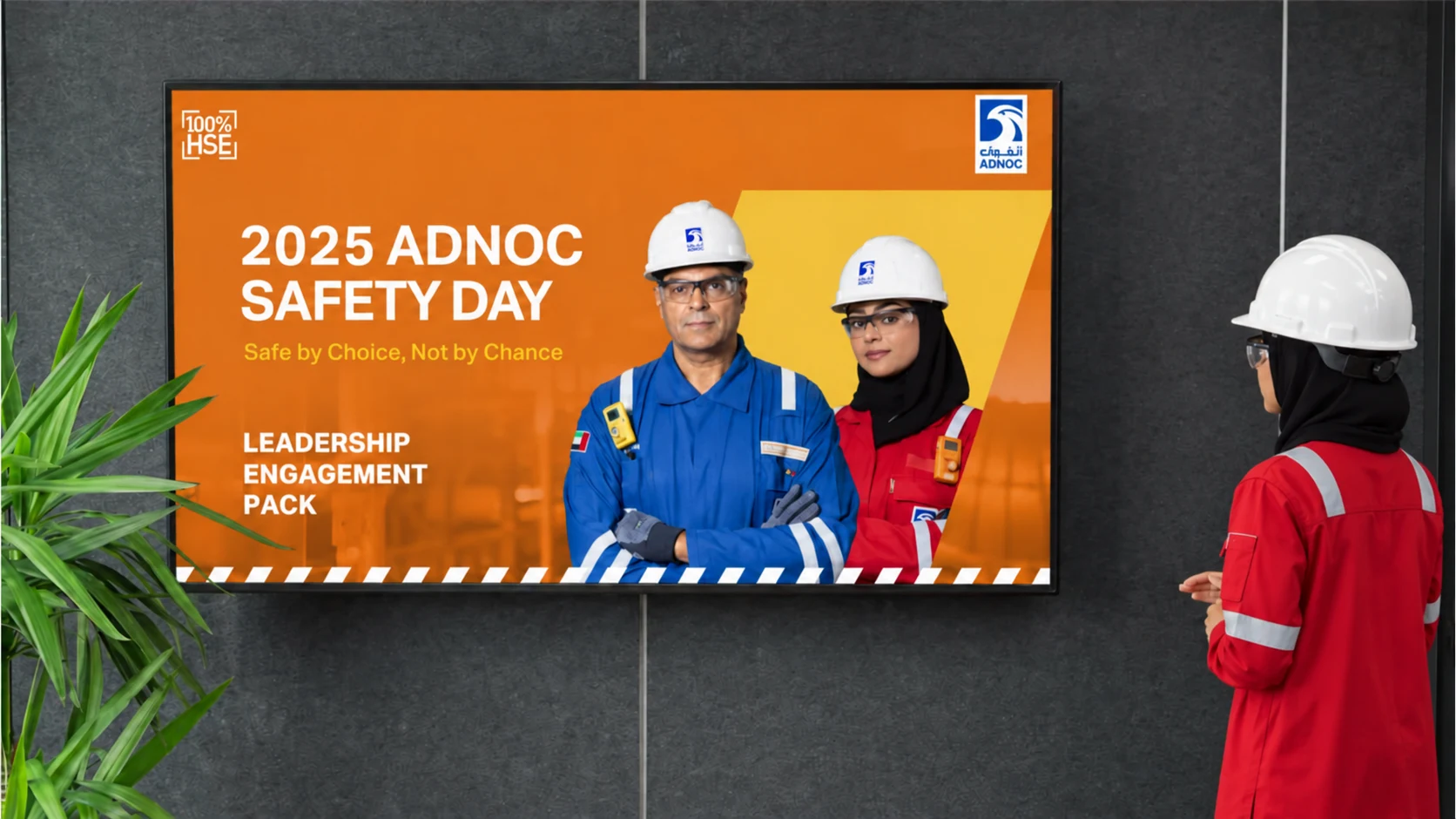
Presenting an ADNOC Safety Day engagement deck.
Services
Interactive Training
E-Learning
SCORM online modules
/services/e-learning
Scenario questions inside a client e-learning module.

Services
Interactive Training
Virtual Reality (VR)
Immersive headset training
/services/virtual-reality-vr-training
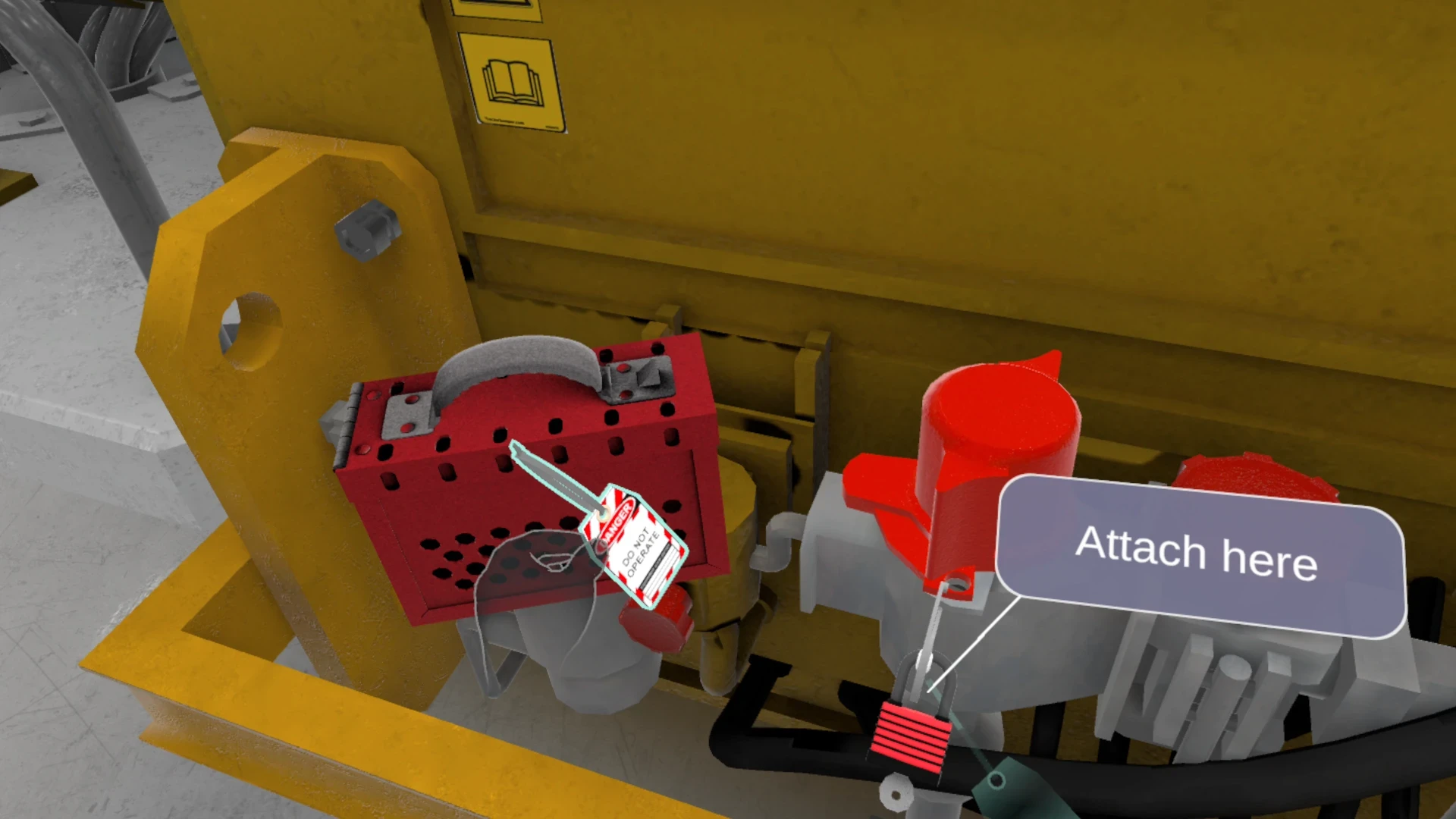
Lockout tagout training with full hand tracking in VR.
Services
Interactive Training
Flat-Screen Simulations
Desktop, web & mobile simulations
/services/flat-screen-simulation-training
SHIIFT simulations running on laptops and mobile devices.

Services
Interactive Training
Digital Twins
Navigable sites & equipment
/services/digital-twins
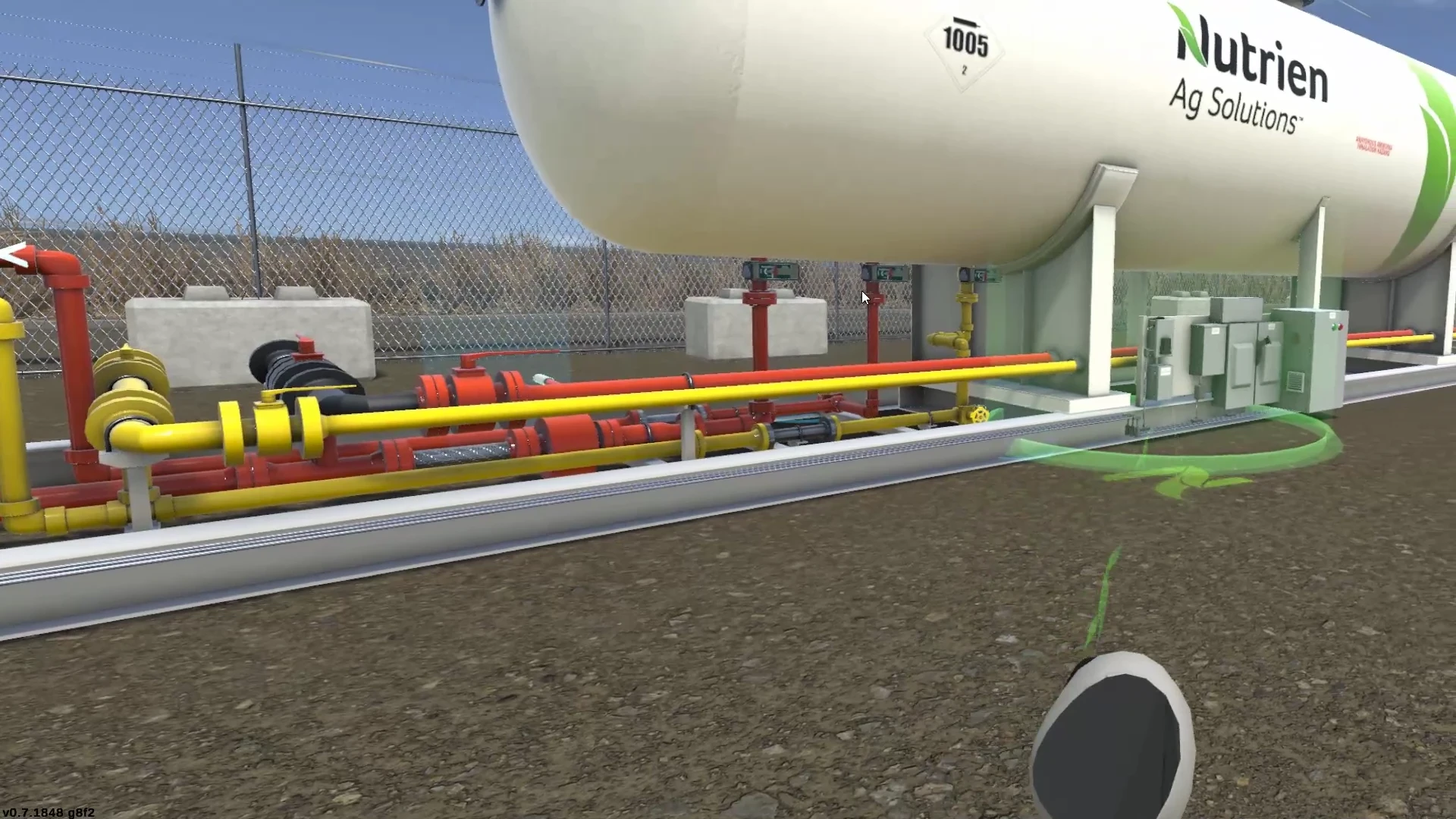
A navigable 3D replica of Nutrien's ammonia transfer plant.
Approach
How We Work
Our approach
Analysis, design, delivery, validation
/approach
Approach
How We Work
SCORM & LMS Integration
Tracking in your systems
/services/scorm-lms-integration
Approach
How We Work
Scenario-Based Assessments
Competency you can prove
/services/scenario-based-assessments