
Virtual Reality Training in 2026
Virtual Reality (VR) has been transforming corporate and industrial training for years by offering safe, immersive and cost-effective learning solutions that keep employees engaged, with higher learning retention and employee retention. With all of these improvements from the standard traditional training, why is VR training not the standard solution for all companies worldwide?
Well, VR is still not for everyone, and initial costs and the newness of the industry can scare people away. But as technology and the VR industry continues to advance, I expect VR Training will be found in more and more industries will recognize it’s potential when done right, and virtual reality training solutions will be adopted by more and more companies across the globe.
So what are the top industries using virtual reality training right now in 2025? Below, we explore five industries paving the way for the futre of training, where VR training is making the biggest impact.
Manufacturing &Amp; Industrial Safety
VR training is actively enhancing safety protocols in manufacturing, allowing workers to practice critical procedures without real-world dangers. Industries using virtual reality for industrial safety have seen significant reductions in workplace accidents by preparing the employees for hazardous environments before they ever step onto the job site, and refreshing them as much as they need to for irregular procedures.
Hazardous Work Environments: One of the most common use cases for VR, training to operate heavy machinery or practicing dangerous processes involving hazardous materials, all without any real-world risks.
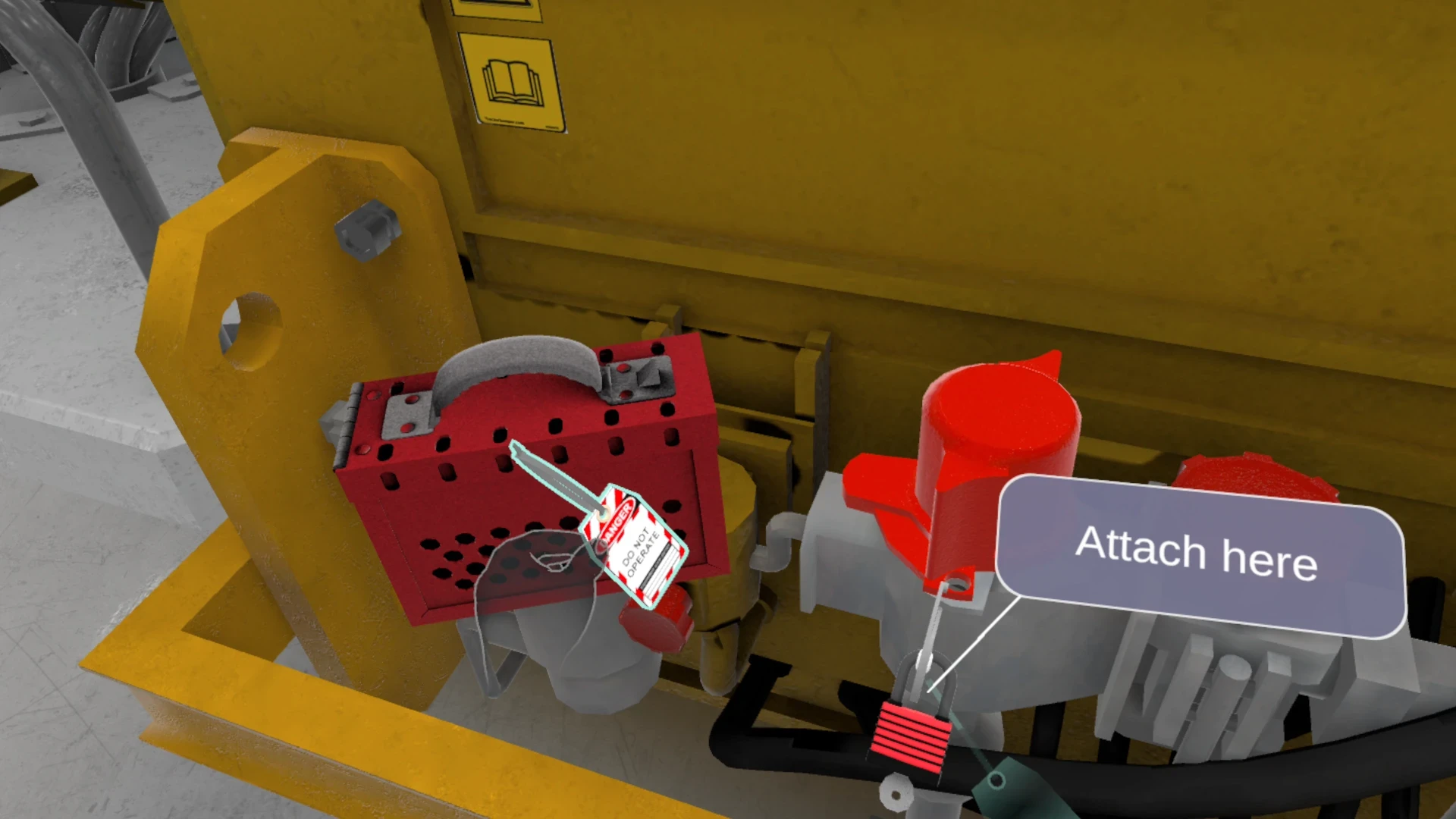
Lockout/Tagout (LOTO) Training: Lockout Tagout is an example of a complicated procedure involved in manufacturing and other industrial sites, practising the process in a virtual environment lets engineers memorize and get comfortable with what they need to know effectively to prevent accidents.
Assembly Line Training: New employees can learn assembly procedures in VR before stepping onto the factory floor, reducing downtime and improving efficiency.
Healthcare &Amp; Medical
Virtual reality training has been widely used in healthcare and the use of VR only grows in 2025. VR is providing medical professionals with hands-on practice in high-stakes environments, allowing healthcare workers and students to train safely and refine their skills in a virtual world where the patients aren’t real, before handling real patients, with real lives, in the real world.
Surgical Simulations: You don’t have to be in the healthcare industry to know surgical procedures and operations are a risky process, which is often scary for patients. A big reason risks are minimized in surgeries is because of well practiced surgeons. VR allows medical professionals to practice surgeries and any kind of medical procedure with high accuracy and zero risk to any patient, while also being more cost-effective than practicing on cadavers.
Emergency Response Training: With VR, paramedics and ER staff can train and practice for high-pressure scenarios such cardiac arrest or trauma care.
Patient Interaction Training: Often, doctors and nurses practice a lot in completing their procedures with accuracy but don’t always have the best bedside manner with their patients, this is sometimes worsened by being desensitized to the same procedures and situations daily. VR simulations give a fresh environment for medical professionals to improve their patient interactions and soft skills.
Transportation &Amp; Logistics
Transportation VR training is a rising topic in the virtual training scene, more and more companies in the industry are using VR driving simulator solutions to train their commercial drivers. Creating scenario-based training in the real world can be very expensive, so we can expect the number of VR driver training to grow in 2025.
Driving Training: Driver training in virtual reality is used to help truck drivers, bus drivers, train drivers, forklift operators, etc, with realistic driving scenarios to improve their decision making and increase safety for the real-world situations.
Pre-Trip Inspections: Transportation industries have been using virtual reality training to assist new drivers in learning lengthy pre-trip or vehicle inspection processes before hitting the road.
Energy &Amp; Utilities
The energy sector is one of the leading industries using VR for workforce training, it’s a job that requires a lot of safety training to make sure workers are prepared for hazardous environments. Virtual reality training continues to be a key component in training power plant operators, electrical technicians, and oil and gas workers to handle complex systems and emergency responses.
Power Plant Operations: Engineers and technicians working in power plants can simulate working in their power plant environment with digital twins of the tools to train for maintenance and emergency scenarios.
Electrical Safety Training: Electrical safety VR training helps workers understand high-voltage environments and practice safety procedures.
Pipeline and Offshore Drilling Training: Virtual reality training enables oil and gas workers to experience drilling operations and emergency evacuation drills.
LNG Terminals: Workers at liquefied natural gas (LNG) terminals can use VR to practice handling operations, safety protocols, emergency shutdown procedures, or even just familiarizing themselves with a plant, all within a risk-free environment.
Defense &Amp; Public Safety
One of the most invested in sectors for virtual reality training, is the defense sector. Hundreds of millions are invested into virtual reality training and continues to in 2025. VR training allows military personnel, firefighters, and law enforcement officers to refine their skills in a safe yet immersive environment, ensuring they are ready for real-world challenges. These sectors are usually publicly funded, so they need to show the highest standard of training for the public.
Military Training: Virtual reality replicates true-to-life, digital replicas of military equipment, battlefield scenarios, etc. allowing soldiers to train in mission-specific environments and practice team-based scenarios. These simulations can even be custom-created with sandbox modes for military staff to create scenarios as they please. There are loads of use cases for virtual reality training in the military sector.
Firefighter Training: Fire departments use VR to simulate fires, rescues, and hazardous material responses without endangering trainees, they also have VR training that can help them in talking to victims and helping them.
Law Enforcement & Tactical Training: Officers use virtual reality to practice de-escalation techniques, active shooter scenarios, and crisis response in virtual environment where they can repeatedly practice scenarios without using actors before dealing with the situations in real life, where how they respond will matter a lot.
Closing Thoughts
The industries listed above aren’t the only ones investing in virtual reality training in 2026, a recent article from The Wall Street Journal highlights how companies are increasingly adopting virtual reality for workforce training, covering topics from hardware maintenance to leadership and empathy. Organizations like UPS have even created their own immersive technology divisions.
Each year VR training is getting closer and closer to becoming an industry standard in employee training. As more companies integrate VR into their training programs, the benefits of immersive training become more widely known. Whether improving safety, efficiency, or decision-making, virtual reality training in 2026 is proving it’s value for industries worldwide.
Solutions
Safety Training
Hazard recognition
Spot risks before incidents
/solutions/hazard-recognition-training
Solutions
Safety Training
Life-Saving Rules
Critical rules as decisions
/solutions/life-saving-rules-training
Solutions
Safety Training
Behavioral safety
Stop work authority, used
/solutions/behavioral-safety-training
Solutions
Safety Training
Hand safety
Fewer hand injuries
/solutions/hand-safety-training
Solutions
Safety Training
PPE selection & use
The right kit, worn right
/solutions/ppe-training
Solutions
Safety Training
H2S & gas awareness
The invisible hazard, visible
/solutions/h2s-gas-awareness-training
Solutions
Safety Training
Fire & emergency response
Beyond the routine drill
/solutions/fire-safety-emergency-response-training
Solutions
Safety Training
Toolbox talks
Five strong minutes weekly
/solutions/toolbox-talk-content
Solutions
Safety Training
Permit to work
PTW judgment scenarios
/solutions/permit-to-work-training
Solutions
Safety Training
Isolation & LOTO
Safe energy isolation
/solutions/isolation-lockout-tagout-training
Solutions
Safety Training
Confined space entry
Entries and rescue response
/solutions/confined-space-entry-training
Solutions
Safety Training
Working at height
Falls and dropped objects
/solutions/working-at-height-training
Solutions
Safety Training
Lifting & rigging
Safer critical lifts
/solutions/lifting-rigging-training
Solutions
Safety Training
Hot work
Sparks under control
/solutions/hot-work-training
Solutions
Safety Training
Line of fire
See the energy path
/solutions/line-of-fire-training
Solutions
Safety Training
Driver safety
Safer driving and journeys
/solutions/driver-safety-training
Solutions
Safety Training
Electrical safety
Safe isolation, arc flash aware
/solutions/electrical-safety-training
Solutions
Safety Training
Excavation work
Trenches and buried services
/solutions/excavation-safety-training
Solutions
Safety Training
Ergonomics
Strain prevention that sticks
/solutions/ergonomics-training
Solutions
Safety Training
Situational awareness
Noticing change on site
/solutions/situational-awareness-training
Solutions
Onboarding & People
Site orientation
Inductions before day one
/solutions/site-orientation-onboarding
Solutions
Onboarding & People
Expatriate workforce
Localized multilingual training
/solutions/expatriate-workforce-training
Solutions
Onboarding & People
Visitor inductions
Pre-arrival essentials
/solutions/visitor-induction-training
Solutions
Onboarding & People
Leadership training
Judgment, developed
/solutions/leadership-training
Solutions
Onboarding & People
Soft skills
Conversations that work
/solutions/soft-skills-training
Solutions
Onboarding & People
Safety leadership
Frontline supervisor skills
/solutions/safety-leadership-training
Solutions
Onboarding & People
Human factors
Error traps and defenses
/solutions/human-factors-training
Solutions
Operations & Technical
Process & procedures
Step-by-step competence
/solutions/process-procedure-training
Solutions
Operations & Technical
Operational readiness
Ready before start-up
/solutions/operational-readiness
Solutions
Operations & Technical
Technical training
Complex systems explained
/solutions/technical-training
Solutions
Operations & Technical
Control room & DCS
Alarms and upset response
/solutions/control-room-training
Solutions
Operations & Technical
Crane operation
Operators, banksmen, supervisors
/solutions/crane-operation-training
Solutions
Operations & Technical
Forklift operation
Operators, pedestrians, supervisors
/solutions/forklift-operation-training
Solutions
Operations & Technical
Maintenance & turnarounds
Outage preparation
/solutions/maintenance-turnaround-training
Solutions
Operations & Technical
Process safety
Barriers made visible
/solutions/process-safety-training
Solutions
Compliance & Modernization
Lessons learned (LFI)
Incidents into training
/solutions/lessons-learned-training
Solutions
Compliance & Modernization
Spill response
Environmental first response
/solutions/spill-response-training
Solutions
Compliance & Modernization
Hazardous materials
Storage, handling, transport
/solutions/hazardous-materials-training
Solutions
Compliance & Modernization
Security awareness
Physical and cyber vigilance
/solutions/security-awareness-training
Services
Content Production
Training Videos
Filmed through our global crew network
/services/workplace-safety-training-videos
A safety orientation film produced for Milestone Environmental Services.

Services
Content Production
2D & 3D Animation
Engineering-accurate visuals
/services/2d-3d-animation
From a 3D animation built to supplement an ADNOC e-learning module.

Services
Content Production
Safety Campaigns
Sustained behavior change
/services/safety-campaigns
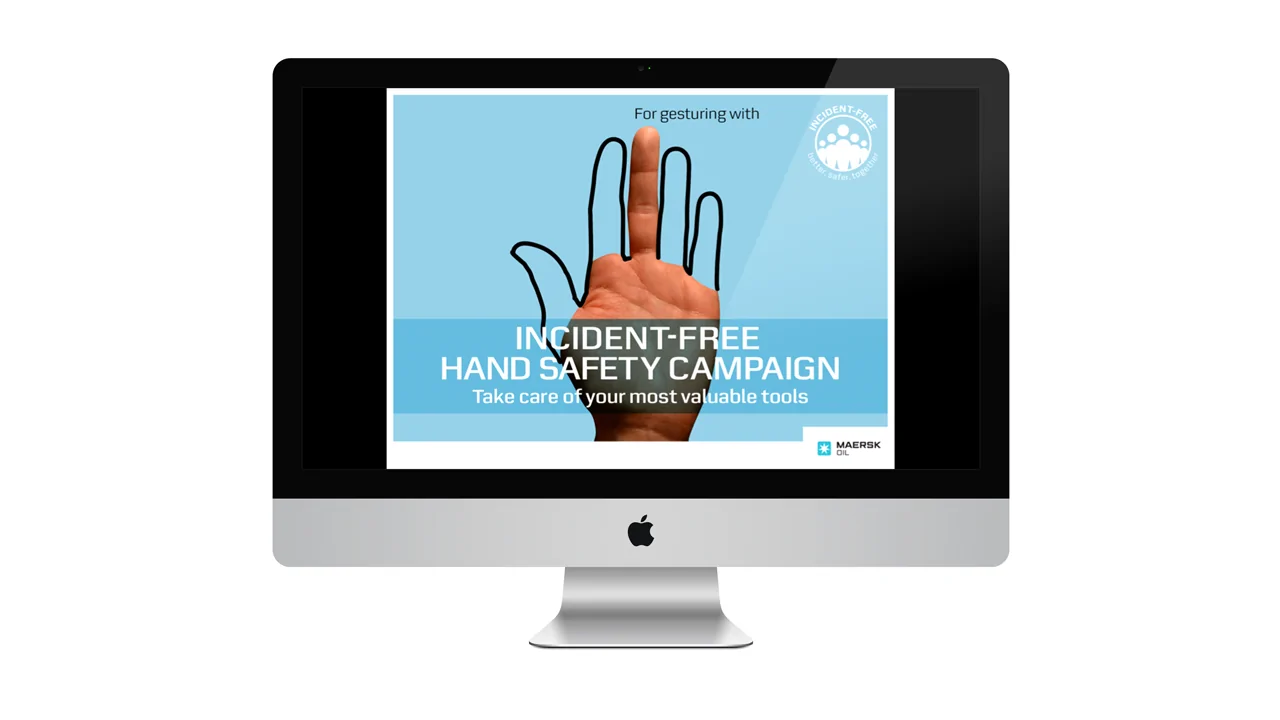
The award-recognized Maersk hand safety campaign.
Services
Content Production
Training posters & print
Site-specific print & visual aids
/services/training-posters
A printed lessons learned handbook produced for Petroleum Development Oman.

Services
Content Production
PowerPoint Materials
Trainer-led deck rebuilds
/services/powerpoint-training-materials
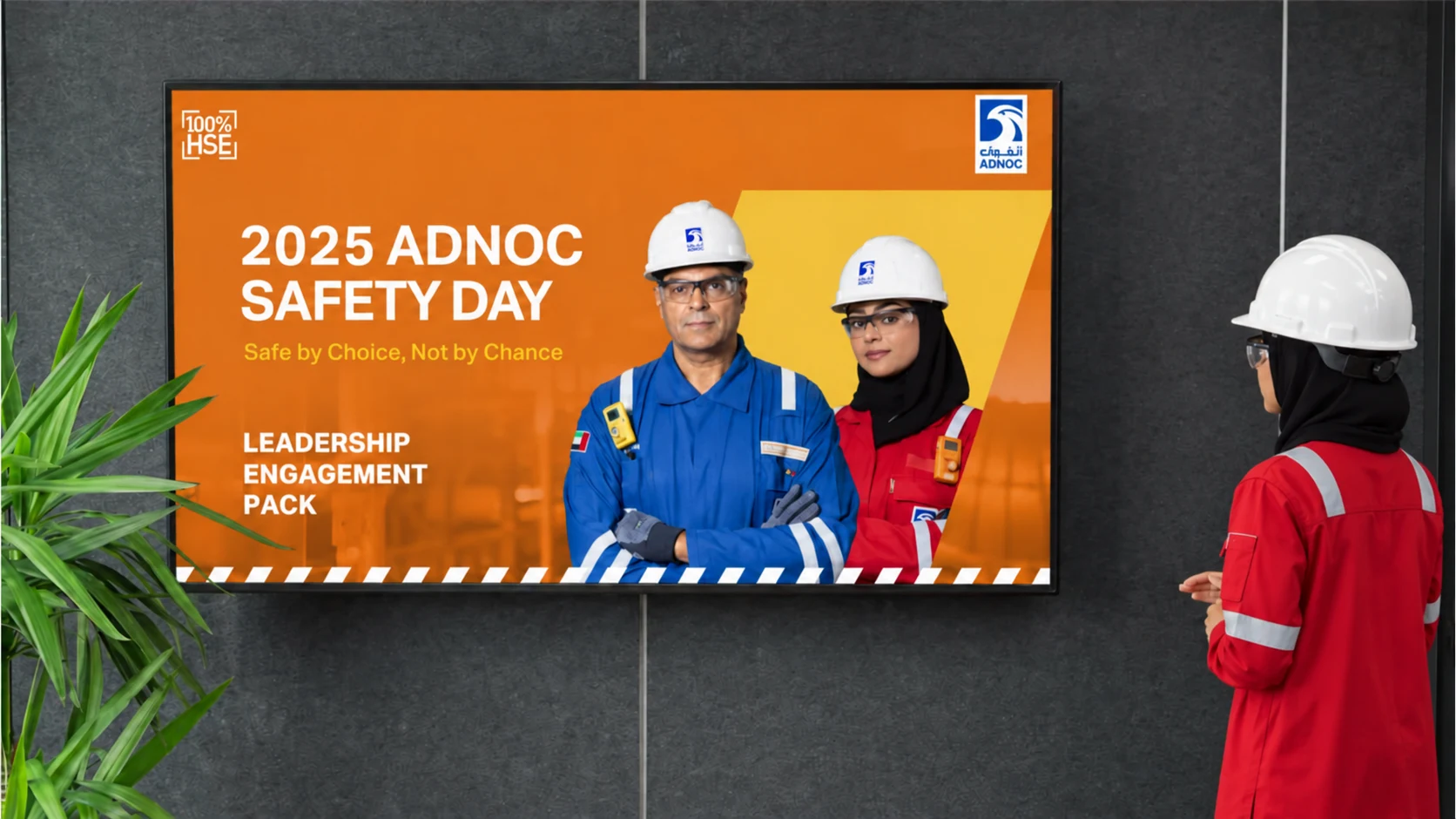
Presenting an ADNOC Safety Day engagement deck.
Services
Interactive Training
E-Learning
SCORM online modules
/services/e-learning
Scenario questions inside a client e-learning module.

Services
Interactive Training
Virtual Reality (VR)
Immersive headset training
/services/virtual-reality-vr-training
Lockout tagout training with full hand tracking in VR.
Services
Interactive Training
Flat-Screen Simulations
Desktop, web & mobile simulations
/services/flat-screen-simulation-training
SHIIFT simulations running on laptops and mobile devices.

Services
Interactive Training
Digital Twins
Navigable sites & equipment
/services/digital-twins
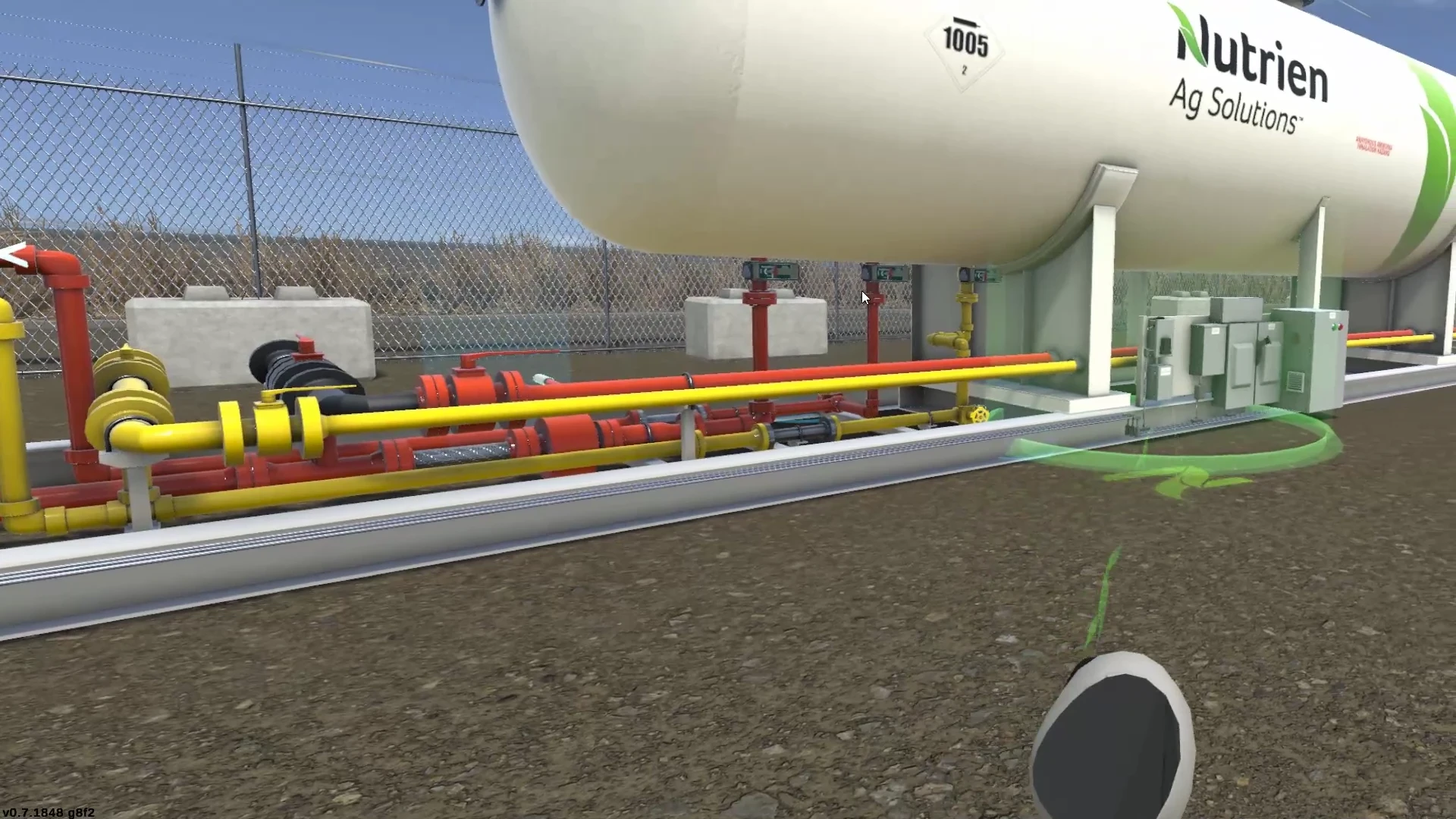
A navigable 3D replica of Nutrien's ammonia transfer plant.
Approach
How We Work
Our approach
Analysis, design, delivery, validation
/approach
Approach
How We Work
SCORM & LMS Integration
Tracking in your systems
/services/scorm-lms-integration
Approach
How We Work
Scenario-Based Assessments
Competency you can prove
/services/scenario-based-assessments