←
All articles
Virtual Reality
How VR Training is Revolutionizing Driver Training in the Logistics Sector
·

Introduction
Driving is the backbone of logistics, and with rising demand, driver shortages, and increasingly complex safety expectations, the need for effective training has never been higher. Traditional methods like classroom instruction and supervised on-road time can only go so far, especially when it comes to preparing drivers for rare, high-risk, or unpredictable situations. That’s where Virtual Reality (VR) training comes in.
In 2026, VR is proving to be a powerful tool in transforming how drivers are trained, offering immersive, repeatable, and safe experiences that help build both confidence and competence behind the wheel.
Why Does Driver Training Need an Upgrade
? The logistics and transport industries face several persistent challenges when it comes to driver training:
Driver shortages: Recruiting and upskilling new drivers quickly and safely is a constant pressure, especially with the older generations of workers soon to retire, and the younger crowd lacking interest in logistics.
Safety compliance: Regulations are strict, and mistakes can be fatal.
Experience gaps: It’s hard to teach drivers how to handle low-frequency, high-risk events like equipment failure, poor visibility, or erratic road users.
Operational downtime: Pulling vehicles and trainers off the road costs time and money.
On top of all this, the reality is that not every driver learns best through lectures, handbooks, or watching someone else drive. VR solves these problems by creating a controlled, immersive environment where critical skills can be practiced without risk.
What Are the Benefits of VR for Driver Training?
Realistic Practice Without Real-World Risk
VR offers immersive training that replicates the driver’s seat, complete with mirrors, blind spots, road conditions, and real-time vehicle responses. Learners can face complex intersections, changing weather, tight loading bays, or urban congestion, all without the danger or cost of real-world mistakes.
Training drivers for dangerous situations (e.g., jackknifing, brake failure, S-curves, or aggressive drivers) has always been difficult. VR allows these events to be practiced safely, repeatedly, and with the ability to pause, reflect, and try again. A great non-vr, but web-based driver training solution we’ve created for this achieves the same goals for users who are avoidant of virtual reality due to fears of motion sickness or looking silly.
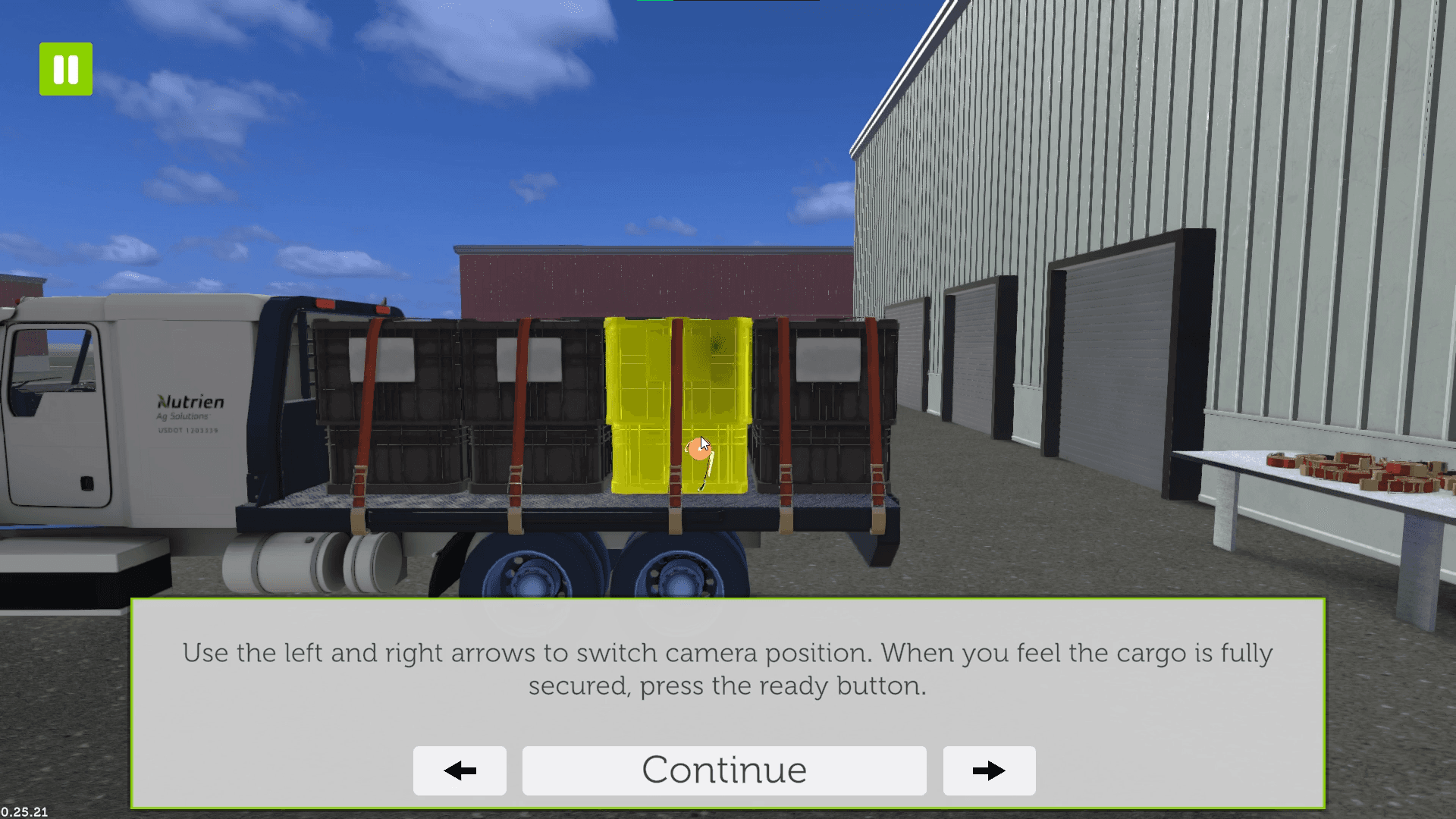
{caption}Snapshot from Nutrien’s Driver Training Program
Faster, More Consistent Onboarding
New drivers can be onboarded more quickly using VR simulations that walk them through procedures like pre-trip inspections, coupling trailers, or understanding site-specific hazards. These modules can be standardised across fleets and locations, ensuring consistent quality without overloading experienced trainers.
Training for Rare but Critical Scenarios
How do you train for something that rarely happens, until it does?
VR lets you simulate high-risk situations that can’t be safely recreated on the road, such as icy braking conditions, emergency stops, or dealing with mechanical issues mid-route. These rare events can now become core components of every training curriculum, allowing drivers to practice them safely so they are ready in case the rare scenario unfortunately becomes real for them. Scenario-based training solves these problems already but can be incredibly expensive without VR.
Motion Simulation: Enhancing Realism in VR Driver Training
Motion simulation technology adds a physical dimension to virtual reality (VR) training by replicating the sensations of movement, vibration, and force that workers or drivers experience in real-world logistics scenarios. This heightened realism is especially valuable in logistics training, where operating heavy machinery, driving vehicles, or handling dynamic warehouse environments requires not only cognitive understanding but also muscle memory and spatial awareness.
By integrating motion platforms with VR, trainees can practice complex maneuvers, such as forklift driving, emergency braking, or collision avoidance in a safe, controlled, and repeatable environment. These simulations deepen engagement and retention, allowing for rapid skill acquisition and more effective preparation for real-world tasks. For example, motion simulation can help drivers experience the physical cues of skidding or abrupt stops, which are difficult to replicate in standard VR setups.
This sort of technology has already been heavily utilized in aviation training with flight simulators used by pilots, however, this leap in immersion comes at a cost. Motion simulation systems require specialized hardware, such as motion seats, actuators, and haptic feedback devices, which significantly increases the initial investment and ongoing maintenance expenses compared to standard VR training setups. While standalone VR headsets can be deployed at scale for a relatively modest price, adding motion simulation can multiply the cost per trainee station, making widespread rollout more challenging for logistics companies. As a result, organizations must weigh the benefits of enhanced realism against the higher financial barrier, especially when large fleets or workforces are involved.

The Role of AI, Data, and Eye Tracking in Driver Training
Artificial intelligence (AI) is transforming driver training by enabling personalized, data-driven instruction and real-time performance analysis. AI-powered simulators can assess a trainee’s driving patterns, identify risky behaviors, and tailor training modules to address individual weaknesses, resulting in more effective learning and safer drivers. These systems can also simulate advanced driver-assistance features, reconstruct near-miss incidents, and generate dynamic, unpredictable scenarios that challenge trainees to react appropriately-preparing them for the complexities of real-world logistics operations.
A unique advantage in driver training is the integration of eye tracking technology. In driving, where situational awareness and hazard perception are critical, eye tracking provides unparalleled insight into where and how trainees focus their attention. By monitoring gaze patterns, instructors can determine if a driver is scanning mirrors, checking blind spots, or spotting potential hazards in time. This data reveals not only what the trainee sees, but also how they prioritize information under cognitive load-mirroring the demands of real-world driving.
Eye tracking enables:
Measurement of cognitive load to ensure trainees are not overwhelmed and can prioritize critical information.
Identification of attention lapses or unsafe gaze behaviors that might lead to accidents.
Evidence-based feedback for personalized coaching, reducing training hours and improving safety outcomes.
Because eye attention and observation are fundamental to safe driving, driver training is uniquely positioned to benefit from these technologies. Eye tracking bridges the gap between simulation and reality, allowing for the development of safer, more attentive drivers and the refinement of training programs based on objective data. This not only improves individual performance but also contributes to broader road safety and operational efficiency in the logistics sector.

How is VR Training Currently Being Used in the Logistics Sector?
Major logistics companies are already integrating VR into their driver training programs, with impressive results:
Company | VR Training Focus | Outcomes & Highlights |
|---|---|---|
Schneider | Left turn intersection safety, routine pre-trip inspection, Schneider’s proprietary Five S’s method | Increased safety for drivers, allowing for repeatable scalable practice for scenarios, enhancing how drivers react to real scenarios, faster onboarding for new drivers |
UPS | Hazard awareness, defensive driving | VR rolled out for new driver onboarding; helps reinforce safety habits and quick judgment. Invested an additional $345 million in 2023 after it’s continued success for them. |
DHL | Loading cargo, stacking procedures | 99% of users affirm having benefited from the training and significant CO₂ emission reduction. |
UPS’s VR Driver Training Program UPS has been a pioneer in integrating VR into driver training since 2017. The company now offers twelve detailed safety modules, allowing trainees to practice identifying and responding to road hazards such as pedestrians, parked cars, and oncoming traffic within a safe, simulated environment. This approach has dramatically reduced training time-from 8 hours to just 2-while maintaining high-quality standards. UPS’s investment in VR has also enabled the development of mobile training academies, bringing immersive learning directly to students via mobile trailers equipped with VR and AR kiosks. The program’s success led UPS to invest an additional $345 million in VR training and safety technology in 2023. DHL’s VR Training for Package Handling DHL uses VR to train employees in package handling and stacking procedures. This allows workers to practice loading packages in a virtual environment, improving their skills without disrupting daily operations. The initiative has resulted in significant cost savings, reduced CO₂ emissions, and high employee engagement, 99% of participants reported improved performance after VR training. Schneider: Real-World Use of VR in Driver Training Schneider National has integrated VR technology into its driver training programs to enhance safety and skill development for its logistics workforce. The company’s VR driver training, developed in partnership with SHIIFT, features immersive modules that simulate real-world scenarios such as left turns, pre-trip inspections, vehicle maintenance, and yard maneuvers. Trainees use VR headsets to experience the driver’s perspective inside a heavy goods vehicle, making decisions and facing realistic consequences in a risk-free environment.
Closing Thoughts
As the logistics industry faces increasing complexity and demand, the benefits of VR training for the logistics sector, such as faster onboarding, improved safety, and greater operational efficiency-are no longer theoretical. Real-world results from industry leaders like UPS, DHL, Schneider and DB Schenker show that VR can boost employee performance, and significantly reduce accidents and costs. The scale of investment from the world’s largest logistics companies is clear proof that VR training is not just a trend but a transformative force, setting a new standard for how drivers and logistics professionals are prepared for the challenges of today’s supply chain.
Solutions
Safety Training
Hazard recognition
Spot risks before incidents
/solutions/hazard-recognition-training
Solutions
Safety Training
Life-Saving Rules
Critical rules as decisions
/solutions/life-saving-rules-training
Solutions
Safety Training
Behavioral safety
Stop work authority, used
/solutions/behavioral-safety-training
Solutions
Safety Training
Hand safety
Fewer hand injuries
/solutions/hand-safety-training
Solutions
Safety Training
PPE selection & use
The right kit, worn right
/solutions/ppe-training
Solutions
Safety Training
H2S & gas awareness
The invisible hazard, visible
/solutions/h2s-gas-awareness-training
Solutions
Safety Training
Fire & emergency response
Beyond the routine drill
/solutions/fire-safety-emergency-response-training
Solutions
Safety Training
Toolbox talks
Five strong minutes weekly
/solutions/toolbox-talk-content
Solutions
Safety Training
Permit to work
PTW judgment scenarios
/solutions/permit-to-work-training
Solutions
Safety Training
Isolation & LOTO
Safe energy isolation
/solutions/isolation-lockout-tagout-training
Solutions
Safety Training
Confined space entry
Entries and rescue response
/solutions/confined-space-entry-training
Solutions
Safety Training
Working at height
Falls and dropped objects
/solutions/working-at-height-training
Solutions
Safety Training
Lifting & rigging
Safer critical lifts
/solutions/lifting-rigging-training
Solutions
Safety Training
Hot work
Sparks under control
/solutions/hot-work-training
Solutions
Safety Training
Line of fire
See the energy path
/solutions/line-of-fire-training
Solutions
Safety Training
Driver safety
Safer driving and journeys
/solutions/driver-safety-training
Solutions
Safety Training
Electrical safety
Safe isolation, arc flash aware
/solutions/electrical-safety-training
Solutions
Safety Training
Excavation work
Trenches and buried services
/solutions/excavation-safety-training
Solutions
Safety Training
Ergonomics
Strain prevention that sticks
/solutions/ergonomics-training
Solutions
Safety Training
Situational awareness
Noticing change on site
/solutions/situational-awareness-training
Solutions
Onboarding & People
Site orientation
Inductions before day one
/solutions/site-orientation-onboarding
Solutions
Onboarding & People
Expatriate workforce
Localized multilingual training
/solutions/expatriate-workforce-training
Solutions
Onboarding & People
Visitor inductions
Pre-arrival essentials
/solutions/visitor-induction-training
Solutions
Onboarding & People
Leadership training
Judgment, developed
/solutions/leadership-training
Solutions
Onboarding & People
Soft skills
Conversations that work
/solutions/soft-skills-training
Solutions
Onboarding & People
Safety leadership
Frontline supervisor skills
/solutions/safety-leadership-training
Solutions
Onboarding & People
Human factors
Error traps and defenses
/solutions/human-factors-training
Solutions
Operations & Technical
Process & procedures
Step-by-step competence
/solutions/process-procedure-training
Solutions
Operations & Technical
Operational readiness
Ready before start-up
/solutions/operational-readiness
Solutions
Operations & Technical
Technical training
Complex systems explained
/solutions/technical-training
Solutions
Operations & Technical
Control room & DCS
Alarms and upset response
/solutions/control-room-training
Solutions
Operations & Technical
Crane operation
Operators, banksmen, supervisors
/solutions/crane-operation-training
Solutions
Operations & Technical
Forklift operation
Operators, pedestrians, supervisors
/solutions/forklift-operation-training
Solutions
Operations & Technical
Maintenance & turnarounds
Outage preparation
/solutions/maintenance-turnaround-training
Solutions
Operations & Technical
Process safety
Barriers made visible
/solutions/process-safety-training
Solutions
Compliance & Modernization
Lessons learned (LFI)
Incidents into training
/solutions/lessons-learned-training
Solutions
Compliance & Modernization
Spill response
Environmental first response
/solutions/spill-response-training
Solutions
Compliance & Modernization
Hazardous materials
Storage, handling, transport
/solutions/hazardous-materials-training
Solutions
Compliance & Modernization
Security awareness
Physical and cyber vigilance
/solutions/security-awareness-training
Services
Content Production
Training Videos
Filmed through our global crew network
/services/workplace-safety-training-videos
A safety orientation film produced for Milestone Environmental Services.

Services
Content Production
2D & 3D Animation
Engineering-accurate visuals
/services/2d-3d-animation
From a 3D animation built to supplement an ADNOC e-learning module.

Services
Content Production
Safety Campaigns
Sustained behavior change
/services/safety-campaigns
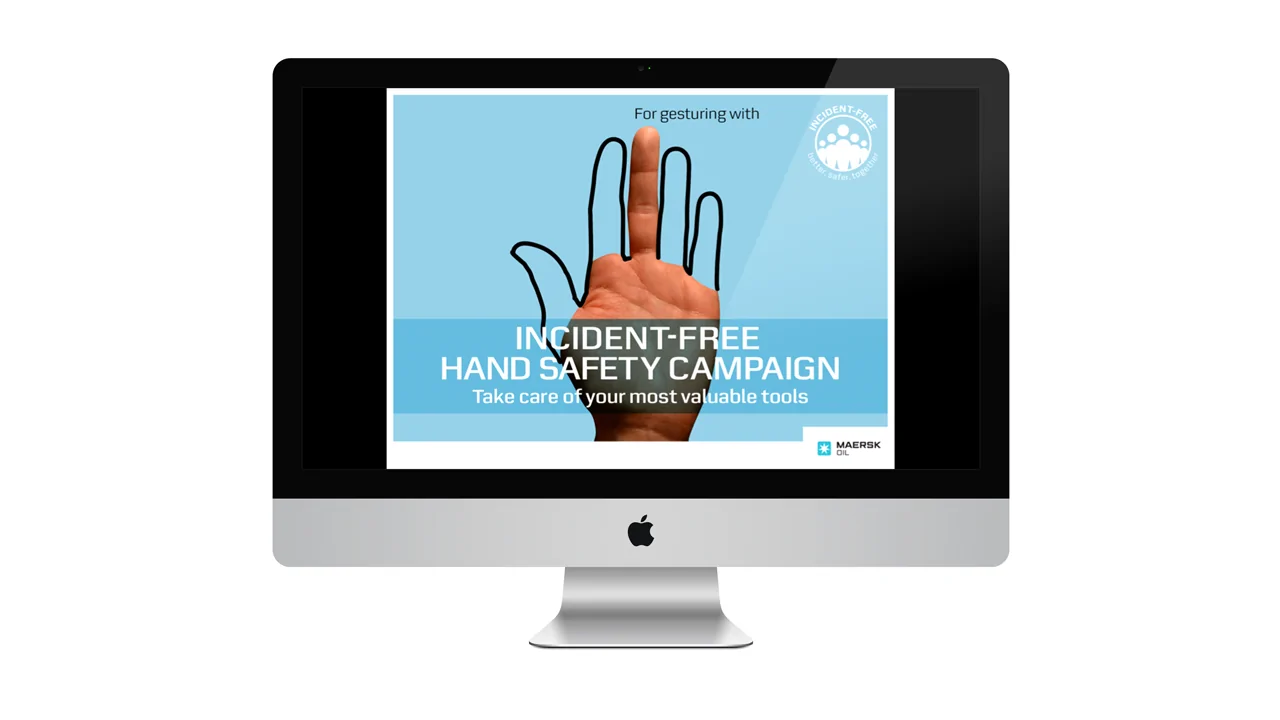
The award-recognized Maersk hand safety campaign.
Services
Content Production
Training posters & print
Site-specific print & visual aids
/services/training-posters
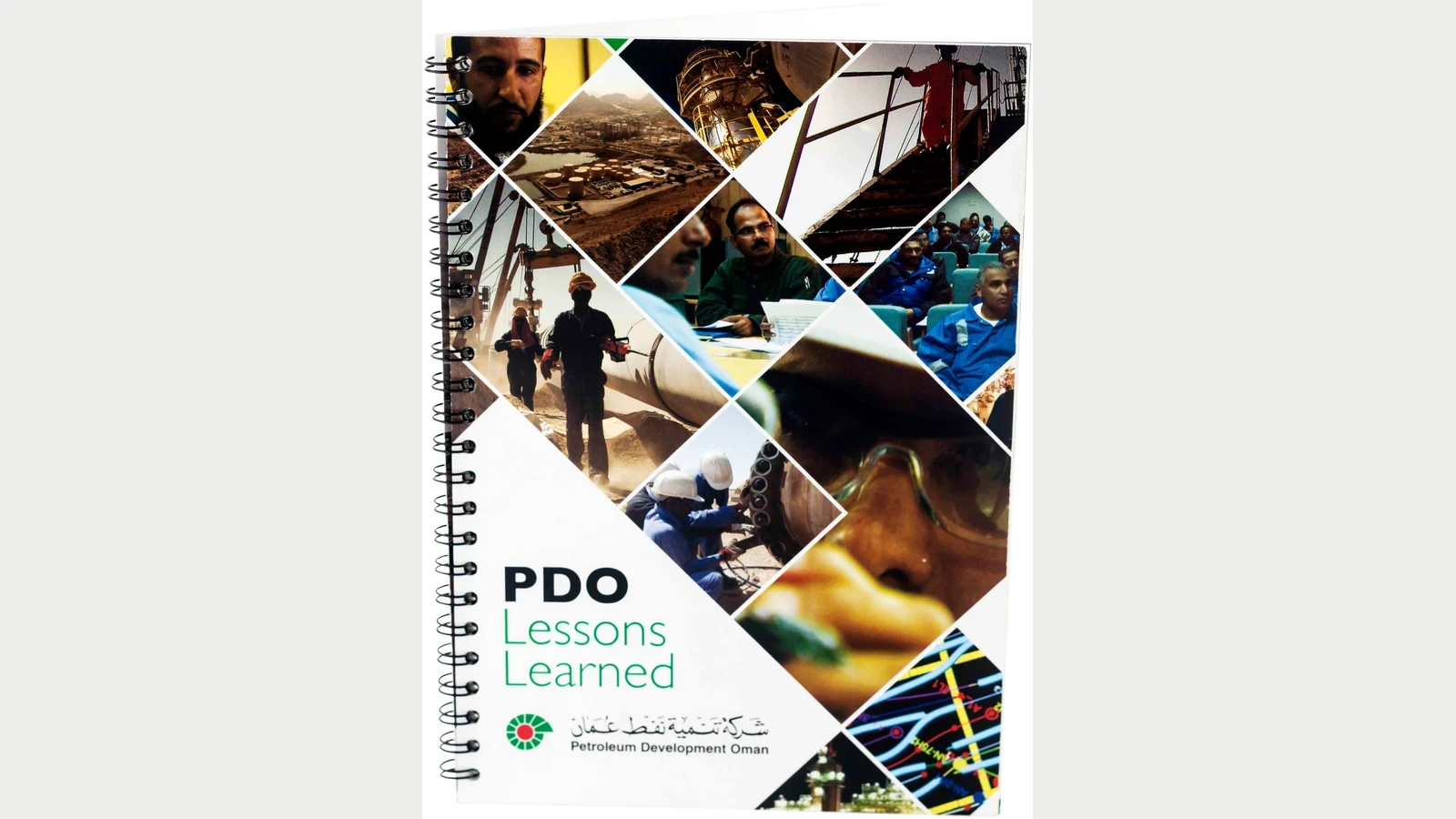
A printed lessons learned handbook produced for Petroleum Development Oman.
Services
Content Production
PowerPoint Materials
Trainer-led deck rebuilds
/services/powerpoint-training-materials
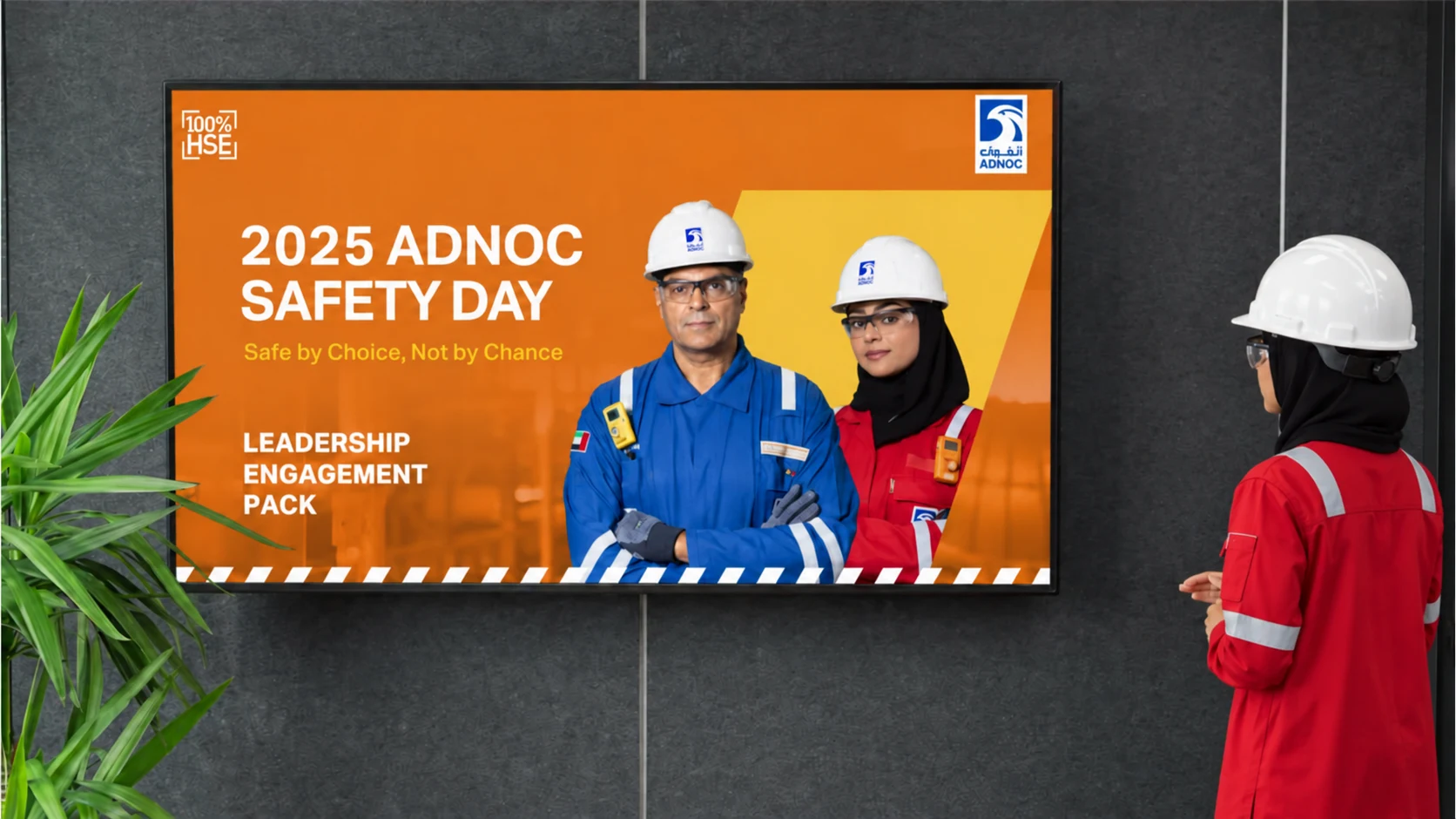
Presenting an ADNOC Safety Day engagement deck.
Services
Interactive Training
E-Learning
SCORM online modules
/services/e-learning
Scenario questions inside a client e-learning module.

Services
Interactive Training
Virtual Reality (VR)
Immersive headset training
/services/virtual-reality-vr-training
Lockout tagout training with full hand tracking in VR.
Services
Interactive Training
Flat-Screen Simulations
Desktop, web & mobile simulations
/services/flat-screen-simulation-training
SHIIFT simulations running on laptops and mobile devices.

Services
Interactive Training
Digital Twins
Navigable sites & equipment
/services/digital-twins
A navigable 3D replica of Nutrien's ammonia transfer plant.
Approach
How We Work
Our approach
Analysis, design, delivery, validation
/approach
Approach
How We Work
SCORM & LMS Integration
Tracking in your systems
/services/scorm-lms-integration
Approach
How We Work
Scenario-Based Assessments
Competency you can prove
/services/scenario-based-assessments