
Virtual Reality
Client
Ministry of Defense
Topics
Confined spaces
Category
Virtual Reality
Sectors
Defence & Security
Objective
To improve the understanding of key steps for divers and support teams operating in confined spaces, training in all required aspects of diver training.
Approach
A highly realistic VR confined space training experience for diving professionals and teams.
The Problem
Diving is a highly specialized activity that comes with significant risks like equipment failure, communication breakdown, or hazardous underwater environments. If proper procedures aren’t followed precisely, divers can face serious incidents. For military and commercial divers, the need for realistic, repeatable, and risk-free training solutions is critical. Without an effective way to rehearse in controlled conditions, divers may enter the water unprepared, leading to operational inefficiencies and compromised safety.
High Risk: Diving is a potentially hazardous activity that can lead to safety incidents if procedures are not correctly followed.
Costly and Resource Intensive: Traditional training methods are labor intensive, dangerous, costly and time consuming.
Limited Repetition and Scalability: Hands-on training is often constrained by time, location, and available resources which limits how often divers can actually practice.
For military divers, the need for a realistic, repeatable, and risk-free training solution is essential. Without an effective way to rehearse procedures in a safe and controlled environment, divers could enter the water unprepared leading to compromised safety.
What Is Confined Space Training?
Confined space training prepares workers to safely enter, work in, and exit areas that are not designed for continuous occupancy and may present limited access or egress. These spaces often have poor ventilation, low visibility, or the potential for hazardous atmospheres, requiring strict safety protocols.
Training typically covers:
Hazard recognition and risk assessment
Emergency response procedures
Safe use of personal protective equipment (PPE)
Communication and monitoring systems
Permits and entry procedures
Confined space training ensures that teams can operate safely in these environments, which often have unique, high-risk characteristics.
Who Needs Confined Space Training?
This type of training is vital for personnel in industries where enclosed or restricted environments are common. Examples include:
Military operations (e.g., divers, engineers working in tanks, vessels, or flooded structures)
Oil and gas (e.g., storage tanks, pipelines)
Construction (e.g., crawlspaces, silos)
Manufacturing (e.g., pressure vessels, mixers)
Utilities and water treatment (e.g., sewer systems, vaults)
Each industry faces different risks, but all benefit from scalable, repeatable training that reduces exposure during preparation phases and improves real-world performance.
Understanding Confined Spaces
According to the UK’s Health and Safety Executive (HSE), a confined space is defined as any place, including chamber, tank, vat, silo, pit, trench, pipe, sewer, flue, well, or other similar space, which is substantially enclosed (though not always entirely) and where serious injury can occur from hazardous substances or conditions within the space or nearby.
Confined spaces may not be small in volume but are dangerous due to poor ventilation, restricted access, or potential for toxic or flammable atmospheres. A space does not need to be under a certain size to be considered confined, but generally, these environments are difficult to enter or exit and present physical or atmospheric hazards. The height, width, or depth is not fixed in law, but entry is typically restricted to openings less than 750 mm wide and environments less than 2 meters in height. Some confined spaces may be several meters deep, such as tanks or wells.
10 common examples of confined spaces include:
Storage tanks
Silos
Utility vaults
Ship holds
Pumping stations
Sewers and manholes
Boilers
Subsea pipelines
Crawlspaces in buildings
Trenches and pits
Legal and Safety Requirements
Under the Confined Spaces Regulations 1997, any worker required to enter or work around a confined space must be adequately trained. This includes understanding potential hazards, using breathing apparatus or other PPE correctly, and responding to emergencies.
Employers must assess all confined space risks and provide training that is task-specific, practical, and repeatable. For military and high-risk environments like diving, this is even more critical. Failure to train properly can result in serious injury, fatalities, and legal consequences.
This reinforces why VR-based confined space training is not just innovative, but aligned with legal requirements and operational safety standards.

The Solution
Realistic Confined Space Training for Divers
To address these challenges, SHIIFT created an immersive virtual reality (VR) training solution deployed via headset for end users to train and mission rehearse in a safe environment, prior to getting into real water.
Features include:
Multi-player VR solution covering familiarization and training for divers enabling team members to train collaboratively within the same scenario.
Photo-realistic scenes of environments and equipment that enhance realism of the diving simulation, keeping users immersed during training.
Divers can have repetitive practice for mission rehearsal, allowing them to prepare for specific operations in a controlled setting, reducing uncertainty and unlocking mastery and confidence of all essential skills before facing real-world diving conditions.
What started out as a ‘nice to have’ concept developed by the SHIIFT Training team and supported by the MOD’s J-Hub incubator, has now become an essential requirement for aspects of defense diver training.
Benefits of VR for Confined Space Training
Virtual reality enhances confined space training by eliminating many traditional constraints. Advantages include:
No exposure to danger: Training is carried out without placing personnel at physical risk, ideal for high-risk tasks like diving or working in hazardous atmospheres.
Unlimited repetition: Scenarios can be repeated as many times as needed to build competence and confidence.
Consistent training: Every trainee experiences the same hazards, decisions, and challenges, ensuring standardization.
Real-time feedback: Mistakes in the simulation become learning opportunities, with immediate debrief and coaching potential.
By leveraging VR, organizations can implement confined space training programs that are safer, more efficient, and more scalable.
Want to learn more about Safety Training and how you can optimize your training?
Research has already shown that VR training massively increases the effectiveness of safety training. We at SHIIFT understand how effective VR can be and how best to utilize the incredible advantages of virtual reality. SHIIFT Training has a mountain of knowledge and experience developing immersive training such as this one.
Or schedule a demo with us to have a deeper dive (no pun intended) into how we can take your training courses to the next step with our revolutionary bespoke training application development, whether you need immersive desktop simulations, virtual reality training, engaging videos, or anything else!
Before and after


Gallery
PROJECTS YOU MIGHT BE INTERESTED IN
See all work
Solutions
Safety Training
Hazard recognition
Spot risks before incidents
/solutions/hazard-recognition-training
Solutions
Safety Training
Life-Saving Rules
Critical rules as decisions
/solutions/life-saving-rules-training
Solutions
Safety Training
Behavioral safety
Stop work authority, used
/solutions/behavioral-safety-training
Solutions
Safety Training
Hand safety
Fewer hand injuries
/solutions/hand-safety-training
Solutions
Safety Training
PPE selection & use
The right kit, worn right
/solutions/ppe-training
Solutions
Safety Training
H2S & gas awareness
The invisible hazard, visible
/solutions/h2s-gas-awareness-training
Solutions
Safety Training
Fire & emergency response
Beyond the routine drill
/solutions/fire-safety-emergency-response-training
Solutions
Safety Training
Toolbox talks
Five strong minutes weekly
/solutions/toolbox-talk-content
Solutions
Safety Training
Permit to work
PTW judgment scenarios
/solutions/permit-to-work-training
Solutions
Safety Training
Isolation & LOTO
Safe energy isolation
/solutions/isolation-lockout-tagout-training
Solutions
Safety Training
Confined space entry
Entries and rescue response
/solutions/confined-space-entry-training
Solutions
Safety Training
Working at height
Falls and dropped objects
/solutions/working-at-height-training
Solutions
Safety Training
Lifting & rigging
Safer critical lifts
/solutions/lifting-rigging-training
Solutions
Safety Training
Hot work
Sparks under control
/solutions/hot-work-training
Solutions
Safety Training
Line of fire
See the energy path
/solutions/line-of-fire-training
Solutions
Safety Training
Driver safety
Safer driving and journeys
/solutions/driver-safety-training
Solutions
Safety Training
Electrical safety
Safe isolation, arc flash aware
/solutions/electrical-safety-training
Solutions
Safety Training
Excavation work
Trenches and buried services
/solutions/excavation-safety-training
Solutions
Safety Training
Ergonomics
Strain prevention that sticks
/solutions/ergonomics-training
Solutions
Safety Training
Situational awareness
Noticing change on site
/solutions/situational-awareness-training
Solutions
Onboarding & People
Site orientation
Inductions before day one
/solutions/site-orientation-onboarding
Solutions
Onboarding & People
Expatriate workforce
Localized multilingual training
/solutions/expatriate-workforce-training
Solutions
Onboarding & People
Visitor inductions
Pre-arrival essentials
/solutions/visitor-induction-training
Solutions
Onboarding & People
Leadership training
Judgment, developed
/solutions/leadership-training
Solutions
Onboarding & People
Soft skills
Conversations that work
/solutions/soft-skills-training
Solutions
Onboarding & People
Safety leadership
Frontline supervisor skills
/solutions/safety-leadership-training
Solutions
Onboarding & People
Human factors
Error traps and defenses
/solutions/human-factors-training
Solutions
Operations & Technical
Process & procedures
Step-by-step competence
/solutions/process-procedure-training
Solutions
Operations & Technical
Operational readiness
Ready before start-up
/solutions/operational-readiness
Solutions
Operations & Technical
Technical training
Complex systems explained
/solutions/technical-training
Solutions
Operations & Technical
Control room & DCS
Alarms and upset response
/solutions/control-room-training
Solutions
Operations & Technical
Crane operation
Operators, banksmen, supervisors
/solutions/crane-operation-training
Solutions
Operations & Technical
Forklift operation
Operators, pedestrians, supervisors
/solutions/forklift-operation-training
Solutions
Operations & Technical
Maintenance & turnarounds
Outage preparation
/solutions/maintenance-turnaround-training
Solutions
Operations & Technical
Process safety
Barriers made visible
/solutions/process-safety-training
Solutions
Compliance & Modernization
Lessons learned (LFI)
Incidents into training
/solutions/lessons-learned-training
Solutions
Compliance & Modernization
Spill response
Environmental first response
/solutions/spill-response-training
Solutions
Compliance & Modernization
Hazardous materials
Storage, handling, transport
/solutions/hazardous-materials-training
Solutions
Compliance & Modernization
Security awareness
Physical and cyber vigilance
/solutions/security-awareness-training
Services
Content Production
Training Videos
Filmed through our global crew network
/services/workplace-safety-training-videos
A safety orientation film produced for Milestone Environmental Services.

Services
Content Production
2D & 3D Animation
Engineering-accurate visuals
/services/2d-3d-animation
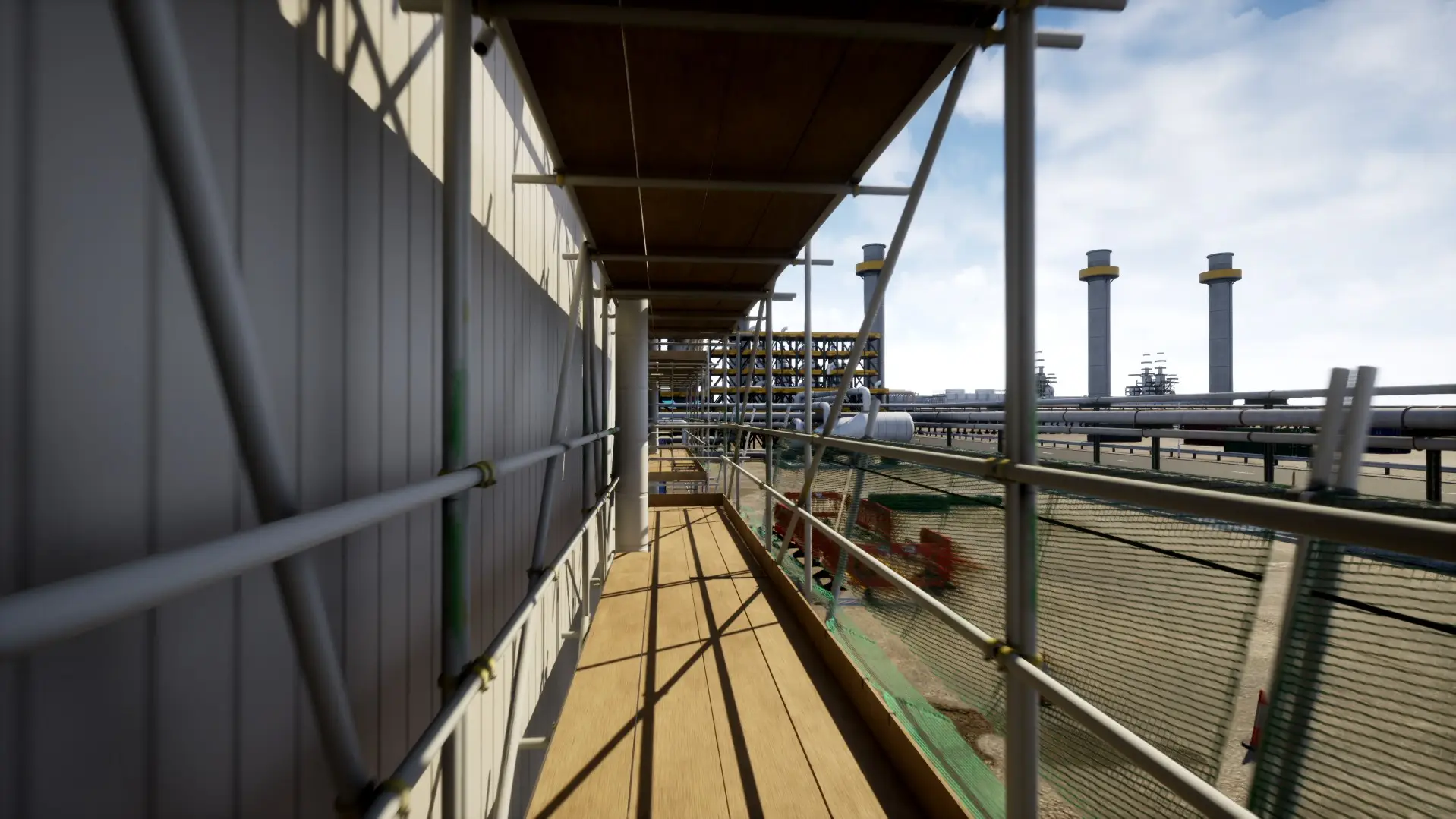
From a 3D animation built to supplement an ADNOC e-learning module.

Services
Content Production
Safety Campaigns
Sustained behavior change
/services/safety-campaigns
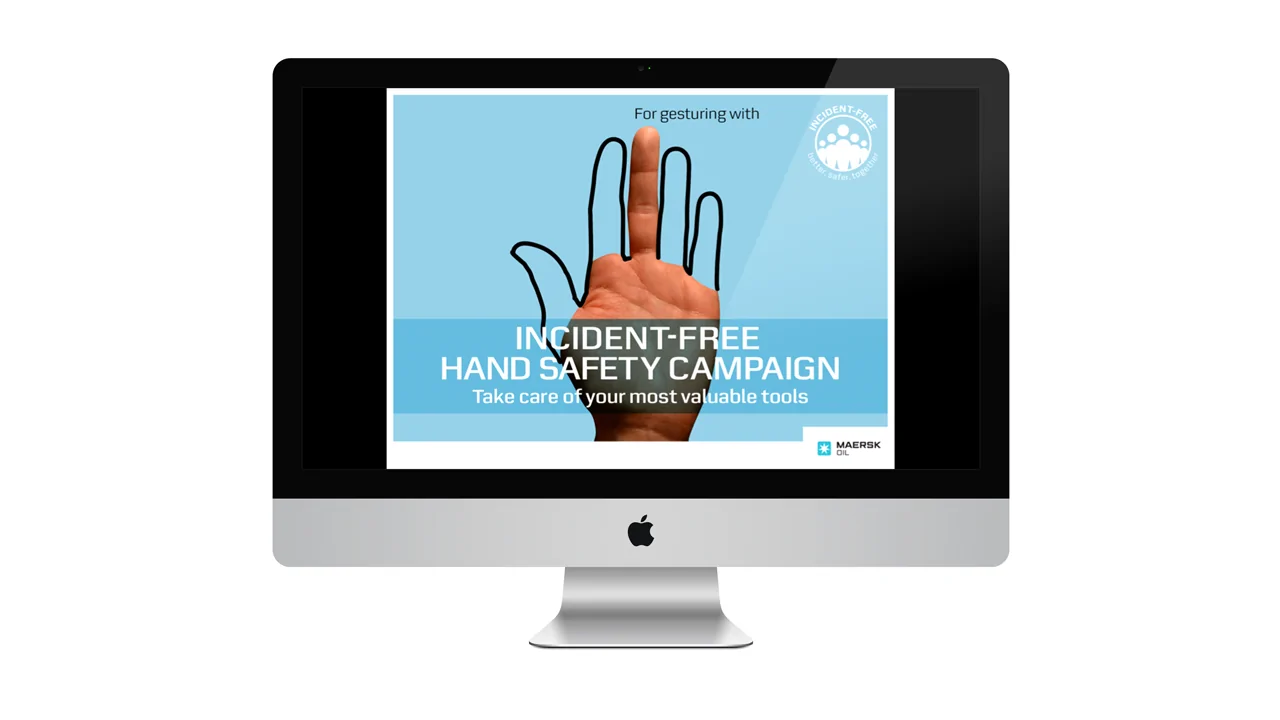
The award-recognized Maersk hand safety campaign.
Services
Content Production
Training posters & print
Site-specific print & visual aids
/services/training-posters
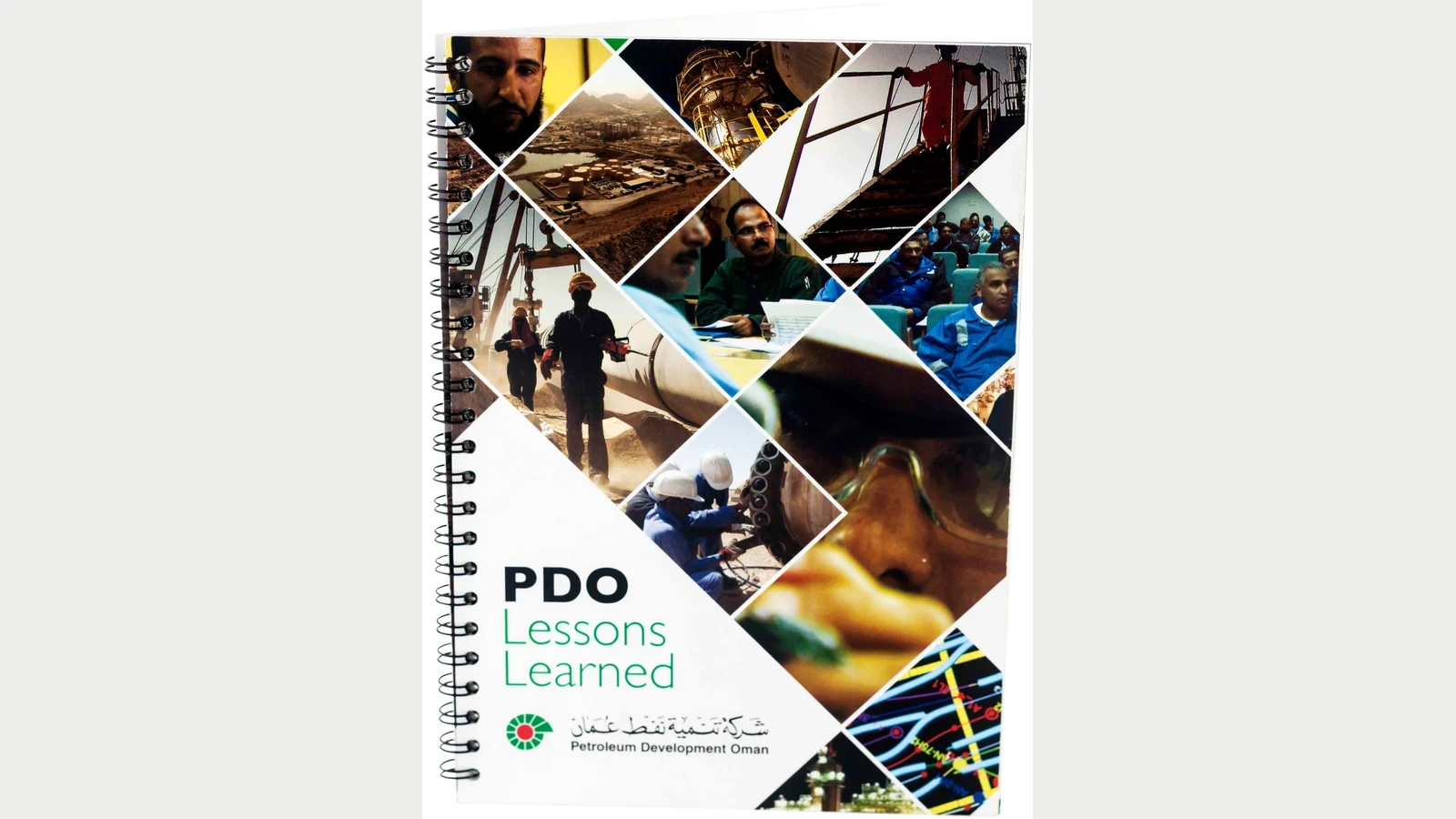
A printed lessons learned handbook produced for Petroleum Development Oman.
Services
Content Production
PowerPoint Materials
Trainer-led deck rebuilds
/services/powerpoint-training-materials
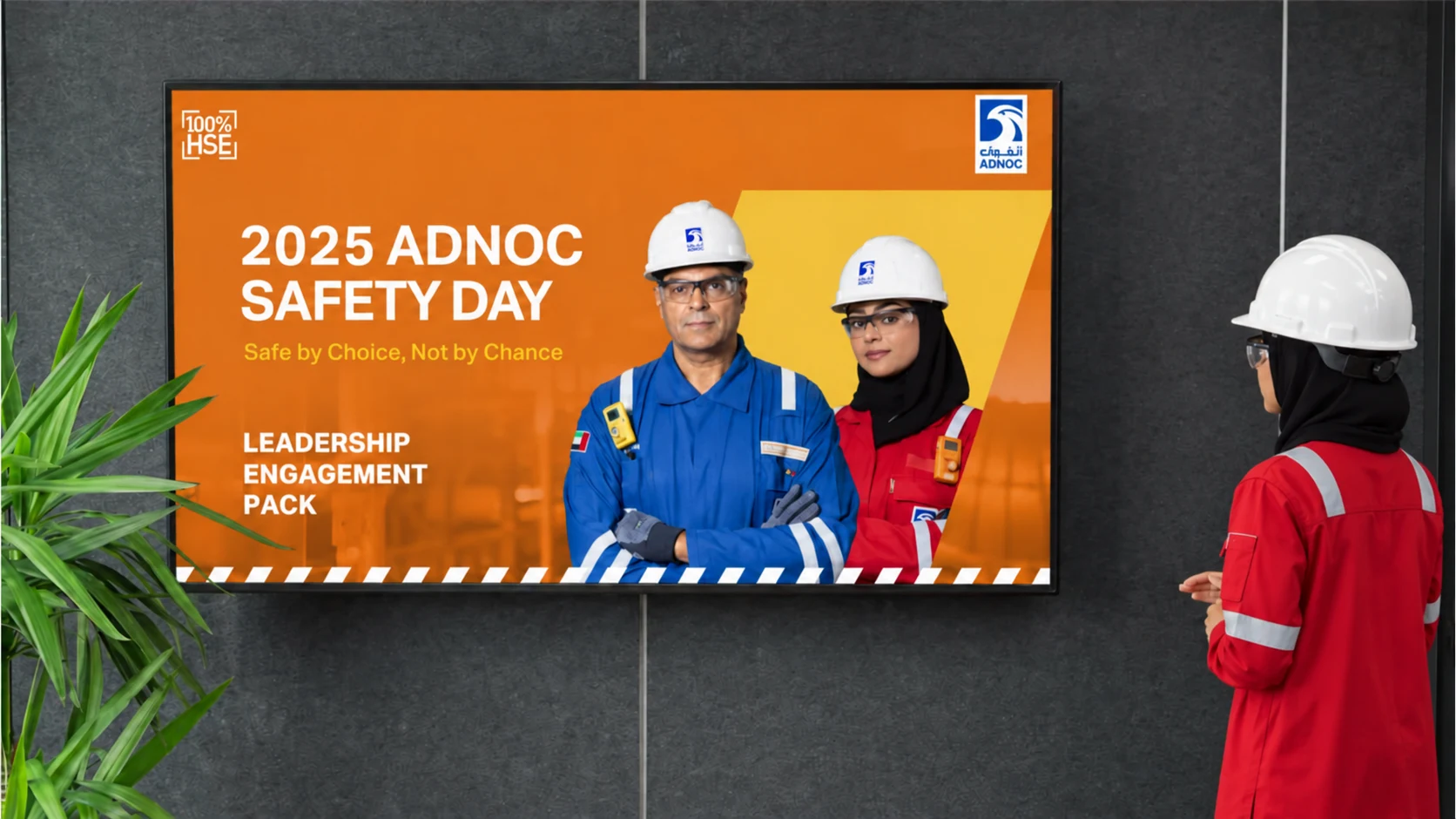
Presenting an ADNOC Safety Day engagement deck.
Services
Interactive Training
E-Learning
SCORM online modules
/services/e-learning
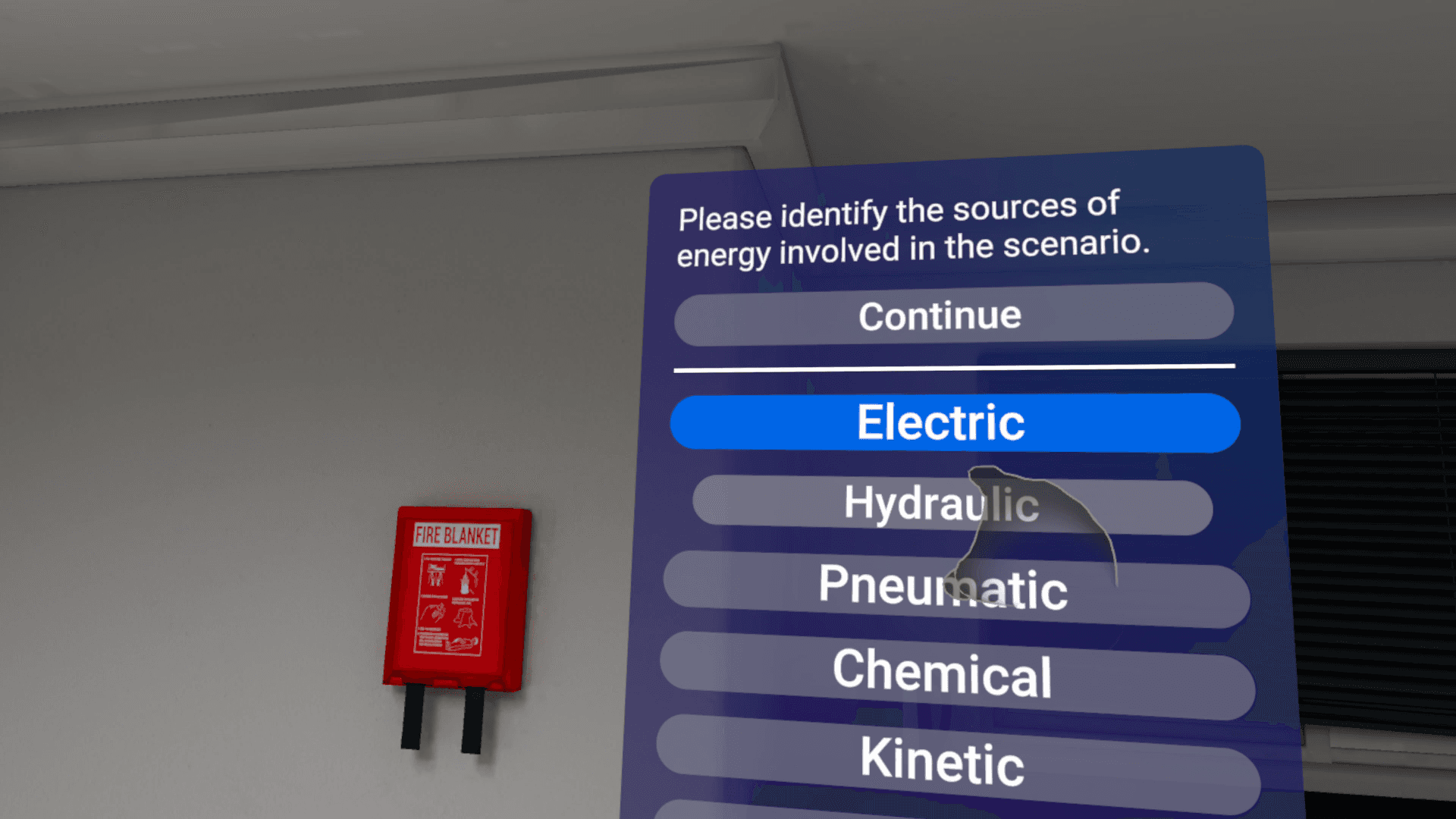
Scenario questions inside a client e-learning module.

Services
Interactive Training
Virtual Reality (VR)
Immersive headset training
/services/virtual-reality-vr-training
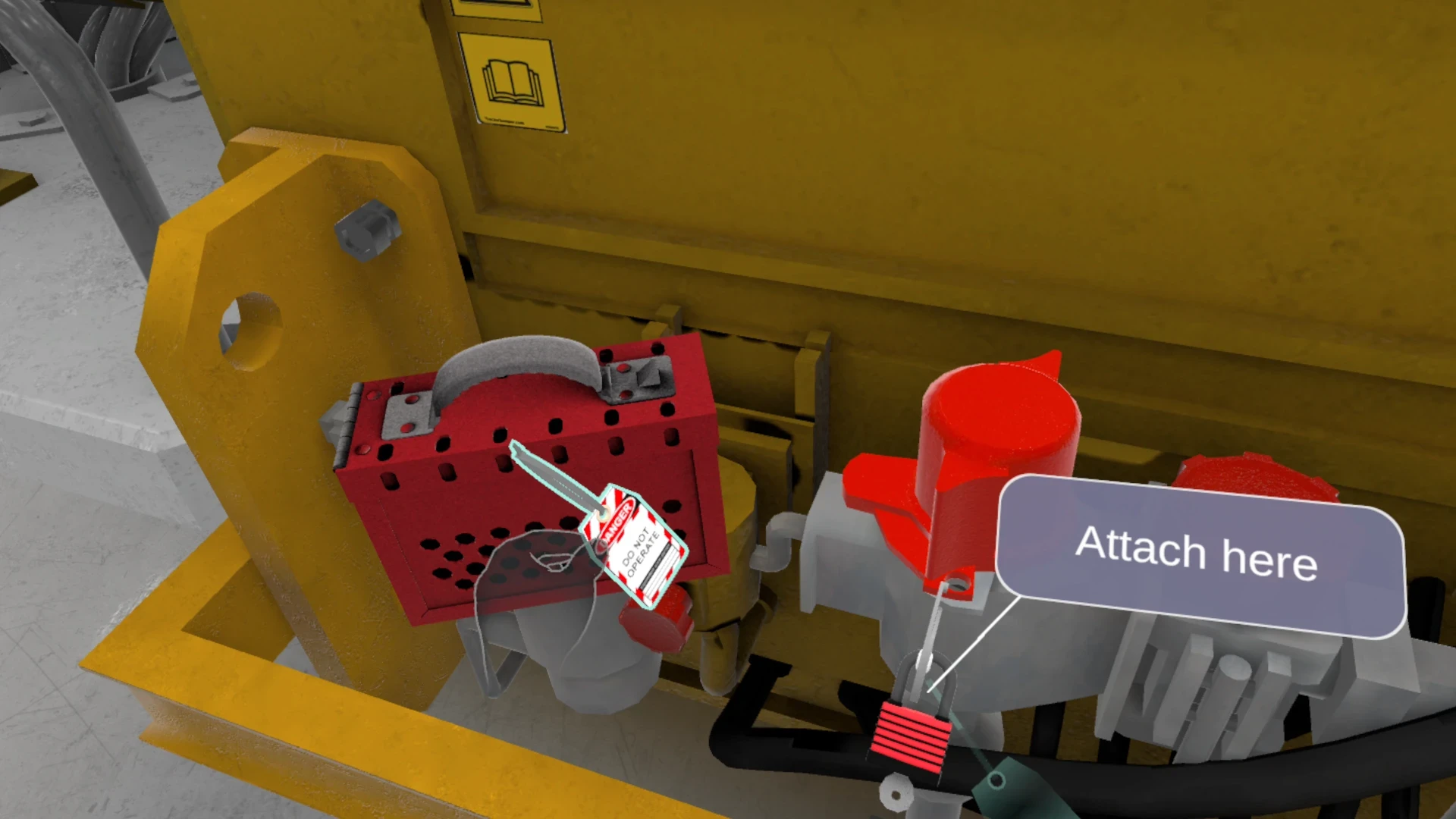
Lockout tagout training with full hand tracking in VR.
Services
Interactive Training
Flat-Screen Simulations
Desktop, web & mobile simulations
/services/flat-screen-simulation-training
SHIIFT simulations running on laptops and mobile devices.

Services
Interactive Training
Digital Twins
Navigable sites & equipment
/services/digital-twins
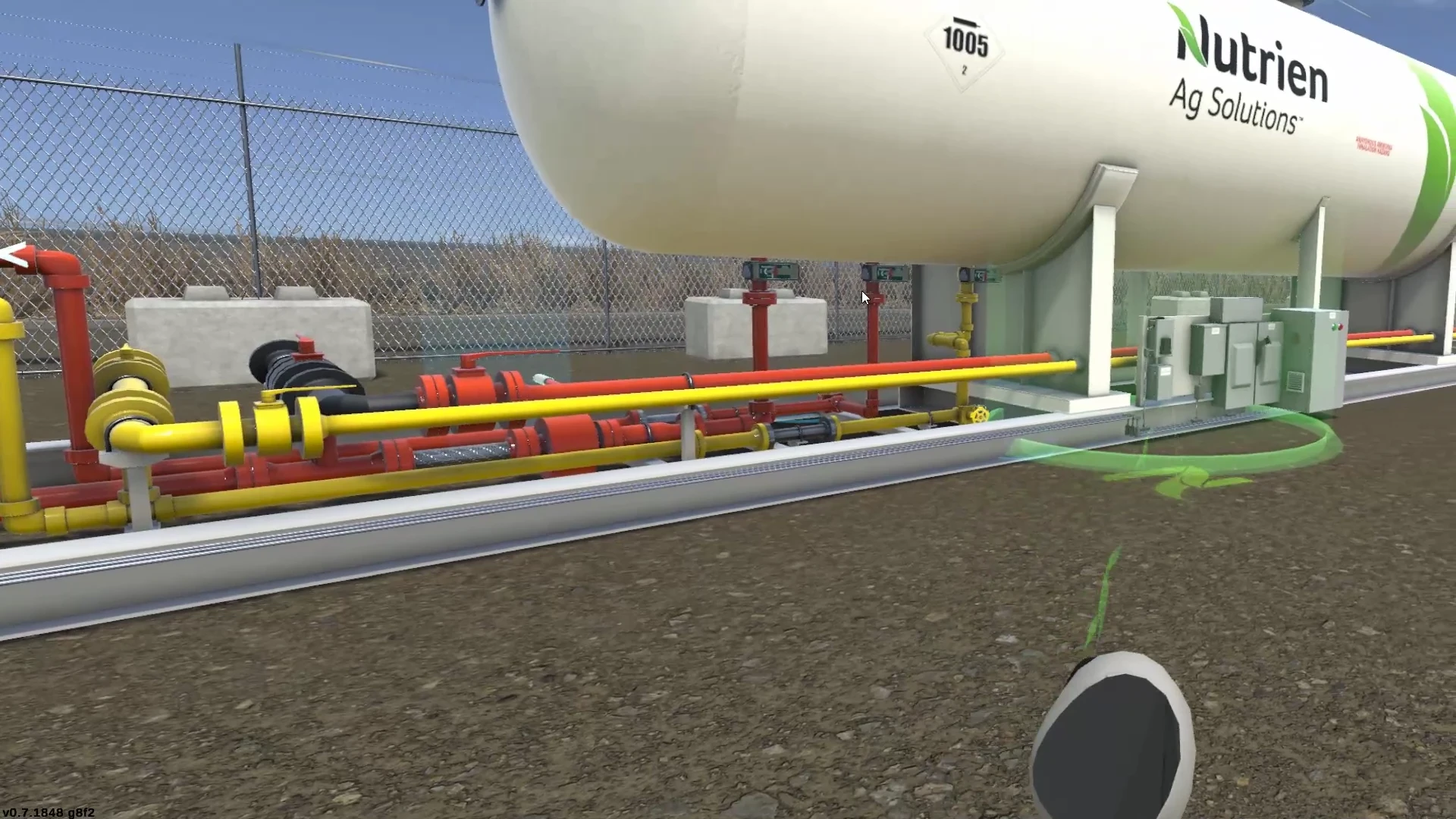
A navigable 3D replica of Nutrien's ammonia transfer plant.
Approach
How We Work
Our approach
Analysis, design, delivery, validation
/approach
Approach
How We Work
SCORM & LMS Integration
Tracking in your systems
/services/scorm-lms-integration
Approach
How We Work
Scenario-Based Assessments
Competency you can prove
/services/scenario-based-assessments