(SHIIFT first published this article on eLearning Industry, click here to read the original publication)
Overview: VR training faces resistance due to cost and adoption. Desktop simulations offer a cheaper, scalable alternative without headsets.
Scale Immersive Training Without VR Hardware
Many organizations encounter resistance when introducing VR training. From employees, the pushback is usually practical. Discomfort wearing headsets, concerns about motion sickness, or reluctance to use unfamiliar technology. From management, the resistance is different. Budget concerns, uncertainty around ROI, and the operational complexity of deploying VR at scale lead to hesitation. What is often overlooked is that immersive training does not depend on VR hardware. Scalable simulation training can be delivered without headsets, without dedicated spaces, and without the associated logistical overhead.
Why VR Isn’t The Only Option For Immersive Learning
There’s a common assumption that immersion only exists inside a headset. But that just isn’t accurate. VR gained early traction through gaming, but even within the gaming industry, most users continue to rely on traditional flat screen experiences. High engagement, realism, and interaction have been achieved for decades without head-mounted displays. The same principle applies to training.
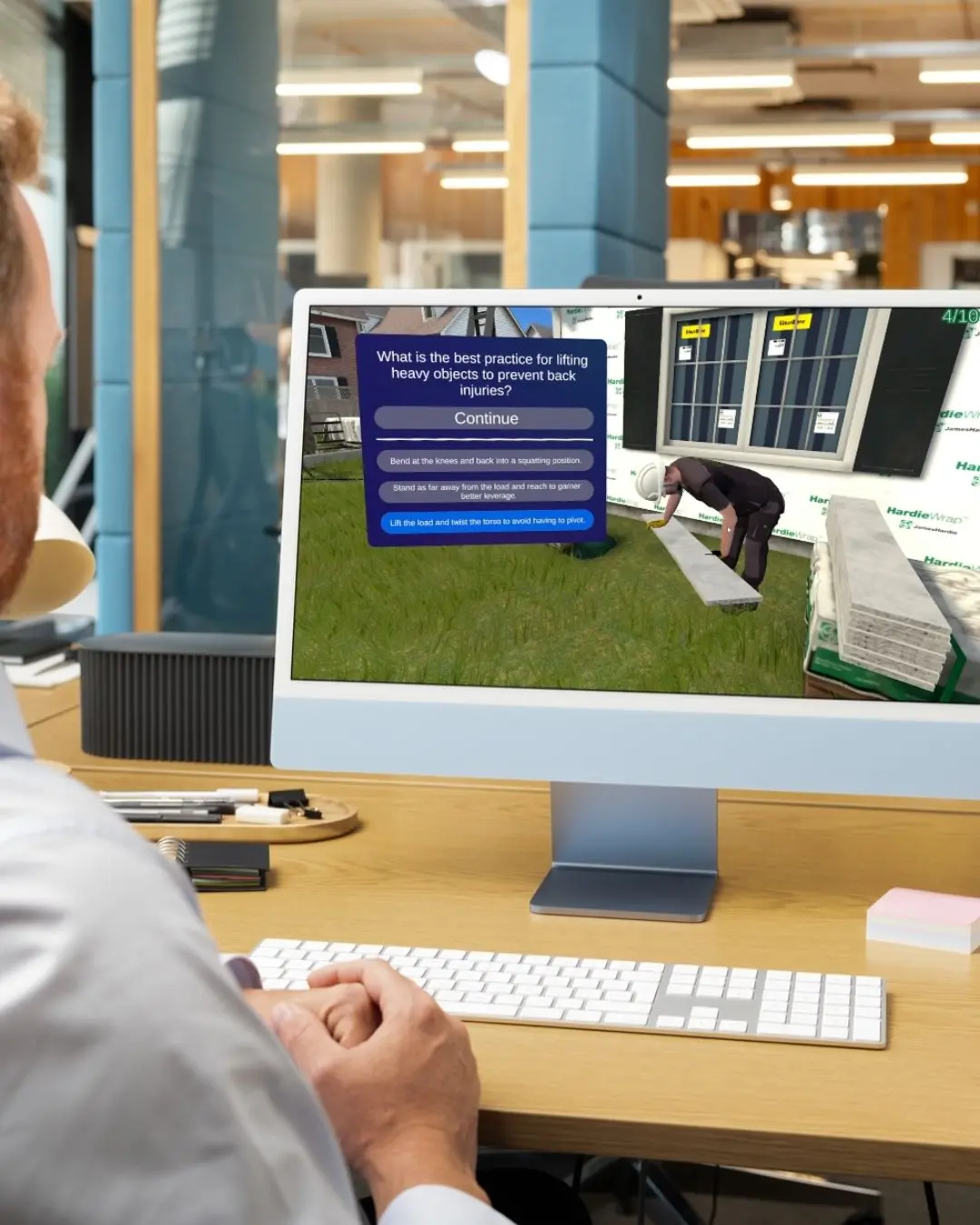
Well-designed simulations on desktop or mobile can replicate environments, decision-making, and consequences in a way that still feels immersive. The key factor isn’t the hardware, but the level of interaction and realism built into the experience.
This approach removes friction while retaining most of the learning value. Sure, it won’t give a true-to-life hands-on experience for VR training that’s focused on building muscle memory, but it retains the benefits of high engagement and improved decision-making in high-risk situations.
Challenges of Adopting VR Training
Motion Sickness
VR sickness is a known issue for a portion of users. In a training context, this becomes a barrier to completion. If employees feel discomfort, they are less likely to engage or complete modules.
High Costs
Scaling VR requires up-front investment in headsets, ongoing device management, and often dedicated physical space. This adds complexity beyond the training content itself.
Operational Constraints
VR training isn’t always flexible. Due to limited number of headsets and dedicated physical space, sessions may need to be scheduled, equipment maintained, and usage supervised. This limits scalability compared to solutions that don’t have any logistical constraints.
How to Overcome These Challenges
These barriers make it difficult to consistently realize the commonly cited benefits of VR training:
Speed Learners complete training significantly faster than classroom formats.
Confidence Higher confidence in applying learned skills
Focus Increased engagement compared to traditional eLearning
If access and adoption are limited, these benefits do not scale across the workforce. This is where non-VR simulations become practical. If cost is the primary concern, removing hardware requirements immediately reduces expenditure. There is no need for headsets, dedicated rooms, or device logistics. The focus shifts entirely to the software.
If employee adoption is the issue, offering multiple formats removes resistance. The same simulation can be delivered in VR for users who prefer it, and as a desktop-based experience for those who do not. In both cases, the training outcome remains consistent. Users interact with the same scenarios, make the same decisions, and experience the same consequences.
What Non-VR Simulations Actually Look Like In Practice
Non-VR simulations aren’t just simplified versions of VR training. When designed properly, they still replicate real-world tasks, environments, and decision points in a controlled digital format.
A typical example would be a scenario-based simulation delivered through a desktop or laptop. The user navigates a realistic environment, interacts with equipment, and is required to make decisions under pressure. Incorrect actions lead to consequences, whether that is a safety incident, process failure, or operational delay. This cause-and-effect structure is what drives learning retention.
These non-VR simulations can also include guided feedback, step-by-step instruction, or assessment modes depending on the training objective. For high-risk environments, this allows employees to repeatedly experience situations that would be too dangerous, too rare, or too costly to replicate in real life.
From a deployment perspective, the advantage is immediate. There’s no requirement for specialist hardware, meaning training can be accessed on existing company devices, whether in an office or remotely. Updates can also be rolled out instantly, ensuring content stays aligned with current procedures. The result is a scalable immersive training solution that maintains interactivity and realism, while removing the physical and logistical constraints associated with VR.
Conclusion
VR is one way to deliver immersive training, but it’s not the only way. By removing the dependency on headsets and introducing accessible simulation formats, it becomes possible to scale immersive training without the typical resistance, cost, or complexity associated with VR.
VR training faces resistance due to cost and adoption. Desktop simulations offer a cheaper, scalable alternative without headsets.
Solutions
Safety Training
Hazard recognition
Spot risks before incidents
/solutions/hazard-recognition-training
Solutions
Safety Training
Life-Saving Rules
Critical rules as decisions
/solutions/life-saving-rules-training
Solutions
Safety Training
Behavioral safety
Stop work authority, used
/solutions/behavioral-safety-training
Solutions
Safety Training
Hand safety
Fewer hand injuries
/solutions/hand-safety-training
Solutions
Safety Training
PPE selection & use
The right kit, worn right
/solutions/ppe-training
Solutions
Safety Training
H2S & gas awareness
The invisible hazard, visible
/solutions/h2s-gas-awareness-training
Solutions
Safety Training
Fire & emergency response
Beyond the routine drill
/solutions/fire-safety-emergency-response-training
Solutions
Safety Training
Toolbox talks
Five strong minutes weekly
/solutions/toolbox-talk-content
Solutions
Safety Training
Permit to work
PTW judgment scenarios
/solutions/permit-to-work-training
Solutions
Safety Training
Isolation & LOTO
Safe energy isolation
/solutions/isolation-lockout-tagout-training
Solutions
Safety Training
Confined space entry
Entries and rescue response
/solutions/confined-space-entry-training
Solutions
Safety Training
Working at height
Falls and dropped objects
/solutions/working-at-height-training
Solutions
Safety Training
Lifting & rigging
Safer critical lifts
/solutions/lifting-rigging-training
Solutions
Safety Training
Hot work
Sparks under control
/solutions/hot-work-training
Solutions
Safety Training
Line of fire
See the energy path
/solutions/line-of-fire-training
Solutions
Safety Training
Driver safety
Safer driving and journeys
/solutions/driver-safety-training
Solutions
Safety Training
Electrical safety
Safe isolation, arc flash aware
/solutions/electrical-safety-training
Solutions
Safety Training
Excavation work
Trenches and buried services
/solutions/excavation-safety-training
Solutions
Safety Training
Ergonomics
Strain prevention that sticks
/solutions/ergonomics-training
Solutions
Safety Training
Situational awareness
Noticing change on site
/solutions/situational-awareness-training
Solutions
Onboarding & People
Site orientation
Inductions before day one
/solutions/site-orientation-onboarding
Solutions
Onboarding & People
Expatriate workforce
Localized multilingual training
/solutions/expatriate-workforce-training
Solutions
Onboarding & People
Visitor inductions
Pre-arrival essentials
/solutions/visitor-induction-training
Solutions
Onboarding & People
Leadership training
Judgment, developed
/solutions/leadership-training
Solutions
Onboarding & People
Soft skills
Conversations that work
/solutions/soft-skills-training
Solutions
Onboarding & People
Safety leadership
Frontline supervisor skills
/solutions/safety-leadership-training
Solutions
Onboarding & People
Human factors
Error traps and defenses
/solutions/human-factors-training
Solutions
Operations & Technical
Process & procedures
Step-by-step competence
/solutions/process-procedure-training
Solutions
Operations & Technical
Operational readiness
Ready before start-up
/solutions/operational-readiness
Solutions
Operations & Technical
Technical training
Complex systems explained
/solutions/technical-training
Solutions
Operations & Technical
Control room & DCS
Alarms and upset response
/solutions/control-room-training
Solutions
Operations & Technical
Crane operation
Operators, banksmen, supervisors
/solutions/crane-operation-training
Solutions
Operations & Technical
Forklift operation
Operators, pedestrians, supervisors
/solutions/forklift-operation-training
Solutions
Operations & Technical
Maintenance & turnarounds
Outage preparation
/solutions/maintenance-turnaround-training
Solutions
Operations & Technical
Process safety
Barriers made visible
/solutions/process-safety-training
Solutions
Compliance & Modernization
Lessons learned (LFI)
Incidents into training
/solutions/lessons-learned-training
Solutions
Compliance & Modernization
Spill response
Environmental first response
/solutions/spill-response-training
Solutions
Compliance & Modernization
Hazardous materials
Storage, handling, transport
/solutions/hazardous-materials-training
Solutions
Compliance & Modernization
Security awareness
Physical and cyber vigilance
/solutions/security-awareness-training
Services
Content Production
Training Videos
Filmed through our global crew network
/services/workplace-safety-training-videos
A safety orientation film produced for Milestone Environmental Services.

Services
Content Production
2D & 3D Animation
Engineering-accurate visuals
/services/2d-3d-animation
From a 3D animation built to supplement an ADNOC e-learning module.

Services
Content Production
Safety Campaigns
Sustained behavior change
/services/safety-campaigns
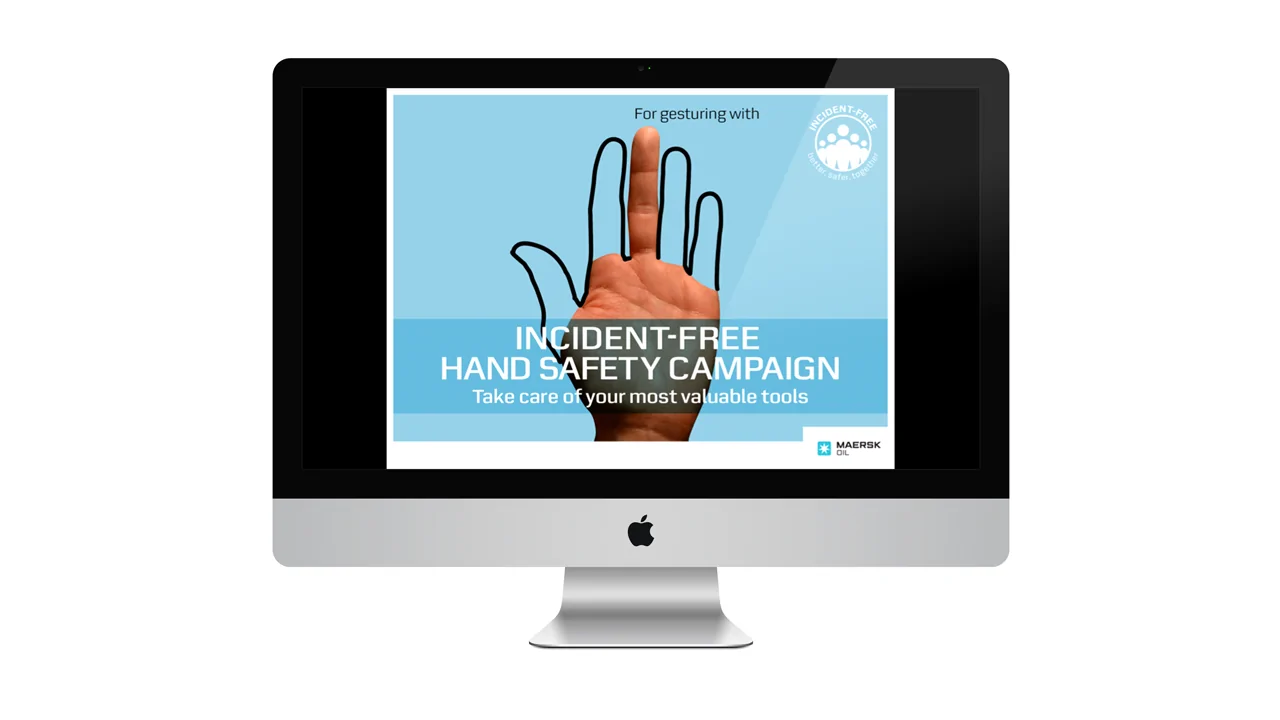
The award-recognized Maersk hand safety campaign.
Services
Content Production
Training posters & print
Site-specific print & visual aids
/services/training-posters
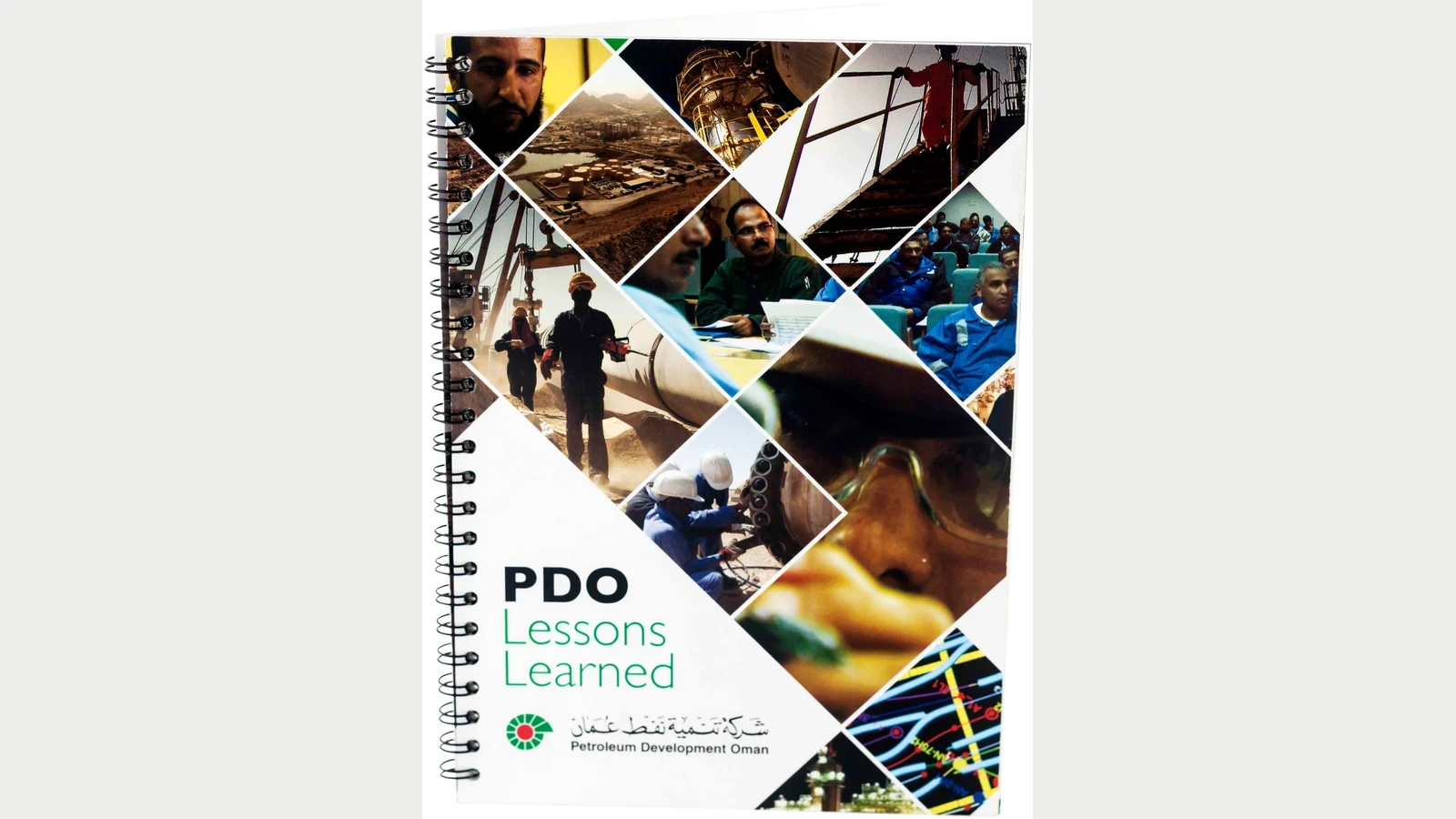
A printed lessons learned handbook produced for Petroleum Development Oman.
Services
Content Production
PowerPoint Materials
Trainer-led deck rebuilds
/services/powerpoint-training-materials
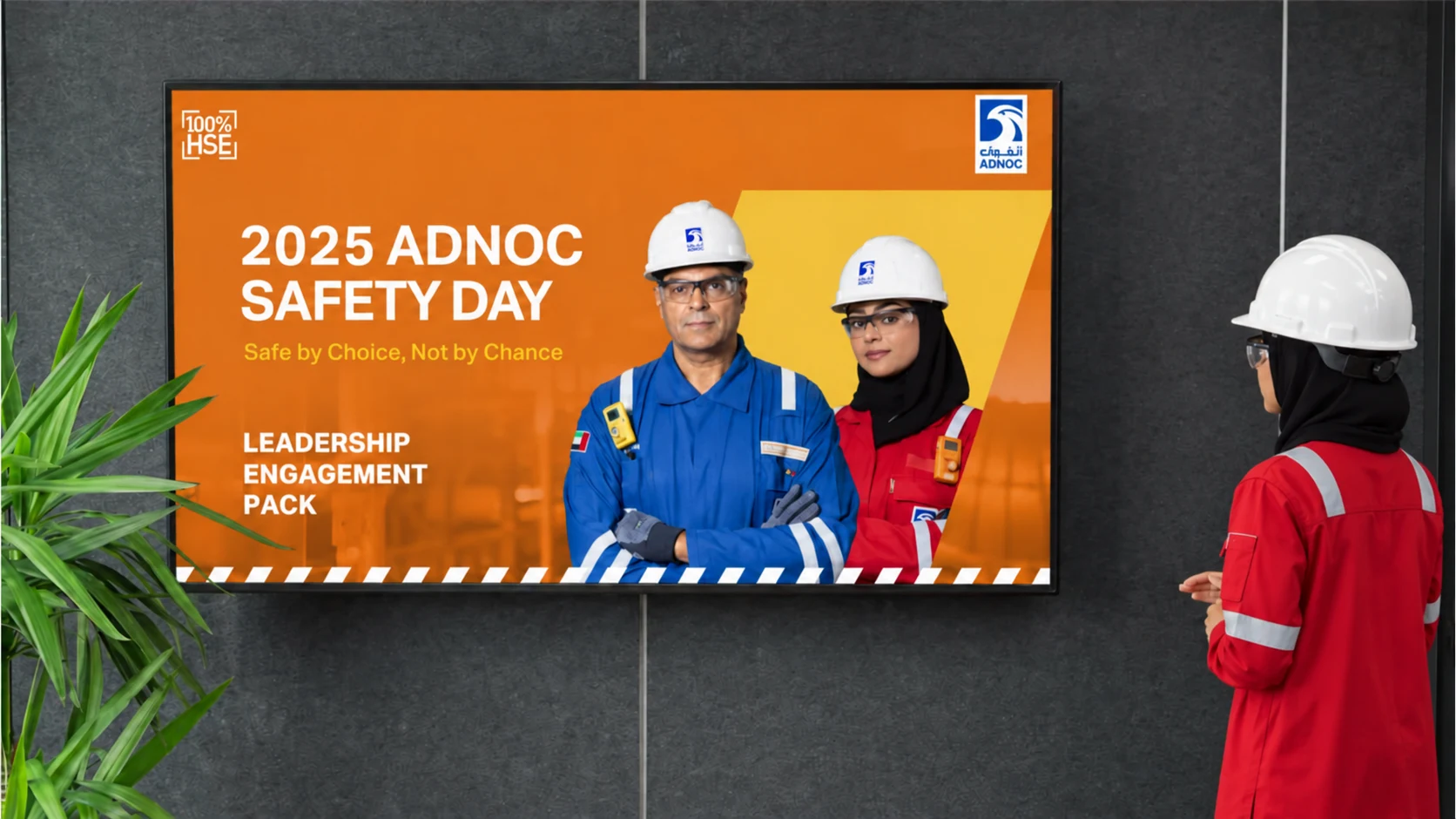
Presenting an ADNOC Safety Day engagement deck.
Services
Interactive Training
E-Learning
SCORM online modules
/services/e-learning
Scenario questions inside a client e-learning module.

Services
Interactive Training
Virtual Reality (VR)
Immersive headset training
/services/virtual-reality-vr-training
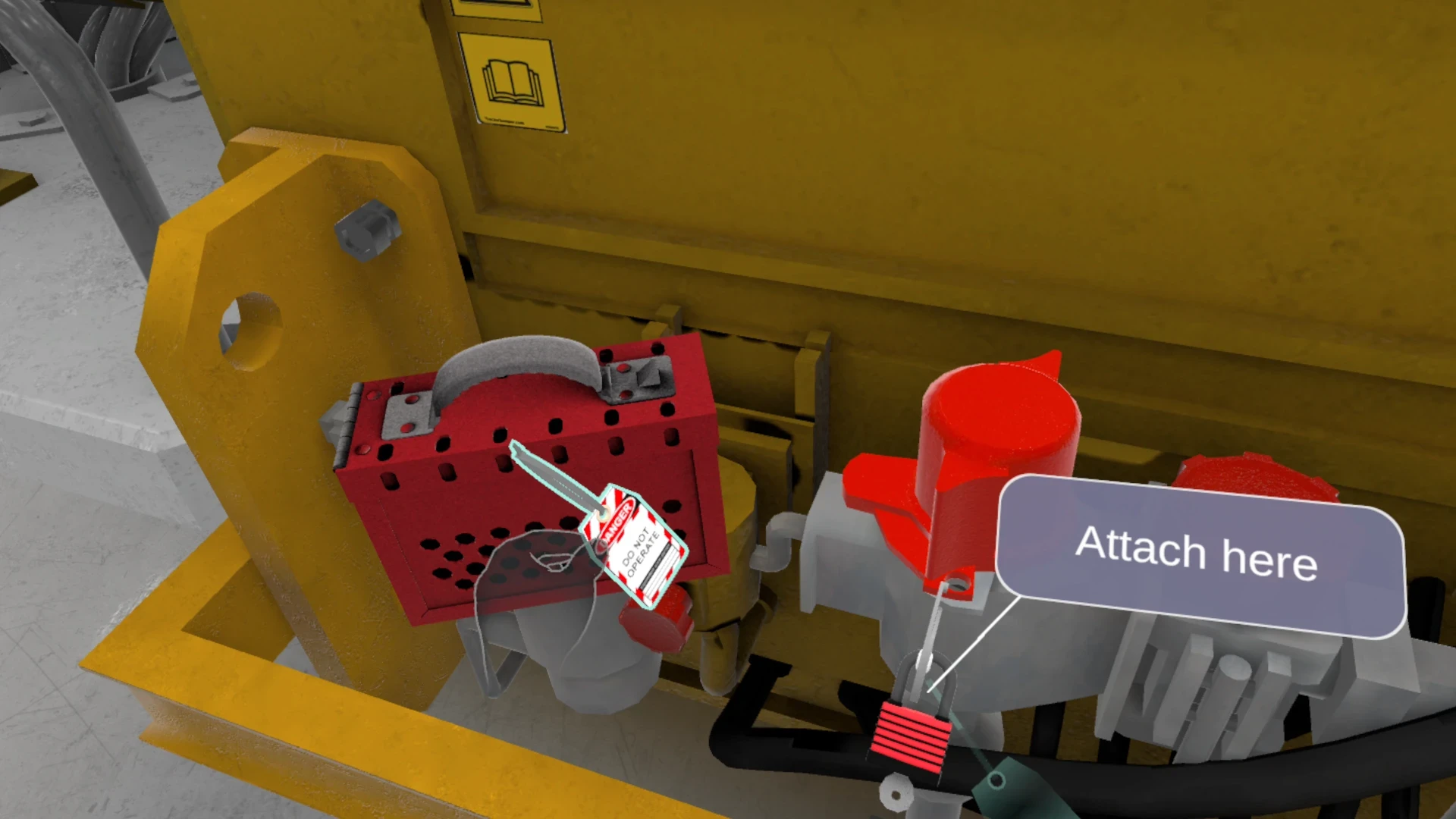
Lockout tagout training with full hand tracking in VR.
Services
Interactive Training
Flat-Screen Simulations
Desktop, web & mobile simulations
/services/flat-screen-simulation-training
SHIIFT simulations running on laptops and mobile devices.

Services
Interactive Training
Digital Twins
Navigable sites & equipment
/services/digital-twins
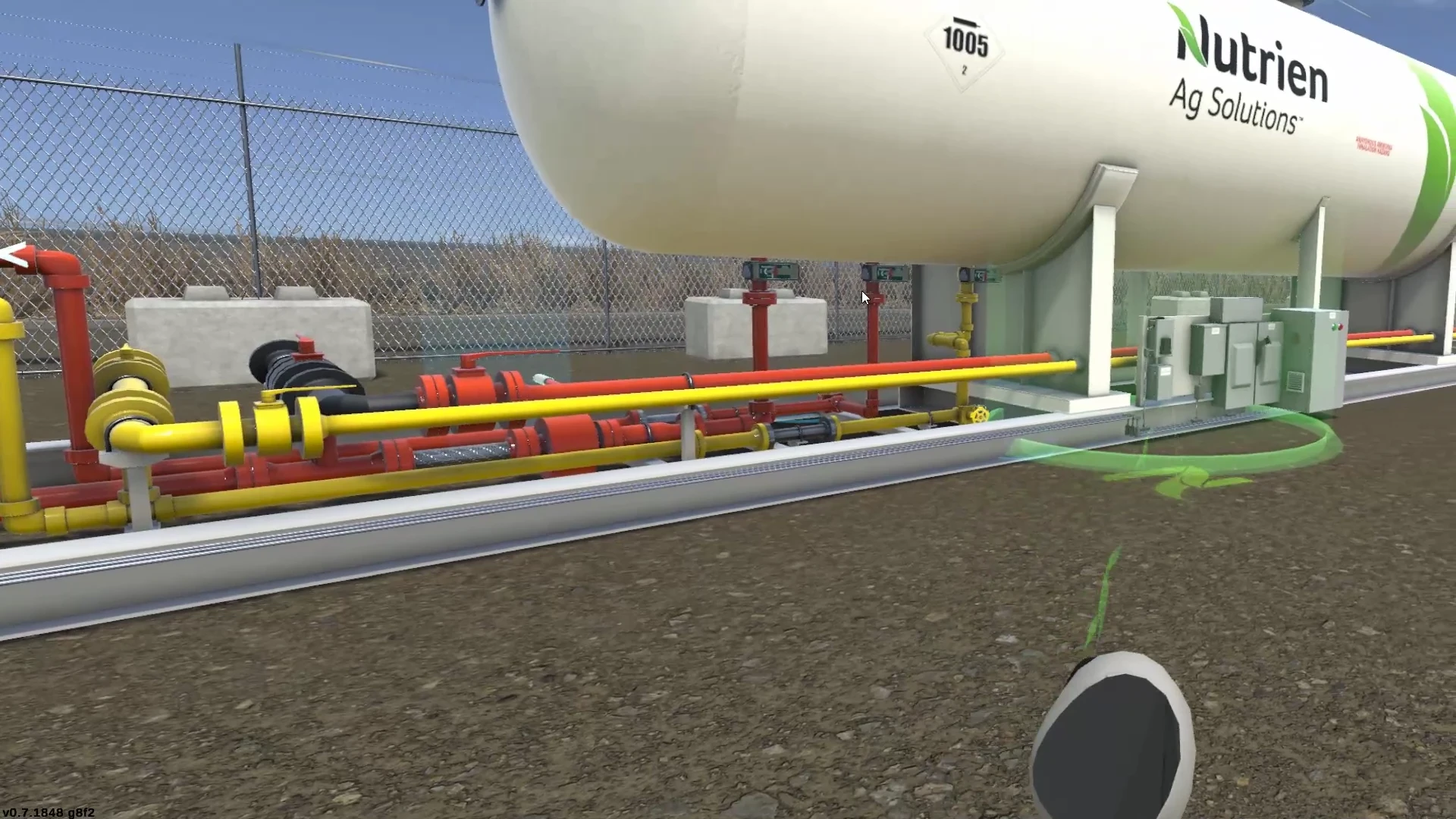
A navigable 3D replica of Nutrien's ammonia transfer plant.
Approach
How We Work
Our approach
Analysis, design, delivery, validation
/approach
Approach
How We Work
SCORM & LMS Integration
Tracking in your systems
/services/scorm-lms-integration
Approach
How We Work
Scenario-Based Assessments
Competency you can prove
/services/scenario-based-assessments