Introduction
Every safety training coordinator in a global manufacturing environment knows how quickly generic programs can lose impact across different countries and job roles. When incident rates refuse to budge, and traditional methods fail to engage, the need for technology-driven solutions grows urgent. Measurable training objectives and immersive platforms like Virtual Reality and Augmented Reality create specific, observable changes in worker behavior that can be tracked and improved. This guide shows how to create training that resonates worldwide and delivers real safety results.
Quick Summary
| Effective Insight | Practical Explanation |
|---|
| 1. Define Specific Training Objectives | Clear, measurable goals help focus training and facilitate better learning outcomes among employees. |
| 2. Align Assessments with Objectives | Use hands-on evaluations to measure skills, ensuring assessments reflect the actual training goals set. |
| 3. Customize Content for Relevance | Tailored training that mirrors real job conditions keeps employees engaged and reinforces learning effectively. |
| 4. Integrate Analytics for Tracking | Real-time data helps evaluate training impact on employee behavior and identify areas needing improvement. |
| 5. Continuously Validate Effectiveness | Regularly assess training results with specific metrics to ensure ongoing relevance and improvement to safety practices. |
Step 1: Define measurable training objectives and requirements
Measurable training objectives form the foundation of any safety program that actually works. Without clear objectives, your training becomes a compliance checkbox rather than a catalyst for real behavior change on the shop floor. This step transforms vague safety goals into specific, observable outcomes that your team can understand and achieve.
Start by identifying what your employees need to know and do differently after training. Rather than stating “understand lockout tagout procedures,” define it as “demonstrate proper lockout tagout sequence on three different equipment types with zero errors.” The difference matters. Specific objectives give your instructors a clear target and your learners something concrete to practice. Learning objectives should use the A-B-C-D model addressing audience, behavior, condition, and degree to establish instructional intent clearly.
Next, ensure your objectives are learner-centered and action-oriented. They should answer the question: what will employees be able to do that they cannot do today? Good objectives start with measurable action verbs like “identify,” “demonstrate,” “apply,” or “respond.” This approach keeps focus on observable skills rather than abstract knowledge. For manufacturing environments, this means specifying whether workers will identify hazards during a live walkthrough, demonstrate proper PPE removal in a simulated scenario, or respond to an emergency alarm within a defined timeframe.
Align your assessment methods with your objectives from the start. If your objective requires employees to demonstrate equipment shutdown procedures, your assessment cannot be a multiple-choice quiz. You need hands-on evaluation, observation, or simulation. Training objectives must be measurable with assessment methods that logically align to ensure they remain achievable and verifiable.
Consider the complexity levels your training demands. A facility-wide hazard recognition program may need objectives at multiple cognitive levels. Operators need to identify hazards (lower level), but supervisors need to analyze root causes and recommend preventive measures (higher level). Structure your objectives accordingly across your multinational team’s various roles and responsibilities.
Pro tip: Create an objectives matrix mapping each training module to specific incident prevention outcomes your facility tracks (near misses, lost time, severity rates). This connection shows everyone how their training directly reduces your actual incident data.
Choosing the right technology platform determines whether your safety training sticks or gets forgotten by Monday. Your multinational manufacturing operation needs a solution that works across different facilities, languages, and workforce skill levels. This step guides you through evaluating platforms that deliver measurable safety outcomes rather than just checking compliance boxes.
Start by assessing your current training ecosystem and gaps. What devices do your workers actually use on the floor? Can they access training on smartphones, tablets, or only desktop computers? Your platform must meet employees where they are, not force them to work around technology limitations. Virtual reality simulations offer immersive hazard recognition training, but they require specific hardware. Augmented reality overlays work on standard tablets. E-learning modules run anywhere with internet access. The best approach often involves blended learning that combines digital and in-person training to reinforce critical safety behaviors across multiple touchpoints.
Evaluate platforms based on your actual incident data and risk profile. High-hazard operations benefit from hands-on simulation training where employees practice dangerous scenarios safely before encountering real equipment. If your facility struggles with lockout tagout violations, you need interactive simulations where workers rehearse the exact sequence repeatedly. If behavioral safety is your challenge, video based training with scenario analysis helps employees recognize unsafe choices before making them. Recommended practices for selecting technology platforms emphasize addressing high-risk areas effectively to maximize safety outcomes.
Consider integration with your existing learning management system. Your platform must connect with your LMS to track completion, assessment scores, and training history across your global team. This integration enables analytics that show which training modules correlate with incident reduction. Can the platform provide detailed engagement metrics showing whether workers actually completed simulations or just clicked through? Real-time data tells you if your training is working or if employees need additional support.
Test platforms with a representative group from your workforce before full deployment. Include operators, supervisors, and different language groups in your pilot. Ask them directly: Does this training feel relevant to your actual job? Can you navigate it easily? Do you understand what you are supposed to learn? Their feedback reveals whether your chosen platform will drive behavior change or create frustration.
Pro tip: Request platform demonstrations that include incident scenario data from similar manufacturing facilities, showing directly how their training reduced specific incident types in environments matching your operations.
Here’s a comparison of technology platforms for safety training and their benefits:
| Platform Type | Strengths | Best Use Case | Potential Limitation |
|---|
| Virtual Reality (VR) | Immersive, hands-on experience | High-risk simulation | Requires specialized devices |
| Augmented Reality (AR) | Real-world overlays, flexible | Equipment walkthroughs | Dependent on tablet quality |
| E-Learning Modules | Accessible anywhere, scalable | Theory and compliance topics | Can lack engagement |
| Blended Learning | Combines strengths, more retention | Complex skills, diverse teams | More planning required |
Step 3: Customize engaging training content and simulations
Generic safety training puts people to sleep. Your multinational manufacturing operation needs content that speaks directly to the hazards your teams actually face on your specific equipment in your specific facilities. This step focuses on building training simulations and content that feel relevant, interactive, and worth the time your employees invest.
Start by breaking your training into digestible chunks rather than marathon sessions. A 45-minute lockout tagout video loses attention by minute 10. Instead, create five to seven minute modules covering one specific concept each, allowing workers to complete training during natural breaks or shift changes. Engaging online content uses diverse interactive activities and multimedia that serve learning objectives to maintain learner focus and improve retention rates across your workforce.
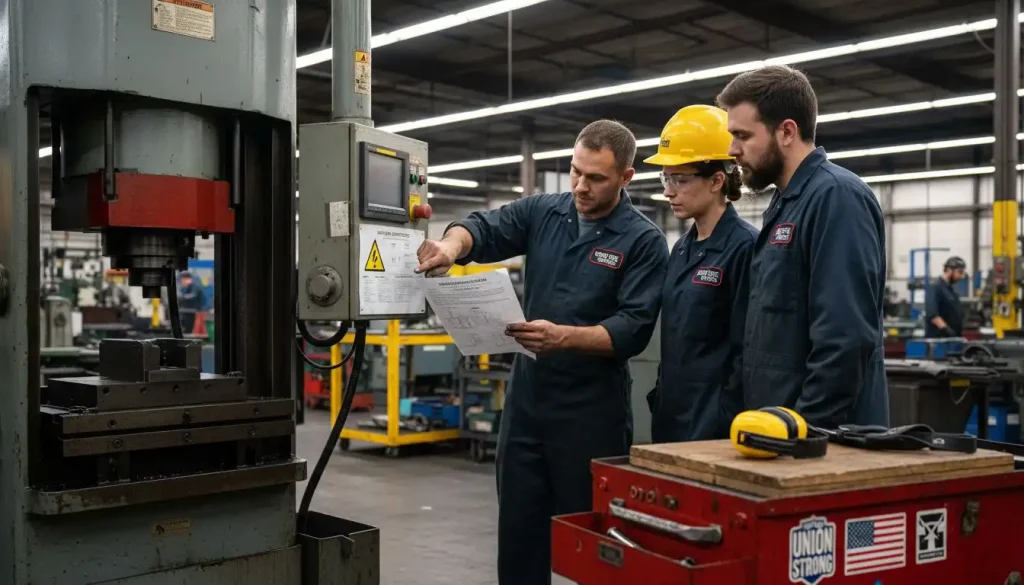
Design simulations that replicate actual job conditions. If your operators work with hydraulic presses, your simulation should show the exact press model they operate, not a generic machine. Include the sounds, visual cues, and decision points they encounter in reality. When workers practice lockout procedures on virtual equipment that matches their workplace, they transfer that learning directly to their actual jobs. The stakes feel real because the scenario is real.
Incorporate scenario variations that challenge different experience levels. A new hire might practice basic hazard identification in a single piece of equipment. A supervisor might work through complex multi-step scenarios involving coordination across teams. Simulations aligned with learner aptitudes and real-world experience support active learning in ways that generic training cannot match, building confidence for actual performance.
Use video strategically to show consequences and best practices. A 90-second video demonstrating proper respirator fit beats 500 words of text explaining it. Include real workers from your facilities performing tasks correctly. This builds credibility and shows employees that the training reflects their actual work environment. Avoid overly polished or theatrical productions that feel disconnected from your shop floor reality.
Test your customized content with actual workers before rollout. Ask them: Does this scenario match what you actually do? Are the controls intuitive? Did you learn something you did not know? Their feedback reveals whether your customization truly resonates or if you have missed the mark.
Step 4: Integrate analytics and LMS compatibility for tracking
Without data, you are flying blind. Your safety training program generates valuable information about what is working and what is not, but only if you capture and analyze it properly. This step ensures your training platform feeds directly into your learning management system, creating a complete picture of engagement, completion, and actual behavior change across your global operations.
Start by confirming your training platform integrates seamlessly with your existing LMS. Your platform must automatically log when employees access modules, how long they spend in simulations, which assessment questions they struggle with, and what scores they achieve. This real-time data flows into your LMS without manual entry or separate downloads. When integration fails, you end up managing training data in spreadsheets and missing critical insights about performance patterns.
Configure your analytics to track the metrics that matter to your safety goals. Generic completion reports tell you who finished training but nothing about what they learned. Instead, focus on engagement depth. Did workers spend meaningful time in the hazard recognition simulation, or did they click through quickly? Did they attempt dangerous actions in the virtual scenario before selecting safe responses? Did assessment scores improve after multiple attempts? Learning analytics transform educational data into actionable insights for monitoring progress and customizing learning experiences that drive actual behavior change rather than just compliance.
Set up automated reporting that flags underperformance immediately. Your LMS should alert you when an employee fails an assessment three times, completes training too quickly to be meaningful, or has not accessed required modules by their deadline. Early intervention prevents compliance gaps and identifies employees who need additional support or different delivery approaches. This proactive approach catches problems before they become safety risks on your shop floor.
Correlate training data with your incident tracking system. Over time, you will discover which training modules and simulation types correlate most strongly with incident reduction in specific areas. Perhaps your virtual reality lockout tagout training reduces violation incidents by 42 percent while e-learning for this topic shows lower impact. This correlation data tells you where to invest your training resources for maximum safety return.
Build dashboards that your safety leadership can access instantly. Executives should see completion rates by facility, average assessment scores by department, and trending data showing whether your training investments are reducing incidents over time. Transparent reporting builds organizational support for training programs and justifies continued investment.
Pro tip: Create a baseline incident report before launching your new training program, then track the same metrics monthly in your LMS dashboard to quantify exactly how much your safety training reduces specific incident types across your facilities.
Here’s a summary of how analytics can enhance safety training effectiveness:
| Analytics Feature | Business Impact | Example Metric |
|---|
| Engagement Tracking | Identifies participation gaps | Time spent in simulations |
| Automated Alerts | Enables rapid intervention | Failure trigger notifications |
| LMS Integration | Centralizes data and reporting | Completion rate by facility |
| Incident Correlation | Measures training ROI | Incident reduction percent |
Step 5: Validate training effectiveness and make improvements
Training that does not change behavior is just entertainment. Your organization invests significant resources in safety programs, so you need concrete evidence that your training actually reduces incidents and improves safety culture. This step focuses on measuring what matters and using that data to continuously refine your program.
Start with immediate post-training evaluations that go beyond satisfaction ratings. Generic questions like “Did you enjoy this training?” tell you nothing about learning or behavior change. Instead, ask specific questions about knowledge transfer and confidence. Can participants identify the three critical lockout points on their equipment? Would they recognize an unsafe condition they learned about in the simulation? Do they feel confident responding to an emergency? Recommended evaluation questions focus on constructs closely linked to learning outcomes and knowledge transfer that predict actual on-the-job performance.
Measure behavior change at 30, 60, and 90 days after training. Have your supervisors observe whether employees actually apply what they learned. Are they performing lockout procedures correctly? Are they wearing required PPE consistently? Are they speaking up about hazards? This observational data reveals the gap between what employees know in training and what they do under real working conditions. If that gap exists, your training needs adjustment.
Track safety culture metrics alongside incident data. Survey your workforce about their confidence in safety, their willingness to report hazards, and their understanding of why safety procedures matter. Over time, effective training builds a culture where safety feels like shared responsibility rather than management mandates. Workers should trust that their company genuinely values their wellbeing, not just compliance numbers.
Systematic evaluation using Kirkpatrick’s model measures impacts on knowledge, behavior, and safety culture to support continuous improvement across multiple training modalities. This approach reveals which training formats work best for your specific audience and risks.
Use your findings to iterate rapidly. If virtual reality simulation drives behavior change but e-learning doesn’t for a specific topic, shift your investment accordingly. If certain departments show stronger results, study what they did differently and replicate it. Your training program is a living, evolving process that improves through honest assessment and willingness to change.
Pro tip: Compare incident rates from six months before training launch to six months after, isolating variables like seasonal patterns and regulatory changes, then attribute the remaining improvement directly to your training effectiveness and safety culture shifts.
Elevate Your Safety Training for Real Results
Designing safety training that truly engages employees and drives measurable behavior change is a challenge many organizations face. This article highlights the need for specific, actionable objectives, immersive content, and technology platforms that integrate seamlessly with your existing systems. At SHIIFT Training, we understand these pain points and specialize in crafting custom digital safety solutions leveraging VR, AR, interactive simulations, and live-action videos tailored to your unique manufacturing environment.
Take your safety program beyond compliance by partnering with a platform designed for maximum engagement, knowledge retention, and incident reduction. Visit the SHIIFT Training contact us page to explore our full range of hardware-agnostic solutions that meet your workforce where they are. Discover how our integrated analytics and LMS compatibility deliver real-time insights so you can measure training effectiveness and continuously improve. Don’t wait—transform your safety culture today with customized, interactive training modules built for your team’s success.
Frequently Asked Questions
How can I define measurable training objectives for safety training?
To define measurable training objectives, clearly articulate what employees should know and do differently after training. Use specific, observable outcomes, such as “demonstrate proper lockout tagout sequence on three different equipment types with zero errors,” and ensure your objectives align with your assessment methods.
Select technology platforms that are accessible across various devices, such as smartphones and tablets, to accommodate your team. Consider using blended learning that combines digital and in-person training to maximize engagement and retention.
How should I customize safety training content for my team?
Customize safety training content by ensuring it addresses the specific hazards and equipment your employees work with daily. Break training into digestible modules, such as five to seven-minute segments, and incorporate real-world simulations to enhance relevance and engagement.
How can I measure the effectiveness of my safety training?
Measure the effectiveness of your safety training by evaluating knowledge transfer through specific post-training questions and observing behavior change after 30, 60, and 90 days. Regularly track safety culture metrics alongside incident data to assess improvements over time.
What types of analytics should I use to track safety training success?
Utilize analytics that track engagement depth, completion rates, and behavior changes related to safety training. Set up automated reporting systems that alert you to under-performance and correlate training data with incident tracking to measure return on investment.
How can I improve my safety training program continuously?
Continuously improve your safety training program by gathering feedback from employees and analyzing performance data. Use findings to iterate your training content and methods, ensuring they remain relevant and effective in addressing safety challenges.