What Are Slips, Trips, and Falls?
Slips, trips, and falls are the most common cause of non-fatal workplace injuries and a major cause of fatalities, resulting from a loss of balance due to insufficient friction (slip), striking an object (trip), or falling from heights or the same level. These incidents often cause back, head, and knee injuries, largely caused by wet floors, uneven surfaces, or poor lighting.
Key Definitions and Causes
- Slips: Occur when there is too little friction or traction between footwear and the walking surface, such as on wet, greasy, or icy floors. They often lead to backward falls.
- Trips: Happen when a foot strikes an object, causing a loss of balance and forward momentum. Common causes include uneven surfaces, trailing cables, or clutter in walkways.
- Falls: An uncontrolled, unrecovered loss of balance that can occur on the same level (due to a slip or trip) or from a height, such as from ladders or stairs.
Common Causes of Slips, Trips, and Falls
Slips, trips, and falls can occur in a wide range of workplaces and environments. Identifying the underlying causes helps prevent accidents before they happen.
Slips (Occurs when there is insufficient friction between the footwear and the floor):
- Contamination: Wet floors from spills, leaks, rainwater, or melted snow; oil, grease, cleaning fluids, or dust on surfaces
- Flooring/Footwear: Polished or worn flooring, loose rugs or mats, inappropriate or worn footwear with poor grip
- Environmental: Rain, ice, or snow entering work areas; condensation on floors
- Maintenance Issues: Uneven cleaning, delayed spill response, worn or slippery floor coatings
- Surface Changes: Newly waxed or freshly cleaned floors not marked with warning signs
Trips (Obstruction or Uneven Surface):
- Obstacles: Trailing cables, wires, cluttered walkways, misplaced equipment, boxes, or tools left on floors
- Surface Irregularities: Uneven floors, cracked tiles, broken mats, thresholds, hidden steps, or sudden level changes
- Visibility: Poor lighting, glare, shadows, or obstructed sightlines that hide hazards
- Access Issues: Narrow walkways, poorly designed ramps, or improperly marked transitions
- Human Factors: Lack of attention, multitasking, distractions, or carrying objects that obscure the floor
Falls (Loss of Balance or from Elevation):
- Elevation Changes: Stairs, ladders, platforms, scaffolding, or stepping off vehicles or loading docks
- Human Factors: Rushing, distractions, fatigue, overreaching, or carrying bulky/heavy items
- Lack of Protection: Missing or inadequate handrails, guardrails, or fall arrest systems
- Unsafe Surfaces: Slippery stairs, unprotected edges, or unstable platforms
- Environmental Conditions: Wet or icy stairs, wind, or poor visibility in elevated areas
How to Prevent Slips, Trips, and Falls
Effective control measures for slips, trips, and falls involve maintaining clear, dry, and well-lit walkways, using slip-resistant flooring, requiring proper footwear, and immediately addressing spills or obstructions. Key actions include good housekeeping, securing cables, using wet floor signs, and providing training to ensure hazard awareness.
Slip Prevention Measures
- Contamination Control: Clean up spills immediately, use dry cleaning methods (sweeping/vacuuming) before wet cleaning, and use appropriate degreasers.
- Floor Maintenance: Use anti-slip mats, ensure proper drainage, and repair broken tiles, uneven surfaces, or damaged mats immediately.
- Footwear: Wear appropriate slip-resistant footwear suitable for the specific work surface, such as rubber soles in wet or greasy areas.
Trip Prevention Measures
- Housekeeping: Keep walkways, stairways, and aisles clear of clutter, tools, and materials.
- Cable Management: Secure or cover cables, cords, and hoses that cross walkways.
- Visibility: Ensure adequate lighting and use contrasting colors to mark steps and uneven surfaces.
Fall Prevention Measures
- Safe Access: Use ladders or step stools to reach high items, rather than chairs or desks.
- Guardrails & Barriers: Install handrails on stairways and use barriers around floor openings, trenches, or raised platforms.
- Behavioral Controls: Avoid running, do not use phones while walking, and hold handrails when using stairs.
Environmental & Administrative Controls
- Signage: Display warning signs for wet floors or temporary hazards.
- Procedures: Implement regular inspections and a system to report hazards immediately.
- Weather Measures: In icy conditions, apply sand or ice melter to walkways.
- Employee Training: Train employees to identify hazards and report or address them promptly. Incorporate slips, trips, and falls training into all relevant training areas like working at height, electrical equipment (wiring), as well as a standalone training program focused on slips, trips, and falls.
Slip, Trips, and Falls Statistics
Slips, trips, and falls are a leading cause of workplace injuries, accounting for a significant portion of major incidents, fatalities, and lost workdays.
- In the US Fall protection (1926.501) was the number 1 most frequently violated safety standard cited by OSHA in 2024’s fiscal year.
- In the UK slips, trips and falls cost businesses nearly £1 billion annually. Recent data shows they cause around 31% of non-fatal injuries and 28% of fatalities in the UK in 2025 with 95% of major slips resulting in broken bones.
- On a global scale, the World Health Organization has reported that falls are the second leading cause of unintentional injury deaths worldwide (not limited to workplace injuries)
A Guide to Effective Slips, Trips, and Falls Training
Slips, trips, and falls (STFs) training teaches employees and employers how to identify and prevent common workplace accidents by focusing on hazard recognition, proper housekeeping, suitable footwear, effective cleaning, risk assessment, and safe behaviors, covering wet surfaces, clutter, cords, lighting, and emergency reporting to reduce risks across various environments. Courses, often online and IOSH-approved, use interactive modules and videos, offering certificates upon completion, and support compliance with health and safety regulations.
1. What it should cover:
- Introduction to STF hazards: Explain what slips, trips, and falls are, the difference between them, and why they matter.
- Common causes: Contaminated floors, obstacles, uneven surfaces, poor lighting, human factors like rushing or fatigue.
- Control measures: Housekeeping, cleaning protocols, proper footwear, slip-resistant flooring, handrails, signage, and fall protection.
- Risk assessment: How to identify high-risk areas in the workplace and what preventive steps to take.
- Emergency procedures: First aid, reporting injuries, and incident documentation.
- Employee responsibilities: What to do if they see a slip, trip, or fall hazard:
- Stop and assess the hazard safely
- Warn others of the hazard
- Report to a supervisor or safety officer
- Take safe action if possible (e.g., clean a spill, remove obstacle, or cordon off the area)
- Document or follow up to prevent recurrence
- Legal and safety responsibilities: Employer and employee duties under health and safety regulations.
- Practical examples: Real-life scenarios and case studies showing incidents and how they could have been prevented.
2. Training formats:
- Classroom or interactive eLearning modules: Presentation slides, quizzes, and videos explaining hazards and prevention.
- Practical demonstrations: Hands-on exercises showing correct footwear, cleaning methods, and safe walking practices.
- VR/AR simulations: Interactive scenarios where employees practice hazard recognition and safe response.
- Toolbox talks or short briefings: Quick, targeted sessions for teams, focusing on specific areas or incidents.
- Case study reviews: Discussing past incidents and lessons learned.
3. Examples:
From our Al-Hosn health and safety animation series, some of the accidents shown were trips or falls, like the working at height example which stresses to fasten your safety harness to a secure anchor point.
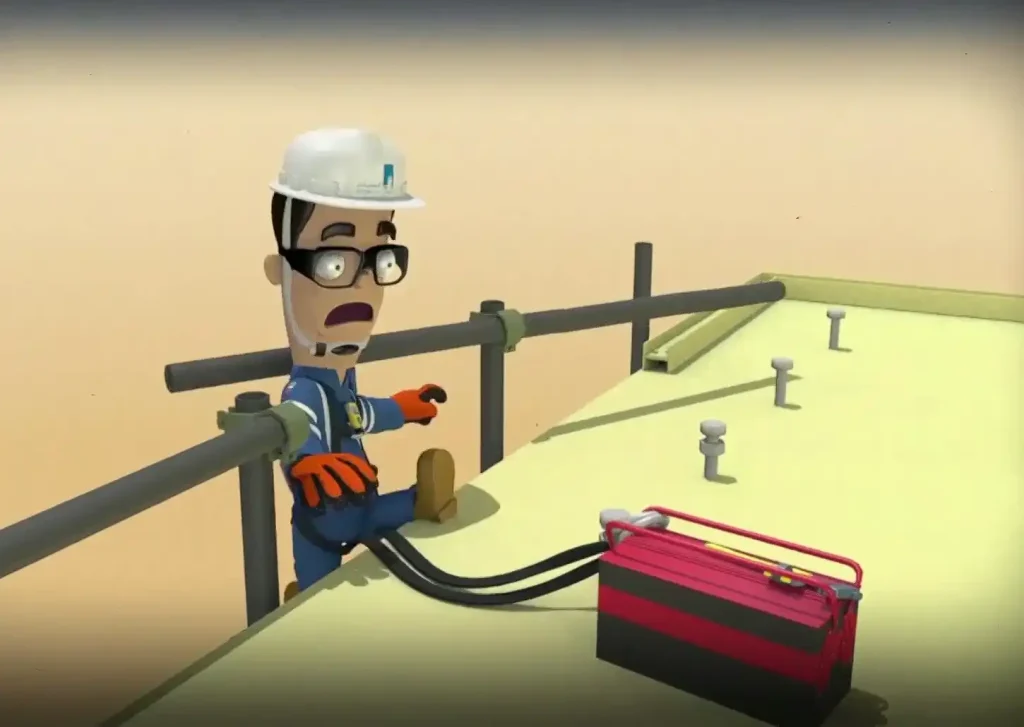
Falling from height
Or the example from electrical equipment training animation which stresses the importance of making sure the flex from the tools you’re working with don’t present a trip hazard to others in the area. Both examples use a funny cartoon style 3d animation that show incidents in a comedic fashion, while explaining all the important points.
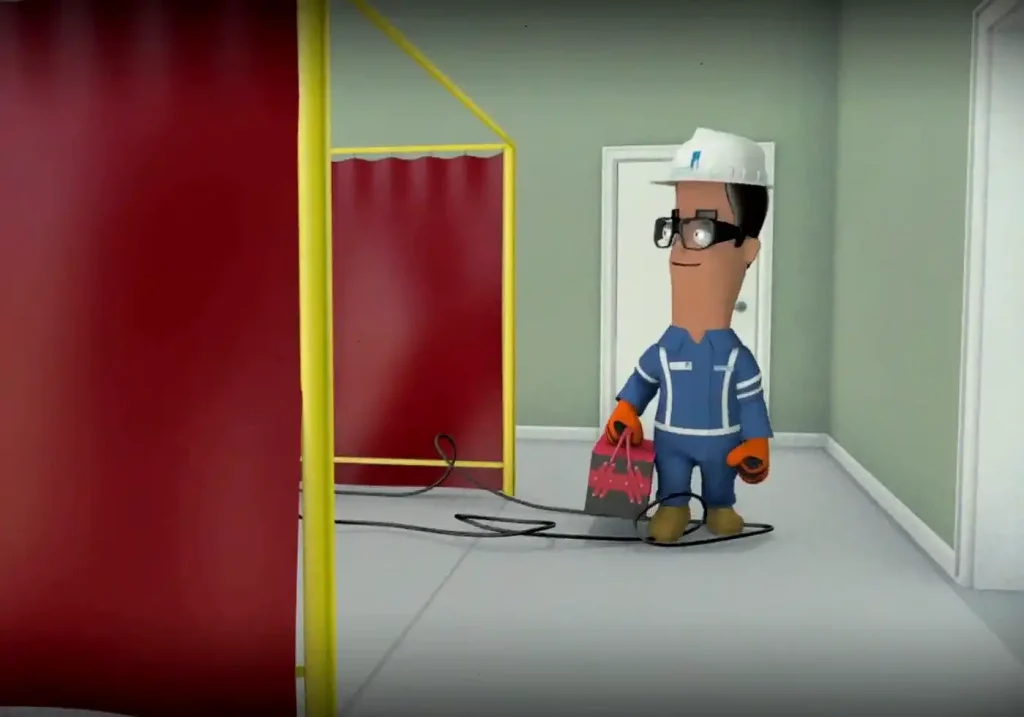
Trip hazard
A more serious example comes from our working at height safety drama, which results in a serious falling from height injury.
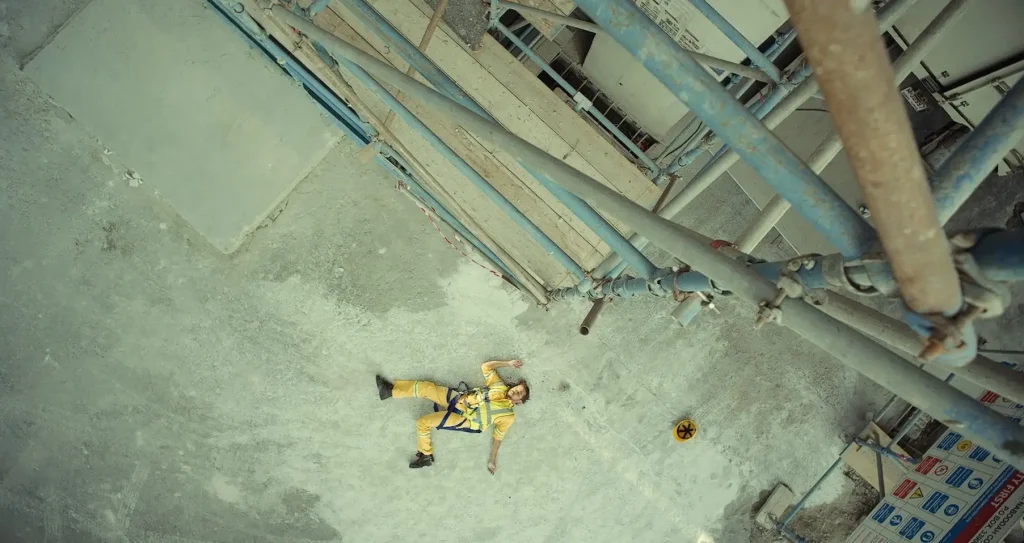
Fall from height injury
Closing Thoughts
Slips, trips, and falls remain one of the most common causes of workplace injuries, yet they are also among the most preventable. By providing effective training, maintaining good housekeeping, and encouraging employees to report hazards, organisations can significantly reduce the risk of accidents. Every employee has a role to play in keeping walkways safe and identifying potential dangers before they lead to injury.
If you want to strengthen your slips, trips, and falls training, speak to SHIIFT Training today. Our immersive and practical training solutions help employees recognize hazards, respond correctly, and build safer working habits. Contact us to discuss a tailored training program for your organisation.