Introduction
Across regulated and safety‑critical industries, procedure deviation is one of the most persistent and expensive operational problems. Every time a worker departs from an approved SOP or work instruction, the organization risks batch failures, rework, investigations, audit findings, and even safety incidents.
What Is Procedure Deviation?
Procedure deviation is any departure from approved standards, standard operating procedures (SOPs), or work instructions, particularly in regulated or safety‑critical environments. It occurs when steps are skipped, performed out of order, or executed incorrectly, whether intentionally or unintentionally.
The impacts of procedure deviation are significant: it can lead to batch failures or rework in manufacturing, safety incidents on operational sites, regulatory compliance findings, and damage to a company’s reputation. Even small deviations can escalate quickly, making consistent adherence to procedures essential for both safety and operational integrity.
Despite large investments in training, many companies still rely on text‑heavy documents and slide decks that do little to shape real behavior on the shop floor. Video‑based training changes this dynamic by turning procedures into concrete, visual behaviors that employees can see, understand, and replicate with much greater consistency.
Why Traditional Training Leads to Procedure Deviation
Traditional “read and understand” training rests on a simple assumption: if employees have read an SOP and signed a form, they will perform the procedure correctly. In practice, dense documents, abstract language, and limited context mean that many learners skim rather than truly comprehend.
Slide-based sessions and occasional classroom briefings often suffer from the same issues such as low engagement, inconsistent delivery, and weak knowledge retention over time. New starters may learn more from whoever trains them informally than from official materials, which introduces variation, tribal workarounds, and gaps between documented and actual practice. The result is a fertile environment for deviations labeled as “human error” but rooted in flawed training design.
How Video-Based Training Changes Worker Behavior
Video-based training addresses these weaknesses by showing, not telling. Instead of visualizing a process after reading the words, you actually see the process in thorough detail via a carefully constructed video. When workers can watch a procedure being performed step by step, they see the correct sequence, technique, and pace in a way that text alone cannot convey. Not to mention some workers may struggle to visualize anything at all if they have aphantasia which prevents them from using their mind’s eye.
Many empirical studies in technical and clinical domains have shown that learners trained with video demonstrate higher procedural accuracy, better adherence to standards, and faster task completion compared with those trained through written or lecture-only formats. In other words, video training not only informs but also shapes the motor and cognitive patterns that underpin reliable execution.
Best Video-Based Training Methods to Reduce Procedure Deviation
Standardizing the “One Best Way”
Video SOPs provide a single, authoritative representation of how a task should be done. Rather than relying on each trainer’s interpretation, or on inconsistent on‑the‑job demonstrations, every learner sees the same visual standard. This reduces variation between shifts, lines, and sites and helps align practice with the official procedure instead of local habits. When everyone shares the same mental model of “how we do this here,” the risk of deviation from conflicting instructions drops markedly.
Breaking Complex Procedures into Micro‑Steps
Procedures in pharma, manufacturing, and healthcare can be complex, with many decision points and critical steps. Long text documents often overwhelm learners, leading them to miss or misinterpret important details. Well-designed video training breaks these processes into short, focused segments, or microlearning modules that tackle one task or phase at a time.
Learners can watch a short clip on a specific step, replay it if needed, and then apply it immediately. This reduces step‑skipping and errors in sequencing, especially for infrequent or high‑risk tasks where workers cannot rely on routine alone.
See below for an example from our training video we created for ADNOC on how to use a respirator which focuses visuals on each micro-step with detailed voiceover.

{caption}Screengrab from our caption-enabled video showing how to put on a respirator
Improving Retention and Recall at the Point of Work
People naturally remember images and actions better than abstract descriptions. Video leverages this by embedding the procedure in episodic memory: workers can recall “what it looked like” when an expert performed the task. When the same video is accessible on demand at the point of work, like on a tablet at the line, a workstation in the lab, or a mobile device on the ward, employees can refresh their memory moments before execution.
This just‑in‑time support is particularly powerful in reducing deviations that occur when staff are unsure, under time pressure, or performing a rarely used procedure.
Capturing and Preserving Expert Tacit Knowledge
Many deviations arise when experienced staff leave and their tacit knowledge disappears with them. Text SOPs may describe the “what” of a task but often miss the subtle “how”. The exact grip, angle, or order that makes the process robust. Video captures these nuances directly from subject‑matter experts, preserving them as repeatable demonstrations.
New hires and cross-trained staff can see precisely how the best people in the organization perform critical tasks. This reduces the risk of deviations caused by incomplete handovers or over‑reliance on memory and informal coaching.
Enabling Data‑Driven Continuous Improvement
Modern video training platforms do more than host files; they generate data. Organizations can see which videos are watched most, where learners rewind or pause, and which procedures generate questions or assessment failures. Coupled with deviation and CAPA data, this allows teams to detect patterns.
For example, a cluster of deviations around a particular step that learners consistently revisit in training. Training and quality teams can then refine the video, clarify the SOP wording, or add targeted coaching before issues become entrenched. Over time, this creates a feedback loop where training content continuously adapts to real operational risks.
Evidence of Reduced Procedure Deviation from Video-Based Training
When video-based training is implemented systematically, several outcome patterns tend to emerge. First, the number of deviations attributed to “human error” in targeted procedures often decreases, particularly where root causes previously pointed to unclear instructions or inconsistent training.
Second, right‑first‑time rates improve, as employees perform tasks correctly without rework or correction. Third, investigations and audits frequently reveal that staff can articulate the procedure clearly and explain why certain steps are critical, indicating deeper understanding rather than rote compliance.
In documented studies of technical skills training, video‑trained cohorts commonly outperform control groups on procedural accuracy, adherence to protocols, and objective performance scores, supporting the link between video and more reliable execution.
Designing Video Training That Actually Reduces Deviations
The impact of video is not automatic; it depends on design. Each video should align directly with a specific SOP or work instruction and clearly signal which steps are critical, which are conditional, and where common errors occur. Visuals matter: close‑ups of hands, equipment interfaces, labels, and instruments help learners see details they would otherwise miss.
Modules should be short, ideally 3–7 minutes, each focused on a single procedure or discrete part of a larger workflow, and titled in a way that makes them easy to find at the moment of need. Layering in callouts, on‑screen text, or brief narration reinforces key points without overwhelming the viewer.
From an implementation standpoint, organizations gain the most when they prioritize high‑risk or high‑deviation procedures first. Quality, operations, and training teams can collaborate to review deviation data and choose a small set of procedures where better training would have the biggest impact.
Video SOPs should then be embedded into the existing training ecosystem: linked directly from the document management system, referenced in qualifications, and used during on‑the‑job coaching and competency assessments. Observation checklists can mirror the structure of the videos so that supervisors assess the exact behaviors shown on screen.
What Other Tools Can Be Used to Reduce Procedure Deviation
While video-based training is highly effective, other tools can complement it to further reduce deviations. Digital checklists and guided workflow apps provide step-by-step prompts at the point of work.
Interactive simulations and VR training allow learners to practice high-risk or complex tasks in a safe, controlled environment. Additionally, automated alerts or sensors can flag skipped steps in real time, and competency tracking systems ensure employees demonstrate proficiency before performing critical operations independently.
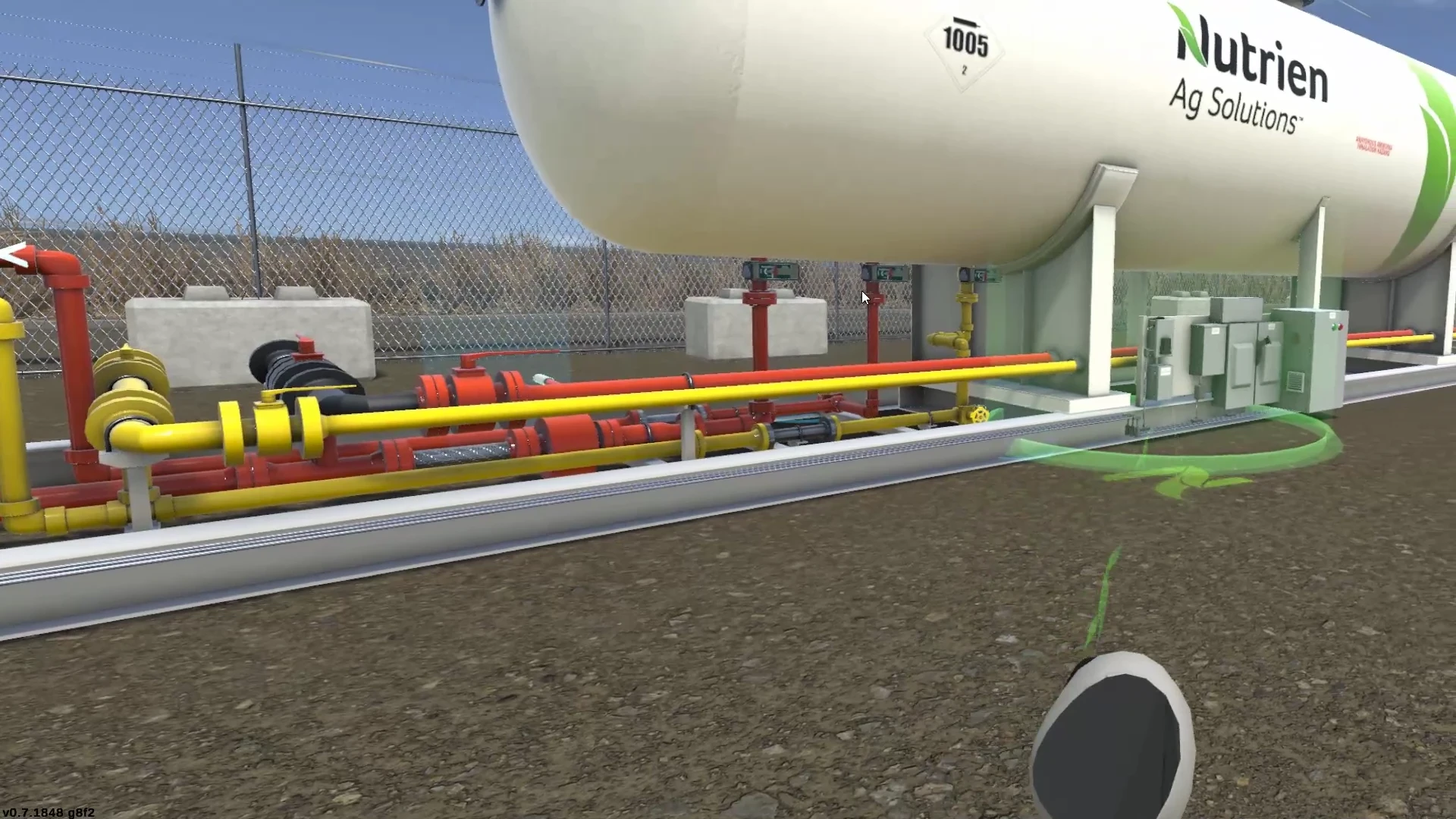
For example, SHIIFT Training developed a VR application for Nutrien Ag Solutions that covered a full hands-on training for their complex ammonia transfer process and all the required safety knowledge, which acted as a highly effective method of reducing procedure deviation in such a high-risk process.
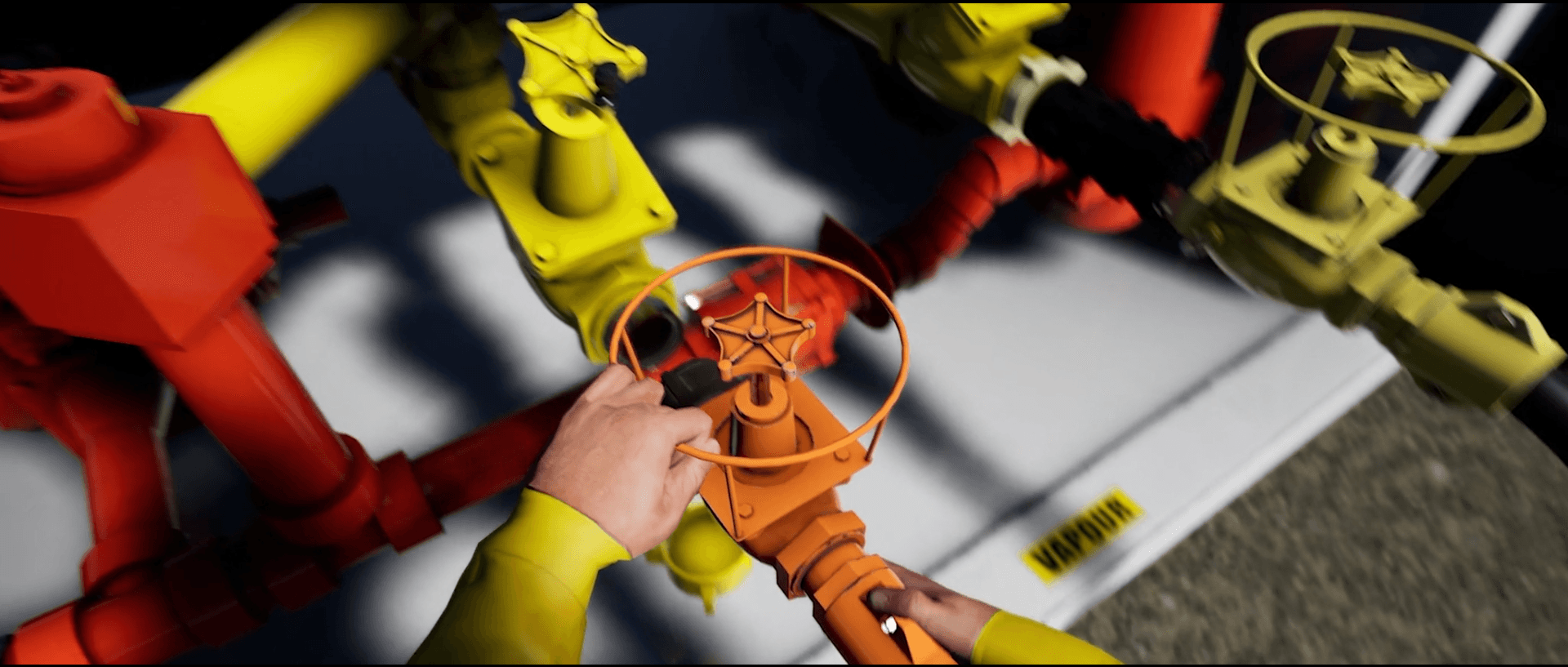
{caption}Promotional render of the ammonia transfer VR training
Closing Thoughts
Many organizations can show impressive training completion rates, yet still struggle with deviations and inconsistent practice. The underlying issue is that reading and signing off on a document does not guarantee accurate, repeatable execution. Video-based training closes this gap by making procedures observable, memorable, and easier to perform correctly under real conditions.
By standardizing the “one best way,” supporting micro‑learning at the point of work, and preserving expert know‑how, well‑designed video training programs help shift the focus from box‑ticking to genuine procedural compliance. The outcome is fewer deviations, safer operations, and a more resilient workforce that can maintain quality even as products, technologies, and people change.
Solutions
Safety Training
Hazard recognition
Spot risks before incidents
/solutions/hazard-recognition-training
Solutions
Safety Training
Life-Saving Rules
Critical rules as decisions
/solutions/life-saving-rules-training
Solutions
Safety Training
Behavioral safety
Stop work authority, used
/solutions/behavioral-safety-training
Solutions
Safety Training
Hand safety
Fewer hand injuries
/solutions/hand-safety-training
Solutions
Safety Training
PPE selection & use
The right kit, worn right
/solutions/ppe-training
Solutions
Safety Training
H2S & gas awareness
The invisible hazard, visible
/solutions/h2s-gas-awareness-training
Solutions
Safety Training
Fire & emergency response
Beyond the routine drill
/solutions/fire-safety-emergency-response-training
Solutions
Safety Training
Toolbox talks
Five strong minutes weekly
/solutions/toolbox-talk-content
Solutions
Safety Training
Permit to work
PTW judgment scenarios
/solutions/permit-to-work-training
Solutions
Safety Training
Isolation & LOTO
Safe energy isolation
/solutions/isolation-lockout-tagout-training
Solutions
Safety Training
Confined space entry
Entries and rescue response
/solutions/confined-space-entry-training
Solutions
Safety Training
Working at height
Falls and dropped objects
/solutions/working-at-height-training
Solutions
Safety Training
Lifting & rigging
Safer critical lifts
/solutions/lifting-rigging-training
Solutions
Safety Training
Hot work
Sparks under control
/solutions/hot-work-training
Solutions
Safety Training
Line of fire
See the energy path
/solutions/line-of-fire-training
Solutions
Safety Training
Driver safety
Safer driving and journeys
/solutions/driver-safety-training
Solutions
Safety Training
Electrical safety
Safe isolation, arc flash aware
/solutions/electrical-safety-training
Solutions
Safety Training
Excavation work
Trenches and buried services
/solutions/excavation-safety-training
Solutions
Safety Training
Ergonomics
Strain prevention that sticks
/solutions/ergonomics-training
Solutions
Safety Training
Situational awareness
Noticing change on site
/solutions/situational-awareness-training
Solutions
Onboarding & People
Site orientation
Inductions before day one
/solutions/site-orientation-onboarding
Solutions
Onboarding & People
Expatriate workforce
Localized multilingual training
/solutions/expatriate-workforce-training
Solutions
Onboarding & People
Visitor inductions
Pre-arrival essentials
/solutions/visitor-induction-training
Solutions
Onboarding & People
Leadership training
Judgment, developed
/solutions/leadership-training
Solutions
Onboarding & People
Soft skills
Conversations that work
/solutions/soft-skills-training
Solutions
Onboarding & People
Safety leadership
Frontline supervisor skills
/solutions/safety-leadership-training
Solutions
Onboarding & People
Human factors
Error traps and defenses
/solutions/human-factors-training
Solutions
Operations & Technical
Process & procedures
Step-by-step competence
/solutions/process-procedure-training
Solutions
Operations & Technical
Operational readiness
Ready before start-up
/solutions/operational-readiness
Solutions
Operations & Technical
Technical training
Complex systems explained
/solutions/technical-training
Solutions
Operations & Technical
Control room & DCS
Alarms and upset response
/solutions/control-room-training
Solutions
Operations & Technical
Crane operation
Operators, banksmen, supervisors
/solutions/crane-operation-training
Solutions
Operations & Technical
Forklift operation
Operators, pedestrians, supervisors
/solutions/forklift-operation-training
Solutions
Operations & Technical
Maintenance & turnarounds
Outage preparation
/solutions/maintenance-turnaround-training
Solutions
Operations & Technical
Process safety
Barriers made visible
/solutions/process-safety-training
Solutions
Compliance & Modernization
Lessons learned (LFI)
Incidents into training
/solutions/lessons-learned-training
Solutions
Compliance & Modernization
Spill response
Environmental first response
/solutions/spill-response-training
Solutions
Compliance & Modernization
Hazardous materials
Storage, handling, transport
/solutions/hazardous-materials-training
Solutions
Compliance & Modernization
Security awareness
Physical and cyber vigilance
/solutions/security-awareness-training
Services
Content Production
Training Videos
Filmed through our global crew network
/services/workplace-safety-training-videos
A safety orientation film produced for Milestone Environmental Services.

Services
Content Production
2D & 3D Animation
Engineering-accurate visuals
/services/2d-3d-animation
From a 3D animation built to supplement an ADNOC e-learning module.

Services
Content Production
Safety Campaigns
Sustained behavior change
/services/safety-campaigns
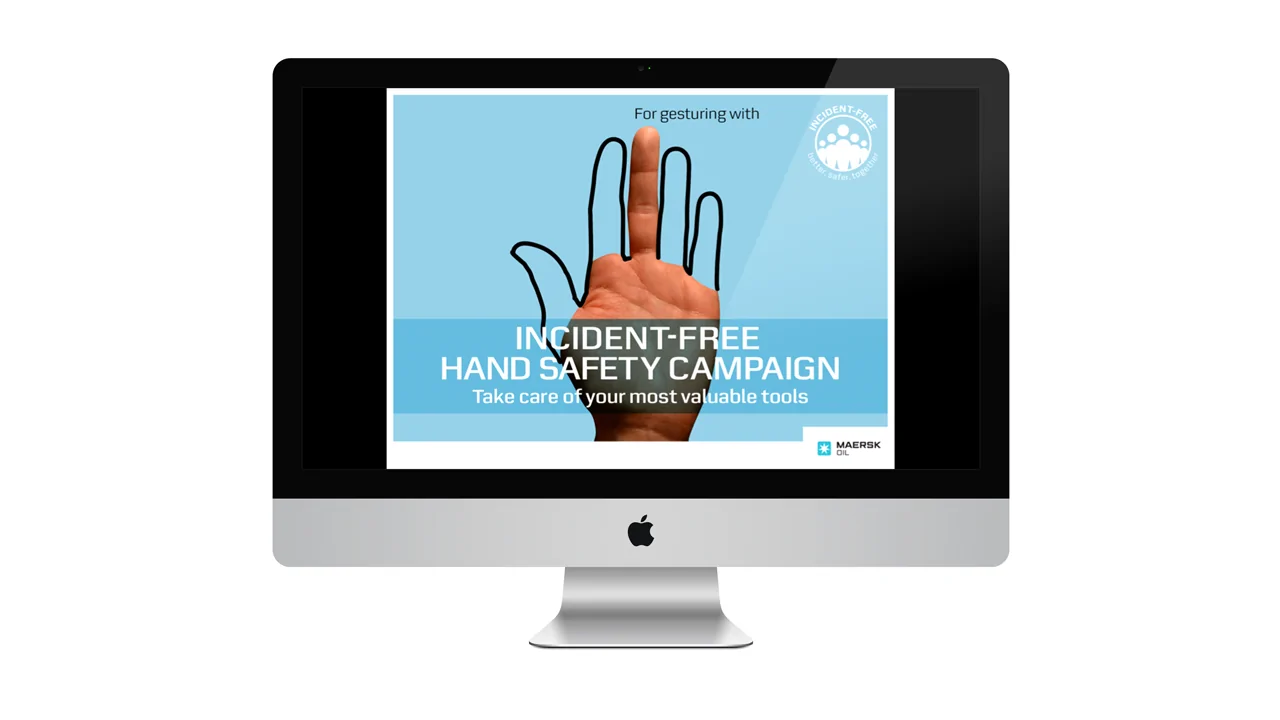
The award-recognized Maersk hand safety campaign.
Services
Content Production
Training posters & print
Site-specific print & visual aids
/services/training-posters
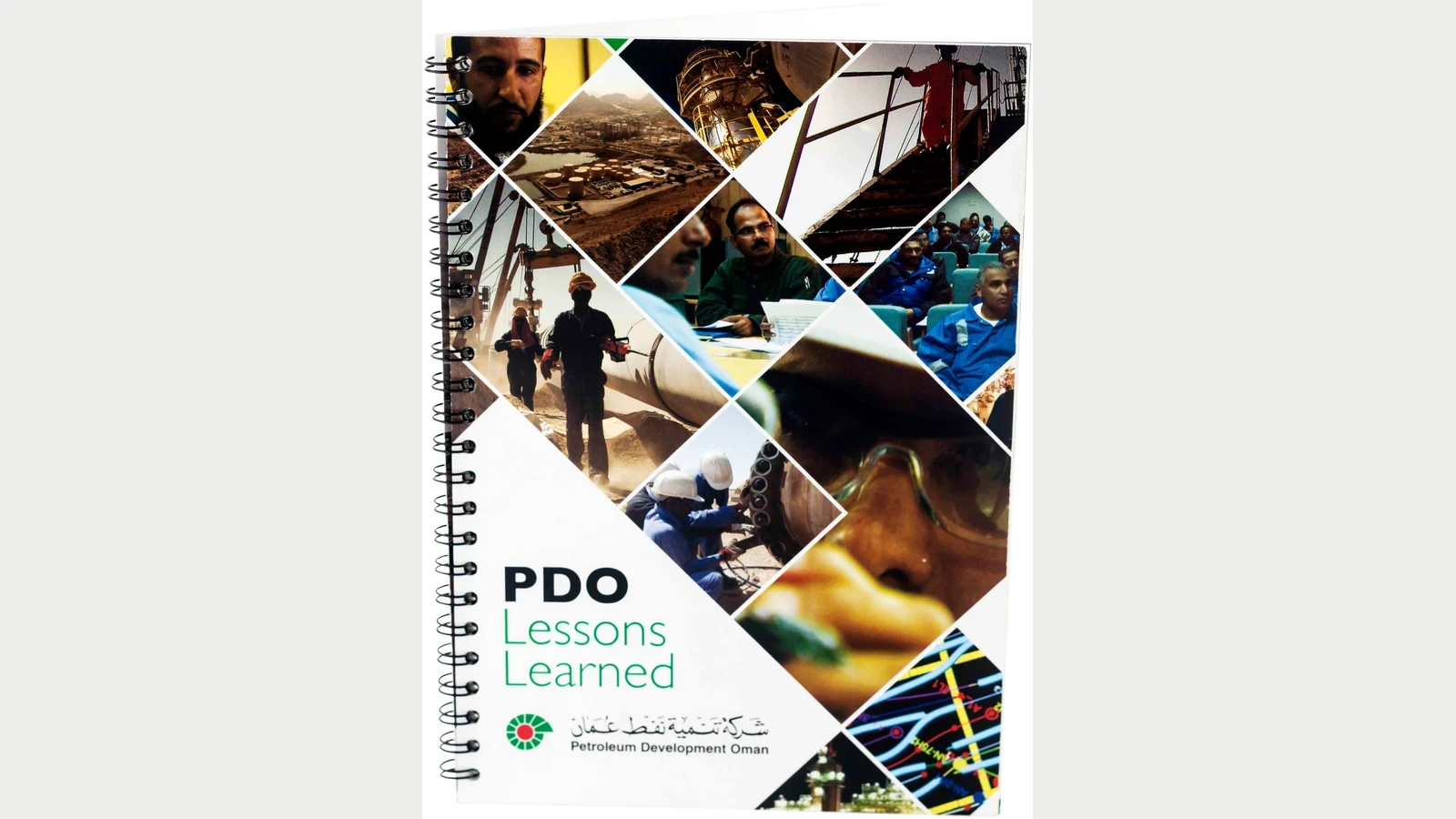
A printed lessons learned handbook produced for Petroleum Development Oman.
Services
Content Production
PowerPoint Materials
Trainer-led deck rebuilds
/services/powerpoint-training-materials
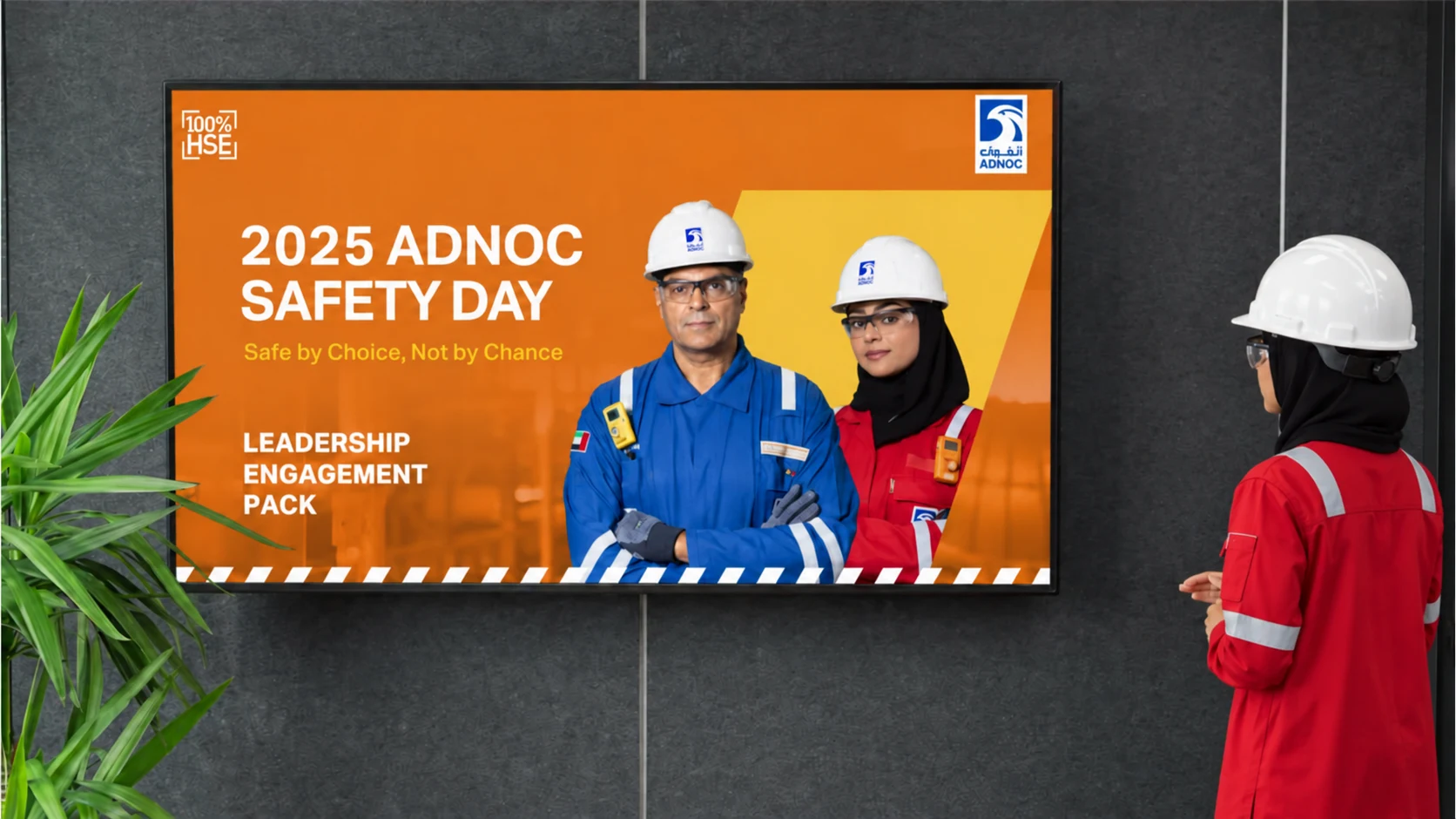
Presenting an ADNOC Safety Day engagement deck.
Services
Interactive Training
E-Learning
SCORM online modules
/services/e-learning
Scenario questions inside a client e-learning module.

Services
Interactive Training
Virtual Reality (VR)
Immersive headset training
/services/virtual-reality-vr-training
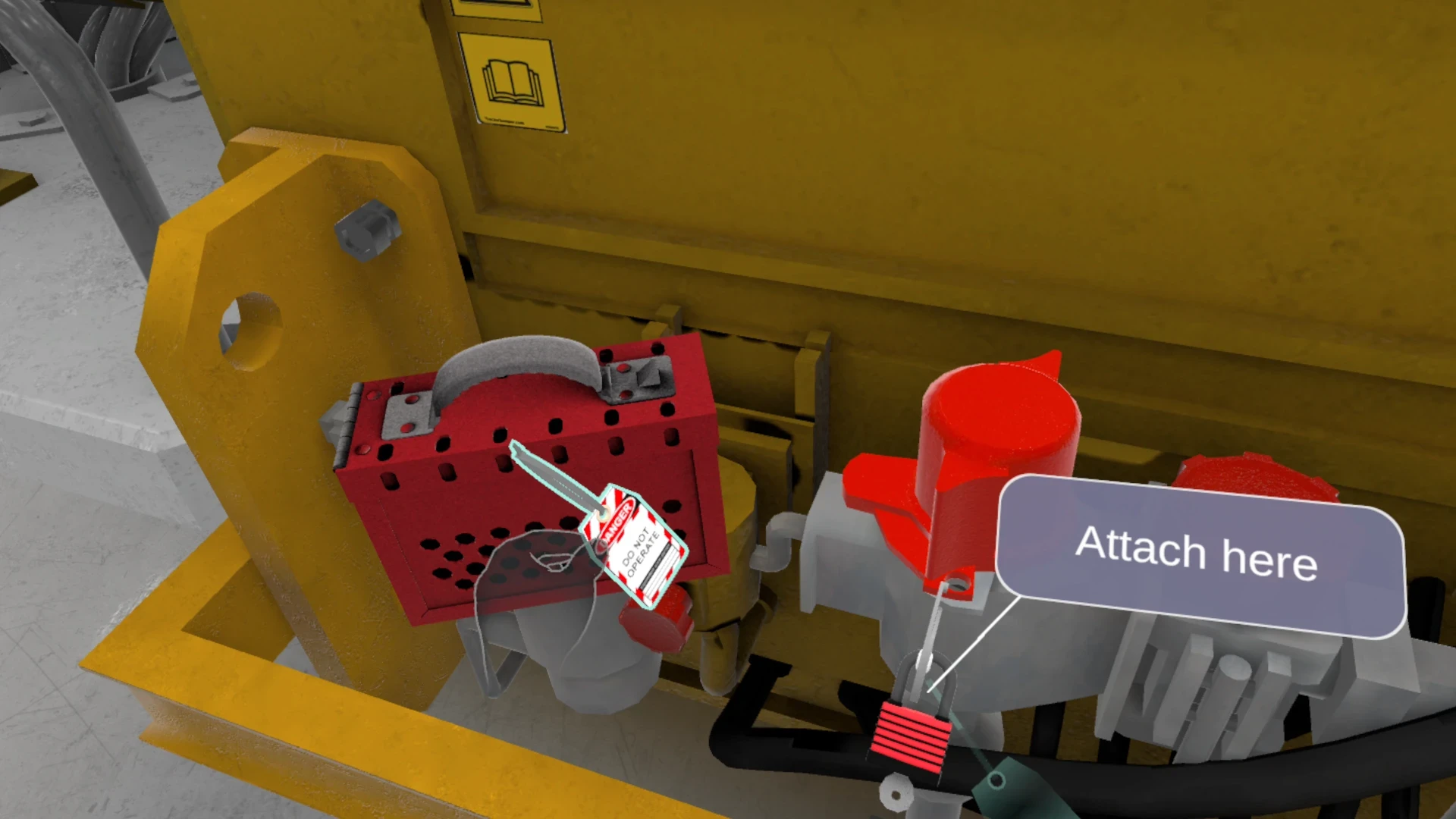
Lockout tagout training with full hand tracking in VR.
Services
Interactive Training
Flat-Screen Simulations
Desktop, web & mobile simulations
/services/flat-screen-simulation-training
SHIIFT simulations running on laptops and mobile devices.

Services
Interactive Training
Digital Twins
Navigable sites & equipment
/services/digital-twins
A navigable 3D replica of Nutrien's ammonia transfer plant.
Approach
How We Work
Our approach
Analysis, design, delivery, validation
/approach
Approach
How We Work
SCORM & LMS Integration
Tracking in your systems
/services/scorm-lms-integration
Approach
How We Work
Scenario-Based Assessments
Competency you can prove
/services/scenario-based-assessments