Send us a message
We would like to learn more about your challenges and to understand how we can support you.
Get in touch.
Send us a message and we’ll get
back to you within 48 hours.
Alternatively, email
hello@shiifttraining.com
Across critical industries such as manufacturing, construction, energy, transport, and heavy industry, a structural challenge is unfolding: the workforce is ageing faster than it is being replenished. In Europe, North America, and parts of Asia, the average age of industrial employees now exceeds 45 years, with many reaching retirement eligibility within the next decade. Meanwhile, the inflow of young workers into these sectors remains alarmingly low.
The implications are profound. These industries underpin physical infrastructure, energy generation, logistics networks, and construction, all essential for economic continuity. Yet many of them face a “gray wave” of retirements with limited succession planning in place. Skilled operators, technicians, and supervisors who have accumulated decades of tacit knowledge are departing faster than replacements are trained. Without renewed focus on workforce renewal, productivity, safety, and knowledge continuity could all decline.
This challenge doesn’t just stem from a short-term labour fluctuation but from structural shifts in education, social perception, and career preferences. To remain viable, these sectors must modernize how they attract, train, and retain talent, especially through immersive, digital, and adaptive learning techniques that can replicate on-the-job experience in accelerated and scalable ways.
Traditional heavy industries were historically built on long-term employment, craftsmanship, and accumulated expertise. Unlike fast-moving consumer technology sectors where new tools often reset the knowledge baseline every few years, core operations in energy plants, rail networks, or manufacturing facilities depend on gradual skill refinement over decades.
Roles such as machine operators, welders, maintenance engineers, and control room technicians are acquired through progressive exposure and mentorship. Training cycles are lengthy because many tasks involve safety-critical or high-risk processes that cannot be mastered through theory alone. Workers learn through apprenticeship, observation, and gradual responsibility, forming an unbroken chain of practical knowledge passed from one generation to the next.
For much of the 20th century, this structure provided stability. However, in recent decades, many industries have seen fewer new entrants choosing these technical paths. At the same time, a large share of skilled employees are reaching retirement age.
This has created an uneven age profile in some sectors, where a significant amount of day to day expertise is concentrated among older workers. When these workers retire, organisations may face challenges in preserving operational knowledge and maintaining consistent performance.
Attracting new entrants to traditional industries has become increasingly difficult, partly due to changing social perceptions and competing opportunities. Several interlinked factors explain this trend:
This misalignment between perception and reality has created a generational skills divide. Even as industries evolve technologically, they struggle to attract the digital-savvy workforce capable of sustaining that transformation.

Technical training with senior staff explaining equipment
The retirement of experienced personnel impacts operations far beyond labour replacement. It reshapes the DNA of enterprise knowledge and performance.
When amplified across large industrial ecosystems, these effects jeopardize reliability, customer delivery, and national infrastructure performance. Energy plants risk outages, construction sites face project delays, and transport networks experience operational disruptions. The compounded cost of this demographic shift could stretch into billions in lost efficiency unless addressed through innovative workforce strategies.
Forward-looking organizations have begun to treat workforce renewal as a strategic imperative, not a routine HR problem. A mix of technical, cultural, and educational responses is taking shape across multiple sectors:
Such adaptations represent a multidimensional effort to reinvent traditional workforce management for an era of demographic change. Yet while these responses show progress, a systemic solution requires not just capturing knowledge but transferring it effectively and in a way that attracts younger workers, which brings immersive learning to the forefront.
Immersive learning technologies are rapidly emerging as one of the most effective tools to combat workforce attrition and accelerate skill development. Unlike static eLearning or text-based manuals, immersive training replicates the sensory and procedural environment of real operations, making practice safer, faster and much more engaging.
Furthermore, when combined with analytics, immersive tools offer data-driven insight into performance improvement. Supervisors can track completion rates, reaction times, and error patterns, translating learning metrics into predictive indicators for job readiness and operational safety.
By integrating immersive learning with traditional mentorship, companies bridge generational divides. Veteran workers’ insights shape simulation content, while new recruits refine those skills in a controlled, measurable environment. The result is a powerful continuity mechanism that keeps organizational memory alive while adapting it for a digital generation.
Many organizations reach out to us specifically to address challenges created by retiring workforces and the need to transfer critical skills. SHIIFT works with clients to create simulations based on real procedures, helping organisations onboard staff efficiently, capture expertise from retiring employees, and maintain consistent standards across teams and locations.
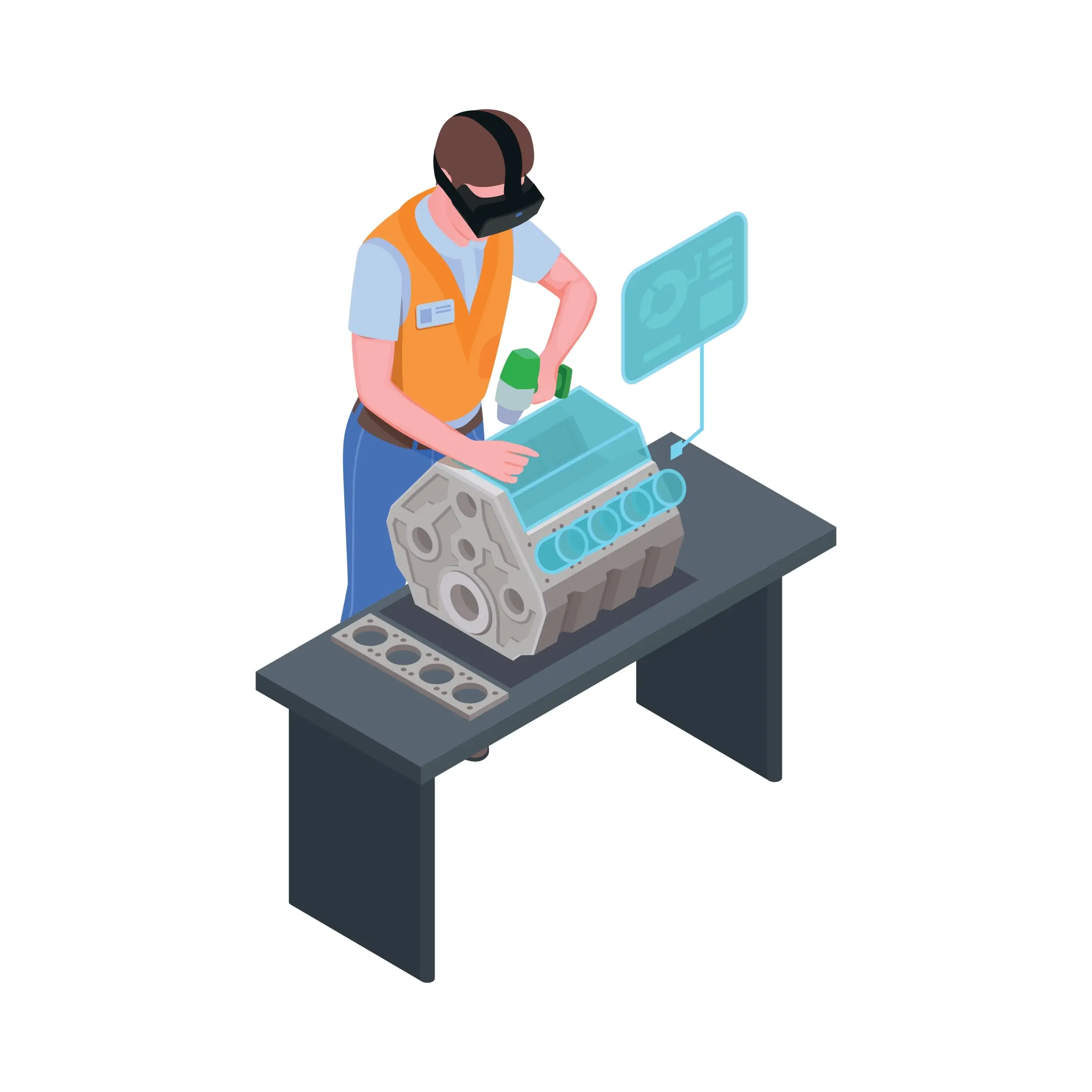
Young worker learning through immersive training
In addition to immersive simulations, SHIIFT provides interactive eLearning, computer based training, and training videos designed to engage both younger and older workers, ensuring veteran knowledge is captured and immortalized in the digital world, and applied practically and effectively for training new employees in engaging ways.
If you’re interested, contact us to learn how we can help your organization!
The impending retirement wave across manufacturing, construction, energy, and transport signals not just a demographic milestone but a strategic reckoning. These sectors are losing their most experienced workers at a velocity unmatched by new recruitment. Without deliberate action, the result may be operational fragility, safety lapses, and declining productivity, all at a time when infrastructure demands and sustainability goals are rising.
Yet within this challenge lies opportunity. By embracing modern learning technologies, flexible career design, and closer cooperation with educational ecosystems, industries can transform workforce renewal into a long-term competitive strength. Immersive and simulation-based training, in particular, offer a practical means to preserve the wisdom of retiring professionals while accelerating the development of their successors.
The ageing workforce problem is real and accelerating, but it won’t lead to decline if companies continue to respond effectively. Companies that acknowledge the need to work towards attracting younger workforces through advanced training ecosystems, will be the ones that sustain continuity, safety, and productivity in the decades to come.
Deliver next generation training. Get in touch.
Email us at hello@shiifttraining.com or send
us a message and we’ll be in touch within 48hrs.