Send us a message
We would like to learn more about your challenges and to understand how we can support you.
Get in touch.
Send us a message and we’ll get
back to you within 48 hours.
Alternatively, email
hello@shiifttraining.com
"*" indicates required fields
Overloading learners with excessive information is one of the fastest ways to reduce the effectiveness of e-learning. When too much content is delivered in a single session, cognitive overload occurs, making it difficult for learners to process and retain key information. Instead of improving knowledge, it leads to fatigue and disengagement. Breaking content into shorter, focused modules allows learners to absorb information more effectively and improves both completion rates and overall training outcomes.
What you should do instead:
Structure content into short, focused modules using a microlearning approach. Prioritize key information and remove anything that does not directly support the learning objective. Even if it is important information that needs to be learnt, dividing the information is essential for retaining engagement in learners.
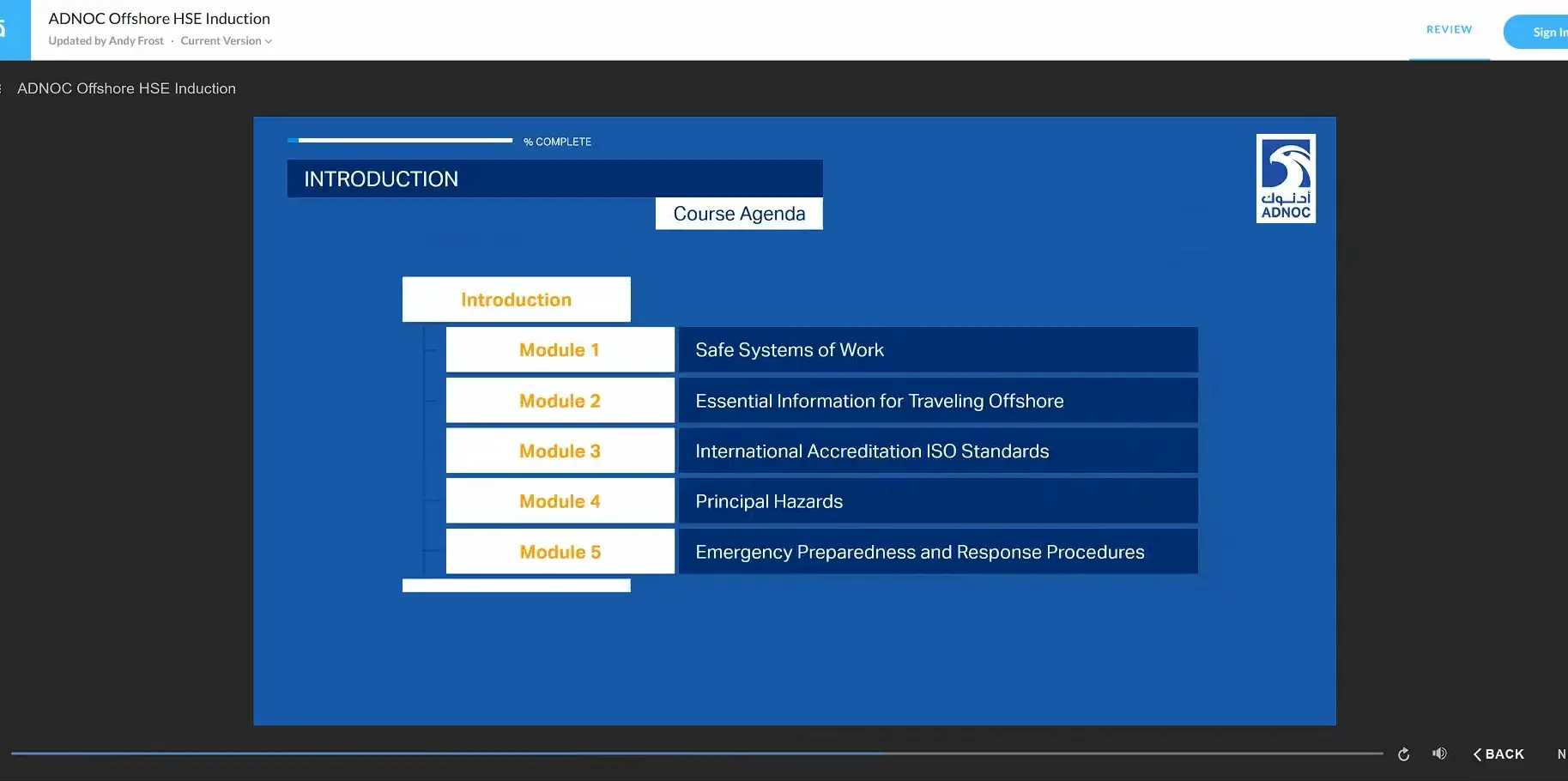
SHIIFT Training’s ADNOC e-learning project is a great demonstration of this. Even though this course as a whole was designed as an offshore HSE induction training, it was divided into 5 distinct modules with easy to digest content and regular formative assessments to maximize absorption of key knowledge.
E-learning that relies heavily on static slides or large blocks of text fails to capture attention. Learners are more likely to skim or drop off entirely when content does not require interaction. Engagement is directly linked to retention, so passive learning formats significantly reduce the impact of training. Incorporating interactive elements such as quizzes, scenarios, or decision-based activities helps maintain attention and ensures learners actively process the material.
What you should do instead:
Introduce interactive elements such as scenario-based learning, short assessments, and decision-making tasks to keep learners actively involved throughout the course.
SHIIFT’s e-learning courses include built-in knowledge checks, clickable elements, and short decision-based questions throughout the content rather than only at the end. This keeps learners engaged and ensures they are actively processing information as they progress.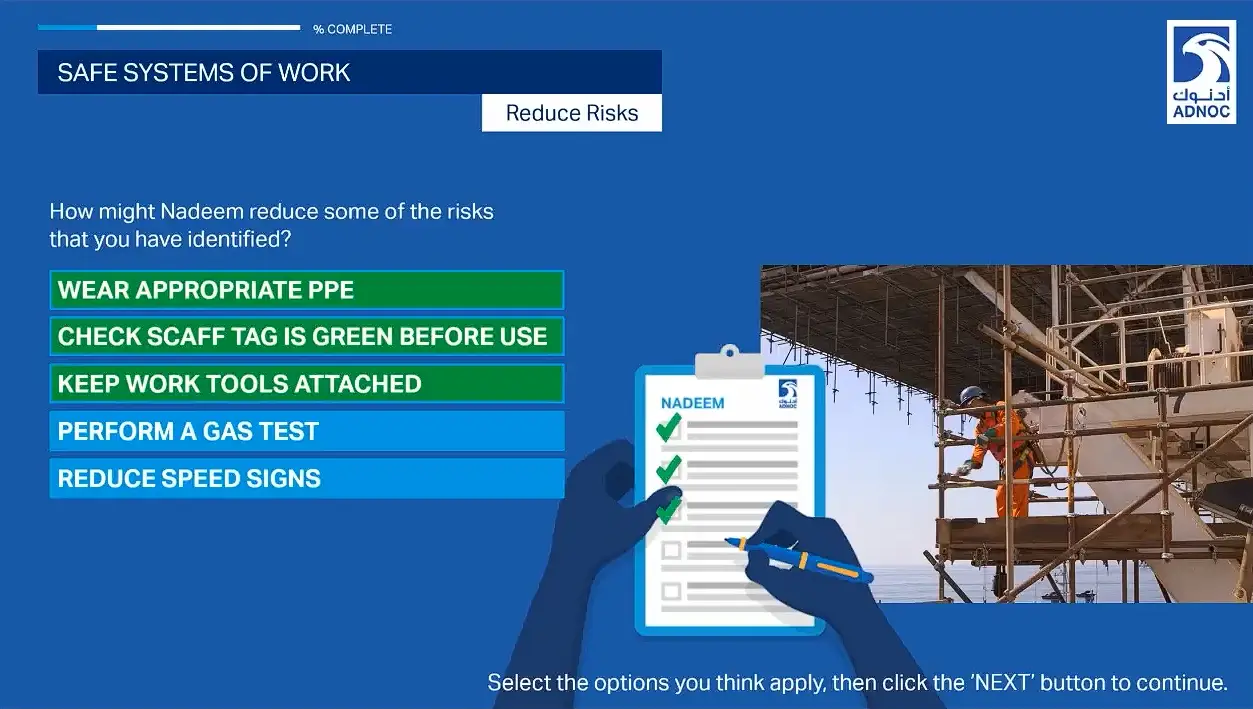
When training content is disconnected from real job responsibilities, it becomes difficult for learners to transfer knowledge into practice. Employees may understand concepts in theory but struggle to apply them in real situations. This gap reduces the overall effectiveness of training and limits its return on investment. E-learning should be designed around real tasks, scenarios, and challenges that employees face, ensuring that learning translates directly into improved performance.
What you should do instead:
Use job-relevant examples, step-by-step workflows, and scenario-based questions within the e-learning content. Focus on mirroring real tasks through case studies, guided decision points, and practical exercises that reflect actual responsibilities.
In our e-learning projects, SHIIFT has the unique advantage of having an in-house 3d animation team that can really bring concepts to life, allowing us to easily embed the video content into the e-learning where users can see real-world application and test their comprehension.
Without tracking data, organisations have no way of understanding whether their training is working. Metrics such as completion rates, assessment scores, time spent on modules, and performance improvements provide critical insight into effectiveness. Ignoring this data means missed opportunities to refine and optimize training programs. Establishing clear KPIs and regularly analyzing results allows organisations to identify weaknesses and continuously improve outcomes.
What you should do instead:
Define clear KPIs from the start and use learning analytics to track performance. Regularly review the data to identify gaps and improve training effectiveness.
E-learning should always be developed with data in mind. Our e-learning courses are built to integrate with LMS platforms, enabling tracking of completion rates, assessment scores, and learner progress. This gives clients clear visibility on performance and allows continuous improvement of training content.
Delivering identical training to all employees, regardless of their role or experience level, reduces relevance. Beginners may feel overwhelmed, while experienced employees may find the content repetitive and unnecessary. This lack of personalization leads to disengagement and inefficient use of training time. Tailoring content to specific roles, skill levels, or learning paths ensures that each learner receives relevant information, improving both engagement and ROI.
What you should do instead:
Segment learners by role, experience, or skill level. Create tailored learning paths so content remains relevant and efficient for each group.
We usually structure e-learning content so modules can be assigned based on role or responsibility. For example, supervisory content can be separated from technician-level training, ensuring each learner only receives relevant material.
Learning doesn’t end when a course is completed, but many organizations treat it that way. Without reinforcement, knowledge retention declines rapidly over time. This results in employees forgetting key information and failing to apply what they learned. Reinforcement strategies such as follow-up quizzes, refresher modules, or on-the-job practice help maintain knowledge and ensure long-term impact. Continuous learning support is essential for maximizing the return on training investment.
What you should do instead:
Implement reinforcement strategies such as spaced learning, refresher modules, and ongoing assessments to maintain knowledge and improve long-term retention.
Our e-learning courses include recap sections and end-of-module assessments that reinforce key points. These can also be revisited within the LMS, allowing learners to refresh their knowledge without retaking the entire course
If you’ve spotted some of these mistakes in your own training, they’re likely already impacting your results.
If you want to fix that, get in touch with SHIIFT Training. We build e-learning that follows proven design principles while going further to keep learners engaged from start to finish. We can also rework your existing courses into structured modules that meet higher industry standards and deliver better results.
If you’re looking for more insights on improving your e-learning, check out these useful resources below:
Deliver next generation training. Get in touch.
Email us at hello@shiifttraining.com or send
us a message and we’ll be in touch within 48hrs.