5. Implement Ongoing Safety Training and Risk Assessments
Warehouse safety is not a one time exercise. Processes change, layouts evolve, and new risks emerge over time. Ongoing training and regular risk assessments are essential for maintaining safe operations.
Refresher training helps reinforce correct behavior and address bad habits before they lead to incidents. Toolbox talks and short safety briefings are effective ways to keep warehouse health and safety visible and relevant.
Risk assessments should be reviewed regularly and whenever there are changes to equipment, layout, or workload. Employees should be encouraged to report hazards and near misses without fear of blame.
Modern warehouse safety training methods, including interactive e-learning, can help workers better understand risks and consequences. The goal is not just compliance but awareness and accountability.
Key Points:
- Regular refresher training on warehouse safety
- Toolbox talks and safety briefings
- Routine workplace inspections
- Updated risk assessments after changes
- Systems for reporting hazards and near misses
Ongoing training ensures that employees remain aware of risks and understand their responsibilities under warehousing safety standards.
Warehousing Safety Training Materials
If you want to strengthen your warehouse safety training using modern, engaging learning solutions, look no further!
Contact SHIIFT to discuss how our immersive and interactive training can support your health and safety goals. For one of our clients, we created an immersive hazard hunt experience where users can explore and find risks/hazards, and learn about best practice in an engaging format and all directly within their learning management system!
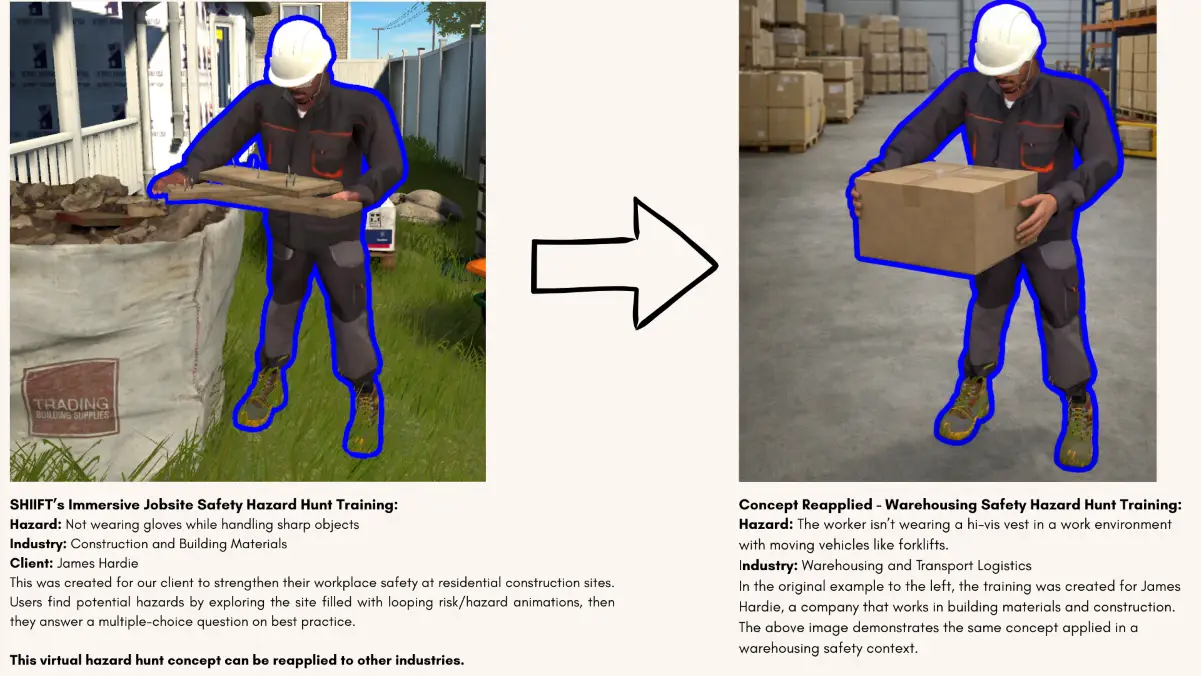
Immersive hazard hunt training concept
We also specialize in custom E-Learning development, 3D animated or live-action training videos, VR simulations, etc. Check out more of our projects here.
Common Warehouse Hazards to Watch For
- Vehicle and pedestrian interaction
- Falling objects from racking
- Poor storage practices
- Inadequate lighting
- Noise and dust exposure
- Fatigue and repetitive tasks
Addressing these hazards through structured warehouse safety rules and training reduces both short term incidents and long term health issues.
Benefits of Strong Warehouse Health and Safety Practices
Effective warehousing safety delivers measurable benefits. Fewer accidents mean reduced downtime, lower insurance costs, and improved productivity. Employees are more confident and engaged when they feel protected, which improves morale and retention.
From a compliance perspective, clear warehouse safety rules and documented training help demonstrate due diligence and reduce the risk of enforcement action. Safety done properly supports both people and performance.
Conclusion
Effective warehouse safety relies on clear procedures, consistent training, and active management involvement. By maintaining clean work areas, using equipment correctly, improving manual handling practices, enforcing PPE rules, and investing in ongoing training, organisations can significantly reduce workplace risks.
These five warehouse safety tips provide a practical framework for building a safer and more compliant operation.