Send us a message
We would like to learn more about your challenges and to understand how we can support you.
Get in touch.
Send us a message and we’ll get
back to you within 48 hours.
Alternatively, email
hello@shiifttraining.com
"*" indicates required fields
Electrical hazards are among the most serious risks in any workplace. Faulty wiring, overloaded circuits, and improper maintenance can lead to shocks, fires, equipment damage, and in severe cases, fatalities. Because electricity cannot be seen and often gives little warning before an incident occurs, maintaining strong safety practices is essential.
Workplaces that prioritize electrical safety reduce the likelihood of accidents while also protecting employees, equipment, and operations. The following tips outline important practices that help minimize electrical risks and maintain a safer working environment.
Strong electrical safety begins with clear procedures, proper maintenance, and ensuring that only qualified personnel work on electrical systems.
Never allow untrained staff to perform electrical repairs or work on wiring and panels. Electrical systems require specialized knowledge, and only licensed or qualified electricians should carry out installations, repairs, or inspections.
Before using electrical equipment, visually inspect cables, plugs, and casings for signs of damage. Frayed wires, exposed conductors, or cracked housings should be reported immediately and the equipment removed from service.
Regular Portable Appliance Testing helps identify faults that may not be visible during a standard inspection. PAT testing helps ensure that electrical appliances remain safe to operate over time.
Maintain a clear working space in front of electrical panels and switchboards. A clearance of around 36 inches (approximately one meter) ensures technicians can access equipment quickly and safely in case of an emergency.
Electrical panels, high voltage equipment, and restricted areas should be clearly marked with warning signs. Proper signage alerts workers to potential hazards and prevents unauthorized access.
Encourage employees to report electrical concerns such as flickering lights, buzzing sounds, scorch marks, or damaged outlets as soon as they notice them. Early reporting can prevent minor issues from escalating into serious hazards.
Even seemingly simple electrical repairs can create additional risks if handled incorrectly. Employees should never attempt to fix electrical equipment unless they are properly trained and authorized.
When performing maintenance on electrical equipment or machinery, lockout tagout procedures should be used to isolate energy sources. This ensures that equipment cannot be accidentally energized while work is being performed.
Electrical outlets and circuits are common sources of workplace hazards when used improperly or overloaded.
Plugging multiple high powered devices into the same outlet or extension cord can cause circuits to overheat. Overloaded outlets significantly increase the risk of electrical fires.
Surge protectors help protect equipment from power spikes caused by electrical faults or lightning. Sensitive devices such as computers and electronic systems should always be connected through quality surge protection.
Connecting multiple extension cords together, known as daisy chaining, can create dangerous heat buildup and electrical load issues. Extension cords should only be used individually and for temporary purposes.
Grounding provides a safe path for excess electrical current. Equipment that is not properly grounded increases the risk of electric shock and equipment damage.
In areas where moisture may be present, such as outdoors or near water sources, ground fault protection devices should be used. Ground Fault Circuit Interrupters (GFCIs) automatically cut power if a fault is detected, helping prevent electrical shock.
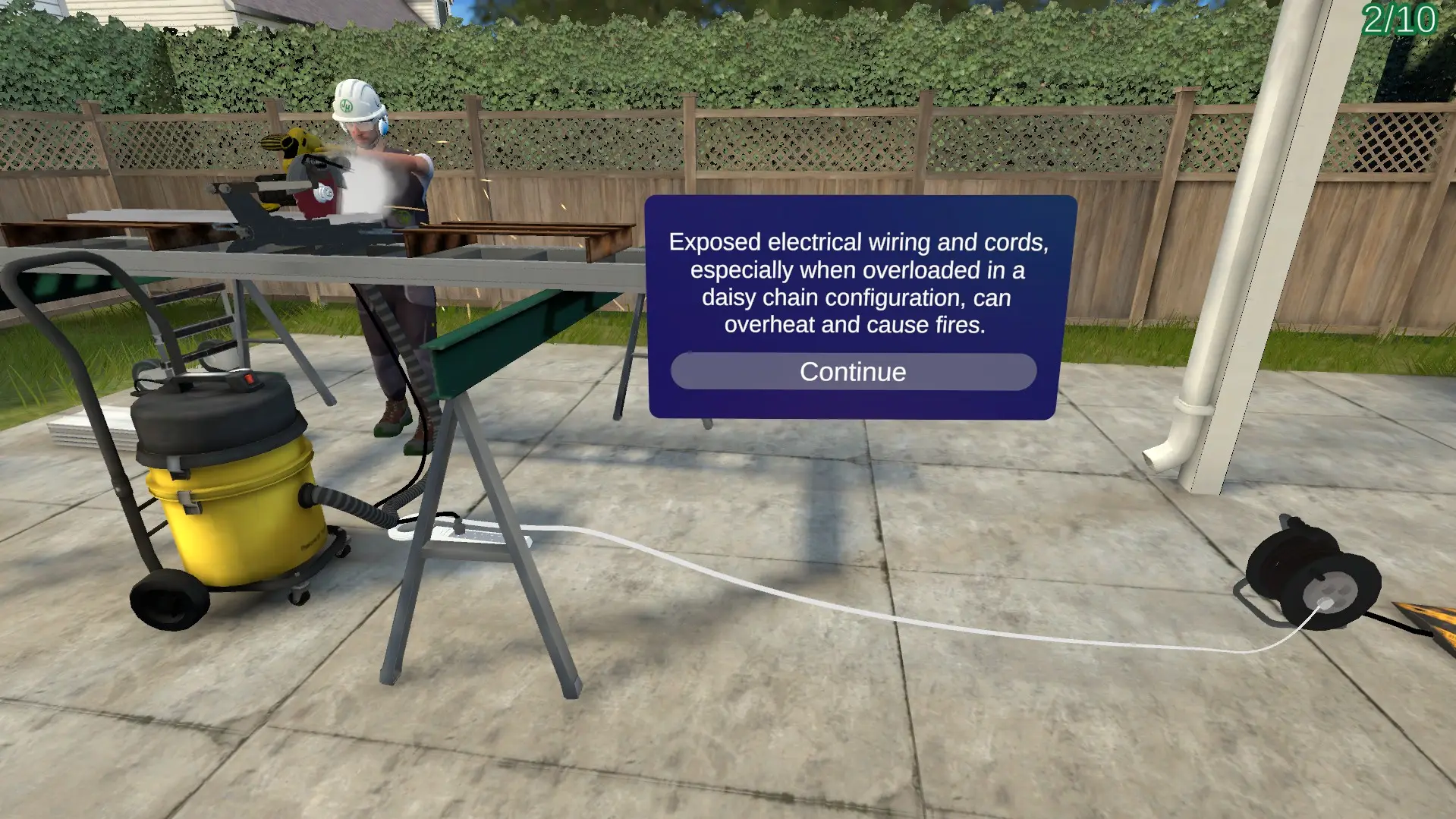
Daisy Chained Wiring – As shown in our hazard hunt simulation
Electrical equipment and cables should be handled and maintained carefully to reduce the risk of damage and accidents.
When disconnecting equipment, always pull from the plug head rather than the cable. Pulling the cord repeatedly weakens the internal wiring and can lead to exposed conductors.
Loose cables across walkways can create both electrical hazards and trip hazards. Keeping cables organized and properly routed helps maintain a safer workspace.
Using tape to cover damaged insulation is not a safe repair method. Damaged cords should always be replaced rather than temporarily patched.
Power tools should be inspected for damaged casings, worn insulation, or exposed wires before use. Damaged tools should be removed from service until properly repaired or replaced.
Water conducts electricity and increases the risk of shock. Electrical equipment should be kept away from water sources, and employees should never handle electrical devices with wet hands.
Switching off and unplugging tools and machinery when they are not required reduces the risk of overheating, power surges, and unnecessary energy consumption.
Appliances must always be fitted with the correct fuse rating. Incorrect fuses can fail to protect circuits from overloads and may increase the risk of electrical fires.
Electrical safety depends not only on equipment and procedures but also on effective training. Workers must understand the risks, recognize warning signs, and know how to respond to potential hazards.
The 21st and ultimate tip for electrical safety in a workplace, is to procure highly engaging, and effective digital training solutions from SHIIFT Training. Contact us to enhance your organization’s electrical safety practices with e-learning, VR, or safety videos.
Deliver next generation training. Get in touch.
Email us at hello@shiifttraining.com or send
us a message and we’ll be in touch within 48hrs.