Send us a message
We would like to learn more about your challenges and to understand how we can support you.
Get in touch.
Send us a message and we’ll get
back to you within 48 hours.
Alternatively, email
hello@shiifttraining.com
"*" indicates required fields
Training centers have long been the backbone of professional skill development, offering hands-on simulations and practical experiences that prepare individuals for the real world. From corporate safety programs to technical operations and military training, these centers provide immersive, physical experiences that help learners develop competence and confidence through both onsite training and offsite training programs.
Even the most advanced training centers face limitations. Certain scenarios high-risk emergencies, rare operational failures, or costly simulations, can be difficult or unsafe to replicate in a physical environment. Virtual reality (VR) training can serve as a complementary tool, allowing training centers to offer additional practical experiences without introducing risk or significant cost.
A training center is a facility dedicated to developing skills, knowledge, and competencies in a structured environment. These centers serve purposes including education, certification, operational readiness, compliance, and workplace safety. Examples include corporate learning hubs, technical schools, and military academies.
The main value of a training center lies in practical, hands-on simulations. Trainees learn by doing, practicing real-world tasks under controlled conditions to build competence, confidence, and readiness.
Training centers vary depending on their focus and audience:
While training centers create realistic, hands-on scenarios, some situations remain difficult to replicate safely or affordably in the real world.
Many training centers have yet to adopt VR, even as it is increasingly used in industries such as healthcare, manufacturing, and logistics. Physical simulations cover most standard training needs, but high-risk, rare, or costly scenarios can be challenging to replicate physically.
Examples include:
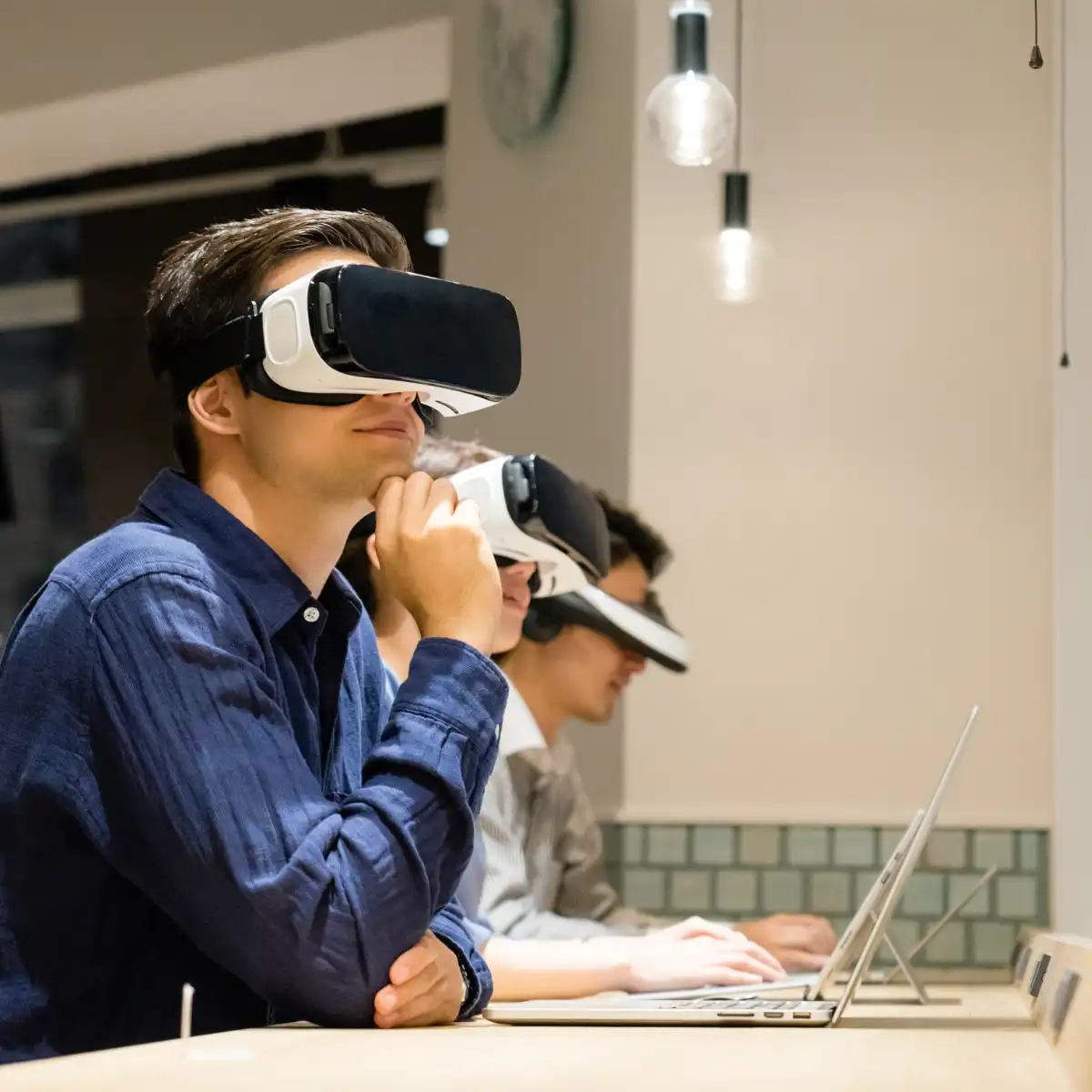
VR allows trainees to experience these situations repeatedly and safely, providing exposure that would otherwise be difficult or impossible to achieve in a physical-world setting, while they can easily be achieved in a virtual-world setting.
Incorporating specialized VR training facilities into training center courses has a wide array of benefits, including enhanced engagement, improved retention, and more efficient skill development, and these benefits go beyond the everyday advantages of VR training itself.
1. Enhanced Practical Training for Rare or Dangerous Scenarios
VR allows trainees to practice scenarios that are too dangerous, expensive, or rare to replicate physically. For example, a chemical spill in a plant or an emergency evacuation can be simulated safely, enabling trainees to make decisions under pressure without endangering themselves or the facility.
Training centers often rely on physical replicas for hands-on learning, but some scenarios like chemical spills, machinery failures, or emergency evacuations are too costly, dangerous, or rare to replicate repeatedly. VR fills this gap, allowing centers to offer experiences they otherwise couldn’t.
2. Safety and Risk Reduction
VR training eliminates real-world risk while still providing a realistic experience. Trainees can interact with heavy machinery, hazardous materials, or high-risk environments without injury or equipment damage.
Even the most advanced physical simulations can’t safely recreate extremely rare or catastrophic events, like large-scale plant emergencies, system-wide machinery failures, or unusual tactical situations. VR allows a training center to expand the range of experiences it offers, providing practical learning opportunities for scenarios that would otherwise be impossible or prohibitively costly to simulate physically.
3. Cost Efficiency
For a training center, building and maintaining physical replicas for each session can be expensive. VR allows training centers to reuse scenarios across multiple training sessions, reducing setup costs while increasing throughput for training. Training centers would still use physical replicas for key hands-on learning, but VR provides a cost-effective alternative for scenarios that are expensive, rare, or high-maintenance to replicate physically.
This allows centers to allocate budgets more strategically, using VR for high-cost or resource-intensive scenarios while keeping physical setups for core practical training. VR essentially expands the menu of training options without disproportionately increasing costs.
4. Consistency and Standardization
VR provides identical scenarios for every trainee, removing variability caused by different instructors, changing conditions, or physical setups. This ensures that all trainees receive the same level of training, which is especially important for technical skills and compliance-focused training programs.
5. Scalability and Accessibility
In the real world, training centers have space limits for creating their courses or physical replicas. Physical space limits how many trainees can participate at once.
Multiple trainees can engage in VR simulations simultaneously, without needing to limit how many users can practice on machinery at one time or limit the number of scenarios the training center can offer training for. This increases throughput and allows training centers to expand their reach without requiring additional physical space or equipment.
6. Data Collection and Performance Analytics
VR can track every action a trainee takes, including response times, decision-making, and errors. This data provides objective insight into performance, more accurately than observation alone.
Instructors can use the data to identify skill gaps, tailor future modules, and provide objective assessment across all trainees, supporting the center’s educational outcomes and reporting requirements.It also allows them to create a more perfect training program by optimizing every facet of their course, resulting in more satisfied customers overall.
7. Engagement and Retention
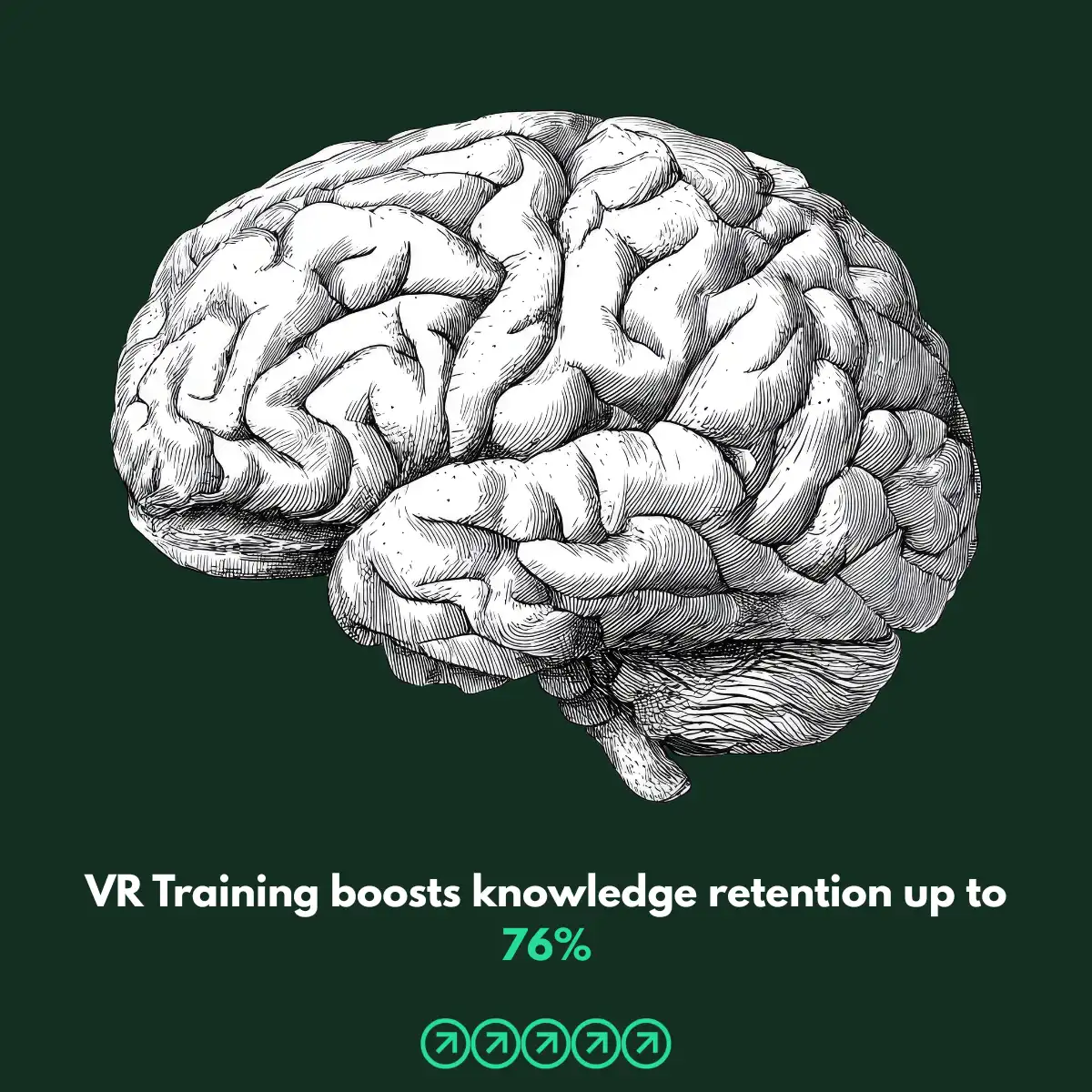
Immersive VR scenarios are interactive and often incorporate gamification, making training more engaging than traditional observation-based methods. Trainees are more likely to remain focused, retain key information, and apply skills confidently in real-world situations.
Many training centers rely on classroom-based learning for some courses because physical training setups are limited in number, space, or availability. VR allows trainees to experience interactive, hands-on scenarios even when physical replicas are unavailable, keeping learners engaged and improving retention compared to passive classroom instruction. This makes VR a valuable supplement to traditional training, ensuring practical learning opportunities are accessible even when physical resources are constrained.
The key advantage of VR is that it supplements rather than replaces physical simulations. Training centers continue to offer hands-on experiences, while VR addresses scenarios that are too costly, dangerous, or rare to replicate physically in a training center.
Examples:
By incorporating VR, training centers can expand the range of experiences offered, providing additional opportunities for practical skill development.
Training centers provide valuable hands-on, real-world simulations. VR can complement these experiences by offering scenarios that are difficult, dangerous, or costly to replicate physically. The benefits demonstrate how VR can support and extend the capabilities of modern training centers.
For training centers exploring additional tools, VR provides a way to broaden the range of practical experiences available to trainees without replacing existing real-world simulations.
Deliver next generation training. Get in touch.
Email us at hello@shiifttraining.com or send
us a message and we’ll be in touch within 48hrs.