Introduction
Across regulated and safety‑critical industries, procedure deviation is one of the most persistent and expensive operational problems. Every time a worker departs from an approved SOP or work instruction, the organization risks batch failures, rework, investigations, audit findings, and even safety incidents.
What is Procedure Deviation?
Procedure deviation is any departure from approved standards, standard operating procedures (SOPs), or work instructions, particularly in regulated or safety‑critical environments. It occurs when steps are skipped, performed out of order, or executed incorrectly, whether intentionally or unintentionally.
The impacts of procedure deviation are significant: it can lead to batch failures or rework in manufacturing, safety incidents on operational sites, regulatory compliance findings, and damage to a company’s reputation. Even small deviations can escalate quickly, making consistent adherence to procedures essential for both safety and operational integrity.
Despite large investments in training, many companies still rely on text‑heavy documents and slide decks that do little to shape real behavior on the shop floor. Video‑based training changes this dynamic by turning procedures into concrete, visual behaviors that employees can see, understand, and replicate with much greater consistency.
Why Traditional Training Leads to Procedure Deviation
Traditional “read and understand” training rests on a simple assumption: if employees have read an SOP and signed a form, they will perform the procedure correctly. In practice, dense documents, abstract language, and limited context mean that many learners skim rather than truly comprehend.
Slide-based sessions and occasional classroom briefings often suffer from the same issues such as low engagement, inconsistent delivery, and weak knowledge retention over time. New starters may learn more from whoever trains them informally than from official materials, which introduces variation, tribal workarounds, and gaps between documented and actual practice. The result is a fertile environment for deviations labeled as “human error” but rooted in flawed training design.
How Video-Based Training Changes Worker Behavior
Video-based training addresses these weaknesses by showing, not telling. Instead of visualizing a process after reading the words, you actually see the process in thorough detail via a carefully constructed video. When workers can watch a procedure being performed step by step, they see the correct sequence, technique, and pace in a way that text alone cannot convey. Not to mention some workers may struggle to visualize anything at all if they have aphantasia which prevents them from using their mind’s eye.
Many empirical studies in technical and clinical domains have shown that learners trained with video demonstrate higher procedural accuracy, better adherence to standards, and faster task completion compared with those trained through written or lecture-only formats. In other words, video training not only informs but also shapes the motor and cognitive patterns that underpin reliable execution.
Best Video-Based Training Methods to Reduce Procedure Deviation
Standardizing the “One Best Way”
Video SOPs provide a single, authoritative representation of how a task should be done. Rather than relying on each trainer’s interpretation, or on inconsistent on‑the‑job demonstrations, every learner sees the same visual standard. This reduces variation between shifts, lines, and sites and helps align practice with the official procedure instead of local habits. When everyone shares the same mental model of “how we do this here,” the risk of deviation from conflicting instructions drops markedly.
Breaking Complex Procedures into Micro‑Steps
Procedures in pharma, manufacturing, and healthcare can be complex, with many decision points and critical steps. Long text documents often overwhelm learners, leading them to miss or misinterpret important details. Well-designed video training breaks these processes into short, focused segments, or microlearning modules that tackle one task or phase at a time.
Learners can watch a short clip on a specific step, replay it if needed, and then apply it immediately. This reduces step‑skipping and errors in sequencing, especially for infrequent or high‑risk tasks where workers cannot rely on routine alone.
See below for an example from our training video we created for ADNOC on how to use a respirator which focuses visuals on each micro-step with detailed voiceover.
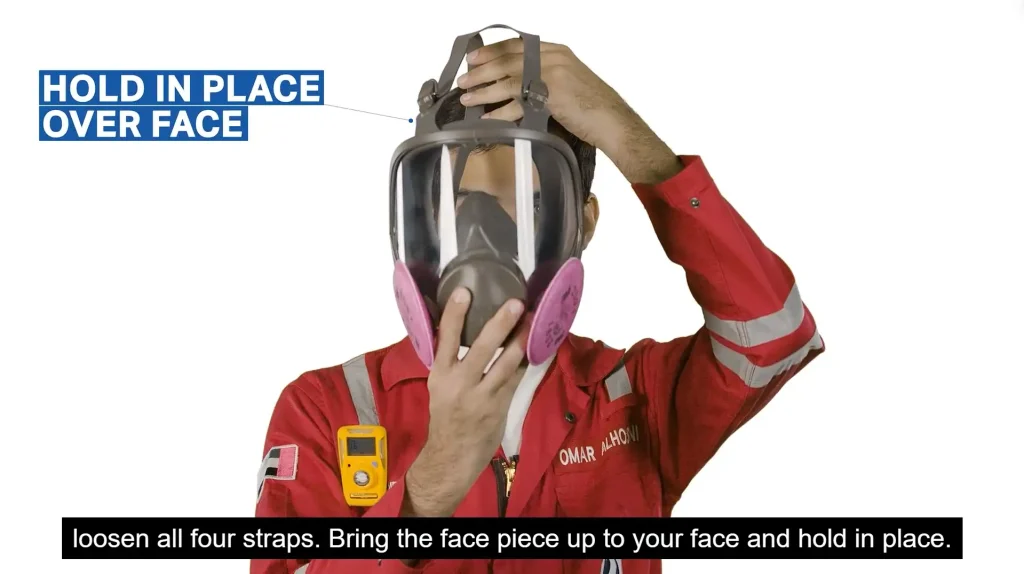
Screengrab from our caption-enabled video showing how to put on a respirator
Improving Retention and Recall at the Point of Work
People naturally remember images and actions better than abstract descriptions. Video leverages this by embedding the procedure in episodic memory: workers can recall “what it looked like” when an expert performed the task. When the same video is accessible on demand at the point of work, like on a tablet at the line, a workstation in the lab, or a mobile device on the ward, employees can refresh their memory moments before execution.
This just‑in‑time support is particularly powerful in reducing deviations that occur when staff are unsure, under time pressure, or performing a rarely used procedure.
Capturing and Preserving Expert Tacit Knowledge
Many deviations arise when experienced staff leave and their tacit knowledge disappears with them. Text SOPs may describe the “what” of a task but often miss the subtle “how”. The exact grip, angle, or order that makes the process robust. Video captures these nuances directly from subject‑matter experts, preserving them as repeatable demonstrations.
New hires and cross-trained staff can see precisely how the best people in the organization perform critical tasks. This reduces the risk of deviations caused by incomplete handovers or over‑reliance on memory and informal coaching.
Enabling Data‑Driven Continuous Improvement
Modern video training platforms do more than host files; they generate data. Organizations can see which videos are watched most, where learners rewind or pause, and which procedures generate questions or assessment failures. Coupled with deviation and CAPA data, this allows teams to detect patterns.
For example, a cluster of deviations around a particular step that learners consistently revisit in training. Training and quality teams can then refine the video, clarify the SOP wording, or add targeted coaching before issues become entrenched. Over time, this creates a feedback loop where training content continuously adapts to real operational risks.
Evidence of Reduced Procedure Deviation from Video-Based Training
When video-based training is implemented systematically, several outcome patterns tend to emerge. First, the number of deviations attributed to “human error” in targeted procedures often decreases, particularly where root causes previously pointed to unclear instructions or inconsistent training.
Second, right‑first‑time rates improve, as employees perform tasks correctly without rework or correction. Third, investigations and audits frequently reveal that staff can articulate the procedure clearly and explain why certain steps are critical, indicating deeper understanding rather than rote compliance.
In documented studies of technical skills training, video‑trained cohorts commonly outperform control groups on procedural accuracy, adherence to protocols, and objective performance scores, supporting the link between video and more reliable execution.
Designing Video Training That Actually Reduces Deviations
The impact of video is not automatic; it depends on design. Each video should align directly with a specific SOP or work instruction and clearly signal which steps are critical, which are conditional, and where common errors occur. Visuals matter: close‑ups of hands, equipment interfaces, labels, and instruments help learners see details they would otherwise miss.
Modules should be short, ideally 3–7 minutes, each focused on a single procedure or discrete part of a larger workflow, and titled in a way that makes them easy to find at the moment of need. Layering in callouts, on‑screen text, or brief narration reinforces key points without overwhelming the viewer.
From an implementation standpoint, organizations gain the most when they prioritize high‑risk or high‑deviation procedures first. Quality, operations, and training teams can collaborate to review deviation data and choose a small set of procedures where better training would have the biggest impact.
Video SOPs should then be embedded into the existing training ecosystem: linked directly from the document management system, referenced in qualifications, and used during on‑the‑job coaching and competency assessments. Observation checklists can mirror the structure of the videos so that supervisors assess the exact behaviors shown on screen.
What Other Tools Can Be Used to Reduce Procedure Deviation
While video-based training is highly effective, other tools can complement it to further reduce deviations. Digital checklists and guided workflow apps provide step-by-step prompts at the point of work.
Interactive simulations and VR training allow learners to practice high-risk or complex tasks in a safe, controlled environment. Additionally, automated alerts or sensors can flag skipped steps in real time, and competency tracking systems ensure employees demonstrate proficiency before performing critical operations independently.
For example, SHIIFT Training developed a VR application for Nutrien Ag Solutions that covered a full hands-on training for their complex ammonia transfer process and all the required safety knowledge, which acted as a highly effective method of reducing procedure deviation in such a high-risk process.
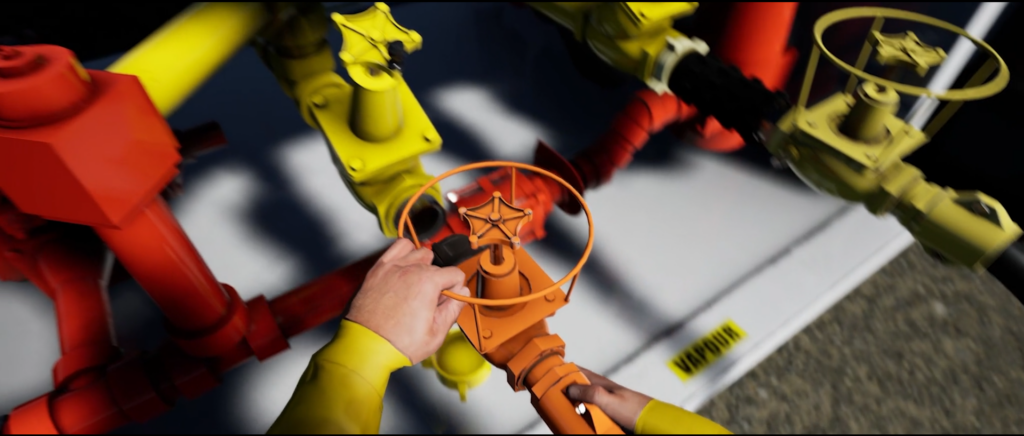
Promotional render of the ammonia transfer VR training
Closing Thoughts
Many organizations can show impressive training completion rates, yet still struggle with deviations and inconsistent practice. The underlying issue is that reading and signing off on a document does not guarantee accurate, repeatable execution. Video-based training closes this gap by making procedures observable, memorable, and easier to perform correctly under real conditions.
By standardizing the “one best way,” supporting micro‑learning at the point of work, and preserving expert know‑how, well‑designed video training programs help shift the focus from box‑ticking to genuine procedural compliance. The outcome is fewer deviations, safer operations, and a more resilient workforce that can maintain quality even as products, technologies, and people change.