Send us a message
We would like to learn more about your challenges and to understand how we can support you.
Get in touch.
Send us a message and we’ll get
back to you within 48 hours.
Alternatively, email
hello@shiifttraining.com
"*" indicates required fields
Hand and power tool safety focuses on preventing injuries caused by incorrect selection, use, or maintenance of hand and power tools. Cuts, crush injuries, eye damage, and electric shock remain among the most common workplace incidents. Structured tool safety training reduces these risks by improving hazard recognition, correct technique, and decision making before incidents occur.
Tool safety is the practice of selecting, using, inspecting, and maintaining hand and power tools in a way that prevents injury, equipment damage, and unsafe working conditions. It applies to manual hand tools and powered equipment, including electric, pneumatic, and battery driven tools.
Tool related incidents frequently result in lost time injuries and long term hand damage. Learning tool safety helps workers identify hazards such as kickback, blade contact, pinch points, vibration, and electrical risks. It also supports legal compliance, protects productivity, and reduces equipment damage.
Tool safety training is effective because it targets high frequency tasks where small mistakes have serious consequences. Practical instruction improves muscle memory and situational awareness. Scenario based training helps workers understand how incidents develop, not just what rules exist.
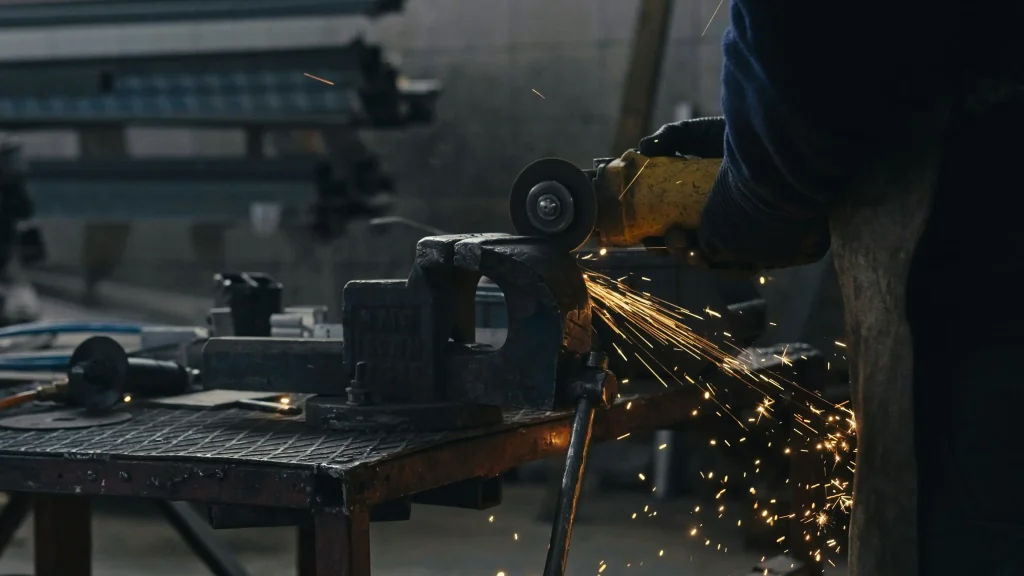
Tool Specific Hazard Identification
Identify hazards unique to each hand and power tool such as blade contact, kickback, pinch points, or electrical exposure. This ensures training reflects real risks rather than generic safety rules.
Inspection and Tool Condition Awareness
Train workers to recognize defects, wear, and damage before use. Early detection prevents tool failure and secondary injuries.
Task Based Learning Focus
Link training with examples tied directly to the tasks workers perform daily. This improves relevance and makes correct behaviors easier to apply on the job.
Assess Tool Usage and Incident Data
Identify which hand and power tools are used most frequently across tasks. Prioritize tools with the highest incident, near miss, or injury rates.
Define Standard Operating Procedures
Develop clear procedures for each tool category based on manufacturer guidance. Ensure procedures cover safe use, limitations, and prohibited practices.
Train on Full Tool Life-cycle
Train workers on inspection, setup, operation, and shutdown for each tool. Emphasize recognizing defects and knowing when to remove tools from service.
Use Visual Reinforcement
Reinforce learning with images or training videos showing correct and incorrect tool use. Visual contrast helps workers recognize unsafe conditions more quickly.
Refresh Training Regularly
Repeat training at planned intervals and following incidents or near misses. Regular refresher training prevents knowledge fade and addresses emerging risks.
Validate Competence Through Observation
Confirm safe tool use through direct observation during real tasks. Practical validation is more reliable than written or verbal assessments, and should be carefully monitored so that employees don’t take shortcuts with safety even after passing non-practical assessments.
Embed checklists and visuals: Provide simple pre‑use and post‑use checklists with photos of your own tools showing good vs. defective conditions (frayed cords, cracked casings, missing guards, worn handles).
Tool safety training faces several recurring challenges that affect both effectiveness and real-world behavior change. Addressing these issues early in a training programs design helps reduce incidents linked to hand and power tools.
Low engagement and poor retention: Traditional slide-based or lecture-heavy sessions struggle to keep attention, so workers forget key points such as correct PPE, pre-use checks, and lock‑out/tag‑out steps.
Weak pre‑use inspection habits: Operators may not routinely check cables, plugs, guards, triggers, emergency stops, chuck tightness, damaged insulation, or loose handles before use, leading to avoidable failures.
Lack of hands‑on practice: Tool safety is a psychomotor skill; theory-only eLearning without supervised practice on real tools and setups inhibits competence and confidence.
Normalization of unsafe tool practices: Shortcuts such as removing guards, bypassing interlocks, carrying tools by the cord, or leaving bits in chucks during transport can become “how we do it here” if not challenged.
Tool safety training reduces hand and power tool accidents by focusing on correct selection, safe operation, and consistent reinforcement. Training programs that prioritize real tasks, visual learning, and observed competence are more effective than theory based instruction. Continuous refreshers and incident driven updates help maintain safe behaviors and reduce injury risk over time.
Deliver next generation training. Get in touch.
Email us at hello@shiifttraining.com or send
us a message and we’ll be in touch within 48hrs.